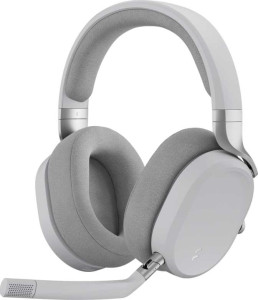
Fractal Design Scape
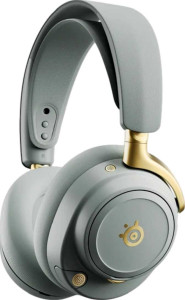
SteelSeries Arctis Nova Elite

Fractal Design Scape SteelSeries Arctis Nova Elite

Overview

Welcome to our detailed spec comparison between the Fractal Design Scape and the SteelSeries Arctis Nova Elite, two serious contenders in the premium wireless headset market. Both offer over-ear comfort, Bluetooth 5.3, and spatial audio support, yet they take notably different approaches to sound reproduction, noise cancellation, and microphone design. Read on to see how every specification stacks up before you decide which one belongs on your desk.

Common Features

  • Both headsets have an over-ear fit.
  • Both headsets have a detachable cable.
  • Neither headset can be folded.
  • Neither headset has an open-back design.
  • Both headsets have stereo speakers.
  • Both headsets support spatial audio.
  • Both headsets use a 40 mm driver unit size.
  • Both headsets have passive noise reduction.
  • Both headsets have 2 drivers.
  • Both headsets have a noise-canceling microphone.
  • Both headsets have a mute function.
  • Both headsets have a rechargeable battery.
  • Both headsets have a battery level indicator.
  • Both headsets have a removable battery.
  • Both headsets can be used wirelessly.
  • Both headsets use Bluetooth version 5.3.
  • Both headsets have USB Type-C.
  • Both headsets have a control panel placed on the device.
  • Both headsets can be used as a headset.
  • Neither headset has a vibration function.

Main Differences

  • Weight is 338 g on Fractal Design Scape and 380 g on SteelSeries Arctis Nova Elite.
  • RGB lighting is present on Fractal Design Scape but not available on SteelSeries Arctis Nova Elite.
  • Lowest frequency is 20 Hz on Fractal Design Scape and 10 Hz on SteelSeries Arctis Nova Elite.
  • Highest frequency is 20000 Hz on Fractal Design Scape and 40000 Hz on SteelSeries Arctis Nova Elite.
  • Active noise cancellation (ANC) is present on SteelSeries Arctis Nova Elite but not available on Fractal Design Scape.
  • A neodymium magnet is used on Fractal Design Scape but not on SteelSeries Arctis Nova Elite.
  • Lowest microphone frequency is 50 Hz on Fractal Design Scape and 100 Hz on SteelSeries Arctis Nova Elite.
  • Highest microphone frequency is 16000 Hz on Fractal Design Scape and 14000 Hz on SteelSeries Arctis Nova Elite.
  • A removable microphone is featured on Fractal Design Scape but not on SteelSeries Arctis Nova Elite.
  • Number of microphones is 2 on Fractal Design Scape and 4 on SteelSeries Arctis Nova Elite.
  • Battery life is 40 hours on Fractal Design Scape and 30 hours on SteelSeries Arctis Nova Elite.
  • Connectivity options are 2.4GHz wireless, Bluetooth, and USB on Fractal Design Scape and 3.5mm on SteelSeries Arctis Nova Elite.
  • Compatibility covers PlayStation, PC, and Nintendo Switch on Fractal Design Scape and PC, PlayStation, Nintendo Switch, and Xbox on SteelSeries Arctis Nova Elite.
  • Maximum Bluetooth range is 15 m on Fractal Design Scape and 10 m on SteelSeries Arctis Nova Elite.
Specs Comparison
Fractal Design Scape

Fractal Design Scape

SteelSeries Arctis Nova Elite

SteelSeries Arctis Nova Elite

Design:
Fit Over-ear Over-ear
has a detachable cable
weight 338 g 380 g
has RGB lighting
can be folded
has an open-back design
has stereo speakers

Both headsets share the same fundamental design DNA: over-ear, closed-back builds with detachable cables and no folding capability. This means neither is optimized for portability, positioning both squarely as desktop or home-use headsets rather than commuter gear. The non-foldable form factor is worth noting for anyone with limited storage space, as both will need a dedicated spot on a stand or desk.

Where the two diverge most meaningfully is in weight and aesthetics. The Fractal Design Scape comes in at 338 g, a full 42 g lighter than the Arctis Nova Elite's 380 g. Over extended gaming or listening sessions lasting several hours, that difference is tangible — lighter headsets reduce neck fatigue and pressure points, which matters significantly for marathon use. Additionally, the Scape includes RGB lighting, which the Nova Elite entirely lacks; for users who value a cohesive, illuminated desktop setup, this is a genuine differentiator.

On design, the Fractal Design Scape holds a clear edge: it is meaningfully lighter — an advantage with direct real-world comfort implications — and adds RGB aesthetics that the Nova Elite cannot match. Users who prioritize long-wear comfort or a lit battlestation setup will find the Scape the stronger choice within this spec group.

Sound quality:
lowest frequency 20 Hz 10 Hz
highest frequency 20000 Hz 40000 Hz
has active noise cancellation (ANC)
supports spatial audio
driver unit size 40 mm 40 mm
has a neodymium magnet
has passive noise reduction
drivers count 2 2

The frequency response is the sharpest dividing line here. The Fractal Design Scape covers the standard 20 Hz–20,000 Hz range — exactly the bounds of typical human hearing — while the Arctis Nova Elite extends dramatically to 10 Hz–40,000 Hz. In practice, frequencies below 20 Hz are felt more than heard, adding physicality to deep bass, and the ultrasonic upper range can contribute to a subtle sense of airiness in high-resolution audio. For competitive gaming, the difference is negligible, but for audiophile-leaning listeners, the Nova Elite's wider response signals a more ambitious acoustic tuning target.

The bigger real-world differentiator is noise isolation. Both headsets offer passive noise reduction, but only the Arctis Nova Elite adds active noise cancellation (ANC) — a fundamentally different technology that uses microphones and processing to actively counteract ambient sound. For anyone in a noisy environment, ANC is a significant practical advantage that passive foam alone cannot replicate. On the flip side, the Scape features a neodymium magnet while the Nova Elite does not; neodymium drivers are known for stronger magnetic flux, which can translate to tighter, more controlled driver movement and improved transient response — though whether this fully offsets the Nova Elite's other acoustic advantages depends heavily on implementation.

On balance, the SteelSeries Arctis Nova Elite holds the edge in sound quality for this spec group. Its wider frequency range and the addition of ANC represent two substantial advantages over the Scape. The Scape's neodymium magnet is a meaningful spec, but it is a single counterpoint against the Nova Elite's broader acoustic and noise-isolation feature set.

Microphone:
has a noise-canceling microphone
lowest mic frequency 50 Hz 100 Hz
highest mic frequency 16000 Hz 14000 Hz
has a removable microphone
has a mute function
number of microphones 2 4

Both headsets include noise-canceling microphones with mute functions, so the fundamentals are covered on either side. The more interesting story emerges when looking at their frequency capture ranges. The Fractal Design Scape's mic spans 50 Hz–16,000 Hz, versus the Arctis Nova Elite's 100 Hz–14,000 Hz. The Scape's lower floor means it captures more of the chest resonance and warmth in a voice, while its higher ceiling preserves more sibilance and breath detail — both contributing to a fuller, more natural-sounding vocal reproduction. For voice chat and streaming alike, this wider capture window is a tangible advantage.

The Nova Elite counters with a significantly larger microphone array: 4 microphones versus the Scape's 2. More microphone inputs generally allow for more sophisticated beamforming and noise-isolation algorithms, which can produce cleaner voice pickup in noisy environments even if the raw frequency range is narrower. It is a classic hardware-versus-software-processing trade-off — raw capture range on one side, array-driven processing power on the other.

The clearest practical differentiator, however, is removability. The Scape features a removable microphone, while the Nova Elite's is fixed. For users who want to double the headset as a clean, mic-free listening device, this matters considerably. Weighing all factors, this group is competitive, but the Fractal Design Scape holds a slight edge — its wider frequency response and removable mic offer more flexibility, while the Nova Elite's quad-mic array remains its strongest counterargument.
Power:
Battery life 40 hours 30 hours
has a rechargeable battery
has a battery level indicator
has a removable battery

Strip away the one numerical difference and these two headsets are essentially identical on paper in this category: both are rechargeable, both carry a battery level indicator, and both feature a removable battery — a increasingly rare convenience that lets users swap in a fresh cell rather than waiting out a charge cycle. That last point is a genuine quality-of-life feature worth highlighting, as most competitors in this segment have moved to sealed, non-removable batteries.

The single differentiator is battery life, and it is a meaningful one. The Fractal Design Scape is rated for 40 hours against the Arctis Nova Elite's 30 hours — a 10-hour gap that represents a 33% advantage in endurance. Practically speaking, a 30-hour battery already covers several days of heavy use for most people, so neither headset will leave users stranded frequently. However, for extended travel, LAN events, or users who simply dislike the friction of charging, the Scape's additional headroom is a real differentiator.

The Fractal Design Scape wins this group clearly. With an identical feature set across every other power spec, the 10-hour battery advantage is the sole variable — and it unambiguously favors the Scape for users who prioritize fewer interruptions between charges.

Connectivity:
connectivity 2.4GHz wireless, Bluetooth, USB 3.5mm
compatibility PlayStation, PC, Nintendo Switch PC, PlayStation, Nintendo Switch, Xbox
Can be used wirelessly
Bluetooth version 5.3 5.3
Has USB Type-C
maximum Bluetooth range 15 m 10 m

Connectivity is where these two headsets diverge most sharply in terms of day-to-day versatility. The Fractal Design Scape offers a notably richer wireless stack: 2.4 GHz wireless, Bluetooth, and USB — giving users the option to choose between low-latency 2.4 GHz for gaming and Bluetooth for casual device switching. The Arctis Nova Elite, by contrast, lists 3.5 mm as its primary wired connection method alongside shared Bluetooth and USB Type-C support. For competitive or latency-sensitive gaming, the Scape's dedicated 2.4 GHz band is a meaningful structural advantage, as it avoids the higher latency and potential interference that Bluetooth can introduce.

Both headsets share Bluetooth 5.3, ensuring equivalent connection stability and efficiency on that front. Where they differ again is range: the Scape reaches up to 15 m over Bluetooth versus the Nova Elite's 10 m — a 50% advantage that matters for users who move around their space while listening. On platform compatibility, the trade-off flips: the Nova Elite adds Xbox support that the Scape lacks, which is a decisive factor for Xbox users and makes the Nova Elite the more universally compatible option across all major current-gen platforms.

Overall, the Fractal Design Scape holds the connectivity edge for PC and PlayStation-centric users, thanks to its 2.4 GHz wireless option and superior Bluetooth range. However, the Nova Elite's Xbox compatibility makes it the only viable choice for that ecosystem — meaning the ″winner″ here is genuinely audience-dependent rather than absolute.

Features:
release date June 2025 October 2025
control panel placed on a device
can be used as a headset
has a vibration function

Across every spec in this group, the Fractal Design Scape and the SteelSeries Arctis Nova Elite are in complete lockstep. Both place their control panel directly on the earcup, both function as full headsets with microphone capability, and neither includes a vibration function. There is simply no differentiator to analyze here — the data is identical on all three points.

The on-device control panel is worth briefly contextualizing: having physical volume, mute, or source controls on the headset itself means users can make adjustments without alt-tabbing or reaching for a separate controller, which is a meaningful ergonomic convenience during gaming sessions. That both headsets offer this is a shared baseline strength, not a point of separation.

This group is an unambiguous tie. Neither product holds any advantage over the other based on the provided specs, and users should weigh this category as neutral when making their decision between the two.

Comparison Summary & Verdict

After examining every specification, it is clear that these two headsets target distinct priorities. The Fractal Design Scape stands out with its lighter 338 g build, RGB lighting, longer 40-hour battery life, removable microphone, wider Bluetooth range of 15 m, and a neodymium magnet driver — making it an excellent pick for gamers who value customization and endurance. The SteelSeries Arctis Nova Elite, on the other hand, counters with active noise cancellation, a broader frequency range extending to 40000 Hz, four built-in microphones, and added Xbox compatibility — positioning it as the stronger choice for users who demand immersive audio fidelity and versatile platform support in demanding listening environments.

Fractal Design Scape
Buy Fractal Design Scape if...

Buy the Fractal Design Scape if you want a lighter headset with a longer battery life, RGB lighting, a removable microphone, and a wider Bluetooth range for extended wireless freedom.

SteelSeries Arctis Nova Elite
Buy SteelSeries Arctis Nova Elite if...

Buy the SteelSeries Arctis Nova Elite if active noise cancellation, a wider frequency response, more built-in microphones, and Xbox compatibility are your top priorities.