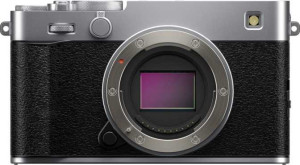
Fujifilm X-E5
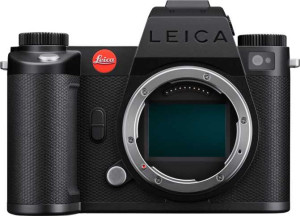
Leica SL3-S

Fujifilm X-E5 Leica SL3-S

Overview

This comparison brings together two very distinct mirrorless cameras: the compact and lightweight Fujifilm X-E5 and the professional-grade Leica SL3-S. While both share a strong autofocus system, sensor shift stabilization, and RAW shooting capability, they diverge sharply across sensor size and resolution, video bitrate, weather sealing, and overall form factor. Read on to find out which camera truly matches your shooting style.

Common Features

  • Both cameras are mirrorless system cameras.
  • Both cameras feature an electronic viewfinder with 100% coverage.
  • Both cameras have a flip-out screen.
  • Both cameras have a touch screen.
  • Both cameras have a hot shoe.
  • Neither camera has a built-in flash.
  • Both cameras feature sensor shift stabilization.
  • Both cameras support AF tracking, phase-detection autofocus for photos, touch autofocus, manual focus, manual shutter speed, and manual exposure.
  • Both cameras have a BSI sensor.
  • Both cameras have phase-detection autofocus for videos and continuous autofocus when recording.
  • Both cameras have a microphone input with a 3.5 mm audio jack, a stereo microphone, and 2 microphones.
  • Both cameras support a 24p cinema mode and slow-motion video recording.
  • Both cameras have a removable and rechargeable battery with a battery level indicator.
  • Both cameras support Wi-Fi 4 and Wi-Fi 5, Bluetooth, remote smartphone control, an HDMI output, and RAW shooting.
  • Neither camera has GPS or pixel shift shot capability.

Main Differences

  • Weather sealing is present on Leica SL3-S but not available on Fujifilm X-E5.
  • Screen resolution is 1040k dots on Fujifilm X-E5 and 2333k dots on Leica SL3-S.
  • Screen size is 3″ on Fujifilm X-E5 and 3.2″ on Leica SL3-S.
  • Weight is 445 g on Fujifilm X-E5 and 768 g on Leica SL3-S.
  • Volume is 356.01 cm³ on Fujifilm X-E5 and 1261.14 cm³ on Leica SL3-S.
  • Lowest operating temperature is 0 °C on Fujifilm X-E5 and -10 °C on Leica SL3-S.
  • Width is 124.9 mm on Fujifilm X-E5 and 141.2 mm on Leica SL3-S.
  • Height is 72.9 mm on Fujifilm X-E5 and 108 mm on Leica SL3-S.
  • Thickness is 39.1 mm on Fujifilm X-E5 and 82.7 mm on Leica SL3-S.
  • Sensor size is APS-C on Fujifilm X-E5 and full frame on Leica SL3-S.
  • Lens mount is Fujifilm X on Fujifilm X-E5 and Leica L on Leica SL3-S.
  • Focus points count is 425 on Fujifilm X-E5 and 779 on Leica SL3-S.
  • Main camera resolution is 40.2 MP on Fujifilm X-E5 and 25.3 MP on Leica SL3-S.
  • Maximum ISO is 12800 on Fujifilm X-E5 and 200000 on Leica SL3-S.
  • Continuous shooting speed is 8 fps on Fujifilm X-E5 and 7 fps on Leica SL3-S.
  • Fastest mechanical shutter speed is 0.00025 s on Fujifilm X-E5 and 0.000125 s on Leica SL3-S.
  • Maximum electronic shutter speed is 5.56E-6 s on Fujifilm X-E5 and 6.25E-5 s on Leica SL3-S.
  • A stacked CMOS sensor is present on Leica SL3-S but not on Fujifilm X-E5.
  • Image stabilization rating is 7 stops on Fujifilm X-E5 and 5 stops on Leica SL3-S.
  • Maximum video resolution is 3510 x 30 fps on Fujifilm X-E5 and 3968 x 30 fps on Leica SL3-S.
  • Movie bitrate is 200 Mbps on Fujifilm X-E5 and 800 Mbps on Leica SL3-S.
  • Battery life is rated at 400 shots on Fujifilm X-E5 and 315 shots on Leica SL3-S.
  • Battery power is 1260 mAh on Fujifilm X-E5 and 2200 mAh on Leica SL3-S.
  • Dual card slots are available on Leica SL3-S but not on Fujifilm X-E5.
  • Bluetooth version is 4.2 on Fujifilm X-E5 and 5.0 on Leica SL3-S.
Specs Comparison
Fujifilm X-E5

Fujifilm X-E5

Leica SL3-S

Leica SL3-S

Design:
Type Mirrorless Mirrorless
viewfinder Electronic viewfinder (EVF) Electronic viewfinder (EVF)
is weather-sealed (splashproof)
screen resolution 1040k dots 2333k dots
Has a flip-out screen
viewfinder coverage 100% 100%
screen size 3" 3.2"
weight 445 g 768 g
has a touch screen
Has a hot shoe
volume 356.013711 cm³ 1261.14192 cm³
is a system camera
has a flash
lowest potential operating temperature 0 °C -10 °C
maximum operating temperature 40 °C 40 °C
Has a tilting viewfinder
width 124.9 mm 141.2 mm
height 72.9 mm 108 mm
thickness 39.1 mm 82.7 mm

Both the Fujifilm X-E5 and the Leica SL3-S are mirrorless system cameras sharing a familiar design DNA: electronic viewfinder with 100% coverage, a flip-out touchscreen, hot shoe, and no built-in flash. However, the similarities end there when you look at their physical footprint. The X-E5 is a compact rangefinder-style body measuring 124.9 × 72.9 × 39.1 mm and weighing just 445 g, while the SL3-S is a substantially larger professional body at 141.2 × 108 × 82.7 mm and 768 g — nearly 73% heavier. In real-world terms, the X-E5 fits comfortably in a jacket pocket and causes minimal fatigue on long shoots, whereas the SL3-S demands a dedicated bag and a more deliberate shooting approach. Their volume difference tells the same story: 356 cm³ versus 1261 cm³.

Where the SL3-S justifies its bulk is in durability and screen quality. It is fully weather-sealed, allowing operation down to -10 °C, making it a credible tool for outdoor and adverse-condition work. The X-E5 offers no weather sealing and is only rated down to 0 °C — a meaningful limitation for photojournalists or landscape shooters in cold or wet environments. The SL3-S also sports a noticeably sharper rear screen at 2333k dots versus the X-E5's 1040k dots, which translates to crisper image review, more precise manual focus confirmation, and a better live-view experience overall.

In terms of design, neither camera is universally superior — the right choice depends entirely on use case. The X-E5 holds a clear edge in portability and discretion, making it ideal for street, travel, or everyday photography where size and weight matter most. The SL3-S has a clear advantage in ruggedness and screen fidelity, suiting professional assignments in demanding conditions. If compactness is the priority, the X-E5 wins outright; if environmental resilience and premium build are non-negotiable, the SL3-S is the stronger option.

Optics:
sensor size APS-C Full frame
lens mount Fujifilm X Leica L
focus points 425 779
megapixels (main camera) 40.2 MP 25.3 MP
maximum ISO 12800 ISO 200000 ISO
has sensor shift stabilization
continuous shooting (mechanical) 8 fps 7 fps
has AF tracking
Has phase-detection autofocus for photos
fastest shutter speed 0.00025 s 0.000125 s
has manual focus
has touch autofocus
has manual shutter speed
has a BSI sensor
has manual exposure
has a two-stage shutter
has a serial shot mode
has a CMOS sensor
has manual ISO
flash sync speed 0.00555556 s 0.005 s
has manual white balance
exposure time 30 s 30 s
Maximum electronic shutter speed 5.56E-6 s 6.25E-5 s
has a stacked CMOS sensor
image stabilization rating (CIPA) 7 stops 5 stops
can combine image stabilization

The most fundamental difference between these two cameras lies in their sensors. The Fujifilm X-E5 uses an APS-C sensor delivering 40.2 MP, while the Leica SL3-S pairs a full-frame sensor with a more modest 25.3 MP. Full-frame sensors capture significantly more light per pixel due to their larger surface area, giving the SL3-S a natural advantage in dynamic range and low-light rendering — and its staggering 200,000 ISO ceiling versus the X-E5's 12,800 ISO makes this gap impossible to ignore. In practice, the SL3-S can shoot in near-darkness where the X-E5 would struggle. The X-E5 counters with its higher resolution, which benefits photographers who crop heavily or need large prints, though the full-frame advantage in per-pixel quality partially offsets that lead.

Autofocus architecture reveals another meaningful split. The SL3-S offers 779 phase-detection focus points blanketing the frame more densely than the X-E5's 425 points, which translates to more reliable subject acquisition near the edges — critical for sports, wildlife, and moving subjects. The SL3-S also features a stacked CMOS sensor, an architecture that enables dramatically faster data readout, reducing rolling shutter distortion during fast-action or video work. The X-E5 uses a standard BSI-CMOS without stacking. On burst shooting, the X-E5 edges ahead at 8 fps mechanical versus 7 fps for the SL3-S — a negligible real-world difference. Where the X-E5 does reclaim ground is stabilization: its IBIS is rated at 7 stops (CIPA) with the ability to combine with lens-based OIS, versus 5 stops on the SL3-S. For handheld shooting in low light with slower lenses, that two-stop gap is genuinely useful.

Overall, the SL3-S holds the stronger optical foundation for demanding professional work: the full-frame sensor, extreme ISO range, denser AF coverage, and stacked readout make it the more versatile tool in challenging conditions. The X-E5 punches back with higher resolution and superior stabilization, making it particularly compelling for static subjects, travel, and handheld long-exposure work. Photographers who prioritize low-light performance and action reliability will favor the SL3-S; those who value resolution and shake-free shooting in a lighter system will find the X-E5 surprisingly competitive.
Videography:
video recording (main camera) 3510 x 30 fps 3968 x 30 fps
Has phase-detection autofocus for videos
has continuous autofocus when recording movies
has a microphone input
has a socket for a 3.5 mm audio jack
has a stereo microphone
movie bitrate 200 Mbps 800 Mbps
number of microphones 2 2
has a 24p cinema mode
supports slow-motion video recording

For video, these two cameras share a surprisingly similar feature set on paper — both record up to 30 fps, support 24p cinema mode, slow-motion, continuous phase-detection autofocus, and carry dual stereo microphones with a 3.5 mm input. The practical divergence comes down to two numbers that matter enormously in a professional post-production context: resolution and bitrate. The Leica SL3-S captures at a maximum of 3968 pixels horizontally versus 3510 pixels on the Fujifilm X-E5 — a moderate but real difference that gives the SL3-S slightly more flexibility for reframing in the edit.

The more decisive gap, however, is in data throughput. The SL3-S records at up to 800 Mbps, a full four times the X-E5's ceiling of 200 Mbps. Higher bitrate means more visual information is preserved per frame — finer gradients, better retention of detail in motion, and significantly more headroom for color grading. At 200 Mbps the X-E5 is capable for many professional applications, but in heavy grading workflows or when shooting high-contrast scenes, compression artifacts become a limiting factor sooner. The SL3-S's 800 Mbps output places it firmly in the same tier as dedicated cinema tools, making it far more suitable for commercial, narrative, or broadcast work where post-production flexibility is non-negotiable.

The SL3-S holds a clear videography advantage, driven almost entirely by its 4x higher bitrate. The resolution edge is secondary but reinforces the same conclusion. The X-E5 is a competent video camera for run-and-gun or hybrid shooters, but for filmmakers who prioritize image fidelity and grading latitude, the SL3-S is the substantially stronger choice based on the data provided.

Battery:
Battery life (CIPA) 400 shots 315 shots
has a removable battery
has a rechargeable battery
has a battery level indicator
battery power 1260 mAh 2200 mAh

Battery performance here produces a counterintuitive result worth unpacking. The Leica SL3-S carries a physically larger battery at 2200 mAh — nearly double the Fujifilm X-E5's 1260 mAh cell — yet delivers fewer shots per charge: 315 versus the X-E5's 400 (both CIPA-rated). This apparent paradox is explained by the SL3-S's more power-hungry internals: its full-frame sensor, higher-resolution screen, and stacked CMOS architecture all draw more current, consuming the larger battery faster than the X-E5's more efficient APS-C system drains its smaller one.

In practical terms, 400 shots is a reasonable day's supply for a casual or travel shooter, while 315 shots may require a spare battery for anything beyond a half-day session. Both cameras use removable, rechargeable batteries with level indicators — standard features that allow the straightforward workaround of carrying a second cell. Still, the need to do so arises sooner with the SL3-S, which is a minor but real inconvenience in the field.

The X-E5 holds a clear edge in battery endurance by the only metric that matters for day-to-day shooting: how many frames you get before reaching for a charger. Its smaller battery simply works harder relative to its size, making it the more efficient system based strictly on the provided data.

Features:
release date June 2025 January 2025
supports Wi-Fi
Has Bluetooth
Has dual card slots
has pixel shift shot
shoots raw
Wi-Fi version Wi-Fi 5 (802.11ac), Wi-Fi 4 (802.11n) Wi-Fi 5 (802.11ac), Wi-Fi 4 (802.11n)
supports a remote smartphone
has an HDMI output
has GPS
has an advanced hot shoe
has NFC
has an external memory slot
Has USB Type-C
Bluetooth version 4.2 5

Across most connectivity features, these two cameras are remarkably well-matched — identical Wi-Fi standards, USB-C, HDMI output, smartphone remote control, external memory, and RAW shooting. The meaningful differences are narrow but worth noting. The Leica SL3-S runs Bluetooth 5.0 against the Fujifilm X-E5's Bluetooth 4.2, which in practice means a more stable and slightly longer-range connection when pairing with a smartphone for remote control or image transfer — a modest but real-world relevant upgrade for photographers who rely on wireless tethering workflows.

The more consequential distinction is storage redundancy. The SL3-S includes dual card slots, while the X-E5 offers only a single slot. For professional assignments — weddings, commercial shoots, press events — dual slots are a critical safety net, allowing simultaneous backup writing so that a card failure never means lost images. The X-E5's single-slot design is a genuine limitation for anyone shooting in high-stakes scenarios where data loss is not an option.

On balance, the SL3-S holds a modest but meaningful edge in this group. The dual card slots alone tip the scales for professional use cases, and the Bluetooth 5.0 upgrade is a small but welcome addition. The X-E5 keeps pace on every other front, making the gap narrow for casual or enthusiast shooters — but for working professionals, the SL3-S's redundancy features are hard to overlook.

Comparison Summary & Verdict

The Fujifilm X-E5 and Leica SL3-S are both capable mirrorless cameras sharing a solid feature set, but they occupy very different niches. The Fujifilm X-E5 is the ideal companion for photographers who value a lightweight and compact body (445 g), a higher 40.2 MP resolution, faster 8 fps continuous shooting, a stronger 7-stop image stabilization rating, and longer battery life of 400 shots — all at a significantly smaller footprint. The Leica SL3-S, on the other hand, targets professional and hybrid shooters who demand a full-frame sensor, an extraordinary 200000 ISO ceiling, a stacked CMOS sensor, 800 Mbps video bitrate, 779 focus points, dual card slots, weather sealing down to -10 °C, and Bluetooth 5.0. Choose the Fujifilm X-E5 for portability and high-resolution stills; choose the Leica SL3-S for professional-grade video, extreme low-light performance, and robust build quality.

Fujifilm X-E5
Buy Fujifilm X-E5 if...

Buy the Fujifilm X-E5 if you want a lightweight and compact mirrorless camera with a higher 40.2 MP resolution, stronger 7-stop image stabilization, and longer battery life.

Leica SL3-S
Buy Leica SL3-S if...

Buy the Leica SL3-S if you need a full-frame sensor with an extreme 200000 ISO range, 800 Mbps video bitrate, weather sealing, dual card slots, and a stacked CMOS sensor for professional work.