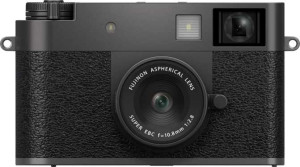
Fujifilm X Half
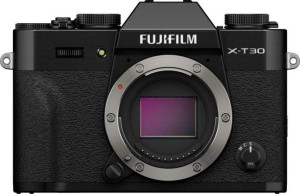
Fujifilm X-T30 III

Fujifilm X Half Fujifilm X-T30 III

Common Features

  • Both products are mirrorless cameras.
  • Both products have a touch screen.
  • Both products have a flash.
  • Both products have a lowest potential operating temperature of 0 °C.
  • Both products have a maximum operating temperature of 40 °C.
  • Both products lack a tilting viewfinder.
  • Both products have a stereo microphone.
  • Both products have two microphones.
  • Both products have a 24p cinema mode.
  • Both products have a removable battery.
  • Both products have a rechargeable battery.
  • Both products have a battery level indicator.
  • Both products have a battery power of 1260 mAh.
  • Both products support Wi-Fi.
  • Both products have Bluetooth.
  • Both products support a remote smartphone.
  • Both products have an external memory slot.
  • Both products have a BSI sensor.
  • Both products have manual focus.
  • Both products have manual shutter speed.

Main Differences

  • Fujifilm X Half has an optical viewfinder (OVF) while Fujifilm X-T30 III has an electronic viewfinder (EVF).
  • Screen resolution is 920k dots on Fujifilm X Half and 1620k dots on Fujifilm X-T30 III.
  • Fujifilm X Half does not have a flip-out screen, but Fujifilm X-T30 III does.
  • Viewfinder coverage is 90% on Fujifilm X Half and 100% on Fujifilm X-T30 III.
  • Screen size is 2.4″ on Fujifilm X Half and 3″ on Fujifilm X-T30 III.
  • Fujifilm X Half weighs 240 g, while Fujifilm X-T30 III weighs 378 g.
  • Fujifilm X Half lacks a hot shoe, but Fujifilm X-T30 III has one.
  • Fujifilm X Half is not a system camera, while Fujifilm X-T30 III is a system camera.
  • Fujifilm X Half has a volume of 204.0882 cm³, whereas Fujifilm X-T30 III has a volume of 458.804736 cm³.
  • Fujifilm X Half has a width of 105.8 mm, while Fujifilm X-T30 III has a width of 118.4 mm.
  • Fujifilm X Half has a height of 64.3 mm, while Fujifilm X-T30 III has a height of 82.8 mm.
  • Fujifilm X Half has a thickness of 30 mm, while Fujifilm X-T30 III has a thickness of 46.8 mm.
  • Fujifilm X Half has a 1″ sensor size, while Fujifilm X-T30 III has an APS-C sensor size.
  • Fujifilm X Half has 18 MP on its main camera, while Fujifilm X-T30 III has 26.1 MP.
  • Fujifilm X Half has a fastest shutter speed of 0.0005 s, while Fujifilm X-T30 III has a fastest shutter speed of 0.00025 s.
  • Fujifilm X Half cannot create panoramas in-camera, but Fujifilm X-T30 III can.
  • Power-on delay is 1.7 s on Fujifilm X Half and 0.8 s on Fujifilm X-T30 III.
  • Fujifilm X Half records video at 1080 x 24 fps, while Fujifilm X-T30 III records video at 4160 x 30 fps.
  • Fujifilm X Half lacks a timelapse function, but Fujifilm X-T30 III has one.
  • Movie bitrate is 50 Mbps on Fujifilm X Half and 200 Mbps on Fujifilm X-T30 III.
  • Battery life (CIPA) is 880 shots on Fujifilm X Half and 315 shots on Fujifilm X-T30 III.
  • Fujifilm X Half does not shoot raw, while Fujifilm X-T30 III shoots raw.
  • Wi-Fi version is Wi-Fi 5 (802.11ac), Wi-Fi 4 (802.11n) on Fujifilm X Half and Wi-Fi 4 (802.11n) on Fujifilm X-T30 III.
  • Fujifilm X Half lacks an HDMI output, but Fujifilm X-T30 III has one.
Specs Comparison
Fujifilm X Half

Fujifilm X Half

Fujifilm X-T30 III

Fujifilm X-T30 III

Design:
Type Mirrorless Mirrorless
viewfinder Optical viewfinder (OVF) Electronic viewfinder (EVF)
is weather-sealed (splashproof)
screen resolution 920k dots 1620k dots
Has a flip-out screen
viewfinder coverage 90% 100%
screen size 2.4" 3"
weight 240 g 378 g
has a touch screen
Has a hot shoe
volume 204.0882 cm³ 458.804736 cm³
is a system camera
has a flash
lowest potential operating temperature 0 °C 0 °C
maximum operating temperature 40 °C 40 °C
Has a tilting viewfinder
width 105.8 mm 118.4 mm
height 64.3 mm 82.8 mm
thickness 30 mm 46.8 mm

The Fujifilm X Half and Fujifilm X-T30 III both belong to the mirrorless camera category, but their designs differ in several key areas. The X Half uses an optical viewfinder (OVF) with 90% coverage, while the X-T30 III features an electronic viewfinder (EVF) with 100% coverage, offering a more precise and immersive viewing experience.

When it comes to the display, the X Half has a 2.4″ screen with a resolution of 920k dots, which is smaller and lower resolution compared to the 3″ screen with 1620k dots on the X-T30 III. Additionally, the X Half lacks a flip-out screen, while the X-T30 III includes a flip-out screen, offering more flexibility for various shooting angles. Both cameras have a touchscreen, but the X-T30 III is larger and heavier, weighing 378 g, compared to the X Half’s lighter 240 g. The X Half is more compact with a volume of 204.0882 cm³, while the X-T30 III is significantly larger at 458.804736 cm³.

Both cameras have a flash and share the same operating temperature range, with a minimum of 0°C and a maximum of 40°C. The X Half does not have a hot shoe, whereas the X-T30 III does. The X Half is not weather-sealed, and there is no mention of weather-sealing for the X-T30 III either. The X Half is also smaller in size, with a width of 105.8 mm, height of 64.3 mm, and thickness of 30 mm, while the X-T30 III measures 118.4 mm in width, 82.8 mm in height, and 46.8 mm in thickness. Both cameras do not feature a tilting viewfinder.

Optics:
sensor size 1" APS-C
megapixels (main camera) 18 MP 26.1 MP
maximum ISO 12800 ISO 12800 ISO
has sensor shift stabilization
fastest shutter speed 0.0005 s 0.00025 s
has manual focus
has manual shutter speed
has a BSI sensor
has manual exposure
has a two-stage shutter
has a CMOS sensor
has manual ISO
has manual white balance
can create panoramas in-camera
exposure time 30 s 30 s
has a stacked CMOS sensor
power-on delay 1.7 s 0.8 s

The Fujifilm X Half and Fujifilm X-T30 III have several differences in their optics specifications. The X Half features a 1″ sensor size, while the X-T30 III uses a larger APS-C sensor, which may offer different depth of field and low-light performance characteristics. The X Half has an 18 MP main camera, whereas the X-T30 III offers a higher 26.1 MP resolution for its main camera.

Both cameras support a maximum ISO of 12800, but the X-T30 III has a faster power-on delay of 0.8 seconds compared to the X Half’s 1.7 seconds. The X Half can achieve a fastest shutter speed of 0.0005 s, while the X-T30 III has a slightly slower fastest shutter speed of 0.00025 s. Both cameras support manual focus, manual shutter speed, manual exposure, manual ISO, and manual white balance.

The X Half does not have sensor shift stabilization, and neither does the X-T30 III. Additionally, the X Half lacks the ability to create panoramas in-camera, a feature that the X-T30 III supports. Both cameras use a BSI CMOS sensor, but neither model has a stacked CMOS sensor. Exposure time for both cameras is 30 seconds, and both have a two-stage shutter for greater control.

Videography:
video recording (main camera) 1080 x 24 fps 4160 x 30 fps
has a stereo microphone
Has timelapse function
movie bitrate 50 Mbps 200 Mbps
number of microphones 2 2
has a 24p cinema mode

The Fujifilm X Half and Fujifilm X-T30 III differ in several aspects of their videography capabilities. The X Half records video at 1080 x 24 fps, while the X-T30 III offers higher video resolution at 4160 x 30 fps, providing a more detailed and smoother video recording option.

Both cameras feature a stereo microphone and have two microphones in total, but the X-T30 III supports a timelapse function, which is not available on the X Half. In terms of video quality, the X Half has a movie bitrate of 50 Mbps, while the X-T30 III significantly increases the bitrate to 200 Mbps, allowing for higher video quality and greater detail.

Both models support a 24p cinema mode, ensuring film-like video capture, and both have the same number of microphones. However, the key differences lie in the video resolution, recording frame rate, timelapse function, and movie bitrate, with the X-T30 III providing more advanced videography features overall.

Battery:
Battery life (CIPA) 880 shots 315 shots
has a removable battery
has a rechargeable battery
has a battery level indicator
battery power 1260 mAh 1260 mAh

In terms of battery performance, the Fujifilm X Half and Fujifilm X-T30 III differ significantly. The X Half offers a much longer battery life, providing up to 880 shots (CIPA), whereas the X-T30 III is rated for only 315 shots (CIPA). This represents a substantial difference in how long each camera can last on a single charge under standard testing conditions.

Both cameras feature a removable and rechargeable battery, as well as a battery level indicator to help manage power. The battery power for both models is identical, with each camera using a 1260 mAh battery.

Despite the shared battery power, the X Half’s significantly longer battery life makes it a better choice for extended shooting sessions, while the X-T30 III will require more frequent recharging or battery changes during heavy use.

Features:
release date June 2025 November 2025
supports Wi-Fi
Has Bluetooth
Has dual card slots
shoots raw
Wi-Fi version Wi-Fi 5 (802.11ac), Wi-Fi 4 (802.11n) Wi-Fi 4 (802.11n)
supports a remote smartphone
has an HDMI output
has GPS
has first-party support for live streaming
has NFC
has an external memory slot
Has USB Type-C
Bluetooth version 5.2 5.2

Both the Fujifilm X Half and Fujifilm X-T30 III offer strong wireless connectivity options. Both cameras support Wi-Fi and Bluetooth, with the X Half using Wi-Fi versions 5 (802.11ac) and 4 (802.11n), while the X-T30 III supports Wi-Fi version 4 (802.11n) only. Both models also have Bluetooth version 5.2, ensuring reliable wireless connections for transferring media or controlling the camera remotely via a smartphone.

Neither camera includes dual card slots, and neither has GPS or NFC functionality. Both support remote smartphone control. The X-T30 III has an HDMI output, which the X Half lacks, offering greater video output options for the X-T30 III. The X-T30 III also has the capability to shoot raw images, a feature absent in the X Half.

Both cameras feature an external memory slot and USB Type-C for fast data transfer, offering the same functionality in terms of external storage and connectivity. However, the X-T30 III has a slight edge with the addition of HDMI output and raw image shooting support, while both cameras share similar wireless connectivity and external memory features.

Comparison Summary

This is a specification comparison between Fujifilm X Half and Fujifilm X-T30 III. Both cameras are mirrorless, have a touch screen, a flash, and support Wi-Fi and Bluetooth. However, the Fujifilm X Half has an optical viewfinder, while the Fujifilm X-T30 III has an electronic viewfinder. The X-T30 III has a larger screen size (3″ compared to 2.4″), higher screen resolution, and a faster video recording capability at 4160 x 30 fps. The X Half has a lower battery life (880 shots compared to 315 shots on the X-T30 III). Additionally, the X-T30 III features a hot shoe, raw image support, and an HDMI output, all absent on the X Half.