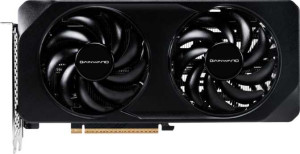
Gainward GeForce RTX 5060 Ghost
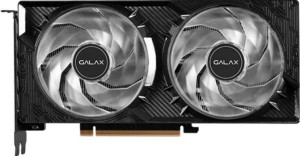
Galax GeForce RTX 5060 1-Click OC

Gainward GeForce RTX 5060 Ghost Galax GeForce RTX 5060 1-Click OC

Overview

Welcome to our in-depth specification face-off between the Gainward GeForce RTX 5060 Ghost and the Galax GeForce RTX 5060 1-Click OC. Both cards are built on the modern Blackwell architecture and share a remarkably similar foundation, yet they diverge in subtle but meaningful ways. This comparison digs into their boost clock speeds, real-world throughput figures, and physical dimensions to help you decide which card belongs in your next build.

Common Features

  • Both cards share a base GPU clock speed of 2280 MHz.
  • Both cards have a GPU memory speed of 1750 MHz.
  • Both cards feature 3840 shading units.
  • Both cards have 120 texture mapping units (TMUs).
  • Both cards have 48 render output units (ROPs).
  • Double Precision Floating Point (DPFP) is supported on both cards.
  • Both cards have an effective memory speed of 28000 MHz.
  • Both cards offer a maximum memory bandwidth of 448 GB/s.
  • Both cards come with 8GB of VRAM.
  • Both cards use GDDR7 memory.
  • Both cards have a 128-bit memory bus width.
  • ECC memory is supported on both cards.
  • Both cards support DirectX 12 Ultimate.
  • Both cards support OpenGL version 4.6.
  • Both cards support OpenCL version 3.
  • Multi-display technology is supported on both cards.
  • Ray tracing is supported on both cards.
  • 3D support is available on both cards.
  • DLSS is supported on both cards.
  • XeSS (XMX) is not available on either card.
  • Both cards include 1 HDMI port with HDMI 2.1b.
  • Both cards offer 3 DisplayPort outputs.
  • Neither card has USB-C ports, DVI outputs, or mini DisplayPort outputs.
  • Both cards are based on the Blackwell GPU architecture.
  • Both cards have a Thermal Design Power (TDP) of 145W.
  • Both cards use PCIe version 5.
  • Both cards are built on a 5 nm semiconductor process.
  • Both cards have 21900 million transistors.
  • Neither card features air-water cooling.

Main Differences

  • GPU turbo clock speed is 2497 MHz on Gainward GeForce RTX 5060 Ghost and 2512 MHz on Galax GeForce RTX 5060 1-Click OC.
  • Pixel rate is 119.9 GPixel/s on Gainward GeForce RTX 5060 Ghost and 120.6 GPixel/s on Galax GeForce RTX 5060 1-Click OC.
  • Floating-point performance is 19.18 TFLOPS on Gainward GeForce RTX 5060 Ghost and 19.29 TFLOPS on Galax GeForce RTX 5060 1-Click OC.
  • Texture rate is 299.6 GTexels/s on Gainward GeForce RTX 5060 Ghost and 301.4 GTexels/s on Galax GeForce RTX 5060 1-Click OC.
  • Width is 262.1 mm on Gainward GeForce RTX 5060 Ghost and 247 mm on Galax GeForce RTX 5060 1-Click OC.
  • Height is 126.3 mm on Gainward GeForce RTX 5060 Ghost and 131 mm on Galax GeForce RTX 5060 1-Click OC.
Specs Comparison
Gainward GeForce RTX 5060 Ghost

Gainward GeForce RTX 5060 Ghost

Galax GeForce RTX 5060 1-Click OC

Galax GeForce RTX 5060 1-Click OC

Performance:
GPU clock speed 2280 MHz 2280 MHz
GPU turbo 2497 MHz 2512 MHz
pixel rate 119.9 GPixel/s 120.6 GPixel/s
floating-point performance 19.18 TFLOPS 19.29 TFLOPS
texture rate 299.6 GTexels/s 301.4 GTexels/s
GPU memory speed 1750 MHz 1750 MHz
shading units 3840 3840
texture mapping units (TMUs) 120 120
render output units (ROPs) 48 48
Has Double Precision Floating Point (DPFP)

At the core, the Gainward RTX 5060 Ghost and the Galax RTX 5060 1-Click OC share nearly identical DNA: both run at a base GPU clock of 2280 MHz, feature the same 3840 shading units, 120 TMUs, 48 ROPs, and identical memory speeds of 1750 MHz. This means the vast majority of their rendering pipeline is functionally equivalent, and in most workloads they will behave as equals.

The only meaningful divergence lies in the GPU turbo clock — the Galax 1-Click OC boosts to 2512 MHz versus the Gainward Ghost's 2497 MHz, a difference of just 15 MHz. This small bump translates directly into the Galax's marginally higher 19.29 TFLOPS of floating-point performance (vs. 19.18 TFLOPS), a slightly better texture rate of 301.4 GTexels/s, and a pixel rate of 120.6 GPixel/s — all roughly 0.6% ahead. In practice, this gap is imperceptible in gaming or rendering workloads; no real-world benchmark would reliably distinguish the two.

Both cards support Double Precision Floating Point, which is noteworthy for compute-adjacent use cases, though neither has an advantage here. Overall, the Galax 1-Click OC holds a technical edge on paper due to its factory-overclocked turbo speed, but the margin is so slim that it should not be a deciding factor. Buyers should weigh cooling, build quality, and pricing far more heavily than this negligible clock difference.

Memory:
effective memory speed 28000 MHz 28000 MHz
maximum memory bandwidth 448 GB/s 448 GB/s
VRAM 8GB 8GB
GDDR version GDDR7 GDDR7
memory bus width 128-bit 128-bit
Supports ECC memory

When it comes to memory, the Gainward Ghost and the Galax 1-Click OC are carbon copies of each other. Both carry 8GB of GDDR7 VRAM running at an effective speed of 28000 MHz across a 128-bit bus, yielding a maximum bandwidth of 448 GB/s. GDDR7 is the latest generation of graphics memory, and its bandwidth output here is substantially higher than what GDDR6X achieved on comparable bus widths — a meaningful generational leap for texture streaming and high-resolution asset throughput.

The 128-bit bus width is worth contextualizing: while narrower than the 192-bit or 256-bit interfaces found on higher-tier cards, GDDR7's raw speed compensates significantly, making 448 GB/s competitive for the mainstream segment these cards occupy. For 1080p and 1440p gaming, this bandwidth is more than adequate; only the most memory-intensive 4K scenarios or professional compute tasks would expose any ceiling. The inclusion of ECC memory support on both cards is a small but notable bonus for users doing compute or ML workloads where data integrity matters.

This group is a complete tie — every single memory specification is identical across both products. Memory performance will not be a differentiating factor between the Gainward Ghost and the Galax 1-Click OC under any workload.

Features:
DirectX version DirectX 12 Ultimate DirectX 12 Ultimate
OpenGL version 4.6 4.6
OpenCL version 3 3
Supports multi-display technology
supports ray tracing
Supports 3D
supports DLSS
has XeSS (XMX)
AMD SAM / Intel Resizable BAR Intel Resizable BAR Intel Resizable BAR
has LHR
has RGB lighting
supported displays 4 4

Feature parity continues to be the defining theme of this comparison. Both the Gainward Ghost and the Galax 1-Click OC support DirectX 12 Ultimate — the gold standard for modern gaming, enabling hardware-accelerated ray tracing, mesh shaders, and variable rate shading. Paired with ray tracing and DLSS support, both cards are well-equipped for contemporary titles that leverage NVIDIA's upscaling and lighting technologies, which can dramatically recover frame rates in ray-traced scenes.

Both cards support up to 4 simultaneous displays and include multi-display technology, making them capable choices for productivity multi-monitor setups. Intel Resizable BAR support on both allows the CPU to access the full GPU frame buffer at once, a feature that can yield measurable performance gains in supported games. Neither card carries LHR restrictions, meaning full compute throughput is available without limitation.

The feature set is identical across both products — no differentiators exist in this group. Buyers choosing between the Gainward Ghost and the Galax 1-Click OC will find no advantage on either side here; software capabilities, API support, and extras like RGB lighting are all evenly matched.

Ports:
has an HDMI output
HDMI ports 1 1
HDMI version HDMI 2.1b HDMI 2.1b
DisplayPort outputs 3 3
USB-C ports 0 0
DVI outputs 0 0
mini DisplayPort outputs 0 0

The port configuration on both the Gainward Ghost and the Galax 1-Click OC is identical: one HDMI 2.1b output and three DisplayPort outputs, totaling four display connections — consistent with the four-display limit noted in the Features group. HDMI 2.1b is the latest revision of the standard, supporting high refresh rates at 4K and beyond, as well as features like Variable Refresh Rate (VRR) and Quick Frame Transport, making it well-suited for modern gaming monitors and TVs alike.

The three DisplayPort outputs provide ample flexibility for multi-monitor productivity setups or high-bandwidth display daisy-chaining. The absence of USB-C and legacy DVI outputs is expected at this tier — neither omission is a practical concern for the vast majority of users, as both connector types have faded from relevance in mainstream display hardware.

Once again, this group produces a complete tie. Connectivity options are a non-factor in differentiating these two cards; both offer the same modern, versatile port layout suited for gaming and multi-display use cases.

General info:
GPU architecture Blackwell Blackwell
release date May 2025 May 2025
Thermal Design Power (TDP) 145W 145W
PCI Express (PCIe) version 5 5
semiconductor size 5 nm 5 nm
number of transistors 21900 million 21900 million
Has air-water cooling
width 262.1 mm 247 mm
height 126.3 mm 131 mm

Underneath the surface, these two cards are built on the same foundation: both use the Blackwell architecture on a 5 nm process node, pack an identical 21,900 million transistors, and carry a 145W TDP. The shared power envelope means neither card will demand meaningfully different cooling or PSU headroom from your system, and PCIe 5.0 support on both ensures forward compatibility with current and near-future motherboard platforms.

The only concrete differentiator in this group is physical size. The Gainward Ghost is notably longer at 262.1 mm versus the Galax 1-Click OC's 247 mm — a 15mm difference that can matter in compact or mid-tower cases with tight GPU clearance. The Galax is slightly taller at 131 mm compared to the Ghost's 126.3 mm, though bracket height is rarely a limiting factor in standard builds. For small form factor or ITX case builders, the Galax's shorter length gives it a practical installation advantage.

Aside from dimensions, this group is essentially a tie on every substantive specification. The Galax 1-Click OC holds a mild edge for space-constrained builds thanks to its shorter footprint, while the Gainward Ghost's slightly lower height is unlikely to influence most purchasing decisions. Buyers should measure their case's GPU clearance before committing either way.

Comparison Summary & Verdict

After examining every data point, it is clear that both cards are exceptionally well-matched. They share the same 8GB GDDR7 memory, 145W TDP, PCIe 5 interface, and an identical feature set including ray tracing and DLSS support. The Galax GeForce RTX 5060 1-Click OC edges ahead with a slightly higher GPU turbo of 2512 MHz, a marginally better floating-point performance of 19.29 TFLOPS, and a more compact 247 mm width, making it the stronger pick for tighter cases and those who want every last MHz out of the box. The Gainward GeForce RTX 5060 Ghost, while fractionally behind in raw clock headroom, offers a lower profile height of 126.3 mm, which may suit certain chassis layouts better. For most buyers the performance gap is negligible, so physical fit and brand preference will likely be the deciding factor.

Gainward GeForce RTX 5060 Ghost
Buy Gainward GeForce RTX 5060 Ghost if...

Buy the Gainward GeForce RTX 5060 Ghost if your case demands a shorter card height of 126.3 mm and overall vertical clearance is a priority in your build.

Galax GeForce RTX 5060 1-Click OC
Buy Galax GeForce RTX 5060 1-Click OC if...

Buy the Galax GeForce RTX 5060 1-Click OC if you want a slightly higher out-of-the-box boost clock of 2512 MHz, better throughput figures, and a narrower 247 mm footprint for compact builds.