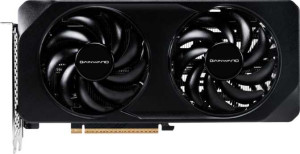
Gainward GeForce RTX 5060 Ghost
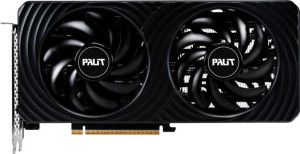
Palit GeForce RTX 5060 Dual OC

Gainward GeForce RTX 5060 Ghost Palit GeForce RTX 5060 Dual OC

Overview

When two cards share the same GPU foundation, the details start to matter. This page puts the Gainward GeForce RTX 5060 Ghost and the Palit GeForce RTX 5060 Dual OC side by side, examining where they align and where they quietly diverge. Both are built on the Blackwell architecture with identical memory configurations, yet differences in GPU turbo clock speeds and resulting throughput metrics create a subtle but measurable performance gap worth understanding before you buy.

Common Features

  • Both cards have a base GPU clock speed of 2280 MHz.
  • Both cards have a GPU memory speed of 1750 MHz.
  • Both cards feature 3840 shading units.
  • Both cards include 120 texture mapping units (TMUs).
  • Both cards include 48 render output units (ROPs).
  • Double Precision Floating Point (DPFP) is supported on both cards.
  • Both cards have an effective memory speed of 28000 MHz.
  • Both cards offer a maximum memory bandwidth of 448 GB/s.
  • Both cards come with 8GB of VRAM.
  • Both cards use GDDR7 memory.
  • Both cards have a 128-bit memory bus width.
  • ECC memory is supported on both cards.
  • Both cards support DirectX 12 Ultimate.
  • Both cards support OpenGL version 4.6.
  • Both cards support OpenCL version 3.
  • Multi-display technology is supported on both cards.
  • Ray tracing is supported on both cards.
  • 3D support is available on both cards.
  • DLSS is supported on both cards.
  • XeSS (XMX) support is not available on either card.
  • Both cards include one HDMI 2.1b output.
  • Both cards feature three DisplayPort outputs.
  • Neither card has USB-C, DVI, or mini DisplayPort outputs.
  • Both cards are built on the Blackwell GPU architecture.
  • Both cards have a Thermal Design Power (TDP) of 145W.
  • Both cards use PCI Express version 5.
  • Both cards are manufactured on a 5 nm semiconductor process.
  • Both cards have 21900 million transistors.
  • Air-water cooling is not available on either card.
  • Both cards share the same dimensions: 262.1 mm wide and 126.3 mm tall.

Main Differences

  • GPU turbo clock speed is 2497 MHz on the Gainward GeForce RTX 5060 Ghost and 2535 MHz on the Palit GeForce RTX 5060 Dual OC.
  • Pixel rate is 119.9 GPixel/s on the Gainward GeForce RTX 5060 Ghost and 121.7 GPixel/s on the Palit GeForce RTX 5060 Dual OC.
  • Floating-point performance is 19.18 TFLOPS on the Gainward GeForce RTX 5060 Ghost and 19.47 TFLOPS on the Palit GeForce RTX 5060 Dual OC.
  • Texture rate is 299.6 GTexels/s on the Gainward GeForce RTX 5060 Ghost and 304.2 GTexels/s on the Palit GeForce RTX 5060 Dual OC.
Specs Comparison
Gainward GeForce RTX 5060 Ghost

Gainward GeForce RTX 5060 Ghost

Palit GeForce RTX 5060 Dual OC

Palit GeForce RTX 5060 Dual OC

Performance:
GPU clock speed 2280 MHz 2280 MHz
GPU turbo 2497 MHz 2535 MHz
pixel rate 119.9 GPixel/s 121.7 GPixel/s
floating-point performance 19.18 TFLOPS 19.47 TFLOPS
texture rate 299.6 GTexels/s 304.2 GTexels/s
GPU memory speed 1750 MHz 1750 MHz
shading units 3840 3840
texture mapping units (TMUs) 120 120
render output units (ROPs) 48 48
Has Double Precision Floating Point (DPFP)

At their core, the Gainward RTX 5060 Ghost and Palit RTX 5060 Dual OC are built on identical silicon foundations: the same 3840 shading units, 120 TMUs, 48 ROPs, and a base GPU clock of 2280 MHz. Memory is also in lockstep at 1750 MHz. This means both cards draw from the same well of raw architectural capability, and any real-world performance gap between them will come entirely from how aggressively each card boosts under load.

That gap is narrow but measurable. The Palit Dual OC reaches a higher GPU turbo of 2535 MHz versus the Gainward Ghost's 2497 MHz — a difference of 38 MHz, or roughly 1.5%. This translates directly into the Palit's slightly higher pixel rate (121.7 GPixel/s vs 119.9), texture rate (304.2 GTexels/s vs 299.6), and floating-point throughput (19.47 TFLOPS vs 19.18). In practice, a sub-2% compute advantage rarely produces a visible framerate difference in gaming, and falls well within run-to-run benchmark variance.

Based strictly on the provided specs, the Palit Dual OC holds a marginal performance edge due to its higher boost clock and correspondingly elevated throughput figures. However, the advantage is so slim that it would not be perceptible in typical use. For buyers prioritizing peak-clock headroom, the Palit has the technical upper hand; for all practical purposes, the two cards are performance-equivalent at this spec level.

Memory:
effective memory speed 28000 MHz 28000 MHz
maximum memory bandwidth 448 GB/s 448 GB/s
VRAM 8GB 8GB
GDDR version GDDR7 GDDR7
memory bus width 128-bit 128-bit
Supports ECC memory

The memory configuration of these two cards is, without exception, identical. Both carry 8GB of GDDR7 VRAM across a 128-bit bus, running at an effective speed of 28000 MHz to deliver 448 GB/s of bandwidth. There is simply no differentiator to find here — every single memory spec matches exactly.

That said, the shared specifications are worth understanding in context. GDDR7 is a meaningful generational step over GDDR6X, and 448 GB/s is a respectable bandwidth figure for a mid-range card — enough to feed the GPU efficiently in 1080p and 1440p workloads. The 128-bit bus is the natural pairing for this tier, and while it is narrower than what higher-end GPUs use, GDDR7's speed largely compensates. ECC memory support on both cards is also a minor bonus for users doing compute or content-creation work where data integrity matters.

This group is a complete tie. Buyers cannot use memory specs as a deciding factor between the Gainward Ghost and the Palit Dual OC — the two cards are, in this dimension, the same product.

Features:
DirectX version DirectX 12 Ultimate DirectX 12 Ultimate
OpenGL version 4.6 4.6
OpenCL version 3 3
Supports multi-display technology
supports ray tracing
Supports 3D
supports DLSS
has XeSS (XMX)
AMD SAM / Intel Resizable BAR Intel Resizable BAR Intel Resizable BAR
has LHR
has RGB lighting
supported displays 4 4

Feature parity between the Gainward Ghost and the Palit Dual OC is total. Both support DirectX 12 Ultimate and ray tracing, placing them fully in the current generation of graphics API compatibility — meaning no modern game or rendering feature is off the table for either card. DLSS support is present on both, which is arguably the most practically valuable feature on this list, as it allows AI-driven upscaling to recover performance in demanding titles without a meaningful image quality cost.

Multi-monitor users are equally served, with both cards capable of driving up to 4 displays simultaneously. The shared Resizable BAR support allows the CPU to access the full VRAM pool at once rather than in chunks, a small but real optimization that can improve frame pacing in CPU-bound scenarios. RGB lighting is present on both, though its relevance is purely aesthetic.

There is no feature-based differentiator between these two cards — every capability, from API support to display count to software features, is mirrored exactly. This group is a dead tie, and neither the Gainward Ghost nor the Palit Dual OC holds any advantage here.

Ports:
has an HDMI output
HDMI ports 1 1
HDMI version HDMI 2.1b HDMI 2.1b
DisplayPort outputs 3 3
USB-C ports 0 0
DVI outputs 0 0
mini DisplayPort outputs 0 0

Connectivity is another area where these two cards offer no grounds for differentiation. Both the Gainward Ghost and the Palit Dual OC ship with an identical port layout: 1 HDMI 2.1b and 3 DisplayPort outputs, totalling four physical connections — consistent with the four-display limit noted in their feature specs.

The version details matter here. HDMI 2.1b is the latest revision of the standard, supporting high refresh rates at 4K and beyond, as well as variable refresh rate and other quality-of-life features for TV and monitor users alike. The three DisplayPort outputs provide ample flexibility for multi-monitor desktop setups. The absence of USB-C and legacy DVI is entirely typical for modern mid-range cards and should not be a concern for the vast majority of users.

Once again, this is a complete tie. No buyer can use port selection to distinguish the Gainward Ghost from the Palit Dual OC — the rear I/O bracket of each card is, by the data, identical.

General info:
GPU architecture Blackwell Blackwell
release date May 2025 May 2025
Thermal Design Power (TDP) 145W 145W
PCI Express (PCIe) version 5 5
semiconductor size 5 nm 5 nm
number of transistors 21900 million 21900 million
Has air-water cooling
width 262.1 mm 262.1 mm
height 126.3 mm 126.3 mm

Dig into the general specifications and the same pattern holds: the Gainward Ghost and the Palit Dual OC are built on precisely the same foundation. Both use the Blackwell architecture manufactured on a 5 nm process node, packing 21.9 billion transistors onto the die. The PCIe 5.0 interface ensures neither card will face any bandwidth bottleneck from the motherboard slot, even on demanding workloads.

Power consumption is also identical at 145W TDP, which is a relatively modest draw for a modern discrete GPU. This means both cards should behave comparably in terms of system power requirements, heat output, and cooler demands — relevant context given that neither offers liquid cooling. Physical dimensions are likewise a match, with both measuring 262.1 mm in length and 126.3 mm in height, so case compatibility considerations are exactly the same for each.

This group offers no differentiator whatsoever — it is a complete tie across every listed specification. The two cards are, at the silicon and platform level, the same product in different shrouds.

Comparison Summary & Verdict

After a thorough look at the specs, it is clear that the Gainward GeForce RTX 5060 Ghost and the Palit GeForce RTX 5060 Dual OC are nearly identical cards at their core, sharing the same 8GB GDDR7 memory, 128-bit bus, 145W TDP, and Blackwell architecture. The distinction comes down to the GPU turbo clock speed, where the Palit edges ahead at 2535 MHz versus 2497 MHz, translating into slightly higher floating-point performance (19.47 TFLOPS vs 19.18 TFLOPS), a marginally better texture rate, and a nudge ahead in pixel rate. These differences are modest but consistent across all performance metrics. Buyers who want every last drop of out-of-the-box clock speed will find the Palit the stronger choice, while those for whom the Ghost is the better-priced or more accessible option will sacrifice very little in real-world terms.

Gainward GeForce RTX 5060 Ghost
Buy Gainward GeForce RTX 5060 Ghost if...

Buy the Gainward GeForce RTX 5060 Ghost if it is available at a better price and you are comfortable with a marginally lower GPU turbo clock and slightly reduced throughput metrics compared to the Palit.

Palit GeForce RTX 5060 Dual OC
Buy Palit GeForce RTX 5060 Dual OC if...

Buy the Palit GeForce RTX 5060 Dual OC if you want the higher out-of-the-box GPU turbo clock speed of 2535 MHz, along with the best floating-point performance and texture rate between these two cards.