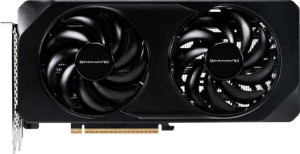
Gainward GeForce RTX 5060 Ti Ghost OC 8GB
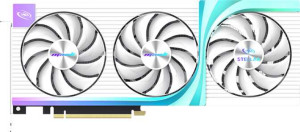
Manli Stellar GeForce RTX 5060 Ti OC 16GB

Gainward GeForce RTX 5060 Ti Ghost OC 8GB Manli Stellar GeForce RTX 5060 Ti OC 16GB

Overview

Welcome to this detailed spec comparison between the Gainward GeForce RTX 5060 Ti Ghost OC 8GB and the Manli Stellar GeForce RTX 5060 Ti OC 16GB. Both cards are built on the same Blackwell architecture and share identical clock speeds, but they diverge in ways that matter depending on your workload. This page breaks down their memory configurations and physical dimensions to help you make the most informed buying decision.

Common Features

  • Both cards have a GPU clock speed of 2407 MHz.
  • Both cards have a GPU turbo speed of 2632 MHz.
  • Both cards deliver a pixel rate of 126.3 GPixel/s.
  • Both cards offer 24.26 TFLOPS of floating-point performance.
  • Both cards have a texture rate of 379 GTexels/s.
  • Both cards have a GPU memory speed of 1750 MHz.
  • Both cards have 4608 shading units.
  • Both cards have 144 texture mapping units (TMUs).
  • Both cards use GDDR7 memory.
  • Both cards have an effective memory speed of 28000 MHz.
  • Both cards offer a maximum memory bandwidth of 448 GB/s.
  • Both cards have a 128-bit memory bus width.
  • ECC memory is supported on both cards.
  • Both cards support DirectX 12 Ultimate.
  • Both cards support OpenGL version 4.6.
  • Both cards support OpenCL version 3.
  • Multi-display technology is supported on both cards.
  • Ray tracing is supported on both cards.
  • DLSS is supported on both cards.
  • 3D support is available on both cards.
  • XeSS (XMX) support is not available on either card.
  • Both cards have one HDMI 2.1b output.
  • Both cards have three DisplayPort outputs.
  • Neither card has USB-C ports, DVI outputs, or mini DisplayPort outputs.
  • Both cards are based on the Blackwell GPU architecture.
  • Both cards have a Thermal Design Power (TDP) of 180W.
  • Both cards use PCIe version 5.
  • Both cards are manufactured on a 5 nm semiconductor process.
  • Both cards contain 21,900 million transistors.
  • Neither card features air-water cooling.

Main Differences

  • VRAM is 8GB on the Gainward GeForce RTX 5060 Ti Ghost OC 8GB and 16GB on the Manli Stellar GeForce RTX 5060 Ti OC 16GB.
  • Width is 262.1 mm on the Gainward GeForce RTX 5060 Ti Ghost OC 8GB and 315 mm on the Manli Stellar GeForce RTX 5060 Ti OC 16GB.
  • Height is 126.3 mm on the Gainward GeForce RTX 5060 Ti Ghost OC 8GB and 127 mm on the Manli Stellar GeForce RTX 5060 Ti OC 16GB.
Specs Comparison
Gainward GeForce RTX 5060 Ti Ghost OC 8GB

Gainward GeForce RTX 5060 Ti Ghost OC 8GB

Manli Stellar GeForce RTX 5060 Ti OC 16GB

Manli Stellar GeForce RTX 5060 Ti OC 16GB

Performance:
GPU clock speed 2407 MHz 2407 MHz
GPU turbo 2632 MHz 2632 MHz
pixel rate 126.3 GPixel/s 126.3 GPixel/s
floating-point performance 24.26 TFLOPS 24.26 TFLOPS
texture rate 379 GTexels/s 379 GTexels/s
GPU memory speed 1750 MHz 1750 MHz
shading units 4608 4608
texture mapping units (TMUs) 144 144
render output units (ROPs) 48 48
Has Double Precision Floating Point (DPFP)

In terms of raw GPU performance, the Gainward RTX 5060 Ti Ghost OC 8GB and the Manli Stellar RTX 5060 Ti OC 16GB are in complete lockstep. Both cards share identical core clocks — a base of 2407 MHz and a boost of 2632 MHz — and their compute pipelines are built from the same silicon configuration: 4608 shading units, 144 TMUs, and 48 ROPs. The resulting throughput figures — 24.26 TFLOPS of floating-point performance, a pixel rate of 126.3 GPixel/s, and a texture rate of 379 GTexels/s — are therefore exactly equal. Memory bandwidth is also a non-factor here, as both run their GDDR7 at 1750 MHz.

What this means in practice is that any workload that is purely compute-bound — shader-heavy rendering, rasterization throughput, or general GPU compute tasks — will produce effectively identical results on both cards. Neither product holds a clock-speed advantage that could translate to higher frame rates or faster compute times out of the box.

The verdict for this group is an absolute tie. Every measurable performance metric is identical across both products. Any real-world differentiation between these two cards will come entirely from factors outside this group — most notably memory capacity and bandwidth — rather than from the GPU engine itself.

Memory:
effective memory speed 28000 MHz 28000 MHz
maximum memory bandwidth 448 GB/s 448 GB/s
VRAM 8GB 16GB
GDDR version GDDR7 GDDR7
memory bus width 128-bit 128-bit
Supports ECC memory

The memory subsystem is where these two cards finally diverge in a meaningful way. Both use GDDR7 memory on a 128-bit bus, running at an effective 28000 MHz for a maximum bandwidth of 448 GB/s — a shared foundation that makes the bandwidth story identical. The critical split, however, is capacity: the Gainward Ghost OC carries 8GB of VRAM, while the Manli Stellar doubles that to 16GB.

That difference matters more than it might appear on paper. At higher resolutions and in modern titles that aggressively pre-load textures and assets, 8GB can become a bottleneck even on mid-range hardware — leading to stuttering, reduced texture quality, or outright crashes as the GPU runs out of local memory. 16GB provides substantial headroom for 1440p and emerging 4K workloads, AI-assisted rendering features, and content creation tasks such as video editing or 3D rendering, where large scene data must reside in VRAM.

The clear winner here is the Manli Stellar RTX 5060 Ti OC 16GB. Since bandwidth and memory type are equal, the only differentiator is capacity — and 16GB vs. 8GB is a gap that will become increasingly relevant as games and applications grow more memory-hungry. For users planning to keep this card for several years or targeting demanding workloads, the Manli's doubled VRAM is a tangible, future-proof advantage.

Features:
DirectX version DirectX 12 Ultimate DirectX 12 Ultimate
OpenGL version 4.6 4.6
OpenCL version 3 3
Supports multi-display technology
supports ray tracing
Supports 3D
supports DLSS
has XeSS (XMX)
AMD SAM / Intel Resizable BAR Intel Resizable BAR Intel Resizable BAR
has LHR
has RGB lighting
supported displays 4 4

Across every feature in this category, the Gainward Ghost OC 8GB and the Manli Stellar OC 16GB are perfectly matched. Both support DirectX 12 Ultimate — the current gold standard for modern gaming APIs, enabling features like hardware-accelerated ray tracing, mesh shaders, and variable-rate shading — alongside OpenGL 4.6 and OpenCL 3 for broader compute and professional application compatibility.

On the gaming and display side, both cards bring DLSS support, which allows AI-driven upscaling to recover performance at higher resolutions without a significant visual quality penalty. Ray tracing support is also present on both, enabling physically accurate lighting and reflections in compatible titles. Neither card supports XeSS, which is expected given that is an Intel-native technology. Multi-monitor users are equally served, with both cards driving up to 4 displays simultaneously. Intel Resizable BAR support on both means compatible systems can allow the CPU to access the full VRAM pool at once, offering a modest but real performance uplift in supported games.

This group is a complete tie. Every feature flag, API version, and capability is shared between the two cards without exception. A buyer's decision cannot be informed by software features or display capability alone — the differentiation lies entirely in the specs covered by other groups.

Ports:
has an HDMI output
HDMI ports 1 1
HDMI version HDMI 2.1b HDMI 2.1b
DisplayPort outputs 3 3
USB-C ports 0 0
DVI outputs 0 0
mini DisplayPort outputs 0 0

Both cards offer the same port layout: one HDMI 2.1b output and three DisplayPort outputs, totaling four display connections — consistent with the four-display limit noted in the Features group. HDMI 2.1b is the latest revision of the standard, supporting up to 4K at high refresh rates and 8K output, which covers virtually every current consumer display scenario. The three DisplayPort outputs add flexibility for multi-monitor workstation setups or high-refresh-rate gaming displays that favor DP over HDMI.

Neither card includes a USB-C port, which means users hoping to connect a USB-C or Thunderbolt display directly will need an active adapter. The absence of DVI and mini DisplayPort outputs is unremarkable at this tier — both are legacy standards that have largely disappeared from modern GPU designs.

Unsurprisingly, this group is another tie. The port configuration is identical in every respect, so connectivity cannot serve as a differentiating factor between the Gainward Ghost OC 8GB and the Manli Stellar OC 16GB.

General info:
GPU architecture Blackwell Blackwell
release date April 2025 April 2025
Thermal Design Power (TDP) 180W 180W
PCI Express (PCIe) version 5 5
semiconductor size 5 nm 5 nm
number of transistors 21900 million 21900 million
Has air-water cooling
width 262.1 mm 315 mm
height 126.3 mm 127 mm

Sharing the same Blackwell architecture, fabricated on a 5nm process with 21.9 billion transistors, these two cards are built from identical silicon. A 180W TDP and PCIe 5.0 interface are likewise shared, meaning power supply requirements and motherboard compatibility are the same for both. The 5nm node is significant context here — it enables the high transistor density that underpins Blackwell's efficiency and performance-per-watt gains over prior generations.

Where they part ways is physical footprint. The Gainward Ghost OC measures 262.1mm in length, while the Manli Stellar stretches to 315mm — a difference of nearly 53mm. That gap is meaningful for case compatibility: compact mid-tower and mini-ITX builds with tight GPU clearance may comfortably fit the Gainward but struggle or outright fail to accommodate the Manli. Heights are nearly identical at roughly 126–127mm, so that dimension is a non-issue.

For this group, the Gainward Ghost OC 8GB holds a practical edge for anyone building in a space-constrained case. Both cards draw the same power and use the same chip, so the shorter length is a pure usability advantage with no performance trade-off attached. Buyers with full-tower cases or confirmed GPU clearance exceeding 315mm will find the size difference irrelevant, but it is a real consideration for smaller form-factor builds.

Comparison Summary & Verdict

After a thorough comparison, it is clear that both the Gainward GeForce RTX 5060 Ti Ghost OC 8GB and the Manli Stellar GeForce RTX 5060 Ti OC 16GB share the same Blackwell GPU core, identical clock speeds, a 180W TDP, and the full feature set including ray tracing and DLSS support. The defining difference comes down to VRAM capacity: 8GB versus 16GB. The Manli Stellar also has a noticeably larger footprint at 315 mm wide compared to the more compact 262.1 mm of the Gainward Ghost. Buyers who need headroom for memory-intensive workloads or future-proofing will favor the Manli, while those seeking a smaller, more space-efficient card without sacrificing core GPU performance will find the Gainward a compelling choice.

Gainward GeForce RTX 5060 Ti Ghost OC 8GB
Buy Gainward GeForce RTX 5060 Ti Ghost OC 8GB if...

Buy the Gainward GeForce RTX 5060 Ti Ghost OC 8GB if you have a compact build with limited space and 8GB of VRAM is sufficient for your use case.

Manli Stellar GeForce RTX 5060 Ti OC 16GB
Buy Manli Stellar GeForce RTX 5060 Ti OC 16GB if...

Buy the Manli Stellar GeForce RTX 5060 Ti OC 16GB if you need the extra headroom of 16GB VRAM for memory-intensive tasks and your case can accommodate its larger 315 mm width.