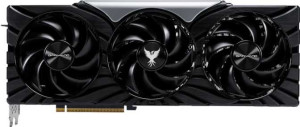
Gainward GeForce RTX 5070 Phoenix GS
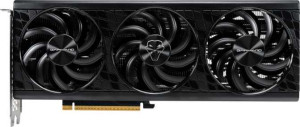
Gainward GeForce RTX 5070 Python III

Gainward GeForce RTX 5070 Phoenix GS Gainward GeForce RTX 5070 Python III

Overview

When choosing between the Gainward GeForce RTX 5070 Phoenix GS and the Gainward GeForce RTX 5070 Python III, both cards share the same Blackwell architecture, 12GB GDDR7 memory, and a 250W TDP — yet they differ in areas that could influence your buying decision. This comparison examines their GPU turbo clock speeds, floating-point performance, texture rates, and physical dimensions to help you find the card that best suits your setup.

Common Features

  • Both cards share a base GPU clock speed of 2325 MHz.
  • Both cards have a GPU memory speed of 1750 MHz.
  • Both cards feature 6144 shading units.
  • Both cards have 192 texture mapping units (TMUs).
  • Both cards have 80 render output units (ROPs).
  • Double Precision Floating Point (DPFP) is supported on both cards.
  • Both cards have an effective memory speed of 28000 MHz.
  • Both cards offer a maximum memory bandwidth of 672 GB/s.
  • Both cards come with 12GB of VRAM.
  • Both cards use GDDR7 memory.
  • Both cards have a 192-bit memory bus width.
  • ECC memory is supported on both cards.
  • Both cards support DirectX 12 Ultimate.
  • Both cards support OpenGL version 4.6.
  • Both cards support OpenCL version 3.
  • Multi-display technology is supported on both cards.
  • Ray tracing is supported on both cards.
  • DLSS is supported on both cards.
  • XeSS (XMX) is not available on either card.
  • Both cards have one HDMI 2.1b output and three DisplayPort outputs, with no USB-C or DVI outputs.
  • Both cards are built on the Blackwell GPU architecture.
  • Both cards have a Thermal Design Power (TDP) of 250W.
  • Both cards use PCIe version 5.
  • Both cards are manufactured on a 5 nm process with 31,100 million transistors.
  • Air-water cooling is not available on either card.

Main Differences

  • GPU turbo clock speed is 2572 MHz on Gainward GeForce RTX 5070 Phoenix GS and 2512 MHz on Gainward GeForce RTX 5070 Python III.
  • Pixel rate is 205.8 GPixel/s on Gainward GeForce RTX 5070 Phoenix GS and 201 GPixel/s on Gainward GeForce RTX 5070 Python III.
  • Floating-point performance is 31.6 TFLOPS on Gainward GeForce RTX 5070 Phoenix GS and 30.87 TFLOPS on Gainward GeForce RTX 5070 Python III.
  • Texture rate is 493.8 GTexels/s on Gainward GeForce RTX 5070 Phoenix GS and 482.3 GTexels/s on Gainward GeForce RTX 5070 Python III.
  • Card width is 331.9 mm on Gainward GeForce RTX 5070 Phoenix GS and 291.9 mm on Gainward GeForce RTX 5070 Python III.
  • Card height is 133.1 mm on Gainward GeForce RTX 5070 Phoenix GS and 116.5 mm on Gainward GeForce RTX 5070 Python III.
Specs Comparison
Gainward GeForce RTX 5070 Phoenix GS

Gainward GeForce RTX 5070 Phoenix GS

Gainward GeForce RTX 5070 Python III

Gainward GeForce RTX 5070 Python III

Performance:
GPU clock speed 2325 MHz 2325 MHz
GPU turbo 2572 MHz 2512 MHz
pixel rate 205.8 GPixel/s 201 GPixel/s
floating-point performance 31.6 TFLOPS 30.87 TFLOPS
texture rate 493.8 GTexels/s 482.3 GTexels/s
GPU memory speed 1750 MHz 1750 MHz
shading units 6144 6144
texture mapping units (TMUs) 192 192
render output units (ROPs) 80 80
Has Double Precision Floating Point (DPFP)

At their foundation, the Phoenix GS and Python III share the same GPU architecture building blocks: identical base clocks of 2325 MHz, the same 6144 shading units, 192 TMUs, 80 ROPs, and matching memory speeds of 1750 MHz. This means both cards draw from the same raw hardware pool and will behave identically under light or thermally constrained workloads.

The meaningful divergence appears at boost: the Phoenix GS reaches a turbo clock of 2572 MHz versus the Python III's 2512 MHz — a 60 MHz gap that cascades into every derived throughput metric. The Phoenix GS delivers 31.6 TFLOPS of floating-point performance and a texture rate of 493.8 GTexels/s, against the Python III's 30.87 TFLOPS and 482.3 GTexels/s. In practice, this roughly 2.4% performance delta is unlikely to be perceptible in most gaming workloads, but it could matter at the margins in sustained compute-heavy or GPU-limited scenarios where every MHz of sustained boost is leveraged continuously.

Overall, the Phoenix GS holds a narrow but consistent edge across all performance metrics in this group, driven entirely by its higher turbo clock. Both cards are otherwise hardware-equivalent, so the real-world advantage of the Phoenix GS will only manifest when the GPU is consistently hitting its boost ceiling — such as in heavily GPU-bound games at high resolutions or in GPU compute tasks. For typical gaming use, the two are effectively matched.

Memory:
effective memory speed 28000 MHz 28000 MHz
maximum memory bandwidth 672 GB/s 672 GB/s
VRAM 12GB 12GB
GDDR version GDDR7 GDDR7
memory bus width 192-bit 192-bit
Supports ECC memory

The memory specifications for the Gainward GeForce RTX 5070 Phoenix GS and the Gainward GeForce RTX 5070 Python III are identical. Both models feature an effective memory speed of 28000 MHz, maximum memory bandwidth of 672 GB/s, and 12GB of VRAM. They both utilize GDDR7 memory, ensuring fast data transfer rates and high performance.

Additionally, both cards have a memory bus width of 192-bit, which contributes to their ability to handle large amounts of data efficiently. They also support ECC memory (Error-Correcting Code), providing improved reliability for tasks that require high precision.

In summary, the memory specifications for both the Phoenix GS and Python III are exactly the same across all listed parameters, ensuring comparable memory performance in both products.

Features:
DirectX version DirectX 12 Ultimate DirectX 12 Ultimate
OpenGL version 4.6 4.6
OpenCL version 3 3
Supports multi-display technology
supports ray tracing
Supports 3D
supports DLSS
has XeSS (XMX)
AMD SAM / Intel Resizable BAR Intel Resizable BAR Intel Resizable BAR
has LHR
has RGB lighting
supported displays 4 4

The Gainward GeForce RTX 5070 Phoenix GS and the Gainward GeForce RTX 5070 Python III share the same feature set, offering identical specifications across all listed parameters. Both cards support DirectX 12 Ultimate, OpenGL 4.6, and OpenCL 3, ensuring compatibility with the latest graphics APIs and software.

Both models also feature multi-display technology support, ray tracing, 3D support, and DLSS, which enhance gaming and rendering performance. Neither card supports XeSS (XMX), though they both support Intel Resizable BAR for improved performance with compatible processors. Additionally, both the Phoenix GS and Python III are free of LHR (Lite Hash Rate) restrictions.

Both cards come with RGB lighting for customizable aesthetics and support up to 4 displays, making them versatile options for multi-monitor setups.

Ports:
has an HDMI output
HDMI ports 1 1
HDMI version HDMI 2.1b HDMI 2.1b
DisplayPort outputs 3 3
USB-C ports 0 0
DVI outputs 0 0
mini DisplayPort outputs 0 0

The Gainward GeForce RTX 5070 Phoenix GS and the Gainward GeForce RTX 5070 Python III share identical port configurations. Both cards feature one HDMI output, with the HDMI version being HDMI 2.1b. They also each have three DisplayPort outputs, offering ample connectivity for high-resolution displays.

Neither card includes USB-C ports, DVI outputs, or mini DisplayPort outputs. The port options are the same across both models, ensuring equal versatility for connecting to external monitors and devices.

Overall, the Phoenix GS and Python III offer the same port options and functionality, providing consistent display connectivity features.

General info:
GPU architecture Blackwell Blackwell
release date January 2025 March 2025
Thermal Design Power (TDP) 250W 250W
PCI Express (PCIe) version 5 5
semiconductor size 5 nm 5 nm
number of transistors 31100 million 31100 million
Has air-water cooling
width 331.9 mm 291.9 mm
height 133.1 mm 116.5 mm

The Gainward GeForce RTX 5070 Phoenix GS and the Gainward GeForce RTX 5070 Python III have identical specifications in several key areas, including GPU architecture, thermal design power (TDP), PCI Express version, semiconductor size, and number of transistors. Both cards are built on the Blackwell architecture, with a 250W TDP, PCIe version 5 support, and a 5 nm semiconductor size. They each feature 31,100 million transistors, ensuring powerful processing capabilities.

However, there are some differences in the physical dimensions. The Phoenix GS has a width of 331.9 mm and a height of 133.1 mm, while the Python III is slightly more compact, with a width of 291.9 mm and a height of 116.5 mm. Both models lack air-water cooling solutions.

In summary, the Phoenix GS and Python III are very similar in terms of architecture and performance specs, with the main difference being the physical size, where the Python III is smaller in both width and height.

Comparison Summary & Verdict

Both the Gainward GeForce RTX 5070 Phoenix GS and the Gainward GeForce RTX 5070 Python III share the same Blackwell architecture, 12GB GDDR7 memory, a 192-bit bus, and 672 GB/s bandwidth, making their core configurations virtually identical. The key differentiator is performance headroom: the Phoenix GS leads with a higher turbo clock of 2572 MHz, 31.6 TFLOPS of floating-point performance, and a texture rate of 493.8 GTexels/s, compared to 2512 MHz, 30.87 TFLOPS, and 482.3 GTexels/s on the Python III. Conversely, the Python III offers a notably more compact footprint at 291.9 x 116.5 mm versus 331.9 x 133.1 mm for the Phoenix GS. If maximizing peak performance output is your priority, the Phoenix GS holds a clear edge; if fitting into a smaller or tighter chassis matters more, the Python III is the smarter choice.

Gainward GeForce RTX 5070 Phoenix GS
Buy Gainward GeForce RTX 5070 Phoenix GS if...

Buy the Gainward GeForce RTX 5070 Phoenix GS if you want the highest possible turbo clock speed and floating-point performance, and physical card size is not a limiting factor in your build.

Gainward GeForce RTX 5070 Python III
Buy Gainward GeForce RTX 5070 Python III if...

Buy the Gainward GeForce RTX 5070 Python III if you need a more compact graphics card that fits into smaller PC cases, and you can accept a marginal reduction in peak performance.