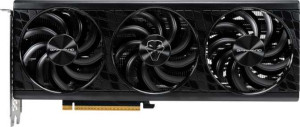
Gainward GeForce RTX 5070 Python III OC
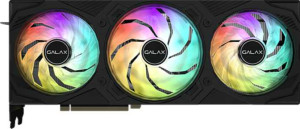
Galax GeForce RTX 5070 Ex Gamer 1-Click OC

Gainward GeForce RTX 5070 Python III OC Galax GeForce RTX 5070 Ex Gamer 1-Click OC

Overview

Welcome to this head-to-head comparison of the Gainward GeForce RTX 5070 Python III OC and the Galax GeForce RTX 5070 Ex Gamer 1-Click OC — two RTX 5070 cards sharing the same Blackwell foundation, identical memory configuration, and feature set. Despite that common ground, the competition heats up when examining pixel rate, GPU turbo clock speed, and physical dimensions, where meaningful gaps begin to emerge between the two.

Common Features

  • Both cards share a base GPU clock speed of 2325 MHz.
  • Both cards have a GPU memory speed of 1750 MHz.
  • Both cards feature 6144 shading units.
  • Both cards include 192 texture mapping units (TMUs).
  • Both cards have 80 render output units (ROPs).
  • Double Precision Floating Point (DPFP) is supported on both cards.
  • Both cards have an effective memory speed of 28000 MHz.
  • Both cards offer a maximum memory bandwidth of 672 GB/s.
  • Both cards come with 12GB of VRAM.
  • Both cards use GDDR7 memory.
  • Both cards feature a 192-bit memory bus width.
  • ECC memory is supported on both cards.
  • Both cards support DirectX 12 Ultimate.
  • Both cards support OpenGL version 4.6.
  • Both cards support OpenCL version 3.
  • Multi-display technology is supported on both cards.
  • Ray tracing is supported on both cards.
  • 3D support is available on both cards.
  • DLSS is supported on both cards.
  • XeSS (XMX) support is not available on either card.
  • Both cards have one HDMI 2.1b output.
  • Both cards feature three DisplayPort outputs.
  • Neither card includes USB-C, DVI, or mini DisplayPort outputs.
  • Both cards are based on the Blackwell GPU architecture.
  • Both cards have a Thermal Design Power (TDP) of 250W.
  • Both cards use PCIe version 5.
  • Both cards are manufactured on a 5 nm semiconductor process.
  • Both cards contain 31100 million transistors.
  • Neither card features air-water cooling.

Main Differences

  • GPU turbo clock speed is 2542 MHz on the Gainward GeForce RTX 5070 Python III OC and 2557 MHz on the Galax GeForce RTX 5070 Ex Gamer 1-Click OC.
  • Pixel rate is 203.4 GPixel/s on the Gainward GeForce RTX 5070 Python III OC and 163.6 GPixel/s on the Galax GeForce RTX 5070 Ex Gamer 1-Click OC.
  • Floating-point performance is 31.24 TFLOPS on the Gainward GeForce RTX 5070 Python III OC and 31.42 TFLOPS on the Galax GeForce RTX 5070 Ex Gamer 1-Click OC.
  • Texture rate is 488.1 GTexels/s on the Gainward GeForce RTX 5070 Python III OC and 490.9 GTexels/s on the Galax GeForce RTX 5070 Ex Gamer 1-Click OC.
  • Card width is 291.9 mm on the Gainward GeForce RTX 5070 Python III OC and 334 mm on the Galax GeForce RTX 5070 Ex Gamer 1-Click OC.
  • Card height is 116.5 mm on the Gainward GeForce RTX 5070 Python III OC and 144 mm on the Galax GeForce RTX 5070 Ex Gamer 1-Click OC.
Specs Comparison
Gainward GeForce RTX 5070 Python III OC

Gainward GeForce RTX 5070 Python III OC

Galax GeForce RTX 5070 Ex Gamer 1-Click OC

Galax GeForce RTX 5070 Ex Gamer 1-Click OC

Performance:
GPU clock speed 2325 MHz 2325 MHz
GPU turbo 2542 MHz 2557 MHz
pixel rate 203.4 GPixel/s 163.6 GPixel/s
floating-point performance 31.24 TFLOPS 31.42 TFLOPS
texture rate 488.1 GTexels/s 490.9 GTexels/s
GPU memory speed 1750 MHz 1750 MHz
shading units 6144 6144
texture mapping units (TMUs) 192 192
render output units (ROPs) 80 80
Has Double Precision Floating Point (DPFP)

At their core, both the Gainward Python III OC and the Galax Ex Gamer 1-Click OC share the same fundamental silicon: identical 6144 shading units, 192 TMUs, 80 ROPs, a base clock of 2325 MHz, and matched memory speeds of 1750 MHz. This means neither card has a structural or architectural advantage — any differences in performance come down to how aggressively each board partner has tuned the boost behavior.

The most striking divergence appears in pixel rate: the Python III OC posts a notably higher 203.4 GPixel/s versus the Ex Gamer's 163.6 GPixel/s. A higher pixel fill rate directly benefits rasterization-heavy workloads — particularly at high resolutions where the GPU must output more pixels per frame — so this gap is meaningful in practice, not just on paper. On the other hand, the Ex Gamer edges ahead in floating-point performance (31.42 TFLOPS vs. 31.24 TFLOPS) and texture rate (490.9 GTexels/s vs. 488.1 GTexels/s), as well as carrying a marginally higher boost clock of 2557 MHz versus 2542 MHz — differences that are real but slim enough to be negligible in most scenarios.

Overall, the performance picture is competitive but split: the Gainward Python III OC holds a clear edge in pixel throughput, which is arguably the more broadly impactful metric for gaming workloads, while the Galax Ex Gamer leads in shader compute and texture throughput by a very small margin. For users prioritizing high-resolution gaming and frame output, the Python III OC has a tangible advantage in this group. For compute-adjacent tasks, the Ex Gamer's fractionally higher TFLOPS may be marginally more relevant, though the gap is too small to be decisive on its own.

Memory:
effective memory speed 28000 MHz 28000 MHz
maximum memory bandwidth 672 GB/s 672 GB/s
VRAM 12GB 12GB
GDDR version GDDR7 GDDR7
memory bus width 192-bit 192-bit
Supports ECC memory

Both the Gainward GeForce RTX 5070 Python III OC and the Galax GeForce RTX 5070 Ex Gamer 1-Click OC share identical memory specifications. Both cards feature an effective memory speed of 28000 MHz and a maximum memory bandwidth of 672 GB/s, ensuring they provide the same high-speed performance for data transfer. Additionally, both have 12GB of VRAM, which is the same across both products and should offer ample memory for demanding tasks.

Both cards use GDDR7 memory, which is the latest version of GDDR memory, contributing to fast data rates and efficient power consumption. The memory bus width is also identical at 192-bit, further emphasizing that both products are equally capable in terms of memory interface.

Furthermore, both products support ECC (Error-Correcting Code) memory, ensuring data integrity and stability during operation, which is particularly beneficial for high-performance computing tasks that require precision and reliability.

Features:
DirectX version DirectX 12 Ultimate DirectX 12 Ultimate
OpenGL version 4.6 4.6
OpenCL version 3 3
Supports multi-display technology
supports ray tracing
Supports 3D
supports DLSS
has XeSS (XMX)
AMD SAM / Intel Resizable BAR Intel Resizable BAR Intel Resizable BAR
has LHR
has RGB lighting
supported displays 4 4

The Gainward GeForce RTX 5070 Python III OC and the Galax GeForce RTX 5070 Ex Gamer 1-Click OC share identical feature sets. Both cards support DirectX 12 Ultimate, OpenGL 4.6, and OpenCL 3, ensuring compatibility with the latest graphics and compute APIs. They also both support multi-display technology, ray tracing, 3D, and DLSS, offering advanced graphical features for an immersive experience in gaming and other graphics-intensive applications.

Neither product supports XeSS (XMX), which is the AI-driven upscaling technology from Intel. However, both cards support Intel Resizable BAR, an enhancement that can improve performance in some scenarios. Both models also lack LHR (Lite Hash Rate), meaning they are fully capable for mining cryptocurrency, if that's a consideration.

When it comes to visual aesthetics, both cards come equipped with RGB lighting, allowing for customizable lighting effects. Lastly, both the Gainward and the Galax support up to 4 displays, making them suitable for multi-monitor setups or other complex display configurations.

Ports:
has an HDMI output
HDMI ports 1 1
HDMI version HDMI 2.1b HDMI 2.1b
DisplayPort outputs 3 3
USB-C ports 0 0
DVI outputs 0 0
mini DisplayPort outputs 0 0

The Gainward GeForce RTX 5070 Python III OC and the Galax GeForce RTX 5070 Ex Gamer 1-Click OC both offer similar port configurations. Both cards feature a single HDMI output, with the HDMI version being HDMI 2.1b, allowing for high-quality video output. Each card also includes 3 DisplayPort outputs, providing ample options for connecting multiple monitors or other display devices.

Neither card includes USB-C ports, DVI outputs, or mini DisplayPort outputs, meaning their display connectivity is focused on HDMI and DisplayPort options.

Overall, the port setups are identical between the Gainward and Galax models, offering the same number and types of outputs for connecting to a variety of displays.

General info:
GPU architecture Blackwell Blackwell
release date March 2025 January 2025
Thermal Design Power (TDP) 250W 250W
PCI Express (PCIe) version 5 5
semiconductor size 5 nm 5 nm
number of transistors 31100 million 31100 million
Has air-water cooling
width 291.9 mm 334 mm
height 116.5 mm 144 mm

Both the Gainward GeForce RTX 5070 Python III OC and the Galax GeForce RTX 5070 Ex Gamer 1-Click OC feature the same GPU architecture, Blackwell, and share identical specifications for Thermal Design Power (TDP), which is 250W. They also both use the PCI Express (PCIe) version 5, offering the latest standard for data transfer speeds, and are built using a 5 nm semiconductor size, with 31,100 million transistors. Neither card includes air-water cooling, as both rely on traditional cooling methods.

In terms of physical dimensions, the Gainward card is slightly smaller, measuring 291.9 mm in width and 116.5 mm in height. The Galax model is slightly larger, with a width of 334 mm and a height of 144 mm, which could be a consideration when fitting these cards into smaller cases.

Overall, the two cards are very similar in terms of general specifications, with the primary difference being the Galax model's larger size compared to the more compact Gainward card.

Comparison Summary & Verdict

Both the Gainward GeForce RTX 5070 Python III OC and the Galax GeForce RTX 5070 Ex Gamer 1-Click OC are built on the same Blackwell architecture, pack 12GB of GDDR7 memory on a 192-bit bus, and share a 250W TDP — making them near-identical in their core offering. Where they diverge is telling: the Galax holds a slight edge in GPU turbo clock at 2557 MHz, floating-point performance at 31.42 TFLOPS, and texture rate at 490.9 GTexels/s. The Gainward, however, delivers a substantially higher pixel rate of 203.4 GPixel/s and is considerably more compact at 291.9 x 116.5 mm versus the Galax at 334 x 144 mm. Builders working with tighter cases will find the Gainward a more practical choice, while those prioritising peak clock speed and throughput in a spacious setup may lean toward the Galax.

Gainward GeForce RTX 5070 Python III OC
Buy Gainward GeForce RTX 5070 Python III OC if...

Buy the Gainward GeForce RTX 5070 Python III OC if you need a more compact card for tighter builds, and want a significantly higher pixel rate of 203.4 GPixel/s.

Galax GeForce RTX 5070 Ex Gamer 1-Click OC
Buy Galax GeForce RTX 5070 Ex Gamer 1-Click OC if...

Buy the Galax GeForce RTX 5070 Ex Gamer 1-Click OC if space is not a constraint and you want a marginally higher GPU turbo clock, floating-point performance, and texture rate.