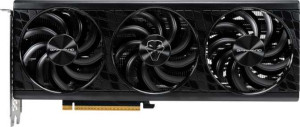
Gainward GeForce RTX 5070 Python III OC
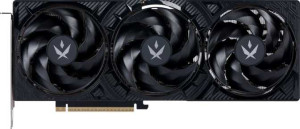
Galax GeForce RTX 5070 Fire

Gainward GeForce RTX 5070 Python III OC Galax GeForce RTX 5070 Fire

Overview

Welcome to our detailed spec comparison between the Gainward GeForce RTX 5070 Python III OC and the Galax GeForce RTX 5070 Fire, two Blackwell-based RTX 5070 cards that share a strong common foundation yet differ in meaningful ways. Both cards are built on the same GPU architecture, pack identical VRAM and memory specs, and support the same feature set, so the real question is how they diverge in boost clock speeds, raw compute throughput, and physical dimensions. Read on to find out which card edges ahead where it matters most.

Common Features

  • Both cards have a base GPU clock speed of 2325 MHz.
  • Both cards have a GPU memory speed of 1750 MHz.
  • Both cards feature 6144 shading units.
  • Both cards have 192 texture mapping units (TMUs).
  • Both cards have 80 render output units (ROPs).
  • Double Precision Floating Point (DPFP) is supported on both cards.
  • Both cards have an effective memory speed of 28000 MHz.
  • Both cards offer a maximum memory bandwidth of 672 GB/s.
  • Both cards come with 12GB of VRAM.
  • Both cards use GDDR7 memory.
  • Both cards have a 192-bit memory bus width.
  • ECC memory is supported on both cards.
  • Both cards support DirectX 12 Ultimate.
  • Both cards support OpenGL version 4.6.
  • Both cards support OpenCL version 3.
  • Multi-display technology is supported on both cards.
  • Ray tracing is supported on both cards.
  • DLSS is supported on both cards.
  • 3D support is available on both cards.
  • XeSS (XMX) support is not available on either card.
  • Both cards have one HDMI 2.1b output and three DisplayPort outputs, with no USB-C, DVI, or mini DisplayPort outputs.
  • Both cards are based on the Blackwell GPU architecture.
  • Both cards have a Thermal Design Power (TDP) of 250W.
  • Both cards use PCIe version 5.
  • Both cards are manufactured on a 5 nm semiconductor process.
  • Both cards feature 31100 million transistors.
  • Air-water cooling is not available on either card.

Main Differences

  • GPU turbo clock speed is 2542 MHz on Gainward GeForce RTX 5070 Python III OC and 2512 MHz on Galax GeForce RTX 5070 Fire.
  • Pixel rate is 203.4 GPixel/s on Gainward GeForce RTX 5070 Python III OC and 201 GPixel/s on Galax GeForce RTX 5070 Fire.
  • Floating-point performance is 31.24 TFLOPS on Gainward GeForce RTX 5070 Python III OC and 30.87 TFLOPS on Galax GeForce RTX 5070 Fire.
  • Texture rate is 488.1 GTexels/s on Gainward GeForce RTX 5070 Python III OC and 482.3 GTexels/s on Galax GeForce RTX 5070 Fire.
  • Card width is 291.9 mm on Gainward GeForce RTX 5070 Python III OC and 314 mm on Galax GeForce RTX 5070 Fire.
  • Card height is 116.5 mm on Gainward GeForce RTX 5070 Python III OC and 133 mm on Galax GeForce RTX 5070 Fire.
Specs Comparison
Gainward GeForce RTX 5070 Python III OC

Gainward GeForce RTX 5070 Python III OC

Galax GeForce RTX 5070 Fire

Galax GeForce RTX 5070 Fire

Performance:
GPU clock speed 2325 MHz 2325 MHz
GPU turbo 2542 MHz 2512 MHz
pixel rate 203.4 GPixel/s 201 GPixel/s
floating-point performance 31.24 TFLOPS 30.87 TFLOPS
texture rate 488.1 GTexels/s 482.3 GTexels/s
GPU memory speed 1750 MHz 1750 MHz
shading units 6144 6144
texture mapping units (TMUs) 192 192
render output units (ROPs) 80 80
Has Double Precision Floating Point (DPFP)

At the foundation, the Gainward RTX 5070 Python III OC and the Galax RTX 5070 Fire are built on identical silicon: both share 6144 shading units, 192 TMUs, 80 ROPs, and the same 1750 MHz memory speed. Their base GPU clock is also identical at 2325 MHz, meaning out-of-the-box, before any boost behavior kicks in, neither card has a head start.

The only meaningful divergence in this group comes down to the boost clock. The Gainward Python III OC reaches a turbo of 2542 MHz versus the Galax Fire's 2512 MHz — a gap of 30 MHz, or roughly 1.2%. This modest difference cascades into slightly higher derived figures: the Python III OC edges ahead in floating-point throughput (31.24 TFLOPS vs 30.87 TFLOPS), texture fill rate (488.1 GTexels/s vs 482.3 GTexels/s), and pixel rate (203.4 GPixel/s vs 201 GPixel/s). In practice, a ~1% performance delta of this kind is unlikely to be perceptible in real workloads — frame rates, rendering times, and compute tasks will land within the margin of run-to-run variance.

Overall, the Gainward Python III OC holds a technical edge in this group, purely by virtue of its higher factory-overclocked turbo clock. However, the advantage is so slim that it should not be a deciding factor on its own. Both cards are functionally equivalent in performance tier, and real-world results will depend far more on cooling efficiency, power delivery, and driver behavior than on this 30 MHz boost clock difference.
Memory:
effective memory speed 28000 MHz 28000 MHz
maximum memory bandwidth 672 GB/s 672 GB/s
VRAM 12GB 12GB
GDDR version GDDR7 GDDR7
memory bus width 192-bit 192-bit
Supports ECC memory

The memory configurations of the Gainward RTX 5070 Python III OC and the Galax RTX 5070 Fire are, in every measurable way, identical. Both cards carry 12GB of GDDR7 VRAM across a 192-bit bus, running at an effective speed of 28000 MHz and delivering 672 GB/s of bandwidth. There is no differentiator to speak of here.

What these shared numbers do tell us is that both cards sit in a well-balanced memory tier for their performance class. GDDR7 is a meaningful generational step over GDDR6X, bringing higher efficiency and throughput at lower power draw. The 672 GB/s bandwidth figure ensures neither card will be memory-starved in demanding workloads — whether that is high-resolution gaming, real-time ray tracing, or creative applications like video editing and 3D rendering. The 12GB frame buffer, while not the largest available, is sufficient for 1440p and most 4K scenarios without aggressive texture compression.

With ECC memory support shared by both, even professional or semi-professional use cases involving compute accuracy are equally served. This group is a clear tie — no advantage exists on either side, and memory configuration should play no role in choosing between these two cards.

Features:
DirectX version DirectX 12 Ultimate DirectX 12 Ultimate
OpenGL version 4.6 4.6
OpenCL version 3 3
Supports multi-display technology
supports ray tracing
Supports 3D
supports DLSS
has XeSS (XMX)
AMD SAM / Intel Resizable BAR Intel Resizable BAR Intel Resizable BAR
has LHR
has RGB lighting
supported displays 4 4

Feature parity is total between the Gainward RTX 5070 Python III OC and the Galax RTX 5070 Fire. Both support DirectX 12 Ultimate — the current gold standard for gaming APIs, enabling hardware-accelerated ray tracing, mesh shaders, and variable rate shading in supported titles. Alongside this, both carry DLSS support, NVIDIA's AI-driven upscaling technology that allows games to render at lower resolutions and reconstruct a higher-quality image, delivering significant frame rate headroom with minimal visual cost.

On the practical side, both cards support up to 4 simultaneous displays and include Intel Resizable BAR, which allows the CPU to access the full GPU frame buffer at once rather than in chunks — a feature that can yield modest but real performance gains in supported games and workloads. Neither card carries LHR (Lite Hash Rate) restrictions, which is a non-issue for gaming but relevant context for compute users. RGB lighting is present on both, leaving aesthetics as a matter of personal preference rather than a spec differentiator.

There is no meaningful distinction to draw here — this group is an unambiguous tie. Every feature available on one card is equally available on the other, and neither holds any software or capability advantage over its counterpart.

Ports:
has an HDMI output
HDMI ports 1 1
HDMI version HDMI 2.1b HDMI 2.1b
DisplayPort outputs 3 3
USB-C ports 0 0
DVI outputs 0 0
mini DisplayPort outputs 0 0

Connectivity is identical across both cards. The Gainward RTX 5070 Python III OC and the Galax RTX 5070 Fire each offer 3 DisplayPort outputs and 1 HDMI 2.1b port, totaling four display outputs — consistent with the four-display limit noted in their features specs. Neither card includes USB-C, DVI, or mini DisplayPort outputs.

The port selection itself is well-suited to modern display ecosystems. HDMI 2.1b supports high-bandwidth scenarios including 4K at high refresh rates and 8K output, making it a natural fit for living room or home theater setups. The three DisplayPort outputs, meanwhile, give multi-monitor users the flexibility to run a full array of high-refresh or high-resolution panels simultaneously — a practical configuration for both gaming and productivity workstations.

With zero differences between the two, this group is a complete tie. Anyone deciding between these cards based on display connectivity will find no reason to favor one over the other.

General info:
GPU architecture Blackwell Blackwell
release date March 2025 March 2025
Thermal Design Power (TDP) 250W 250W
PCI Express (PCIe) version 5 5
semiconductor size 5 nm 5 nm
number of transistors 31100 million 31100 million
Has air-water cooling
width 291.9 mm 314 mm
height 116.5 mm 133 mm

Both cards share the same fundamental silicon story: the Blackwell architecture built on a 5nm process with 31.1 billion transistors, running at a 250W TDP over a PCIe 5.0 interface. This means identical power requirements, the same generational efficiency profile, and the same motherboard compatibility expectations for both the Gainward RTX 5070 Python III OC and the Galax RTX 5070 Fire.

Where the two diverge is physical size. The Galax Fire is noticeably larger, measuring 314 mm × 133 mm compared to the Gainward Python III OC's more compact 291.9 mm × 116.5 mm. That is a difference of roughly 22 mm in length and 17 mm in height — significant enough to matter in the real world. Builders working with mid-tower cases or smaller form factors should measure their available GPU clearance carefully, as the Galax Fire may not fit in enclosures where the Gainward would clear without issue.

On the question of physical fit, the Gainward Python III OC holds a clear advantage for compact or space-constrained builds. For open or full-tower setups where clearance is not a concern, the size difference is irrelevant, and all other general specifications remain perfectly matched between the two.

Comparison Summary & Verdict

After examining every available data point, it is clear that both the Gainward GeForce RTX 5070 Python III OC and the Galax GeForce RTX 5070 Fire are highly capable cards that share the same 12GB GDDR7 memory, 250W TDP, PCIe 5.0 interface, and full support for ray tracing and DLSS. The Gainward card pulls slightly ahead with a higher GPU turbo clock of 2542 MHz, a floating-point performance of 31.24 TFLOPS, and a marginally better texture rate, making it the better pick for users who want every last frame. On the other hand, the Galax GeForce RTX 5070 Fire is a physically larger card at 314 mm wide and 133 mm tall, which may suit cases with more room and potentially allow for a different cooling approach. Choose the Gainward if peak performance is your priority; choose the Galax if case compatibility and cooler size are less of a concern and minor clock differences are acceptable.

Gainward GeForce RTX 5070 Python III OC
Buy Gainward GeForce RTX 5070 Python III OC if...

Buy the Gainward GeForce RTX 5070 Python III OC if you want the highest boost clock speed and marginally better compute and texture performance, while also preferring a more compact card that is easier to fit in tighter cases.

Galax GeForce RTX 5070 Fire
Buy Galax GeForce RTX 5070 Fire if...

Buy the Galax GeForce RTX 5070 Fire if you are comfortable with a larger physical footprint and the slightly lower boost clock of 2512 MHz is an acceptable trade-off for your build.