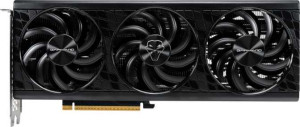
Gainward GeForce RTX 5070 Python III
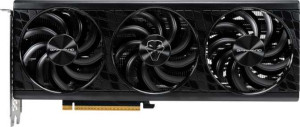
Gainward GeForce RTX 5070 Python III OC

Gainward GeForce RTX 5070 Python III Gainward GeForce RTX 5070 Python III OC

Overview

Welcome to our in-depth specification comparison between the Gainward GeForce RTX 5070 Python III and the Gainward GeForce RTX 5070 Python III OC. Both cards share the same Blackwell architecture, 12GB of GDDR7 memory, and a 250W TDP, making this a highly focused matchup. The key battlegrounds here are GPU turbo clock speed, floating-point performance, and texture throughput — subtle but meaningful areas where these two siblings part ways.

Common Features

  • Both cards share a base GPU clock speed of 2325 MHz.
  • Both cards have a GPU memory speed of 1750 MHz.
  • Both cards feature 6144 shading units.
  • Both cards include 192 texture mapping units (TMUs).
  • Both cards have 80 render output units (ROPs).
  • Double Precision Floating Point (DPFP) is supported on both cards.
  • Both cards have an effective memory speed of 28000 MHz.
  • Both cards offer a maximum memory bandwidth of 672 GB/s.
  • Both cards come with 12GB of VRAM.
  • Both cards use GDDR7 memory.
  • Both cards have a 192-bit memory bus width.
  • ECC memory is supported on both cards.
  • Both cards support DirectX 12 Ultimate.
  • Both cards support OpenGL version 4.6.
  • Both cards support OpenCL version 3.
  • Multi-display technology is supported on both cards.
  • Ray tracing is supported on both cards.
  • DLSS is supported on both cards.
  • XeSS (XMX) is not available on either card.
  • Both cards have one HDMI 2.1b output and three DisplayPort outputs, with no USB-C or DVI outputs.
  • Both cards are built on the Blackwell GPU architecture.
  • Both cards have a Thermal Design Power (TDP) of 250W.
  • Both cards use PCIe version 5.
  • Both cards are manufactured on a 5 nm process with 31100 million transistors.
  • Both cards measure 291.9 mm in width and 116.5 mm in height.
  • Air-water cooling is not available on either card.

Main Differences

  • GPU turbo clock speed is 2512 MHz on the Gainward GeForce RTX 5070 Python III and 2542 MHz on the Gainward GeForce RTX 5070 Python III OC.
  • Pixel rate is 201 GPixel/s on the Gainward GeForce RTX 5070 Python III and 203.4 GPixel/s on the Gainward GeForce RTX 5070 Python III OC.
  • Floating-point performance is 30.87 TFLOPS on the Gainward GeForce RTX 5070 Python III and 31.24 TFLOPS on the Gainward GeForce RTX 5070 Python III OC.
  • Texture rate is 482.3 GTexels/s on the Gainward GeForce RTX 5070 Python III and 488.1 GTexels/s on the Gainward GeForce RTX 5070 Python III OC.
Specs Comparison
Gainward GeForce RTX 5070 Python III

Gainward GeForce RTX 5070 Python III

Gainward GeForce RTX 5070 Python III OC

Gainward GeForce RTX 5070 Python III OC

Performance:
GPU clock speed 2325 MHz 2325 MHz
GPU turbo 2512 MHz 2542 MHz
pixel rate 201 GPixel/s 203.4 GPixel/s
floating-point performance 30.87 TFLOPS 31.24 TFLOPS
texture rate 482.3 GTexels/s 488.1 GTexels/s
GPU memory speed 1750 MHz 1750 MHz
shading units 6144 6144
texture mapping units (TMUs) 192 192
render output units (ROPs) 80 80
Has Double Precision Floating Point (DPFP)

At their core, both the Python III and the Python III OC share an identical hardware foundation: 6144 shading units, 192 TMUs, 80 ROPs, and a base GPU clock of 2325 MHz. This means neither card has a structural advantage in parallelism or memory throughput — the same number of execution resources are doing the work on both boards, and memory bandwidth potential is equal with both running at 1750 MHz GPU memory speed.

The sole performance differentiator lives in the boost clock. The Python III OC is factory-tuned to a 2542 MHz turbo, versus 2512 MHz on the standard Python III — a 30 MHz uplift. That modest frequency advantage cascades into slightly higher derived metrics: floating-point throughput rises from 30.87 TFLOPS to 31.24 TFLOPS, texture rate from 482.3 to 488.1 GTexels/s, and pixel fill rate from 201 to 203.4 GPixel/s. In practice, a ~1.2% clock advantage translates to differences that are essentially invisible in real-world gaming frame rates — well within benchmark noise margins.

The Python III OC holds a technical edge in this group, but it is a very narrow one. The factory overclock delivers a measurable — yet practically negligible — boost in throughput figures. Users prioritizing every last drop of out-of-the-box performance will prefer the OC variant, but those who plan to manually tune their card can likely close this gap entirely on the standard Python III.

Memory:
effective memory speed 28000 MHz 28000 MHz
maximum memory bandwidth 672 GB/s 672 GB/s
VRAM 12GB 12GB
GDDR version GDDR7 GDDR7
memory bus width 192-bit 192-bit
Supports ECC memory

Memory is one area where there is absolutely nothing to separate these two cards. Both the Python III and the Python III OC are equipped with 12GB of GDDR7 running on a 192-bit bus at an effective speed of 28000 MHz, delivering identical peak bandwidth of 672 GB/s. Every single memory specification is a carbon copy between the two variants.

That shared specification set is worth unpacking. GDDR7 is a generational leap over GDDR6X, and the 672 GB/s bandwidth figure reflects that — feeding shader workloads and texture pipelines faster and reducing memory-bound bottlenecks in high-resolution and ray-traced scenarios. The 192-bit bus is a pragmatic width for a mid-to-high-end card, and paired with GDDR7′s clock headroom, it punches well above what previous generations achieved on the same bus width. ECC memory support is also present on both, a useful reliability feature for users doing compute or professional workloads alongside gaming.

This group is an unambiguous tie. Memory configuration is identical in every measurable dimension, so it plays no role whatsoever in differentiating these two cards. A buyer's decision should rest entirely on the other specification groups.

Features:
DirectX version DirectX 12 Ultimate DirectX 12 Ultimate
OpenGL version 4.6 4.6
OpenCL version 3 3
Supports multi-display technology
supports ray tracing
Supports 3D
supports DLSS
has XeSS (XMX)
AMD SAM / Intel Resizable BAR Intel Resizable BAR Intel Resizable BAR
has LHR
has RGB lighting
supported displays 4 4

Feature parity between the Python III and the Python III OC is total. Both cards support DirectX 12 Ultimate and ray tracing, placing them fully in the current generation of rendering capabilities — DX12 Ultimate in particular is the baseline for hardware-accelerated effects like mesh shaders and variable-rate shading. DLSS support is present on both, which is a meaningful advantage for resolution scaling and frame generation in compatible titles. Neither card supports XeSS, but that is an Intel-specific technology and its absence is expected here.

On the practical side, both variants support up to 4 simultaneous displays and include Intel Resizable BAR, which allows the CPU to access the full GPU frame buffer at once rather than in chunks — a feature that can yield tangible performance gains in supported games. RGB lighting is confirmed on both, and neither carries an LHR (Lite Hash Rate) limiter, leaving compute workloads unconstrained.

Like the memory group, this is a clean tie with no differentiating factor between the two cards. Every feature available on one is equally available on the other, so software capabilities and ecosystem support offer no basis for choosing between them.

Ports:
has an HDMI output
HDMI ports 1 1
HDMI version HDMI 2.1b HDMI 2.1b
DisplayPort outputs 3 3
USB-C ports 0 0
DVI outputs 0 0
mini DisplayPort outputs 0 0

Connectivity is identical across both cards, and the layout is well-suited for a modern multi-monitor setup. Each variant offers 3 DisplayPort outputs alongside 1 HDMI 2.1b port, totaling four display outputs — consistent with the four-display limit noted in the features group. The triple DisplayPort configuration is particularly useful for users running high-refresh-rate or high-resolution monitors, where DisplayPort remains the preferred interface.

The HDMI 2.1b port is a noteworthy inclusion, as it supports the bandwidth required for 4K at high refresh rates and 8K output over a single cable, making either card a capable option for living-room or TV-connected setups. The absence of USB-C and legacy DVI outputs is in line with current mid-to-high-end GPU design trends, where those connectors have been phased out in favor of maximizing full-size DisplayPort and HDMI allocations.

This group is another tie. Port selection and display connectivity are completely mirrored between the Python III and the Python III OC, giving neither card any advantage in how or what you can connect to them.

General info:
GPU architecture Blackwell Blackwell
release date March 2025 March 2025
Thermal Design Power (TDP) 250W 250W
PCI Express (PCIe) version 5 5
semiconductor size 5 nm 5 nm
number of transistors 31100 million 31100 million
Has air-water cooling
width 291.9 mm 291.9 mm
height 116.5 mm 116.5 mm

Underpinning both cards is the same silicon: Nvidia's Blackwell architecture built on a 5nm process with 31.1 billion transistors. That fabrication node and transistor density reflect a mature, power-efficient design that enables the performance figures seen in the performance group without runaway power consumption. Both cards connect via PCIe 5.0, ensuring neither will face any interface-level bandwidth bottleneck on a compatible modern platform.

Thermal design is equally matched, with both variants rated at a 250W TDP. This is a significant data point — despite the Python III OC squeezing out a higher boost clock, Gainward has not assigned it a higher power budget. That means the factory overclock is being achieved within the same thermal envelope, which is a sign of efficient binning rather than brute-force power delivery. Physical dimensions are also identical at 291.9 mm × 116.5 mm, so case compatibility planning applies equally to both.

Once again, this group is a tie in every measurable dimension. Same chip, same process node, same power limit, same physical footprint — the Python III OC distinguishes itself only through its higher boost clock, not through any difference in the underlying hardware platform or thermal headroom.

Comparison Summary & Verdict

After examining every specification, it is clear that the Gainward GeForce RTX 5070 Python III and the Gainward GeForce RTX 5070 Python III OC are nearly identical cards, sharing the same 12GB GDDR7 memory, 192-bit bus, 6144 shading units, and full feature set including ray tracing and DLSS. The only meaningful separation lies in the OC variant's higher GPU turbo clock of 2542 MHz, which nudges its floating-point performance to 31.24 TFLOPS and texture rate to 488.1 GTexels/s versus 30.87 TFLOPS and 482.3 GTexels/s on the standard model. For most users, the performance gap will be imperceptible in real-world workloads. Choose the standard Python III if you value consistency and potentially lower cost, and opt for the Python III OC if you want every last MHz out of the box without manual overclocking.

Gainward GeForce RTX 5070 Python III
Buy Gainward GeForce RTX 5070 Python III if...

Buy the Gainward GeForce RTX 5070 Python III if you want the same core architecture and memory configuration at the standard clock speeds, and do not require the marginal boost in turbo frequency or floating-point throughput offered by the OC model.

Gainward GeForce RTX 5070 Python III OC
Buy Gainward GeForce RTX 5070 Python III OC if...

Buy the Gainward GeForce RTX 5070 Python III OC if you want a slightly higher GPU turbo clock of 2542 MHz and the incremental gains in floating-point performance and texture rate that come with it, without having to overclock manually.