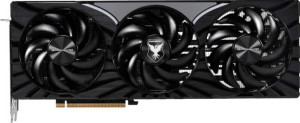
Gainward GeForce RTX 5070 Ti Phoenix-S GS
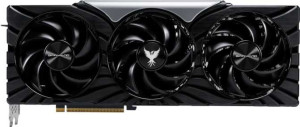
Gainward GeForce RTX 5080 Phoenix

Gainward GeForce RTX 5070 Ti Phoenix-S GS Gainward GeForce RTX 5080 Phoenix

Overview

Welcome to our detailed spec comparison of the Gainward GeForce RTX 5070 Ti Phoenix-S GS and the Gainward GeForce RTX 5080 Phoenix. Both cards share the same Blackwell architecture and a strong foundation of common features, yet they diverge meaningfully in areas like raw compute performance, memory bandwidth, and thermal design. Read on to see how these two GPUs stack up across every key specification.

Common Features

  • Both cards share a base GPU clock speed of 2295 MHz.
  • Double Precision Floating Point (DPFP) is supported on both products.
  • Both products come with 16GB of VRAM.
  • Both cards use GDDR7 memory.
  • Both products feature a 256-bit memory bus width.
  • ECC memory is supported on both products.
  • Both cards are based on the Blackwell GPU architecture.
  • Both products are manufactured on a 5 nm semiconductor process.
  • Both cards feature 45,600 million transistors.
  • Both products connect via PCI Express 5.
  • DirectX 12 Ultimate is supported on both products.
  • OpenGL version 4.6 is available on both products.
  • OpenCL version 3 is supported on both products.
  • Multi-display technology is supported on both products.
  • Ray tracing is supported on both products.
  • 3D technology is supported on both products.
  • DLSS is supported on both products.
  • XeSS (XMX) is not available on either product.
  • Both cards include 1 HDMI 2.1b port and 3 DisplayPort outputs, with no USB-C or DVI outputs.
  • Air-water cooling is not available on either product.
  • Both cards share the same width of 331.9 mm.

Main Differences

  • GPU turbo clock speed is 2482 MHz on the Gainward GeForce RTX 5070 Ti Phoenix-S GS and 2617 MHz on the Gainward GeForce RTX 5080 Phoenix.
  • Pixel rate is 238.3 GPixel/s on the Gainward GeForce RTX 5070 Ti Phoenix-S GS and 293.1 GPixel/s on the Gainward GeForce RTX 5080 Phoenix.
  • Floating-point performance is 44.48 TFLOPS on the Gainward GeForce RTX 5070 Ti Phoenix-S GS and 56.28 TFLOPS on the Gainward GeForce RTX 5080 Phoenix.
  • Texture rate is 695 GTexels/s on the Gainward GeForce RTX 5070 Ti Phoenix-S GS and 879.3 GTexels/s on the Gainward GeForce RTX 5080 Phoenix.
  • GPU memory speed is 1750 MHz on the Gainward GeForce RTX 5070 Ti Phoenix-S GS and 1875 MHz on the Gainward GeForce RTX 5080 Phoenix.
  • Shading units total 8960 on the Gainward GeForce RTX 5070 Ti Phoenix-S GS and 10752 on the Gainward GeForce RTX 5080 Phoenix.
  • Texture mapping units (TMUs) number 280 on the Gainward GeForce RTX 5070 Ti Phoenix-S GS and 336 on the Gainward GeForce RTX 5080 Phoenix.
  • Render output units (ROPs) total 96 on the Gainward GeForce RTX 5070 Ti Phoenix-S GS and 112 on the Gainward GeForce RTX 5080 Phoenix.
  • Effective memory speed is 28000 MHz on the Gainward GeForce RTX 5070 Ti Phoenix-S GS and 30000 MHz on the Gainward GeForce RTX 5080 Phoenix.
  • Maximum memory bandwidth is 896 GB/s on the Gainward GeForce RTX 5070 Ti Phoenix-S GS and 960 GB/s on the Gainward GeForce RTX 5080 Phoenix.
  • Thermal Design Power (TDP) is 300W on the Gainward GeForce RTX 5070 Ti Phoenix-S GS and 360W on the Gainward GeForce RTX 5080 Phoenix.
  • Card height is 127.1 mm on the Gainward GeForce RTX 5070 Ti Phoenix-S GS and 133.1 mm on the Gainward GeForce RTX 5080 Phoenix.
Specs Comparison
Gainward GeForce RTX 5070 Ti Phoenix-S GS

Gainward GeForce RTX 5070 Ti Phoenix-S GS

Gainward GeForce RTX 5080 Phoenix

Gainward GeForce RTX 5080 Phoenix

Performance:
GPU clock speed 2295 MHz 2295 MHz
GPU turbo 2482 MHz 2617 MHz
pixel rate 238.3 GPixel/s 293.1 GPixel/s
floating-point performance 44.48 TFLOPS 56.28 TFLOPS
texture rate 695 GTexels/s 879.3 GTexels/s
GPU memory speed 1750 MHz 1875 MHz
shading units 8960 10752
texture mapping units (TMUs) 280 336
render output units (ROPs) 96 112
Has Double Precision Floating Point (DPFP)

Both the RTX 5070 Ti Phoenix-S GS and the RTX 5080 Phoenix share an identical base GPU clock of 2295 MHz, meaning neither card holds an advantage at its guaranteed sustained frequency. However, the 5080 Phoenix pulls ahead under boost conditions, reaching a turbo of 2617 MHz versus 2482 MHz — a 135 MHz gap that reflects a more capable power and thermal headroom, allowing the 5080 to sustain higher frequencies during demanding workloads.

The more telling performance story lies in the raw compute resources. The 5080 Phoenix fields 10,752 shading units, 336 TMUs, and 112 ROPs, compared to 8,960 shaders, 280 TMUs, and 96 ROPs on the 5070 Ti. This translates directly into the headline figures: the 5080 delivers 56.28 TFLOPS of floating-point throughput versus 44.48 TFLOPS — roughly a 27% advantage — and a texture rate of 879.3 GTexels/s against 695 GTexels/s. In practice, this means the 5080 handles geometry-heavy scenes, complex shaders, and high-resolution rendering pipelines with meaningfully more headroom before hitting a GPU-bound ceiling.

The 5080 Phoenix also edges ahead on memory bandwidth potential with a faster GPU memory speed of 1875 MHz versus 1750 MHz, which feeds its larger shader array more efficiently. Both cards support Double Precision Floating Point, making them equally capable for GPGPU or compute workloads that require DPFP. Overall, the 5080 Phoenix holds a clear and consistent performance advantage in this group across every major throughput metric, with the gap being most significant in raw compute and rasterization capacity.
Memory:
effective memory speed 28000 MHz 30000 MHz
maximum memory bandwidth 896 GB/s 960 GB/s
VRAM 16GB 16GB
GDDR version GDDR7 GDDR7
memory bus width 256-bit 256-bit
Supports ECC memory

The Gainward GeForce RTX 5070 Ti Phoenix-S GS and Gainward GeForce RTX 5080 Phoenix both feature 16GB of VRAM and use GDDR7 memory. However, the effective memory speed on the RTX 5080 Phoenix is faster at 30000 MHz, compared to the 5070 Ti's 28000 MHz. Similarly, the maximum memory bandwidth is higher on the RTX 5080 Phoenix, reaching 960 GB/s, while the 5070 Ti offers 896 GB/s.

Both products have the same 256-bit memory bus width and support ECC memory, ensuring error correction in both cases.

Features:
DirectX version DirectX 12 Ultimate DirectX 12 Ultimate
OpenGL version 4.6 4.6
OpenCL version 3 3
Supports multi-display technology
supports ray tracing
Supports 3D
supports DLSS
has XeSS (XMX)
AMD SAM / Intel Resizable BAR Intel Resizable BAR Intel Resizable BAR
has LHR
has RGB lighting
supported displays 4 4

The Gainward GeForce RTX 5070 Ti Phoenix-S GS and Gainward GeForce RTX 5080 Phoenix are nearly identical in terms of their key features. Both support DirectX 12 Ultimate, OpenGL 4.6, and OpenCL 3. They also both feature multi-display technology, ray tracing, and 3D support. Additionally, both cards support DLSS and do not feature XeSS (XMX).

In terms of system compatibility, both models support Intel Resizable BAR (AMD SAM is not mentioned), and neither card has LHR (Lite Hash Rate). RGB lighting is present on both cards, and they each support up to 4 displays.

Ports:
has an HDMI output
HDMI ports 1 1
HDMI version HDMI 2.1b HDMI 2.1b
DisplayPort outputs 3 3
USB-C ports 0 0
DVI outputs 0 0
mini DisplayPort outputs 0 0

The Gainward GeForce RTX 5070 Ti Phoenix-S GS and Gainward GeForce RTX 5080 Phoenix share identical port configurations. Both cards feature one HDMI output with HDMI 2.1b support, three DisplayPort outputs, and no USB-C, DVI, or mini DisplayPort outputs.

With the same number of HDMI and DisplayPort ports, these models are equally equipped for display connectivity.

General info:
GPU architecture Blackwell Blackwell
release date February 2025 January 2025
Thermal Design Power (TDP) 300W 360W
PCI Express (PCIe) version 5 5
semiconductor size 5 nm 5 nm
number of transistors 45600 million 45600 million
Has air-water cooling
width 331.9 mm 331.9 mm
height 127.1 mm 133.1 mm

Both the Gainward GeForce RTX 5070 Ti Phoenix-S GS and Gainward GeForce RTX 5080 Phoenix use the Blackwell GPU architecture and have the same semiconductor size of 5 nm. They also share the same number of transistors, with both having 45,600 million transistors and PCIe version 5 support.

The RTX 5080 Phoenix has a higher thermal design power (TDP) of 360W compared to the 5070 Ti's 300W. In terms of physical dimensions, the 5070 Ti is slightly shorter in height, measuring 127.1 mm, while the RTX 5080 Phoenix is 133.1 mm in height. Both cards have the same width of 331.9 mm.

Neither card includes air-water cooling, as both models do not feature this cooling system.

Comparison Summary & Verdict

Both the Gainward GeForce RTX 5070 Ti Phoenix-S GS and the Gainward GeForce RTX 5080 Phoenix are built on the same Blackwell architecture, use GDDR7 memory on a 256-bit bus, and offer identical feature sets including ray tracing and DLSS. However, the RTX 5080 Phoenix pulls ahead with a higher GPU turbo clock of 2617 MHz, greater floating-point performance at 56.28 TFLOPS, more shading units, and faster memory bandwidth of 960 GB/s. In exchange, it draws a notably higher 360W TDP versus 300W and is slightly taller. The RTX 5070 Ti Phoenix-S GS is the better fit for users who want strong Blackwell-generation performance with lower power consumption and a more compact form factor, while the RTX 5080 Phoenix is the card of choice for those who demand the highest throughput and can accommodate the extra power overhead.

Gainward GeForce RTX 5070 Ti Phoenix-S GS
Buy Gainward GeForce RTX 5070 Ti Phoenix-S GS if...

Choose the Gainward GeForce RTX 5070 Ti Phoenix-S GS if you want capable Blackwell-generation performance while keeping power consumption lower at 300W and fitting a slightly more compact card into your build.

Gainward GeForce RTX 5080 Phoenix
Buy Gainward GeForce RTX 5080 Phoenix if...

Choose the Gainward GeForce RTX 5080 Phoenix if you need maximum GPU throughput, with its higher 56.28 TFLOPS compute performance, faster 960 GB/s memory bandwidth, and elevated GPU turbo clock of 2617 MHz, and your system can handle the 360W TDP.