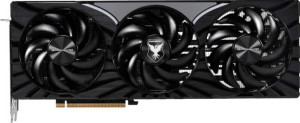
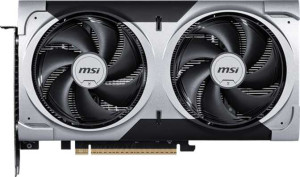
Sharing the same Blackwell architecture, 5nm process node, and PCIe 5.0 interface, both cards come from the same generational foundation. The commonality ends there, though. The Gainward RTX 5070 Ti Phoenix-S is built on a significantly larger die — 45,600 million transistors versus 21,900 million on the MSI RTX 5060 Ti Ventus — which directly explains the roughly 2:1 performance gap seen in the compute and memory groups. More transistors mean more functional units, larger caches, and a wider execution pipeline, all packed onto the same process node.
That added silicon comes with real-world costs. The 5070 Ti carries a 300W TDP compared to the 5060 Ti's considerably more modest 180W — a 120W difference that has cascading implications for PSU requirements, case airflow, and long-term electricity consumption. Physical size tells a similar story: at 331.9mm long, the 5070 Ti is over 100mm longer than the 5060 Ti's 227mm footprint, making case compatibility a genuine consideration for compact or mid-tower builds. Heights are virtually identical at around 127mm, so slot width is a non-issue for either card.
Neither card offers hybrid air-water cooling, so both rely entirely on their respective air cooler designs. Overall, the MSI RTX 5060 Ti Ventus holds a practical advantage in this group for builders with space or power constraints — it fits more cases, demands less from a power supply, and runs a leaner thermal budget. The 5070 Ti's larger footprint and higher TDP are the direct trade-offs for its substantially greater transistor count and the performance that comes with it.