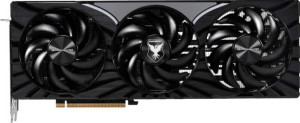
Gainward GeForce RTX 5070 Ti Phoenix-S GS
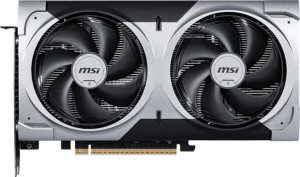
MSI GeForce RTX 5060 Ti Ventus 2X OC Plus 8GB

Gainward GeForce RTX 5070 Ti Phoenix-S GS MSI GeForce RTX 5060 Ti Ventus 2X OC Plus 8GB

Overview

Welcome to our in-depth spec comparison between the Gainward GeForce RTX 5070 Ti Phoenix-S GS and the MSI GeForce RTX 5060 Ti Ventus 2X OC Plus 8GB. Both cards share the same Blackwell architecture and GDDR7 memory, yet they differ significantly across key areas such as raw compute performance, memory capacity, and power consumption. Read on to see how these two GPUs stack up across every major specification.

Common Features

  • Both cards share the same GPU memory speed of 1750 MHz.
  • Double Precision Floating Point (DPFP) is supported on both products.
  • Both cards use GDDR7 memory with an effective memory speed of 28000 MHz.
  • ECC memory support is available on both products.
  • Both products support DirectX 12 Ultimate.
  • Both products support OpenGL version 4.6.
  • Both products support OpenCL version 3.
  • Multi-display technology is supported on both products.
  • Ray tracing is supported on both products.
  • 3D support is available on both products.
  • DLSS is supported on both products.
  • XeSS (XMX) is not available on either product.
  • Both cards feature one HDMI port with HDMI version 2.1b.
  • Both cards include three DisplayPort outputs.
  • Neither card has USB-C ports, DVI outputs, or mini DisplayPort outputs.
  • Both products are based on the Blackwell GPU architecture.
  • Both cards use PCIe version 5.
  • Both cards are manufactured on a 5 nm semiconductor process.
  • Air-water cooling is not available on either product.

Main Differences

  • GPU clock speed is 2295 MHz on the Gainward GeForce RTX 5070 Ti Phoenix-S GS and 2407 MHz on the MSI GeForce RTX 5060 Ti Ventus 2X OC Plus 8GB.
  • GPU turbo speed is 2482 MHz on the Gainward GeForce RTX 5070 Ti Phoenix-S GS and 2602 MHz on the MSI GeForce RTX 5060 Ti Ventus 2X OC Plus 8GB.
  • Pixel rate is 238.3 GPixel/s on the Gainward GeForce RTX 5070 Ti Phoenix-S GS and 124.9 GPixel/s on the MSI GeForce RTX 5060 Ti Ventus 2X OC Plus 8GB.
  • Floating-point performance is 44.48 TFLOPS on the Gainward GeForce RTX 5070 Ti Phoenix-S GS and 23.98 TFLOPS on the MSI GeForce RTX 5060 Ti Ventus 2X OC Plus 8GB.
  • Texture rate is 695 GTexels/s on the Gainward GeForce RTX 5070 Ti Phoenix-S GS and 374.7 GTexels/s on the MSI GeForce RTX 5060 Ti Ventus 2X OC Plus 8GB.
  • Shading units number 8960 on the Gainward GeForce RTX 5070 Ti Phoenix-S GS and 4608 on the MSI GeForce RTX 5060 Ti Ventus 2X OC Plus 8GB.
  • Texture mapping units (TMUs) total 280 on the Gainward GeForce RTX 5070 Ti Phoenix-S GS and 144 on the MSI GeForce RTX 5060 Ti Ventus 2X OC Plus 8GB.
  • Render output units (ROPs) total 96 on the Gainward GeForce RTX 5070 Ti Phoenix-S GS and 48 on the MSI GeForce RTX 5060 Ti Ventus 2X OC Plus 8GB.
  • Maximum memory bandwidth is 896 GB/s on the Gainward GeForce RTX 5070 Ti Phoenix-S GS and 448 GB/s on the MSI GeForce RTX 5060 Ti Ventus 2X OC Plus 8GB.
  • VRAM is 16GB on the Gainward GeForce RTX 5070 Ti Phoenix-S GS and 8GB on the MSI GeForce RTX 5060 Ti Ventus 2X OC Plus 8GB.
  • Memory bus width is 256-bit on the Gainward GeForce RTX 5070 Ti Phoenix-S GS and 128-bit on the MSI GeForce RTX 5060 Ti Ventus 2X OC Plus 8GB.
  • RGB lighting is present on the Gainward GeForce RTX 5070 Ti Phoenix-S GS but not available on the MSI GeForce RTX 5060 Ti Ventus 2X OC Plus 8GB.
  • Thermal Design Power (TDP) is 300W on the Gainward GeForce RTX 5070 Ti Phoenix-S GS and 180W on the MSI GeForce RTX 5060 Ti Ventus 2X OC Plus 8GB.
  • The number of transistors is 45600 million on the Gainward GeForce RTX 5070 Ti Phoenix-S GS and 21900 million on the MSI GeForce RTX 5060 Ti Ventus 2X OC Plus 8GB.
  • Card width is 331.9 mm on the Gainward GeForce RTX 5070 Ti Phoenix-S GS and 227 mm on the MSI GeForce RTX 5060 Ti Ventus 2X OC Plus 8GB.
  • Card height is 127.1 mm on the Gainward GeForce RTX 5070 Ti Phoenix-S GS and 127 mm on the MSI GeForce RTX 5060 Ti Ventus 2X OC Plus 8GB.
Specs Comparison
Gainward GeForce RTX 5070 Ti Phoenix-S GS

Gainward GeForce RTX 5070 Ti Phoenix-S GS

MSI GeForce RTX 5060 Ti Ventus 2X OC Plus 8GB

MSI GeForce RTX 5060 Ti Ventus 2X OC Plus 8GB

Performance:
GPU clock speed 2295 MHz 2407 MHz
GPU turbo 2482 MHz 2602 MHz
pixel rate 238.3 GPixel/s 124.9 GPixel/s
floating-point performance 44.48 TFLOPS 23.98 TFLOPS
texture rate 695 GTexels/s 374.7 GTexels/s
GPU memory speed 1750 MHz 1750 MHz
shading units 8960 4608
texture mapping units (TMUs) 280 144
render output units (ROPs) 96 48
Has Double Precision Floating Point (DPFP)

At first glance, the MSI GeForce RTX 5060 Ti Ventus 2X OC Plus 8GB appears to have a clock speed advantage, running at a base of 2407 MHz and boosting to 2602 MHz versus the Gainward GeForce RTX 5070 Ti Phoenix-S GS at 2295 MHz base and 2482 MHz turbo. However, raw clock speed tells only a fraction of the GPU performance story. The far more telling metric is the scale of the compute architecture underneath those clocks.

The RTX 5070 Ti Phoenix-S GS nearly doubles the 5060 Ti across every parallel-processing dimension: 8960 shading units versus 4608, 280 TMUs versus 144, and 96 ROPs versus 48. This translates directly into real-world throughput numbers that cannot be offset by a clock speed delta. Its floating-point performance of 44.48 TFLOPS is approximately 85% higher than the 5060 Ti's 23.98 TFLOPS, its texture fill rate of 695 GTexels/s is nearly double, and its pixel rate of 238.3 GPixel/s versus 124.9 GPixel/s means it can push substantially more pixels per second — a critical advantage at higher resolutions like 4K. The one area where both cards are perfectly matched is GPU memory speed at 1750 MHz, and both support Double Precision Floating Point, relevant for compute workloads.

The performance edge here belongs decisively to the RTX 5070 Ti Phoenix-S GS. The 5060 Ti's higher clock speeds are structurally outclassed by the 5070 Ti's vastly wider compute pipeline. For users who prioritize gaming at high resolutions, content creation, or GPU compute tasks, the 5070 Ti offers a substantially higher performance ceiling in every throughput-sensitive scenario.

Memory:
effective memory speed 28000 MHz 28000 MHz
maximum memory bandwidth 896 GB/s 448 GB/s
VRAM 16GB 8GB
GDDR version GDDR7 GDDR7
memory bus width 256-bit 128-bit
Supports ECC memory

Both cards share the same GDDR7 memory standard and an identical effective memory speed of 28000 MHz, meaning neither has an edge in raw memory clock. The real divergence lies in how wide a channel that memory can flow through. The RTX 5070 Ti Phoenix-S GS uses a 256-bit memory bus compared to the 5060 Ti Ventus's 128-bit bus — exactly half the width — and this single architectural difference has cascading consequences across every memory metric.

The most immediate consequence is bandwidth: the 5070 Ti Phoenix-S GS delivers 896 GB/s of maximum memory bandwidth versus 448 GB/s on the 5060 Ti. Since bandwidth is essentially the rate at which the GPU can feed data to its shader cores, this gap directly amplifies the compute throughput advantage already seen in the Performance group. High-resolution textures, large frame buffers, and ray tracing workloads are all bandwidth-hungry; at 4K in particular, a narrower memory bus becomes a genuine bottleneck. Compounding this is the VRAM capacity itself: 16 GB on the 5070 Ti versus 8 GB on the 5060 Ti, which matters increasingly as modern game titles and AI workloads push beyond the 8 GB threshold. Both cards support ECC memory, relevant for professional compute use cases.

The memory advantage belongs clearly to the Gainward RTX 5070 Ti Phoenix-S GS. Its doubled bus width, doubled bandwidth, and doubled VRAM capacity give it a substantially more capable memory subsystem — one that will sustain performance at higher resolutions and in more memory-intensive workloads where the 5060 Ti may face hard limits.

Features:
DirectX version DirectX 12 Ultimate DirectX 12 Ultimate
OpenGL version 4.6 4.6
OpenCL version 3 3
Supports multi-display technology
supports ray tracing
Supports 3D
supports DLSS
has XeSS (XMX)
AMD SAM / Intel Resizable BAR Intel Resizable BAR Intel Resizable BAR
has LHR
has RGB lighting
supported displays 4 4

Across the feature set, these two cards are remarkably well-matched. Both support DirectX 12 Ultimate, OpenGL 4.6, OpenCL 3, ray tracing, DLSS, 3D output, and up to 4 simultaneous displays — meaning users of either card have access to the same core gaming and compute feature stack. Intel Resizable BAR is present on both, enabling the CPU to access the full GPU frame buffer at once, which can yield meaningful performance gains in compatible titles.

Drilling down to find any differentiation, the sole distinguishing feature in this group is RGB lighting: the Gainward RTX 5070 Ti Phoenix-S GS includes it, while the MSI RTX 5060 Ti Ventus 2X OC Plus does not. For users building aesthetically coordinated systems, this may factor into the decision, but it carries no functional performance implication whatsoever.

On features alone, this group is essentially a tie. Both cards offer an identical software and API capability profile. The only concrete differentiator — RGB lighting on the 5070 Ti — is purely cosmetic, making this a category where neither card holds a meaningful functional advantage over the other.

Ports:
has an HDMI output
HDMI ports 1 1
HDMI version HDMI 2.1b HDMI 2.1b
DisplayPort outputs 3 3
USB-C ports 0 0
DVI outputs 0 0
mini DisplayPort outputs 0 0

The port configuration on these two cards is completely identical. Both offer 1 HDMI 2.1b output and 3 DisplayPort outputs, totaling four display connections — consistent with the four-display maximum noted in their feature specs. Neither card includes USB-C, DVI, or mini DisplayPort outputs.

The practical takeaway is that users of either card enjoy the same connectivity options. HDMI 2.1b supports up to 4K at high refresh rates and 8K output, while three DisplayPort outputs provide flexibility for multi-monitor setups or high-refresh-rate gaming displays. The absence of USB-C is worth noting for users who rely on that interface for display output to certain monitors or VR headsets, but this limitation applies equally to both.

This category is a complete tie — the port layout is a mirror image across both cards, and no advantage can be assigned to either the Gainward RTX 5070 Ti Phoenix-S GS or the MSI RTX 5060 Ti Ventus 2X OC Plus 8GB on the basis of connectivity alone.

General info:
GPU architecture Blackwell Blackwell
release date February 2025 April 2025
Thermal Design Power (TDP) 300W 180W
PCI Express (PCIe) version 5 5
semiconductor size 5 nm 5 nm
number of transistors 45600 million 21900 million
Has air-water cooling
width 331.9 mm 227 mm
height 127.1 mm 127 mm

Both cards are built on the same Blackwell architecture using a 5 nm process node over a PCIe 5.0 interface, establishing a common generational foundation. Where they diverge significantly is in silicon scale: the RTX 5070 Ti Phoenix-S GS packs 45,600 million transistors against the RTX 5060 Ti Ventus's 21,900 million — more than double — which directly underpins the performance and memory bandwidth gaps seen in the other spec groups. More transistors mean more functional units, larger caches, and greater compute density, all of which translate into the throughput advantages the 5070 Ti holds elsewhere.

That additional silicon comes with real-world costs. The 5070 Ti Phoenix-S GS carries a 300W TDP compared to the 5060 Ti's 180W, a 120W difference that has meaningful implications for PSU requirements, case airflow planning, and long-term electricity consumption. Physically, the 5070 Ti is also considerably larger at 331.9 mm in length versus 227 mm for the 5060 Ti — a 105 mm difference that can be decisive in compact or mid-tower builds with limited GPU clearance. Heights are effectively identical at approximately 127 mm on both.

For system builders, this group highlights a practical tradeoff rather than a straightforward winner. The MSI RTX 5060 Ti Ventus 2X OC Plus holds a clear advantage in power efficiency and physical footprint, making it the more accommodating choice for smaller cases or modest power supplies. The Gainward RTX 5070 Ti Phoenix-S GS demands more from the surrounding system in exchange for its substantially larger compute die — a trade that only makes sense when the build is equipped to support it.

Comparison Summary & Verdict

After examining every specification, a clear picture emerges for each card. The Gainward GeForce RTX 5070 Ti Phoenix-S GS holds a commanding lead in floating-point performance at 44.48 TFLOPS, offers double the VRAM at 16GB on a 256-bit bus, and delivers nearly twice the memory bandwidth and texture throughput — making it the stronger choice for demanding workloads, high-resolution gaming, and content creation tasks. It also adds RGB lighting for those who value aesthetics. The MSI GeForce RTX 5060 Ti Ventus 2X OC Plus 8GB, on the other hand, operates at a considerably lower TDP of 180W and comes in a much more compact form factor, making it an attractive option for users building smaller systems or working within tighter power budgets. Both cards support ray tracing, DLSS, DirectX 12 Ultimate, and identical display output configurations, so neither compromises on modern feature support.

Gainward GeForce RTX 5070 Ti Phoenix-S GS
Buy Gainward GeForce RTX 5070 Ti Phoenix-S GS if...

Buy the Gainward GeForce RTX 5070 Ti Phoenix-S GS if you need maximum GPU performance, 16GB of fast VRAM, and the highest possible memory bandwidth for demanding gaming or professional workloads.

MSI GeForce RTX 5060 Ti Ventus 2X OC Plus 8GB
Buy MSI GeForce RTX 5060 Ti Ventus 2X OC Plus 8GB if...

Buy the MSI GeForce RTX 5060 Ti Ventus 2X OC Plus 8GB if you are building a compact or power-efficient system and a 180W TDP with a smaller card footprint better suits your setup.