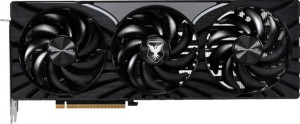
Gainward GeForce RTX 5070 Ti Phoenix-S
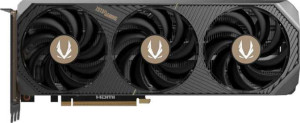
Zotac Gaming GeForce RTX 5070 Ti Solid Core OC

Gainward GeForce RTX 5070 Ti Phoenix-S Zotac Gaming GeForce RTX 5070 Ti Solid Core OC

Overview

Welcome to this detailed spec comparison between the Gainward GeForce RTX 5070 Ti Phoenix-S and the Zotac Gaming GeForce RTX 5070 Ti Solid Core OC. Both cards share the same Blackwell architecture and 16GB GDDR7 memory pool, yet they differ in boost clock speeds, raw throughput figures, and physical dimensions. Read on to find out which of these RTX 5070 Ti variants best suits your build and performance expectations.

Common Features

  • Both cards share a base GPU clock speed of 2295 MHz.
  • Both cards have a GPU memory speed of 1750 MHz.
  • Both cards feature 8960 shading units.
  • Both cards include 280 texture mapping units (TMUs).
  • Both cards have 96 render output units (ROPs).
  • Double Precision Floating Point (DPFP) support is available on both cards.
  • Both cards have an effective memory speed of 28000 MHz.
  • Both cards offer a maximum memory bandwidth of 896 GB/s.
  • Both cards are equipped with 16GB of VRAM.
  • Both cards use GDDR7 memory.
  • Both cards have a 256-bit memory bus width.
  • ECC memory support is available on both cards.
  • Both cards support DirectX 12 Ultimate.
  • Both cards support OpenGL version 4.6.
  • Both cards support OpenCL version 3.
  • Multi-display technology support is available on both cards.
  • Ray tracing support is available on both cards.
  • 3D support is available on both cards.
  • DLSS support is available on both cards.
  • XeSS (XMX) support is not available on either card.
  • Both cards feature one HDMI 2.1b output.
  • Both cards include three DisplayPort outputs.
  • Neither card has any USB-C or DVI outputs.
  • Both cards are based on the Blackwell GPU architecture.
  • Both cards have a Thermal Design Power (TDP) of 300W.
  • Both cards use PCIe version 5.
  • Both cards are manufactured on a 5 nm semiconductor process.
  • Both cards contain 45600 million transistors.
  • Neither card features air-water cooling.

Main Differences

  • GPU turbo clock speed is 2452 MHz on the Gainward GeForce RTX 5070 Ti Phoenix-S and 2482 MHz on the Zotac Gaming GeForce RTX 5070 Ti Solid Core OC.
  • Pixel rate is 235.4 GPixel/s on the Gainward GeForce RTX 5070 Ti Phoenix-S and 238.3 GPixel/s on the Zotac Gaming GeForce RTX 5070 Ti Solid Core OC.
  • Floating-point performance is 43.94 TFLOPS on the Gainward GeForce RTX 5070 Ti Phoenix-S and 44.48 TFLOPS on the Zotac Gaming GeForce RTX 5070 Ti Solid Core OC.
  • Texture rate is 686.6 GTexels/s on the Gainward GeForce RTX 5070 Ti Phoenix-S and 695 GTexels/s on the Zotac Gaming GeForce RTX 5070 Ti Solid Core OC.
  • Card width is 331.9 mm on the Gainward GeForce RTX 5070 Ti Phoenix-S and 303.5 mm on the Zotac Gaming GeForce RTX 5070 Ti Solid Core OC.
  • Card height is 127.1 mm on the Gainward GeForce RTX 5070 Ti Phoenix-S and 115.8 mm on the Zotac Gaming GeForce RTX 5070 Ti Solid Core OC.
Specs Comparison
Gainward GeForce RTX 5070 Ti Phoenix-S

Gainward GeForce RTX 5070 Ti Phoenix-S

Zotac Gaming GeForce RTX 5070 Ti Solid Core OC

Zotac Gaming GeForce RTX 5070 Ti Solid Core OC

Performance:
GPU clock speed 2295 MHz 2295 MHz
GPU turbo 2452 MHz 2482 MHz
pixel rate 235.4 GPixel/s 238.3 GPixel/s
floating-point performance 43.94 TFLOPS 44.48 TFLOPS
texture rate 686.6 GTexels/s 695 GTexels/s
GPU memory speed 1750 MHz 1750 MHz
shading units 8960 8960
texture mapping units (TMUs) 280 280
render output units (ROPs) 96 96
Has Double Precision Floating Point (DPFP)

At the core, both the Gainward GeForce RTX 5070 Ti Phoenix-S and the Zotac Gaming GeForce RTX 5070 Ti Solid Core OC are built on the same fundamental silicon: identical base clocks of 2295 MHz, the same 8960 shading units, 280 TMUs, 96 ROPs, and matching memory speeds of 1750 MHz. This means their theoretical rendering pipelines and memory bandwidth are indistinguishable at the hardware level, and neither card holds an inherent architectural advantage over the other.

The only meaningful performance gap emerges from the factory overclock applied by Zotac. The Solid Core OC reaches a GPU turbo of 2482 MHz versus the Phoenix-S's 2452 MHz — a 30 MHz difference that translates directly into slightly higher derived throughput figures: 44.48 TFLOPS versus 43.94 TFLOPS in floating-point performance, and 695 GTexels/s versus 686.6 GTexels/s in texture fill rate. In practice, a ~1.2% boost clock advantage like this sits well within the noise floor of real-world gaming benchmarks and is unlikely to produce a perceptible frame rate difference under typical workloads.

For this performance group, the Zotac Solid Core OC holds a narrow technical edge strictly by the numbers, courtesy of its higher factory boost clock. However, the advantage is marginal enough that real-world performance between these two cards will be effectively equivalent in gaming and most compute tasks. Buyers should weight other factors — cooling design, acoustics, and price — more heavily than this small clock speed delta when deciding between them.

Memory:
effective memory speed 28000 MHz 28000 MHz
maximum memory bandwidth 896 GB/s 896 GB/s
VRAM 16GB 16GB
GDDR version GDDR7 GDDR7
memory bus width 256-bit 256-bit
Supports ECC memory

The memory configurations of the Gainward Phoenix-S and the Zotac Solid Core OC are a perfect mirror of each other. Both cards equip 16GB of GDDR7 memory running at an effective speed of 28000 MHz across a 256-bit bus, yielding a maximum bandwidth of 896 GB/s. GDDR7 represents a generational leap in memory technology, and at this bandwidth figure, both cards are well-equipped to handle 4K gaming, large texture assets, and memory-intensive workloads without bottlenecking the GPU cores.

The 16GB frame buffer is a practically significant amount at this tier — enough headroom for high-resolution texture packs, multi-monitor rendering, and increasingly VRAM-hungry AI-assisted features in modern games and creative applications. Both cards also support ECC memory, a feature that enables error-correcting functionality useful in professional and compute workloads where data integrity is critical, adding a degree of versatility beyond pure gaming use cases.

This group is a straightforward dead tie. Every memory specification — capacity, speed, bus width, bandwidth, generation, and ECC support — is identical between the two cards. Memory performance will be indistinguishable in any real-world scenario, and this category should carry no weight in a purchasing decision between these two products.

Features:
DirectX version DirectX 12 Ultimate DirectX 12 Ultimate
OpenGL version 4.6 4.6
OpenCL version 3 3
Supports multi-display technology
supports ray tracing
Supports 3D
supports DLSS
has XeSS (XMX)
AMD SAM / Intel Resizable BAR Intel Resizable BAR Intel Resizable BAR
has LHR
has RGB lighting
supported displays 4 4

Feature parity between the Gainward Phoenix-S and the Zotac Solid Core OC is total. Both cards share the same software and API ecosystem: DirectX 12 Ultimate support ensures access to the full suite of modern rendering features including hardware-accelerated ray tracing, mesh shaders, and variable rate shading. Paired with DLSS support, both cards can leverage AI-driven upscaling to deliver higher frame rates with minimal visual quality loss — a meaningful real-world advantage in demanding titles.

On the connectivity and usability side, both cards support up to 4 simultaneous displays and are compatible with Intel Resizable BAR, which allows the CPU to access the full GPU frame buffer at once rather than in small chunks, typically yielding modest but measurable performance improvements in supported games. Neither card carries an LHR (Lite Hash Rate) limiter, though this is largely a legacy concern at this point in the market cycle.

With every feature — from ray tracing and DLSS to RGB lighting and multi-display support — checking out identically on both cards, this group is another complete tie. There is no feature-based reason to prefer one over the other; both deliver the same software capabilities and ecosystem compatibility to the end user.

Ports:
has an HDMI output
HDMI ports 1 1
HDMI version HDMI 2.1b HDMI 2.1b
DisplayPort outputs 3 3
USB-C ports 0 0
DVI outputs 0 0
mini DisplayPort outputs 0 0

Both the Gainward Phoenix-S and the Zotac Solid Core OC offer an identical port layout: three DisplayPort outputs and one HDMI 2.1b port, totaling four display connections — consistent with the four-display limit noted in the Features group. This is a practical and well-balanced configuration for the vast majority of users, covering everything from a single high-refresh-rate gaming monitor to a multi-display productivity setup.

The inclusion of HDMI 2.1b is worth noting: this version supports up to 4K at very high refresh rates and 8K output, making both cards future-ready for next-generation displays and living-room setups via a single cable that carries both video and audio. Neither card offers a USB-C or Thunderbolt port, which may matter to users who want to drive a USB-C monitor directly without an adapter, but this omission is common at this product tier.

As with the previous groups, the port comparison resolves as a complete tie. The connector selection, versions, and counts are identical, so display compatibility and connectivity flexibility will be exactly the same regardless of which card a buyer chooses.

General info:
GPU architecture Blackwell Blackwell
release date March 2025 February 2025
Thermal Design Power (TDP) 300W 300W
PCI Express (PCIe) version 5 5
semiconductor size 5 nm 5 nm
number of transistors 45600 million 45600 million
Has air-water cooling
width 331.9 mm 303.5 mm
height 127.1 mm 115.8 mm

Sharing the same Blackwell architecture, 5nm process node, and 45,600 million transistors, both the Gainward Phoenix-S and the Zotac Solid Core OC are built from identical silicon. Their 300W TDP and PCIe 5.0 interface are likewise the same, meaning power supply requirements and motherboard compatibility are equivalent across both cards. For builders planning around power budgets or slot availability, neither card presents any distinction.

Where these two cards finally diverge in a tangible, practical way is physical size. The Gainward Phoenix-S measures 331.9 mm × 127.1 mm, while the Zotac Solid Core OC comes in notably more compact at 303.5 mm × 115.8 mm — nearly 28mm shorter and over 11mm slimmer in height. That is a meaningful difference for case compatibility: the Zotac will fit comfortably in mid-tower and smaller cases that might struggle to accommodate the longer Gainward cooler shroud.

This group produces the first clear, practical differentiator of the entire comparison. The Zotac Solid Core OC holds a real-world advantage for users building in space-constrained cases or prioritizing a tidier, less crowded interior. For those with large full-tower builds where length is no concern, the size gap is irrelevant — but for compact or mid-size builds, the Zotac's smaller footprint is a genuine point in its favor.

Comparison Summary & Verdict

After examining all available specifications, both cards prove to be extremely capable RTX 5070 Ti options sharing identical memory configurations, a 300W TDP, and full feature parity including ray tracing and DLSS support. The key distinction lies in the numbers: the Zotac Gaming GeForce RTX 5070 Ti Solid Core OC edges ahead with a 2482 MHz boost clock, 44.48 TFLOPS of floating-point performance, and a more compact 303.5 x 115.8 mm footprint. The Gainward GeForce RTX 5070 Ti Phoenix-S, while marginally behind on peak clocks, occupies a larger 331.9 x 127.1 mm frame. Builders working inside space-constrained cases will favour the Zotac, while those with roomier enclosures will find the Gainward a perfectly solid choice at virtually the same performance level.

Gainward GeForce RTX 5070 Ti Phoenix-S
Buy Gainward GeForce RTX 5070 Ti Phoenix-S if...

Buy the Gainward GeForce RTX 5070 Ti Phoenix-S if your case has ample room for a larger card and the small difference in boost clock speed is not a deciding factor for you.

Zotac Gaming GeForce RTX 5070 Ti Solid Core OC
Buy Zotac Gaming GeForce RTX 5070 Ti Solid Core OC if...

Buy the Zotac Gaming GeForce RTX 5070 Ti Solid Core OC if you want the higher boost clock of 2482 MHz and better floating-point performance in a noticeably more compact form factor.