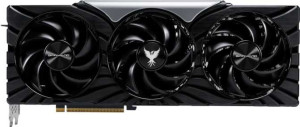
In terms of raw performance, the Gainward GeForce RTX 5070 Ti Phoenix and the MSI GeForce RTX 5070 Ti Ventus 3X are built on an identical silicon foundation. Both cards share the same 2295 MHz base clock and 2452 MHz boost clock, and as a direct consequence, every derived throughput metric — 43.94 TFLOPS of floating-point performance, a pixel rate of 235.4 GPixel/s, and a texture rate of 686.6 GTexels/s — is exactly the same. This is not a coincidence: both are reference-clocked implementations of the same GPU, meaning neither vendor has applied a factory overclock to differentiate their card at launch.
Digging deeper into the compute architecture confirms the parity: both feature 8960 shading units, 280 TMUs, and 96 ROPs, alongside identical 1750 MHz memory speeds and Double Precision Floating Point support. The ROP count directly influences rendering throughput at high resolutions, while the TMU count governs texture fill rate — and with both figures locked to the same values, neither card will have a rendering pipeline advantage over the other in any workload, from gaming to GPU compute tasks.
The verdict for this group is an unambiguous tie. Every single performance specification is identical between the Phoenix and the Ventus 3X. Buyers should therefore look beyond this group — at cooling, build quality, acoustics, or price — to decide between these two cards, as performance alone offers no differentiating factor whatsoever.