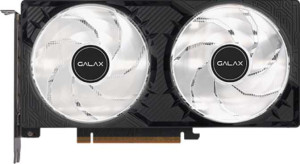
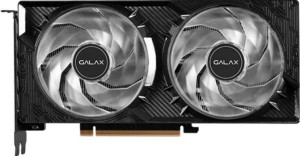
Galax GeForce RTX 5050 1-Click OC
Galax GeForce RTX 5060 1-Click OC

Galax GeForce RTX 5050 1-Click OC Galax GeForce RTX 5060 1-Click OC

Common Features

  • Both products support Double Precision Floating Point (DPFP).
  • Both products have 8GB of VRAM.
  • Both products have a 128-bit memory bus width.
  • Both products support ECC memory.
  • Both products support DirectX 12 Ultimate.
  • Both products support OpenGL version 4.6.
  • Both products support OpenCL version 3.
  • Both products support multi-display technology.
  • Both products support ray tracing.
  • Both products support 3D.
  • Both products support DLSS.
  • Both products do not have XeSS (XMX).
  • Both products have an HDMI output.
  • Both products have HDMI version 2.1b.
  • Both products do not have USB-C ports.
  • Both products do not have DVI outputs.
  • Both products do not have mini DisplayPort outputs.
  • Both products use the Blackwell GPU architecture.
  • Both products support PCI Express version 5.
  • Both products use a 5 nm semiconductor process.
  • Both products do not have air-water cooling.

Main Differences

  • GPU clock speed is 2317 MHz on Galax GeForce RTX 5050 1-Click OC and 2280 MHz on Galax GeForce RTX 5060 1-Click OC.
  • GPU turbo is 2587 MHz on Galax GeForce RTX 5050 1-Click OC and 2512 MHz on Galax GeForce RTX 5060 1-Click OC.
  • Pixel rate is 82.78 GPixel/s on Galax GeForce RTX 5050 1-Click OC and 120.6 GPixel/s on Galax GeForce RTX 5060 1-Click OC.
  • Floating-point performance is 13.25 TFLOPS on Galax GeForce RTX 5050 1-Click OC and 19.29 TFLOPS on Galax GeForce RTX 5060 1-Click OC.
  • Texture rate is 207 GTexels/s on Galax GeForce RTX 5050 1-Click OC and 301.4 GTexels/s on Galax GeForce RTX 5060 1-Click OC.
  • GPU memory speed is 2500 MHz on Galax GeForce RTX 5050 1-Click OC and 1750 MHz on Galax GeForce RTX 5060 1-Click OC.
  • Shading units are 2560 on Galax GeForce RTX 5050 1-Click OC and 3840 on Galax GeForce RTX 5060 1-Click OC.
  • Texture mapping units (TMUs) are 80 on Galax GeForce RTX 5050 1-Click OC and 120 on Galax GeForce RTX 5060 1-Click OC.
  • Render output units (ROPs) are 32 on Galax GeForce RTX 5050 1-Click OC and 48 on Galax GeForce RTX 5060 1-Click OC.
  • Effective memory speed is 20000 MHz on Galax GeForce RTX 5050 1-Click OC and 28000 MHz on Galax GeForce RTX 5060 1-Click OC.
  • Maximum memory bandwidth is 320 GB/s on Galax GeForce RTX 5050 1-Click OC and 448 GB/s on Galax GeForce RTX 5060 1-Click OC.
  • GDDR version is GDDR6 on Galax GeForce RTX 5050 1-Click OC and GDDR7 on Galax GeForce RTX 5060 1-Click OC.
  • HDMI ports are 2 on Galax GeForce RTX 5050 1-Click OC and 1 on Galax GeForce RTX 5060 1-Click OC.
  • DisplayPort outputs are 2 on Galax GeForce RTX 5050 1-Click OC and 3 on Galax GeForce RTX 5060 1-Click OC.
  • Thermal Design Power (TDP) is 130W on Galax GeForce RTX 5050 1-Click OC and 145W on Galax GeForce RTX 5060 1-Click OC.
  • Number of transistors is 16900 million on Galax GeForce RTX 5050 1-Click OC and 21900 million on Galax GeForce RTX 5060 1-Click OC.
  • Width is 234 mm on Galax GeForce RTX 5050 1-Click OC and 247 mm on Galax GeForce RTX 5060 1-Click OC.
  • Height is 129.5 mm on Galax GeForce RTX 5050 1-Click OC and 131 mm on Galax GeForce RTX 5060 1-Click OC.
Specs Comparison
Galax GeForce RTX 5050 1-Click OC

Galax GeForce RTX 5050 1-Click OC

Galax GeForce RTX 5060 1-Click OC

Galax GeForce RTX 5060 1-Click OC

Performance:
GPU clock speed 2317 MHz 2280 MHz
GPU turbo 2587 MHz 2512 MHz
pixel rate 82.78 GPixel/s 120.6 GPixel/s
floating-point performance 13.25 TFLOPS 19.29 TFLOPS
texture rate 207 GTexels/s 301.4 GTexels/s
GPU memory speed 2500 MHz 1750 MHz
shading units 2560 3840
texture mapping units (TMUs) 80 120
render output units (ROPs) 32 48
Has Double Precision Floating Point (DPFP)

The Galax GeForce RTX 5050 1-Click OC and Galax GeForce RTX 5060 1-Click OC both offer strong performance specs, but there are several key differences between them. Starting with GPU clock speed, the RTX 5050 has a base clock of 2317 MHz, slightly higher than the RTX 5060's 2280 MHz. However, when it comes to GPU turbo speed, the RTX 5050 boosts to 2587 MHz, while the RTX 5060 reaches 2512 MHz, making the 5050 marginally faster in this regard.

In terms of pixel rate, the RTX 5060 outpaces the RTX 5050 with a significantly higher rate of 120.6 GPixel/s compared to the 5050's 82.78 GPixel/s. The texture rate also follows this trend, with the RTX 5060 achieving 301.4 GTexels/s, almost double the 5050's 207 GTexels/s. Additionally, the RTX 5060 has more shading units (3840 vs 2560) and texture mapping units (TMUs) (120 vs 80), which should enhance its ability to handle complex textures and shaders more effectively.

On the other hand, the RTX 5050's GPU memory speed is notably higher at 2500 MHz, compared to the RTX 5060's 1750 MHz. The RTX 5050 also has the same number of render output units (ROPs) at 32, while the RTX 5060 has more ROPs at 48, which could improve its performance in rendering tasks. Both cards feature Double Precision Floating Point (DPFP) support, ensuring high accuracy for certain computational tasks.

Memory:
effective memory speed 20000 MHz 28000 MHz
maximum memory bandwidth 320 GB/s 448 GB/s
VRAM 8GB 8GB
GDDR version GDDR6 GDDR7
memory bus width 128-bit 128-bit
Supports ECC memory

The memory specifications of the Galax GeForce RTX 5050 1-Click OC and the Galax GeForce RTX 5060 1-Click OC show some notable differences. Both cards feature 8GB of VRAM and a 128-bit memory bus width, so they are identical in these areas. However, the effective memory speed of the RTX 5050 is 20000 MHz, whereas the RTX 5060 benefits from a faster effective memory speed of 28000 MHz, which could impact overall data throughput and performance in memory-intensive tasks.

In terms of maximum memory bandwidth, the RTX 5050 has a peak bandwidth of 320 GB/s, while the RTX 5060 offers a significantly higher bandwidth of 448 GB/s, further enhancing its potential for handling demanding workloads.

Both cards support ECC (Error-Correcting Code) memory, ensuring error-free data processing for both models, so there’s no difference in that respect.

Features:
DirectX version DirectX 12 Ultimate DirectX 12 Ultimate
OpenGL version 4.6 4.6
OpenCL version 3 3
Supports multi-display technology
supports ray tracing
Supports 3D
supports DLSS
has XeSS (XMX)
AMD SAM / Intel Resizable BAR Intel Resizable BAR Intel Resizable BAR
has LHR
has RGB lighting
supported displays 4 4

The features of the Galax GeForce RTX 5050 1-Click OC and Galax GeForce RTX 5060 1-Click OC are very similar, with both cards supporting a wide range of modern technologies. Both cards support DirectX 12 Ultimate, OpenGL 4.6, and OpenCL 3, ensuring compatibility with the latest software and applications. They also support multi-display technology, ray tracing, and 3D, making them suitable for immersive visual experiences. Additionally, both cards support DLSS (Deep Learning Super Sampling), enhancing performance in compatible games.

Neither card supports XeSS (XMX), so this feature is absent from both models. Both cards also support Intel Resizable BAR (AMD SAM is not mentioned for either), which allows for better memory access and potential performance improvements in certain scenarios.

Other shared features include the absence of LHR (Lite Hash Rate) limiting, RGB lighting, and support for up to 4 displays. Given that the specifications for these features are identical, there are no notable differences between the two models in terms of their feature sets.

Ports:
has an HDMI output
HDMI ports 2 1
HDMI version HDMI 2.1b HDMI 2.1b
DisplayPort outputs 2 3
USB-C ports 0 0
DVI outputs 0 0
mini DisplayPort outputs 0 0

The port configurations of the Galax GeForce RTX 5050 1-Click OC and Galax GeForce RTX 5060 1-Click OC show some differences in the number of HDMI and DisplayPort outputs. The RTX 5050 has 2 HDMI ports, while the RTX 5060 has 1 HDMI port, which could influence the number of displays you can easily connect via HDMI. Both models feature HDMI 2.1b support, so they are compatible with the latest HDMI standards.

In terms of DisplayPort outputs, the RTX 5050 offers 2, while the RTX 5060 provides 3, which may offer more flexibility for users requiring additional DisplayPort connections. Neither card includes USB-C, DVI, or mini DisplayPort outputs, keeping their output options relatively simple but functional for most setups.

Overall, the main difference lies in the number of HDMI and DisplayPort outputs, with the RTX 5050 offering more HDMI ports and the RTX 5060 offering more DisplayPort outputs.

General info:
GPU architecture Blackwell Blackwell
release date June 2025 May 2025
Thermal Design Power (TDP) 130W 145W
PCI Express (PCIe) version 5 5
semiconductor size 5 nm 5 nm
number of transistors 16900 million 21900 million
Has air-water cooling
width 234 mm 247 mm
height 129.5 mm 131 mm

The general specifications of the Galax GeForce RTX 5050 1-Click OC and Galax GeForce RTX 5060 1-Click OC show similarities in their GPU architecture and PCI Express version, with both cards featuring the Blackwell architecture and PCIe version 5. They also share the same semiconductor size of 5 nm. However, there are differences in several key areas. The RTX 5050 has a thermal design power (TDP) of 130W, while the RTX 5060 has a higher TDP of 145W, indicating that the 5060 may consume more power under load.

In terms of transistors, the RTX 5050 has 16,900 million transistors, whereas the RTX 5060 includes 21,900 million transistors, which may contribute to higher performance and efficiency in certain tasks. Additionally, the RTX 5050 is slightly smaller in size, with a width of 234 mm and a height of 129.5 mm, compared to the RTX 5060's 247 mm width and 131 mm height, making the 5060 a bit larger overall.

Both cards do not feature air-water cooling, so their cooling solutions are likely limited to air-based systems. Overall, the differences in TDP, transistor count, and size are key factors to consider for users looking for a specific balance of power and size.

Comparison Summary

This is a specification comparison between Galax GeForce RTX 5050 1-Click OC and Galax GeForce RTX 5060 1-Click OC. Both products support Double Precision Floating Point, have 8GB VRAM with a 128-bit memory bus, and support DirectX 12 Ultimate along with ray tracing and DLSS. The Galax GeForce RTX 5050 1-Click OC features a GPU clock speed of 2317 MHz and turbo of 2587 MHz, while the 5060 model has 2280 MHz and 2512 MHz. Pixel rate, floating-point performance, and texture rate are higher on the 5060, reaching 120.6 GPixel/s, 19.29 TFLOPS, and 301.4 GTexels/s respectively. Memory speed and bandwidth differ, with the 5050 at 2500 MHz and 320 GB/s versus 1750 MHz and 448 GB/s on the 5060. The 5060 also has more shading units, TMUs, and ROPs, and slightly larger dimensions and higher TDP than the 5050.