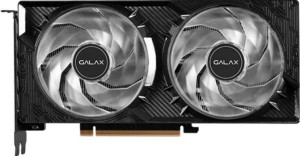
Galax GeForce RTX 5060 1-Click OC
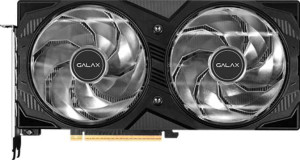
Galax GeForce RTX 5060 EX

Galax GeForce RTX 5060 1-Click OC Galax GeForce RTX 5060 EX

Overview

Welcome to our detailed specification comparison between the Galax GeForce RTX 5060 1-Click OC and the Galax GeForce RTX 5060 EX. Both cards share the same Blackwell architecture, 8GB of GDDR7 memory, and a 145W TDP, making their differences subtle but potentially decisive. In this head-to-head, we examine how they diverge across peak GPU turbo clocks, raw throughput metrics, and physical card dimensions to help you find the best fit for your build.

Common Features

  • Both cards share a base GPU clock speed of 2280 MHz.
  • Both cards have a GPU memory speed of 1750 MHz.
  • Both cards feature 3840 shading units.
  • Both cards include 120 texture mapping units (TMUs).
  • Both cards have 48 render output units (ROPs).
  • Double Precision Floating Point (DPFP) is supported on both cards.
  • Both cards have an effective memory speed of 28000 MHz.
  • Both cards offer a maximum memory bandwidth of 448 GB/s.
  • Both cards come with 8GB of VRAM.
  • Both cards use GDDR7 memory.
  • Both cards have a 128-bit memory bus width.
  • ECC memory is supported on both cards.
  • Both cards support DirectX 12 Ultimate.
  • Both cards support OpenGL version 4.6.
  • Both cards support OpenCL version 3.
  • Multi-display technology is supported on both cards.
  • Ray tracing is supported on both cards.
  • DLSS is supported on both cards.
  • XeSS (XMX) is not available on either card.
  • 3D support is available on both cards.
  • Both cards have one HDMI 2.1b output.
  • Both cards include three DisplayPort outputs.
  • Neither card has USB-C, DVI, or mini DisplayPort outputs.
  • Both cards are built on the Blackwell GPU architecture.
  • Both cards have a Thermal Design Power (TDP) of 145W.
  • Both cards use PCIe version 5.
  • Both cards are manufactured on a 5 nm semiconductor process.
  • Both cards contain 21900 million transistors.
  • Air-water cooling is not available on either card.

Main Differences

  • GPU turbo clock speed is 2512 MHz on Galax GeForce RTX 5060 1-Click OC and 2535 MHz on Galax GeForce RTX 5060 EX.
  • Pixel rate is 120.6 GPixel/s on Galax GeForce RTX 5060 1-Click OC and 121.7 GPixel/s on Galax GeForce RTX 5060 EX.
  • Floating-point performance is 19.29 TFLOPS on Galax GeForce RTX 5060 1-Click OC and 19.47 TFLOPS on Galax GeForce RTX 5060 EX.
  • Texture rate is 301.4 GTexels/s on Galax GeForce RTX 5060 1-Click OC and 304.2 GTexels/s on Galax GeForce RTX 5060 EX.
  • Card width is 247 mm on Galax GeForce RTX 5060 1-Click OC and 264 mm on Galax GeForce RTX 5060 EX.
  • Card height is 131 mm on Galax GeForce RTX 5060 1-Click OC and 145 mm on Galax GeForce RTX 5060 EX.
Specs Comparison
Galax GeForce RTX 5060 1-Click OC

Galax GeForce RTX 5060 1-Click OC

Galax GeForce RTX 5060 EX

Galax GeForce RTX 5060 EX

Performance:
GPU clock speed 2280 MHz 2280 MHz
GPU turbo 2512 MHz 2535 MHz
pixel rate 120.6 GPixel/s 121.7 GPixel/s
floating-point performance 19.29 TFLOPS 19.47 TFLOPS
texture rate 301.4 GTexels/s 304.2 GTexels/s
GPU memory speed 1750 MHz 1750 MHz
shading units 3840 3840
texture mapping units (TMUs) 120 120
render output units (ROPs) 48 48
Has Double Precision Floating Point (DPFP)

At their core, the Galax RTX 5060 1-Click OC and the Galax RTX 5060 EX share an identical silicon foundation: the same 3840 shading units, 120 TMUs, 48 ROPs, base clock of 2280 MHz, and memory speed of 1750 MHz. This means all throughput differences between the two cards come down entirely to a single variable — how aggressively each card boosts under load.

That variable does produce a measurable, if slim, gap. The EX reaches a turbo clock of 2535 MHz versus the 1-Click OC's 2512 MHz — a 23 MHz advantage. Because floating-point throughput, pixel fill rate, and texture rate all scale directly with clock speed on identical hardware, the EX edges ahead across every derived performance metric: 19.47 TFLOPS vs. 19.29 TFLOPS, 121.7 GPixel/s vs. 120.6 GPixel/s, and 304.2 GTexels/s vs. 301.4 GTexels/s. In practical terms, these differences amount to roughly 0.9% across the board — imperceptible in any real gaming or compute workload.

The EX holds a technical edge in this group, but the margin is purely academic. Both cards support Double Precision Floating Point, and their shared architecture means real-world performance will be statistically indistinguishable. The decision between the two should hinge on factors outside raw performance — such as cooling design, price, or power delivery — rather than on these negligible clock speed differences.

Memory:
effective memory speed 28000 MHz 28000 MHz
maximum memory bandwidth 448 GB/s 448 GB/s
VRAM 8GB 8GB
GDDR version GDDR7 GDDR7
memory bus width 128-bit 128-bit
Supports ECC memory

Memory is where any meaningful differentiation between these two cards could emerge — but it simply doesn't. Every single memory specification is identical: 8GB of GDDR7 running at an effective 28000 MHz across a 128-bit bus, delivering 448 GB/s of bandwidth. Both also support ECC memory, a feature typically valued in workstation and compute scenarios where data integrity is critical.

The combination of GDDR7 and a 128-bit bus deserves context. GDDR7 is a generational leap in memory efficiency, and its high per-pin bandwidth largely compensates for the relatively narrow bus width. The resulting 448 GB/s figure is competitive for this tier, enabling smooth texture streaming and keeping up with the GPU's compute throughput in most gaming workloads. That said, the 128-bit bus does impose a ceiling — memory-intensive tasks like high-resolution texture packs or large generative AI models will encounter bandwidth constraints that a wider bus would alleviate.

This group is an absolute tie. There is no basis whatsoever to prefer one card over the other on memory grounds — buyers should look elsewhere in the spec sheet to find any differentiating factor.

Features:
DirectX version DirectX 12 Ultimate DirectX 12 Ultimate
OpenGL version 4.6 4.6
OpenCL version 3 3
Supports multi-display technology
supports ray tracing
Supports 3D
supports DLSS
has XeSS (XMX)
AMD SAM / Intel Resizable BAR Intel Resizable BAR Intel Resizable BAR
has LHR
has RGB lighting
supported displays 4 4

Feature parity between the 1-Click OC and the EX is total. Both cards run on DirectX 12 Ultimate, which unlocks the full suite of modern rendering features — hardware ray tracing, mesh shaders, and variable rate shading — ensuring neither card is at a disadvantage in current or upcoming titles. DLSS support is present on both, giving users access to AI-driven upscaling that can substantially boost frame rates with minimal visual quality loss, a particularly relevant feature at this GPU tier where native resolution headroom can be limited.

A few other shared capabilities are worth noting. Support for up to 4 simultaneous displays makes either card a capable choice for multi-monitor productivity setups, not just gaming. Intel Resizable BAR support allows the CPU to access the full GPU frame buffer at once, which can yield modest but real performance gains in supported games. Neither card carries LHR restrictions, meaning full compute throughput is available for any workload.

With every feature — from ray tracing to RGB lighting to API support levels — being identical, this group is a complete tie. No feature-based argument can be made for choosing one over the other.

Ports:
has an HDMI output
HDMI ports 1 1
HDMI version HDMI 2.1b HDMI 2.1b
DisplayPort outputs 3 3
USB-C ports 0 0
DVI outputs 0 0
mini DisplayPort outputs 0 0

Both the 1-Click OC and the EX offer an identical port layout: one HDMI 2.1b output and three DisplayPort outputs, totaling four display connections — consistent with the four-display limit noted in the Features group. HDMI 2.1b is the latest revision of the standard, bringing support for very high refresh rates at 4K and beyond, as well as improved bandwidth for next-generation displays. The three DisplayPort outputs round out a versatile connectivity package suited to multi-monitor workstation or gaming setups.

Notably absent on both cards is a USB-C port. Some competing cards include a USB-C output that doubles as a DisplayPort connection and can drive VR headsets or newer monitors directly — users with such peripherals will need to rely on adapters. The omission of legacy DVI is expected at this tier and poses no practical concern for modern displays.

Once again, the two cards are in a complete tie. The port configuration is identical in every respect, so connectivity preference offers no reason to choose one over the other.

General info:
GPU architecture Blackwell Blackwell
release date May 2025 May 2025
Thermal Design Power (TDP) 145W 145W
PCI Express (PCIe) version 5 5
semiconductor size 5 nm 5 nm
number of transistors 21900 million 21900 million
Has air-water cooling
width 247 mm 264 mm
height 131 mm 145 mm

Underneath their respective coolers, the 1-Click OC and the EX are built on exactly the same foundation: the Blackwell architecture on a 5nm process with 21.9 billion transistors, a 145W TDP, and a PCIe 5.0 interface. The shared TDP means both cards place an equal demand on system power delivery and cooling infrastructure — neither requires a more robust PSU or airflow setup than the other.

Where they diverge is physical size. The EX is measurably larger, at 264 × 145 mm compared to the 1-Click OC's 247 × 131 mm. That 17mm difference in length and 14mm in height is not trivial in practice. The larger EX cooler likely accommodates a bigger heatsink surface area, which can translate to lower operating temperatures or quieter fan operation under sustained load — though thermal performance data is outside the scope of these specs. Conversely, the more compact 1-Click OC has a meaningful advantage for users with smaller mid-tower or mini-ITX cases where GPU clearance is a genuine constraint.

On the fundamentals — architecture, process node, power draw, and connectivity standard — it is a tie. But the 1-Click OC holds a practical edge for space-constrained builds, while the EX's larger footprint may benefit users prioritizing thermal headroom in a spacious case.

Comparison Summary & Verdict

After a thorough look at every specification, the Galax GeForce RTX 5060 EX holds a measurable edge in raw performance, posting a higher GPU turbo clock of 2535 MHz, a pixel rate of 121.7 GPixel/s, a texture rate of 304.2 GTexels/s, and floating-point performance of 19.47 TFLOPS — making it the stronger choice for users who want every last drop of throughput. On the other hand, the Galax GeForce RTX 5060 1-Click OC is notably more compact at 247 x 131 mm versus 264 x 145 mm, which can be a deciding factor in small form factor builds or cases with tight clearances. Both cards are otherwise identical in memory configuration, feature set, port layout, and power draw, so neither forces a compromise on connectivity or capability. Your decision ultimately comes down to whether a slimmer physical footprint or marginally higher performance numbers matters most to you.

Galax GeForce RTX 5060 1-Click OC
Buy Galax GeForce RTX 5060 1-Click OC if...

Buy the Galax GeForce RTX 5060 1-Click OC if you are building in a compact or small form factor case where physical card size is a priority, as it is noticeably shorter and narrower than the EX.

Galax GeForce RTX 5060 EX
Buy Galax GeForce RTX 5060 EX if...

Buy the Galax GeForce RTX 5060 EX if you want the highest possible out-of-the-box performance, as it offers a higher GPU turbo clock, better pixel rate, and greater floating-point throughput than the 1-Click OC.