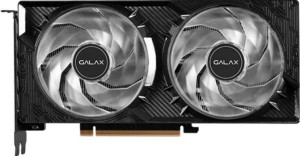
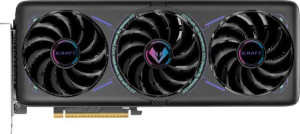
At the memory subsystem level, these two cards share an identical foundation: both run GDDR7 at an effective 28000 MHz over a 128-bit bus, delivering the same peak 448 GB/s of bandwidth. GDDR7 is a meaningful generational step, and 448 GB/s on a 128-bit interface reflects how much efficiency GDDR7 extracts compared to prior generations — so neither card is at a bandwidth disadvantage relative to the other.
Where they diverge is capacity. The Galax RTX 5060 1-Click OC ships with 8GB of VRAM, while the Maxsun RTX 5060 Ti iCraft OC doubles that to 16GB. In practical terms, VRAM capacity determines how large a scene, texture set, or model can reside on-GPU without triggering slower system memory fallback. At 1080p with standard assets this distinction is often invisible, but at 1440p with high-resolution texture packs, or in AI-assisted workloads that stage large model weights on the GPU, the 8GB card will hit its ceiling noticeably sooner. For creative professionals using GPU-accelerated tools, the 16GB buffer is a qualitative difference, not just a quantitative one.
On memory, the Maxsun RTX 5060 Ti iCraft OC holds a clear advantage solely due to its 16GB capacity. The bandwidth and speed are identical, so the Ti does not move data faster — it simply holds twice as much of it on-chip. For users who push texture quality, work with large generative AI models, or plan to use this card beyond a single hardware generation, that extra headroom is a meaningful long-term asset.