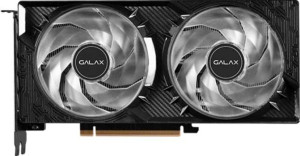
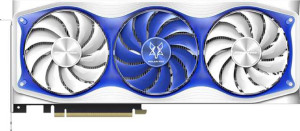
At the heart of the performance gap between these two cards lies a significant difference in raw compute resources. The Manli Polar Fox RTX 5070 OC fields 6144 shading units against the Galax RTX 5060 Ti's 4608, a 33% increase that directly scales into its substantially higher 31.24 TFLOPS of floating-point performance versus 23.84 TFLOPS — a roughly 31% lead in theoretical compute throughput. In practice, this translates into meaningfully faster rasterization and AI-accelerated workloads, particularly at higher resolutions where the GPU is the primary bottleneck.
The texturing and pixel output story reinforces this gap. The RTX 5070 OC's 192 TMUs and 488.1 GTexels/s texture rate dwarf the 5060 Ti's 144 TMUs and 372.5 GTexels/s, meaning more texture data can be processed per frame — critical for complex scenes with high-resolution assets. More strikingly, the 5070 OC's 80 ROPs delivering a 203.4 GPixel/s pixel fill rate is nearly double the 5060 Ti's 48 ROPs and 124.2 GPixel/s. ROPs are the final stage of rendering, writing pixels to the framebuffer, so this advantage directly supports higher framerates at 1440p and 4K without becoming a bottleneck. Clock speeds are comparable — both cards sit in the 2300–2600 MHz range — so the 5070 OC's lead is structural, not frequency-driven.
Both cards share identical 1750 MHz memory speeds and both support Double Precision Floating Point, making them equally suitable for GPGPU and professional compute tasks that require DPFP. However, on every throughput metric that drives gaming and rendering performance, the Manli Polar Fox RTX 5070 OC holds a clear and consistent advantage. The Galax RTX 5060 Ti 1-Click OC is not uncompetitive — its specs are solid for its tier — but users prioritizing peak performance will find the 5070 OC definitively ahead.