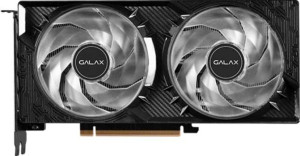
Galax GeForce RTX 5060 Ti 1-Click OC 16GB
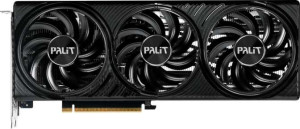
Palit GeForce RTX 5060 Ti Infinity 3 OC 16GB

Galax GeForce RTX 5060 Ti 1-Click OC 16GB Palit GeForce RTX 5060 Ti Infinity 3 OC 16GB

Overview

In this detailed spec comparison between the Galax GeForce RTX 5060 Ti 1-Click OC 16GB and the Palit GeForce RTX 5060 Ti Infinity 3 OC 16GB, we put two Blackwell-architecture cards head to head. Both share the same 16GB GDDR7 memory and 180W TDP, yet they diverge on boost clock speeds, raw throughput figures, physical dimensions, and aesthetic features. Read on to discover which card better matches your priorities.

Common Features

  • Both cards share a base GPU clock speed of 2407 MHz.
  • Both cards have a GPU memory speed of 1750 MHz.
  • Both cards feature 4608 shading units.
  • Both cards have 144 texture mapping units (TMUs).
  • Both cards have 48 render output units (ROPs).
  • Double Precision Floating Point (DPFP) is supported on both cards.
  • Both cards have an effective memory speed of 28000 MHz.
  • Both cards offer a maximum memory bandwidth of 448 GB/s.
  • Both cards come with 16GB of VRAM.
  • Both cards use GDDR7 memory.
  • Both cards have a 128-bit memory bus width.
  • ECC memory is supported on both cards.
  • Both cards support DirectX 12 Ultimate.
  • Both cards support OpenGL 4.6.
  • Both cards support OpenCL 3.
  • Multi-display technology is supported on both cards.
  • Ray tracing is supported on both cards.
  • 3D support is available on both cards.
  • DLSS is supported on both cards.
  • XeSS (XMX) is not available on either card.
  • Both cards have one HDMI 2.1b output.
  • Both cards have three DisplayPort outputs.
  • Neither card has USB-C or DVI outputs.
  • Both cards are based on the Blackwell GPU architecture.
  • Both cards have a Thermal Design Power (TDP) of 180W.
  • Both cards use PCIe 5.0.
  • Both cards are manufactured on a 5 nm process.
  • Both cards have 21900 million transistors.
  • Neither card features air-water cooling.

Main Differences

  • GPU turbo clock is 2587 MHz on Galax GeForce RTX 5060 Ti 1-Click OC 16GB and 2662 MHz on Palit GeForce RTX 5060 Ti Infinity 3 OC 16GB.
  • Pixel rate is 124.2 GPixel/s on Galax GeForce RTX 5060 Ti 1-Click OC 16GB and 127.8 GPixel/s on Palit GeForce RTX 5060 Ti Infinity 3 OC 16GB.
  • Floating-point performance is 23.84 TFLOPS on Galax GeForce RTX 5060 Ti 1-Click OC 16GB and 24.53 TFLOPS on Palit GeForce RTX 5060 Ti Infinity 3 OC 16GB.
  • Texture rate is 372.5 GTexels/s on Galax GeForce RTX 5060 Ti 1-Click OC 16GB and 383.3 GTexels/s on Palit GeForce RTX 5060 Ti Infinity 3 OC 16GB.
  • RGB lighting is present on Galax GeForce RTX 5060 Ti 1-Click OC 16GB but not available on Palit GeForce RTX 5060 Ti Infinity 3 OC 16GB.
  • Width is 247 mm on Galax GeForce RTX 5060 Ti 1-Click OC 16GB and 291.9 mm on Palit GeForce RTX 5060 Ti Infinity 3 OC 16GB.
  • Height is 131 mm on Galax GeForce RTX 5060 Ti 1-Click OC 16GB and 116.6 mm on Palit GeForce RTX 5060 Ti Infinity 3 OC 16GB.
Specs Comparison
Galax GeForce RTX 5060 Ti 1-Click OC 16GB

Galax GeForce RTX 5060 Ti 1-Click OC 16GB

Palit GeForce RTX 5060 Ti Infinity 3 OC 16GB

Palit GeForce RTX 5060 Ti Infinity 3 OC 16GB

Performance:
GPU clock speed 2407 MHz 2407 MHz
GPU turbo 2587 MHz 2662 MHz
pixel rate 124.2 GPixel/s 127.8 GPixel/s
floating-point performance 23.84 TFLOPS 24.53 TFLOPS
texture rate 372.5 GTexels/s 383.3 GTexels/s
GPU memory speed 1750 MHz 1750 MHz
shading units 4608 4608
texture mapping units (TMUs) 144 144
render output units (ROPs) 48 48
Has Double Precision Floating Point (DPFP)

At the core, both the Galax RTX 5060 Ti 1-Click OC and the Palit RTX 5060 Ti Infinity 3 OC share the same fundamental GPU architecture: identical base clocks of 2407 MHz, the same 4608 shading units, 144 TMUs, 48 ROPs, and matching memory speeds of 1750 MHz. This means the two cards start from exactly the same hardware foundation, and any performance gap between them comes down entirely to how aggressively each manufacturer has tuned the boost behavior.

That is where the Palit pulls ahead. Its GPU turbo reaches 2662 MHz versus the Galax's 2587 MHz — a 75 MHz difference that cascades directly into every throughput metric. The Palit delivers 24.53 TFLOPS of floating-point performance versus 23.84 TFLOPS, a roughly 2.9% advantage, and its texture rate of 383.3 GTexels/s outpaces the Galax's 372.5 GTexels/s by a similar margin. In real-world terms, this gap is modest — users are unlikely to perceive it in most gaming scenarios — but it is consistent and measurable, particularly in sustained workloads where sustained boost clocks matter most.

The Palit Infinity 3 OC holds a clear, if narrow, performance edge in this group, driven purely by its higher factory boost clock. The Galax is not a slow card by any means, but if raw GPU throughput is the deciding factor, the Palit's out-of-the-box tuning gives it the lead.

Memory:
effective memory speed 28000 MHz 28000 MHz
maximum memory bandwidth 448 GB/s 448 GB/s
VRAM 16GB 16GB
GDDR version GDDR7 GDDR7
memory bus width 128-bit 128-bit
Supports ECC memory

The memory subsystem tells a straightforward story here: every single spec is identical between the two cards. Both feature 16GB of GDDR7 VRAM running at an effective 28000 MHz across a 128-bit bus, resulting in the same 448 GB/s of maximum memory bandwidth. There is simply no daylight between them on paper, and consequently no daylight in practice either.

That said, these shared specs are worth contextualizing. GDDR7 is a meaningful generational step — its high efficiency and throughput allow a 128-bit bus to deliver bandwidth figures that previously required wider 192-bit or 256-bit interfaces on older GDDR6 designs. For a card in this tier, 448 GB/s is a competitive figure, and the 16GB VRAM capacity offers comfortable headroom for high-resolution textures and modern titles that are increasingly memory-hungry. ECC memory support is a bonus for users doing compute or professional workloads alongside gaming.

This group is a complete tie. Neither the Galax 1-Click OC nor the Palit Infinity 3 OC has any advantage here — buyers can disregard memory specs entirely as a differentiating factor and focus their decision on other spec groups.

Features:
DirectX version DirectX 12 Ultimate DirectX 12 Ultimate
OpenGL version 4.6 4.6
OpenCL version 3 3
Supports multi-display technology
supports ray tracing
Supports 3D
supports DLSS
has XeSS (XMX)
AMD SAM / Intel Resizable BAR Intel Resizable BAR Intel Resizable BAR
has LHR
has RGB lighting
supported displays 4 4

Functionally, these two cards are mirrors of each other. Both support DirectX 12 Ultimate, ray tracing, DLSS, and up to 4 simultaneous displays — the full modern feature set a PC gamer or multi-monitor power user would expect. Intel Resizable BAR support is present on both, which allows the CPU to access the full GPU frame buffer at once and can provide a modest uplift in frame rates in supported titles.

The only concrete differentiator in this group is RGB lighting: the Galax 1-Click OC has it, the Palit Infinity 3 OC does not. For buyers building a themed or windowed system where aesthetics matter, this is a tangible distinction. For everyone else, it is irrelevant to actual GPU capability.

On features, the practical verdict is a near-complete tie. The Galax holds a minor edge for users who specifically want RGB integration, but neither card offers any functional or software feature advantage over the other. Buyers prioritizing lighting customization should lean toward the Galax; those indifferent to aesthetics will find both cards equivalent here.

Ports:
has an HDMI output
HDMI ports 1 1
HDMI version HDMI 2.1b HDMI 2.1b
DisplayPort outputs 3 3
USB-C ports 0 0
DVI outputs 0 0
mini DisplayPort outputs 0 0

Port selection is identical across both cards: one HDMI 2.1b output and three DisplayPort outputs, totaling four display connections — which aligns with the four-display limit noted in the Features group. There are no USB-C, DVI, or mini-DisplayPort outputs on either card.

HDMI 2.1b is the latest HDMI specification, supporting up to 4K at high refresh rates and 8K output, making it well-suited for modern televisions and high-end monitors alike. The three DisplayPort outputs give users ample flexibility for multi-monitor desktop setups without needing adapters. The absence of USB-C is worth noting for anyone hoping to connect a USB-C monitor or VR headset directly — both cards would require an adapter in that scenario.

This is another complete tie. The Galax 1-Click OC and the Palit Infinity 3 OC offer an absolutely identical port layout, so connectivity needs should play no role in choosing between them.

General info:
GPU architecture Blackwell Blackwell
release date April 2025 April 2025
Thermal Design Power (TDP) 180W 180W
PCI Express (PCIe) version 5 5
semiconductor size 5 nm 5 nm
number of transistors 21900 million 21900 million
Has air-water cooling
width 247 mm 291.9 mm
height 131 mm 116.6 mm

Underneath, both cards are built on the same silicon: the Blackwell architecture, fabbed on a 5nm process with 21.9 billion transistors, running at a 180W TDP over PCIe 5.0. None of these fundamentals differ, meaning thermal load on your system, slot compatibility, and architectural capabilities are identical between the two.

Where they diverge is physical footprint. The Galax 1-Click OC measures 247 × 131 mm, while the Palit Infinity 3 OC is notably longer and shorter at 291.9 × 116.6 mm. In practical terms, the Palit is 44.9 mm longer — a significant difference that could matter in compact or mid-tower cases with limited GPU clearance. The Galax, being shorter in length, is the friendlier option for tighter builds. Conversely, the Palit's reduced height of 116.6 mm versus the Galax's 131 mm could be relevant in cases with low-profile PCIe slot spacing, though length is typically the more restrictive dimension in practice.

For case compatibility, the Galax holds an edge in length-constrained builds, while the Palit may suit systems where card height is the limiting factor. Buyers should measure their case's maximum GPU length before deciding — the Palit's extra ~45 mm is too large a gap to overlook in a small or mid-size chassis.

Comparison Summary & Verdict

Both cards are well-matched at their core, sharing identical memory configurations, the same 5 nm Blackwell architecture, and identical port selections. However, key distinctions do emerge. The Palit GeForce RTX 5060 Ti Infinity 3 OC 16GB holds a measurable edge in peak performance, posting a higher GPU turbo clock of 2662 MHz, a superior floating-point output of 24.53 TFLOPS, and a faster texture rate of 383.3 GTexels/s, making it the stronger pick for users who want every last frame. On the other hand, the Galax GeForce RTX 5060 Ti 1-Click OC 16GB offers a noticeably more compact footprint at 247 mm wide and adds RGB lighting for builders who value aesthetics and small-form-factor compatibility. Choose the Palit for outright performance; choose the Galax for a tighter build or a lit-up rig.

Galax GeForce RTX 5060 Ti 1-Click OC 16GB
Buy Galax GeForce RTX 5060 Ti 1-Click OC 16GB if...

Buy the Galax GeForce RTX 5060 Ti 1-Click OC 16GB if you need a more compact card that fits smaller cases and want built-in RGB lighting for a customized build aesthetic.

Palit GeForce RTX 5060 Ti Infinity 3 OC 16GB
Buy Palit GeForce RTX 5060 Ti Infinity 3 OC 16GB if...

Buy the Palit GeForce RTX 5060 Ti Infinity 3 OC 16GB if you want the higher boost clock, better floating-point performance, and faster texture rate for maximum gaming output.