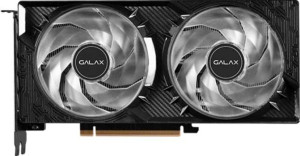
Galax GeForce RTX 5060 Ti 1-Click OC 16GB
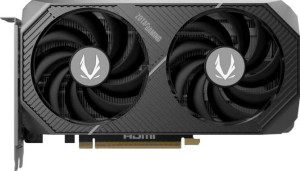
Zotac Gaming GeForce RTX 5060 Ti AMP 16GB

Galax GeForce RTX 5060 Ti 1-Click OC 16GB Zotac Gaming GeForce RTX 5060 Ti AMP 16GB

Overview

Welcome to our in-depth specification comparison between the Galax GeForce RTX 5060 Ti 1-Click OC 16GB and the Zotac Gaming GeForce RTX 5060 Ti AMP 16GB. Both cards share the same Blackwell architecture, 16GB of GDDR7 memory, and a 180W TDP, yet they diverge in areas like GPU turbo clock speeds, raw compute performance, physical dimensions, and aesthetic features. Read on to discover which card best fits your needs.

Common Features

  • Both cards share a base GPU clock speed of 2407 MHz.
  • Both cards have a GPU memory speed of 1750 MHz.
  • Both cards feature 4608 shading units.
  • Both cards include 144 texture mapping units (TMUs).
  • Both cards have 48 render output units (ROPs).
  • Double Precision Floating Point (DPFP) is supported on both cards.
  • Both cards have an effective memory speed of 28000 MHz.
  • Both cards offer a maximum memory bandwidth of 448 GB/s.
  • Both cards come with 16GB of VRAM.
  • Both cards use GDDR7 memory.
  • Both cards have a 128-bit memory bus width.
  • ECC memory is supported on both cards.
  • Both cards support DirectX 12 Ultimate.
  • Both cards support OpenGL version 4.6.
  • Both cards support OpenCL version 3.
  • Multi-display technology is supported on both cards.
  • Ray tracing is supported on both cards.
  • 3D support is available on both cards.
  • DLSS is supported on both cards.
  • XeSS (XMX) support is not available on either card.
  • Both cards include one HDMI 2.1b output.
  • Both cards feature three DisplayPort outputs.
  • Neither card has USB-C, DVI, or mini DisplayPort outputs.
  • Both cards are based on the Blackwell GPU architecture.
  • Both cards have a Thermal Design Power (TDP) of 180W.
  • Both cards use PCIe version 5.
  • Both cards are manufactured on a 5 nm process.
  • Both cards contain 21,900 million transistors.
  • Neither card uses air-water cooling.

Main Differences

  • GPU turbo clock speed is 2587 MHz on the Galax GeForce RTX 5060 Ti 1-Click OC 16GB and 2632 MHz on the Zotac Gaming GeForce RTX 5060 Ti AMP 16GB.
  • Pixel rate is 124.2 GPixel/s on the Galax GeForce RTX 5060 Ti 1-Click OC 16GB and 126.3 GPixel/s on the Zotac Gaming GeForce RTX 5060 Ti AMP 16GB.
  • Floating-point performance is 23.84 TFLOPS on the Galax GeForce RTX 5060 Ti 1-Click OC 16GB and 24.26 TFLOPS on the Zotac Gaming GeForce RTX 5060 Ti AMP 16GB.
  • Texture rate is 372.5 GTexels/s on the Galax GeForce RTX 5060 Ti 1-Click OC 16GB and 379 GTexels/s on the Zotac Gaming GeForce RTX 5060 Ti AMP 16GB.
  • RGB lighting is present on the Galax GeForce RTX 5060 Ti 1-Click OC 16GB but not available on the Zotac Gaming GeForce RTX 5060 Ti AMP 16GB.
  • Card width is 247 mm on the Galax GeForce RTX 5060 Ti 1-Click OC 16GB and 220.5 mm on the Zotac Gaming GeForce RTX 5060 Ti AMP 16GB.
  • Card height is 131 mm on the Galax GeForce RTX 5060 Ti 1-Click OC 16GB and 120.3 mm on the Zotac Gaming GeForce RTX 5060 Ti AMP 16GB.
Specs Comparison
Galax GeForce RTX 5060 Ti 1-Click OC 16GB

Galax GeForce RTX 5060 Ti 1-Click OC 16GB

Zotac Gaming GeForce RTX 5060 Ti AMP 16GB

Zotac Gaming GeForce RTX 5060 Ti AMP 16GB

Performance:
GPU clock speed 2407 MHz 2407 MHz
GPU turbo 2587 MHz 2632 MHz
pixel rate 124.2 GPixel/s 126.3 GPixel/s
floating-point performance 23.84 TFLOPS 24.26 TFLOPS
texture rate 372.5 GTexels/s 379 GTexels/s
GPU memory speed 1750 MHz 1750 MHz
shading units 4608 4608
texture mapping units (TMUs) 144 144
render output units (ROPs) 48 48
Has Double Precision Floating Point (DPFP)

At their foundation, the Galax RTX 5060 Ti 1-Click OC and the Zotac Gaming RTX 5060 Ti AMP are built on identical silicon: the same 4608 shading units, 144 TMUs, 48 ROPs, and a matching base clock of 2407 MHz. Memory bandwidth is also on equal footing, with both running at 1750 MHz. This means the bulk of their real-world compute muscle — shader throughput, memory feeding the pipeline, and rasterization capacity — is functionally the same out of the box.

The meaningful separation appears at boost frequencies. The Zotac AMP reaches a turbo of 2632 MHz versus the Galax's 2587 MHz — a 45 MHz advantage that cascades into every derived metric. This translates directly into a higher floating-point throughput (24.26 TFLOPS vs 23.84 TFLOPS), a better texture fill rate (379 GTexels/s vs 372.5 GTexels/s), and a higher pixel rate (126.3 GPixel/s vs 124.2 GPixel/s). In practice, the gap is roughly 1.7%, which sits below the threshold of perceptible frame-rate differences in most gaming scenarios, but it does confirm the Zotac sustains a consistently higher operating frequency under load.

The edge in this group belongs to the Zotac Gaming RTX 5060 Ti AMP. Its factory boost advantage is modest but consistent across every performance metric derived from it. For users who prioritize squeezing the last bit of throughput without manual overclocking, the Zotac holds a measurable — if slim — lead. The Galax is not meaningfully behind, and both cards will deliver near-identical experiences in typical gaming workloads.

Memory:
effective memory speed 28000 MHz 28000 MHz
maximum memory bandwidth 448 GB/s 448 GB/s
VRAM 16GB 16GB
GDDR version GDDR7 GDDR7
memory bus width 128-bit 128-bit
Supports ECC memory

When it comes to memory, these two cards are in complete lockstep. Both carry 16GB of GDDR7 running across a 128-bit bus at an effective speed of 28000 MHz, yielding 448 GB/s of memory bandwidth. There is not a single figure in this spec group where one card pulls ahead of the other.

The specs themselves deserve context. GDDR7 is a generational leap in memory efficiency — delivering bandwidth that would have previously required a wider bus, keeping power consumption and die cost in check. At 448 GB/s over a 128-bit interface, this configuration punches meaningfully above what prior-generation GDDR6X achieved at similar bus widths. The 16GB capacity is equally significant: it comfortably covers modern high-resolution texture loads, large generative AI workloads run locally, and future titles trending toward higher VRAM requirements. ECC memory support on both cards is a subtle but noteworthy inclusion, adding error-correction capability relevant to creators and professionals using these GPUs for compute tasks beyond gaming.

This group is an absolute tie. Every memory specification — capacity, type, speed, bandwidth, bus width, and ECC support — is identical across the Galax RTX 5060 Ti 1-Click OC and the Zotac Gaming RTX 5060 Ti AMP. Memory configuration should play no role in choosing between these two cards.

Features:
DirectX version DirectX 12 Ultimate DirectX 12 Ultimate
OpenGL version 4.6 4.6
OpenCL version 3 3
Supports multi-display technology
supports ray tracing
Supports 3D
supports DLSS
has XeSS (XMX)
AMD SAM / Intel Resizable BAR Intel Resizable BAR Intel Resizable BAR
has LHR
has RGB lighting
supported displays 4 4

Feature parity between these two cards is remarkably high. Both support DirectX 12 Ultimate, ray tracing, DLSS, and Intel Resizable BAR, and both can drive up to 4 displays simultaneously. For gamers and creators alike, this means neither card is at a disadvantage when it comes to accessing modern rendering techniques, AI-upscaling, or multi-monitor setups.

The sole differentiator in this group is RGB lighting: the Galax 1-Click OC includes it, while the Zotac AMP does not. This is purely an aesthetic distinction — it has no bearing on rendering performance, compatibility, or functionality. For builders who invest in a themed or illuminated system, the Galax's RGB integration adds visual cohesion without requiring a separate controller. For those indifferent to aesthetics or building a clean, minimalist rig, the Zotac's absence of RGB is equally a non-issue.

Functionally, this group is a tie. The Galax holds a narrow edge for users who specifically want RGB lighting, but that advantage is cosmetic rather than technical. No buying decision rooted in capability or compatibility should hinge on this group alone.

Ports:
has an HDMI output
HDMI ports 1 1
HDMI version HDMI 2.1b HDMI 2.1b
DisplayPort outputs 3 3
USB-C ports 0 0
DVI outputs 0 0
mini DisplayPort outputs 0 0

Port configurations on both cards are identical: one HDMI 2.1b output and three DisplayPort outputs, totaling four display connections — matching the maximum supported display count noted in their feature specs. Neither card offers USB-C, DVI, or mini DisplayPort outputs.

The connection lineup is well-suited to current display ecosystems. HDMI 2.1b brings support for high-bandwidth scenarios including 4K at high refresh rates and 8K output, while the three DisplayPort outputs give multi-monitor users flexible, high-fidelity connectivity. The absence of USB-C is worth noting for anyone eyeing a VR headset or a display that relies on that interface — an adapter would be required in those cases, though this applies equally to both cards.

This group is a complete tie. Every port — type, count, and version — is shared between the Galax RTX 5060 Ti 1-Click OC and the Zotac Gaming RTX 5060 Ti AMP. Connectivity requirements should not factor into the decision between these two cards.

General info:
GPU architecture Blackwell Blackwell
release date April 2025 April 2025
Thermal Design Power (TDP) 180W 180W
PCI Express (PCIe) version 5 5
semiconductor size 5 nm 5 nm
number of transistors 21900 million 21900 million
Has air-water cooling
width 247 mm 220.5 mm
height 131 mm 120.3 mm

Sharing the same Blackwell architecture, 5nm process node, 21,900 million transistors, and a 180W TDP, these two cards are built from the same foundational blueprint. PCIe 5.0 support on both ensures neither will face interface bottlenecks on any modern platform, and the shared power envelope means identical PSU and cooling infrastructure requirements for system builders.

Where they diverge is physical footprint. The Galax 1-Click OC measures 247 mm × 131 mm, while the Zotac AMP comes in noticeably more compact at 220.5 mm × 120.3 mm — roughly 26.5 mm shorter in length and about 11 mm shorter in height. That size difference is practically significant: in smaller mid-tower or mini-ITX cases with tight GPU clearance limits, the Zotac may fit where the Galax simply cannot. Even in full-size builds, a shorter card improves airflow dynamics and leaves more room for cable management near the front of the chassis.

For this group, the Zotac Gaming RTX 5060 Ti AMP holds a clear physical advantage. With identical power draw, architecture, and silicon, the Zotac's more compact dimensions make it the more versatile choice across a wider range of case sizes — a meaningful edge for anyone working within space constraints.

Comparison Summary & Verdict

Both the Galax GeForce RTX 5060 Ti 1-Click OC 16GB and the Zotac Gaming GeForce RTX 5060 Ti AMP 16GB are closely matched cards built on the same Blackwell foundation, sharing identical memory configurations, port layouts, and power requirements. However, the differences are meaningful for certain buyers. The Zotac Gaming GeForce RTX 5060 Ti AMP 16GB holds a measurable edge in peak performance, with a higher GPU turbo clock of 2632 MHz, a superior floating-point output of 24.26 TFLOPS, and a better texture rate of 379 GTexels/s, making it the stronger pick for users who want every last frame. It is also notably more compact at 220.5 x 120.3 mm, which is a real advantage in smaller cases. The Galax GeForce RTX 5060 Ti 1-Click OC 16GB, on the other hand, is the card for builders who want a bit of personality in their system, as it is the only one of the two to offer RGB lighting. Choose Zotac for outright performance and a smaller footprint; choose Galax if aesthetics and RGB ambiance matter to your build.

Galax GeForce RTX 5060 Ti 1-Click OC 16GB
Buy Galax GeForce RTX 5060 Ti 1-Click OC 16GB if...

Buy the Galax GeForce RTX 5060 Ti 1-Click OC 16GB if RGB lighting is important to your build aesthetic and you are not constrained by case size.

Zotac Gaming GeForce RTX 5060 Ti AMP 16GB
Buy Zotac Gaming GeForce RTX 5060 Ti AMP 16GB if...

Buy the Zotac Gaming GeForce RTX 5060 Ti AMP 16GB if you want the higher GPU turbo clock, better compute performance, and a more compact card that fits easily into smaller cases.