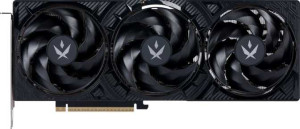
Galax GeForce RTX 5070 Fire
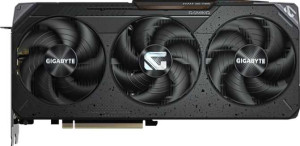
Gigabyte Radeon RX 9070 XT Gaming OC

Galax GeForce RTX 5070 Fire Gigabyte Radeon RX 9070 XT Gaming OC

Overview

Welcome to our in-depth specification showdown between the Galax GeForce RTX 5070 Fire and the Gigabyte Radeon RX 9070 XT Gaming OC. These two mid-to-high-end graphics cards take very different approaches to delivering performance, with key battlegrounds spanning raw compute throughput, memory configuration, display output options, and power efficiency. Read on to see how NVIDIA’s Blackwell architecture stacks up against AMD’s RDNA 4.0 platform across every major specification.

Common Features

  • Both products support Double Precision Floating Point (DPFP).
  • Both products support ECC memory.
  • Both products support DirectX 12 Ultimate.
  • Both products support OpenGL version 4.6.
  • Both products support multi-display technology.
  • Both products support ray tracing.
  • Both products support 3D.
  • XeSS (XMX) support is not available on either product.
  • LHR is not present on either product.
  • RGB lighting is available on both products.
  • Both products have an HDMI output.
  • Both products feature HDMI version 2.1b.
  • Neither product has USB-C ports.
  • Neither product has DVI outputs.
  • Neither product has mini DisplayPort outputs.
  • Both products use PCI Express (PCIe) version 5.
  • Neither product features air-water cooling.

Main Differences

  • GPU base clock speed is 2325 MHz on Galax GeForce RTX 5070 Fire and 1660 MHz on Gigabyte Radeon RX 9070 XT Gaming OC.
  • GPU turbo clock speed is 2512 MHz on Galax GeForce RTX 5070 Fire and 3060 MHz on Gigabyte Radeon RX 9070 XT Gaming OC.
  • Pixel rate is 201 GPixel/s on Galax GeForce RTX 5070 Fire and 391.7 GPixel/s on Gigabyte Radeon RX 9070 XT Gaming OC.
  • Floating-point performance is 30.87 TFLOPS on Galax GeForce RTX 5070 Fire and 50.14 TFLOPS on Gigabyte Radeon RX 9070 XT Gaming OC.
  • Texture rate is 482.3 GTexels/s on Galax GeForce RTX 5070 Fire and 783.4 GTexels/s on Gigabyte Radeon RX 9070 XT Gaming OC.
  • GPU memory speed is 1750 MHz on Galax GeForce RTX 5070 Fire and 2518 MHz on Gigabyte Radeon RX 9070 XT Gaming OC.
  • Shading units total 6144 on Galax GeForce RTX 5070 Fire and 4096 on Gigabyte Radeon RX 9070 XT Gaming OC.
  • Texture mapping units (TMUs) number 192 on Galax GeForce RTX 5070 Fire and 256 on Gigabyte Radeon RX 9070 XT Gaming OC.
  • Render output units (ROPs) total 80 on Galax GeForce RTX 5070 Fire and 128 on Gigabyte Radeon RX 9070 XT Gaming OC.
  • Effective memory speed is 28000 MHz on Galax GeForce RTX 5070 Fire and 20000 MHz on Gigabyte Radeon RX 9070 XT Gaming OC.
  • Maximum memory bandwidth is 672 GB/s on Galax GeForce RTX 5070 Fire and 644.6 GB/s on Gigabyte Radeon RX 9070 XT Gaming OC.
  • VRAM capacity is 12GB on Galax GeForce RTX 5070 Fire and 16GB on Gigabyte Radeon RX 9070 XT Gaming OC.
  • The GDDR version is GDDR7 on Galax GeForce RTX 5070 Fire and GDDR6 on Gigabyte Radeon RX 9070 XT Gaming OC.
  • Memory bus width is 192-bit on Galax GeForce RTX 5070 Fire and 256-bit on Gigabyte Radeon RX 9070 XT Gaming OC.
  • OpenCL version is 3 on Galax GeForce RTX 5070 Fire and 2.2 on Gigabyte Radeon RX 9070 XT Gaming OC.
  • DLSS support is present on Galax GeForce RTX 5070 Fire but not available on Gigabyte Radeon RX 9070 XT Gaming OC.
  • Resizable BAR technology is Intel Resizable BAR on Galax GeForce RTX 5070 Fire and AMD SAM on Gigabyte Radeon RX 9070 XT Gaming OC.
  • HDMI port count is 1 on Galax GeForce RTX 5070 Fire and 2 on Gigabyte Radeon RX 9070 XT Gaming OC.
  • DisplayPort outputs number 3 on Galax GeForce RTX 5070 Fire and 2 on Gigabyte Radeon RX 9070 XT Gaming OC.
  • GPU architecture is Blackwell on Galax GeForce RTX 5070 Fire and RDNA 4.0 on Gigabyte Radeon RX 9070 XT Gaming OC.
  • Thermal Design Power (TDP) is 250W on Galax GeForce RTX 5070 Fire and 304W on Gigabyte Radeon RX 9070 XT Gaming OC.
  • Semiconductor size is 5 nm on Galax GeForce RTX 5070 Fire and 4 nm on Gigabyte Radeon RX 9070 XT Gaming OC.
  • Number of transistors is 31100 million on Galax GeForce RTX 5070 Fire and 53900 million on Gigabyte Radeon RX 9070 XT Gaming OC.
  • Card width is 314 mm on Galax GeForce RTX 5070 Fire and 288 mm on Gigabyte Radeon RX 9070 XT Gaming OC.
  • Card height is 133 mm on Galax GeForce RTX 5070 Fire and 132 mm on Gigabyte Radeon RX 9070 XT Gaming OC.
Specs Comparison
Galax GeForce RTX 5070 Fire

Galax GeForce RTX 5070 Fire

Gigabyte Radeon RX 9070 XT Gaming OC

Gigabyte Radeon RX 9070 XT Gaming OC

Performance:
GPU clock speed 2325 MHz 1660 MHz
GPU turbo 2512 MHz 3060 MHz
pixel rate 201 GPixel/s 391.7 GPixel/s
floating-point performance 30.87 TFLOPS 50.14 TFLOPS
texture rate 482.3 GTexels/s 783.4 GTexels/s
GPU memory speed 1750 MHz 2518 MHz
shading units 6144 4096
texture mapping units (TMUs) 192 256
render output units (ROPs) 80 128
Has Double Precision Floating Point (DPFP)

At first glance, the Galax RTX 5070 Fire appears competitive with its higher base clock of 2325 MHz versus the Gigabyte RX 9070 XT Gaming OC's 1660 MHz. However, clock speed alone is an incomplete picture — what matters is how the GPU's full pipeline translates those clocks into actual work. The RX 9070 XT boosts all the way to 3060 MHz, a turbo headroom that is substantially wider than the RTX 5070 Fire's 2512 MHz ceiling, and it is this sustained peak throughput that drives the larger performance story.

When looking at the throughput metrics that directly reflect gaming and rendering workloads, the RX 9070 XT Gaming OC holds a commanding lead across the board. Its 50.14 TFLOPS of floating-point performance is roughly 62% higher than the RTX 5070 Fire's 30.87 TFLOPS, meaning the AMD card can process significantly more shader operations per second. The pixel fill rate of 391.7 GPixel/s versus 201 GPixel/s means the RX 9070 XT can push nearly twice as many pixels per second — a direct advantage in high-resolution rendering and anti-aliasing workloads. Similarly, its texture throughput of 783.4 GTexels/s nearly doubles the RTX 5070 Fire's 482.3 GTexels/s, translating to sharper, more detailed texture rendering at speed. These advantages persist even though the RTX 5070 Fire has more raw shading units (6144 vs. 4096) — the RX 9070 XT compensates through higher clocks and more render output units (128 ROPs vs. 80) and texture mapping units (256 TMUs vs. 192), which are the pipeline stages that ultimately determine real output.

Both cards support Double Precision Floating Point, relevant for compute and professional workloads. However, based purely on the performance group specs, the Gigabyte RX 9070 XT Gaming OC has a clear and substantial advantage: it outperforms the Galax RTX 5070 Fire in every throughput metric — floating-point performance, pixel rate, texture rate, and memory speed — by wide margins. For users prioritizing raw rasterization performance, the RX 9070 XT is the stronger card in this comparison.
Memory:
effective memory speed 28000 MHz 20000 MHz
maximum memory bandwidth 672 GB/s 644.6 GB/s
VRAM 12GB 16GB
GDDR version GDDR7 GDDR6
memory bus width 192-bit 256-bit
Supports ECC memory

The memory subsystems of these two cards reflect fundamentally different engineering philosophies. The Galax RTX 5070 Fire pairs a narrower 192-bit bus with the newer GDDR7 standard, achieving an effective memory speed of 28000 MHz and peaking at 672 GB/s of bandwidth. The Gigabyte RX 9070 XT Gaming OC, meanwhile, relies on a wider 256-bit bus with GDDR6, reaching 20000 MHz effective speed and 644.6 GB/s of bandwidth. The result is a near-dead-heat in total bandwidth — the RTX 5070 Fire's faster memory technology compensates almost exactly for its narrower bus, closing the gap that would otherwise favor the RX 9070 XT's wider pipeline.

Where the RX 9070 XT earns a clear and practical advantage is in raw capacity: 16GB of VRAM versus the RTX 5070 Fire's 12GB. In today's demanding titles — especially at 4K with high-resolution texture packs, ray tracing, or when running AI-accelerated features — VRAM capacity is increasingly a hard ceiling. Hitting that ceiling causes stutters and asset streaming issues that no bandwidth advantage can fully offset. The extra 4GB gives the RX 9070 XT considerably more headroom for future-proofing and memory-intensive workloads like video editing or large model inference alongside gaming.

Both cards support ECC memory, a feature typically valued in professional compute contexts for error correction. On balance, this memory group is genuinely split: the RTX 5070 Fire wins on memory technology generation and narrowly leads in bandwidth, but the RX 9070 XT Gaming OC holds a meaningful real-world edge through its superior VRAM capacity — a spec that tends to matter more as game engines and workloads grow more demanding over time.

Features:
DirectX version DirectX 12 Ultimate DirectX 12 Ultimate
OpenGL version 4.6 4.6
OpenCL version 3 2.2
Supports multi-display technology
supports ray tracing
Supports 3D
supports DLSS
has XeSS (XMX)
AMD SAM / Intel Resizable BAR Intel Resizable BAR AMD SAM
has LHR
has RGB lighting
supported displays 4 4

Much of this feature set is shared ground: both cards support DirectX 12 Ultimate, OpenGL 4.6, ray tracing, 3D, multi-display output across up to 4 displays, and RGB lighting. Neither carries LHR restrictions. For the vast majority of gaming and general use scenarios, these shared capabilities mean users on either card will have access to the same foundational API and display feature set.

The most consequential differentiator is upscaling support. The Galax RTX 5070 Fire supports DLSS, NVIDIA's AI-driven upscaling technology, which has broad adoption across a large library of supported titles and can deliver significant frame rate boosts with minimal perceptible image quality loss. The Gigabyte RX 9070 XT Gaming OC does not support DLSS — and notably, neither card supports XeSS. The RX 9070 XT would rely on AMD's own upscaling solutions, which are not reflected in the provided specs for this group. For users who heavily play DLSS-supported titles, this is a tangible day-to-day advantage for the RTX 5070 Fire. Additionally, the RTX 5070 Fire has a slightly newer OpenCL 3 implementation versus the RX 9070 XT's OpenCL 2.2, which can matter in GPU compute workflows, though it is a secondary consideration for most gamers.

The resizable BAR implementations differ by ecosystem — Intel Resizable BAR on the RTX 5070 Fire versus AMD SAM on the RX 9070 XT — but both serve the same functional purpose of allowing the CPU full access to GPU memory, so this is not a meaningful differentiator in practice. Overall, the RTX 5070 Fire holds a clear edge in this group, driven primarily by its DLSS support — a feature with direct and widespread gaming impact that the RX 9070 XT lacks.

Ports:
has an HDMI output
HDMI ports 1 2
HDMI version HDMI 2.1b HDMI 2.1b
DisplayPort outputs 3 2
USB-C ports 0 0
DVI outputs 0 0
mini DisplayPort outputs 0 0

Both cards offer a total of 4 display outputs and share the same HDMI 2.1b standard, which supports up to 4K at high refresh rates and 8K output — so neither card is disadvantaged in terms of display technology quality. The distinction lies entirely in how those four ports are distributed.

The Galax RTX 5070 Fire leans toward a DisplayPort-centric layout with 3 DisplayPort outputs and 1 HDMI, while the Gigabyte RX 9070 XT Gaming OC splits evenly with 2 DisplayPort and 2 HDMI ports. In practice, this matters depending on the user's monitor setup. The RTX 5070 Fire is better suited for users running multiple DisplayPort monitors — common in high-refresh-rate gaming rigs where DisplayPort is the preferred connection. The RX 9070 XT Gaming OC, with its dual HDMI outputs, is more accommodating for users who mix HDMI-only displays, TVs, or capture devices alongside a primary monitor.

Neither configuration is objectively superior — it comes down to the user's specific peripherals. However, for a typical multi-monitor gaming setup dominated by DisplayPort displays, the RTX 5070 Fire offers slightly more flexibility, while the RX 9070 XT Gaming OC holds the edge for HDMI-heavy environments. This group is effectively a tie, with the ″right″ choice depending entirely on the user's display ecosystem.

General info:
GPU architecture Blackwell RDNA 4.0
release date March 2025 March 2025
Thermal Design Power (TDP) 250W 304W
PCI Express (PCIe) version 5 5
semiconductor size 5 nm 4 nm
number of transistors 31100 million 53900 million
Has air-water cooling
width 314 mm 288 mm
height 133 mm 132 mm

Underneath their respective architectures — NVIDIA's Blackwell on the RTX 5070 Fire and AMD's RDNA 4.0 on the RX 9070 XT Gaming OC — lies a telling divergence in silicon strategy. The RX 9070 XT is built on a 4 nm process and packs a remarkable 53,900 million transistors, compared to the RTX 5070 Fire's 5 nm node and 31,100 million transistors. That 73% transistor count advantage for the AMD card directly explains the throughput dominance seen in its performance metrics — AMD has simply deployed more compute resources on die, which is also why it demands more power to feed them.

That power demand is a meaningful practical consideration. The RX 9070 XT Gaming OC carries a 304W TDP versus the RTX 5070 Fire's notably lower 250W. A 54W difference is significant: it translates to higher electricity costs over time, more heat output requiring better case airflow, and potentially the need for a higher-rated PSU. For users with thermally constrained builds or strict power budgets, the RTX 5070 Fire's efficiency advantage is a genuine real-world benefit. Both cards use air cooling exclusively, so neither offers an out-of-the-box liquid cooling option.

Physically, the cards are close in size — the RTX 5070 Fire is slightly longer at 314 mm versus the RX 9070 XT's 288 mm, while heights are nearly identical. Both use PCIe 5.0, ensuring maximum interface bandwidth on compatible motherboards with full backwards compatibility otherwise. Overall, this group does not yield a single clear winner: the RX 9070 XT Gaming OC brings denser, more advanced silicon, while the Galax RTX 5070 Fire holds a meaningful edge in power efficiency and slightly better physical compatibility with compact or power-limited systems.

Comparison Summary & Verdict

After examining every specification, both cards clearly target different types of users. The Gigabyte Radeon RX 9070 XT Gaming OC holds a commanding lead in raw compute performance, offering higher floating-point throughput, a larger 16GB VRAM pool, more ROPs and TMUs, and a faster GPU turbo clock, making it the stronger choice for demanding workloads and future-proofing. Meanwhile, the Galax GeForce RTX 5070 Fire counters with a notably lower 250W TDP, faster effective memory speed via GDDR7, and exclusive access to DLSS upscaling, which can meaningfully boost in-game frame rates. If maximum performance and ample memory capacity are your priorities, the Gigabyte card wins out. But if power efficiency, DLSS support, and a slightly more compact form factor matter more, the Galax is the smarter pick.

Galax GeForce RTX 5070 Fire
Buy Galax GeForce RTX 5070 Fire if...

Buy the Galax GeForce RTX 5070 Fire if you want a power-efficient card with DLSS support, faster GDDR7 memory, and a lower 250W TDP that keeps energy consumption in check.

Gigabyte Radeon RX 9070 XT Gaming OC
Buy Gigabyte Radeon RX 9070 XT Gaming OC if...

Buy the Gigabyte Radeon RX 9070 XT Gaming OC if you need maximum raw compute performance, a larger 16GB VRAM capacity, and higher pixel and texture throughput for demanding workloads.