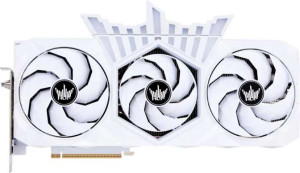
Galax GeForce RTX 5070 Ti HOF OC Lab Deluxe
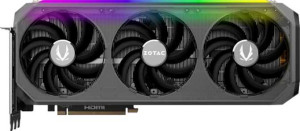
Zotac Gaming GeForce RTX 5070 Ti AMP Extreme Infinity

Galax GeForce RTX 5070 Ti HOF OC Lab Deluxe Zotac Gaming GeForce RTX 5070 Ti AMP Extreme Infinity

Overview

Welcome to our in-depth spec comparison between the Galax GeForce RTX 5070 Ti HOF OC Lab Deluxe and the Zotac Gaming GeForce RTX 5070 Ti AMP Extreme Infinity. Both cards are built on the same Blackwell architecture and share an identical memory configuration, yet they diverge in key areas such as GPU turbo clock speeds, raw compute performance, and physical dimensions. Read on to find out which card best suits your needs.

Common Features

  • Both cards share a base GPU clock speed of 2295 MHz.
  • Both cards have a GPU memory speed of 1750 MHz.
  • Both cards feature 8960 shading units.
  • Both cards include 280 texture mapping units (TMUs).
  • Both cards have 96 render output units (ROPs).
  • Double Precision Floating Point (DPFP) is supported on both cards.
  • Both cards have an effective memory speed of 28000 MHz.
  • Both cards offer a maximum memory bandwidth of 896 GB/s.
  • Both cards come with 16GB of VRAM.
  • Both cards use GDDR7 memory.
  • Both cards feature a 256-bit memory bus width.
  • ECC memory is supported on both cards.
  • Both cards support DirectX 12 Ultimate.
  • Both cards support OpenGL version 4.6.
  • Both cards support OpenCL version 3.
  • Multi-display technology is supported on both cards.
  • Ray tracing is supported on both cards.
  • 3D support is available on both cards.
  • DLSS is supported on both cards.
  • XeSS (XMX) support is not available on either card.
  • Both cards include one HDMI port with HDMI 2.1b.
  • Both cards feature three DisplayPort outputs.
  • Neither card includes USB-C ports, DVI outputs, or mini DisplayPort outputs.
  • Both cards are based on the Blackwell GPU architecture.
  • Both cards have a Thermal Design Power (TDP) of 300W.
  • Both cards use PCIe version 5.
  • Both cards are built on a 5 nm semiconductor process.
  • Both cards feature 45600 million transistors.
  • Neither card includes air-water cooling.

Main Differences

  • GPU turbo clock speed is 2580 MHz on the Galax GeForce RTX 5070 Ti HOF OC Lab Deluxe and 2512 MHz on the Zotac Gaming GeForce RTX 5070 Ti AMP Extreme Infinity.
  • Pixel rate is 247.7 GPixel/s on the Galax GeForce RTX 5070 Ti HOF OC Lab Deluxe and 241.2 GPixel/s on the Zotac Gaming GeForce RTX 5070 Ti AMP Extreme Infinity.
  • Floating-point performance is 46.23 TFLOPS on the Galax GeForce RTX 5070 Ti HOF OC Lab Deluxe and 45.02 TFLOPS on the Zotac Gaming GeForce RTX 5070 Ti AMP Extreme Infinity.
  • Texture rate is 722.4 GTexels/s on the Galax GeForce RTX 5070 Ti HOF OC Lab Deluxe and 703.4 GTexels/s on the Zotac Gaming GeForce RTX 5070 Ti AMP Extreme Infinity.
  • Card width is 349.4 mm on the Galax GeForce RTX 5070 Ti HOF OC Lab Deluxe and 332.1 mm on the Zotac Gaming GeForce RTX 5070 Ti AMP Extreme Infinity.
  • Card height is 160 mm on the Galax GeForce RTX 5070 Ti HOF OC Lab Deluxe and 137.5 mm on the Zotac Gaming GeForce RTX 5070 Ti AMP Extreme Infinity.
Specs Comparison
Galax GeForce RTX 5070 Ti HOF OC Lab Deluxe

Galax GeForce RTX 5070 Ti HOF OC Lab Deluxe

Zotac Gaming GeForce RTX 5070 Ti AMP Extreme Infinity

Zotac Gaming GeForce RTX 5070 Ti AMP Extreme Infinity

Performance:
GPU clock speed 2295 MHz 2295 MHz
GPU turbo 2580 MHz 2512 MHz
pixel rate 247.7 GPixel/s 241.2 GPixel/s
floating-point performance 46.23 TFLOPS 45.02 TFLOPS
texture rate 722.4 GTexels/s 703.4 GTexels/s
GPU memory speed 1750 MHz 1750 MHz
shading units 8960 8960
texture mapping units (TMUs) 280 280
render output units (ROPs) 96 96
Has Double Precision Floating Point (DPFP)

Both cards share an identical foundation: the same 2295 MHz base clock, 8960 shading units, 280 TMUs, 96 ROPs, and 1750 MHz memory speed. This means their theoretical compute architecture is the same silicon, and neither has an inherent structural advantage at rest. The real divergence emerges under sustained load.

The critical differentiator is the GPU turbo clock: the Galax HOF OC Lab Deluxe boosts to 2580 MHz, while the Zotac AMP Extreme Infinity reaches 2512 MHz — a gap of 68 MHz, or roughly 2.7%. That delta cascades directly into every throughput metric: the HOF delivers 46.23 TFLOPS of floating-point performance versus 45.02 TFLOPS, a 722.4 GTexels/s texture fill rate versus 703.4 GTexels/s, and a 247.7 GPixel/s pixel rate versus 241.2 GPixel/s. In practice, this translates to a modest but consistent throughput advantage in GPU-bound scenarios — particularly in high-resolution rendering, compute workloads, and texture-heavy scenes.

The edge here belongs to the Galax HOF OC Lab Deluxe. While the ~2.7% clock advantage will not produce transformative real-world gains — both cards will feel nearly identical in most gaming titles — the HOF's higher turbo headroom makes it the stronger choice for users who value maximizing every frame, running GPU compute tasks, or who want a wider ceiling before hitting thermal or power limits.

Memory:
effective memory speed 28000 MHz 28000 MHz
maximum memory bandwidth 896 GB/s 896 GB/s
VRAM 16GB 16GB
GDDR version GDDR7 GDDR7
memory bus width 256-bit 256-bit
Supports ECC memory

On memory, these two cards are in complete lockstep. Both equip 16GB of GDDR7 running at an effective 28000 MHz across a 256-bit bus, yielding identical peak bandwidth of 896 GB/s. That bandwidth figure is particularly significant: GDDR7 at this bus width delivers a meaningful generational leap over GDDR6X, enabling faster texture streaming, reduced latency in large asset pipelines, and more headroom for high-resolution workloads like 4K gaming and GPU-accelerated content creation.

The 16GB frame buffer is another shared strength worth contextualizing. At 4K with demanding titles, modern texture packs, or ray tracing enabled, VRAM headroom increasingly determines whether a card maintains smooth performance or begins to stutter as assets spill out of on-card memory. 16GB sits comfortably above the threshold where current-generation games and most professional workloads begin to strain. Both cards also support ECC memory, a feature typically associated with workstation GPUs — it enables error correction for compute tasks where data integrity is critical, adding quiet versatility beyond pure gaming.

This group is an unambiguous tie. Every memory specification — capacity, speed, bus width, bandwidth, and ECC support — is identical. Memory subsystem will not be a deciding factor between the Galax HOF OC Lab Deluxe and the Zotac AMP Extreme Infinity; buyers should look to other spec groups to differentiate the two.

Features:
DirectX version DirectX 12 Ultimate DirectX 12 Ultimate
OpenGL version 4.6 4.6
OpenCL version 3 3
Supports multi-display technology
supports ray tracing
Supports 3D
supports DLSS
has XeSS (XMX)
AMD SAM / Intel Resizable BAR Intel Resizable BAR Intel Resizable BAR
has LHR
has RGB lighting
supported displays 4 4

Feature parity is total here. Both cards run on DirectX 12 Ultimate, the current ceiling for gaming API support, which unlocks hardware-accelerated ray tracing, mesh shaders, and variable rate shading in compatible titles. Alongside OpenCL 3 and OpenGL 4.6, both cards are equally equipped for the full spectrum of modern gaming, creative, and compute workloads without compromise on either side.

The most practically valuable shared features are DLSS and ray tracing support. DLSS, in particular, is increasingly a performance multiplier rather than a mere bonus — in supported titles, it can substantially boost frame rates with minimal visual cost, making high-refresh 4K gaming viable. Ray tracing support ensures neither card is left behind as more titles implement hybrid rendering pipelines. Both also support Intel Resizable BAR, which allows the CPU to access the full GPU frame buffer simultaneously rather than in small chunks, a low-level optimization that yields measurable frame rate gains in a growing number of games. The absence of LHR on both is also worth noting: there are no mining-era artificial compute restrictions in play.

With every feature — from multi-display support across 4 outputs to RGB lighting — mirrored exactly between the two, this group is another clean tie. Neither the Galax HOF OC Lab Deluxe nor the Zotac AMP Extreme Infinity holds any feature-based advantage; the decision remains entirely in the hands of other differentiating factors.

Ports:
has an HDMI output
HDMI ports 1 1
HDMI version HDMI 2.1b HDMI 2.1b
DisplayPort outputs 3 3
USB-C ports 0 0
DVI outputs 0 0
mini DisplayPort outputs 0 0

Connectivity is identical across both cards: a layout of 3 DisplayPort outputs and 1 HDMI 2.1b port gives users four total display connections — enough to drive a full multi-monitor setup without a hub or adapter. The absence of USB-C and legacy DVI ports is consistent with where the high-end GPU market has moved, and neither card breaks from that pattern.

The HDMI version is worth a closer look. HDMI 2.1b is the latest revision of the standard, supporting up to 10K resolution, high frame rate 4K and 8K output, and Variable Refresh Rate — making it fully capable of feeding next-generation TVs and high-end monitors without bottlenecking the signal. The three DisplayPort outputs complement this well for users running productivity-oriented multi-display arrangements or high-refresh gaming monitors, which still predominantly favor DisplayPort.

No differentiation exists between the Galax HOF OC Lab Deluxe and the Zotac AMP Extreme Infinity on ports — every output type, count, and version is a perfect match. This is a tie, and port selection should play no role in choosing between these two cards.

General info:
GPU architecture Blackwell Blackwell
release date February 2025 February 2025
Thermal Design Power (TDP) 300W 300W
PCI Express (PCIe) version 5 5
semiconductor size 5 nm 5 nm
number of transistors 45600 million 45600 million
Has air-water cooling
width 349.4 mm 332.1 mm
height 160 mm 137.5 mm

At the silicon level, these two cards are indistinguishable. Sharing the same Blackwell architecture, 5nm manufacturing process, and 45.6 billion transistors, they draw from an identical power envelope of 300W TDP and connect via PCIe 5.0. The 5nm node is significant context: it enables higher transistor density and better power efficiency relative to prior generations, which is how Blackwell achieves its performance-per-watt gains. Neither card deviates from this baseline in any architectural respect.

Where the two diverge is physical footprint. The Galax HOF OC Lab Deluxe measures 349.4 mm × 160 mm, while the Zotac AMP Extreme Infinity comes in at 332.1 mm × 137.5 mm — a difference of roughly 17mm in length and a notably larger 22.5mm in height. That height gap is particularly consequential: a taller card can conflict with PCIe slots, drive bays, or side-panel clearance in more compact mid-tower cases. The Zotac's smaller profile makes it the more case-agnostic option for builders working within tighter spatial constraints.

Given that TDP, architecture, and all core silicon specs are identical, the deciding factor in this group is purely physical. The Zotac AMP Extreme Infinity holds a clear advantage in fitment flexibility — its more compact dimensions will suit a wider range of PC cases. The Galax HOF, by contrast, demands more vertical and horizontal clearance, which may be a limiting factor depending on the build.

Comparison Summary & Verdict

After examining every specification, it is clear that both cards are closely matched, sharing the same Blackwell architecture, 16GB of GDDR7 memory, 300W TDP, and a full feature set including ray tracing and DLSS. However, the Galax GeForce RTX 5070 Ti HOF OC Lab Deluxe holds a consistent lead in outright performance, offering a higher GPU turbo clock of 2580 MHz, 46.23 TFLOPS of floating-point performance, and a texture rate of 722.4 GTexels/s. The trade-off is a notably larger physical footprint at 349.4 mm wide and 160 mm tall. The Zotac Gaming GeForce RTX 5070 Ti AMP Extreme Infinity, with its more compact 332.1 x 137.5 mm body and still-strong 45.02 TFLOPS, is the better fit for builds where case clearance is a concern.

Galax GeForce RTX 5070 Ti HOF OC Lab Deluxe
Buy Galax GeForce RTX 5070 Ti HOF OC Lab Deluxe if...

Buy the Galax GeForce RTX 5070 Ti HOF OC Lab Deluxe if you want the highest possible GPU turbo clock speed and peak compute performance, and your case can comfortably accommodate its larger dimensions.

Zotac Gaming GeForce RTX 5070 Ti AMP Extreme Infinity
Buy Zotac Gaming GeForce RTX 5070 Ti AMP Extreme Infinity if...

Buy the Zotac Gaming GeForce RTX 5070 Ti AMP Extreme Infinity if you need a more compact card that still delivers strong performance, making it ideal for builds with tighter space constraints.