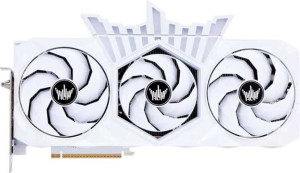
Galax GeForce RTX 5070 Ti HOF OC Lab Deluxe-X
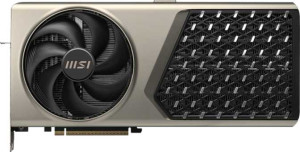
MSI GeForce RTX 5070 Ti Expert OC

Galax GeForce RTX 5070 Ti HOF OC Lab Deluxe-X MSI GeForce RTX 5070 Ti Expert OC

Overview

Choosing between the Galax GeForce RTX 5070 Ti HOF OC Lab Deluxe-X and the MSI GeForce RTX 5070 Ti Expert OC is a genuinely nuanced decision. Both cards are rooted in the same Blackwell architecture, share identical 16GB GDDR7 memory configurations, and offer the same broad feature set. Yet meaningful distinctions exist around boost clock speeds, peak computational throughput, physical dimensions, and aesthetic touches that could make one a better fit for your specific build and priorities.

Common Features

  • Both cards share a base GPU clock speed of 2295 MHz.
  • Both cards have a GPU memory speed of 1750 MHz.
  • Both cards feature 8960 shading units.
  • Both cards include 280 texture mapping units (TMUs).
  • Both cards have 96 render output units (ROPs).
  • Double Precision Floating Point (DPFP) is supported on both cards.
  • Both cards have an effective memory speed of 28000 MHz.
  • Both cards offer a maximum memory bandwidth of 896 GB/s.
  • Both cards are equipped with 16GB of VRAM.
  • Both cards use GDDR7 memory.
  • Both cards feature a 256-bit memory bus width.
  • ECC memory is supported on both cards.
  • Both cards support DirectX 12 Ultimate.
  • Both cards support OpenGL version 4.6.
  • Both cards support OpenCL version 3.
  • Multi-display technology is supported on both cards.
  • Ray tracing is supported on both cards.
  • 3D support is available on both cards.
  • DLSS is supported on both cards.
  • XeSS (XMX) is not available on either card.
  • Both cards include one HDMI 2.1b output.
  • Both cards feature three DisplayPort outputs.
  • Neither card has USB-C, DVI, or mini DisplayPort outputs.
  • Both cards are built on the Blackwell GPU architecture.
  • Both cards have a Thermal Design Power (TDP) of 300W.
  • Both cards use PCIe version 5.
  • Both cards are manufactured on a 5 nm semiconductor process.
  • Both cards contain 45600 million transistors.
  • Neither card features air-water cooling.

Main Differences

  • GPU turbo clock speed is 2610 MHz on the Galax GeForce RTX 5070 Ti HOF OC Lab Deluxe-X and 2580 MHz on the MSI GeForce RTX 5070 Ti Expert OC.
  • Pixel rate is 250.6 GPixel/s on the Galax GeForce RTX 5070 Ti HOF OC Lab Deluxe-X and 247.7 GPixel/s on the MSI GeForce RTX 5070 Ti Expert OC.
  • Floating-point performance is 46.77 TFLOPS on the Galax GeForce RTX 5070 Ti HOF OC Lab Deluxe-X and 46.23 TFLOPS on the MSI GeForce RTX 5070 Ti Expert OC.
  • Texture rate is 730.8 GTexels/s on the Galax GeForce RTX 5070 Ti HOF OC Lab Deluxe-X and 722.4 GTexels/s on the MSI GeForce RTX 5070 Ti Expert OC.
  • RGB lighting is present on the Galax GeForce RTX 5070 Ti HOF OC Lab Deluxe-X but not available on the MSI GeForce RTX 5070 Ti Expert OC.
  • Card width is 349.4 mm on the Galax GeForce RTX 5070 Ti HOF OC Lab Deluxe-X and 319 mm on the MSI GeForce RTX 5070 Ti Expert OC.
  • Card height is 160 mm on the Galax GeForce RTX 5070 Ti HOF OC Lab Deluxe-X and 150 mm on the MSI GeForce RTX 5070 Ti Expert OC.
Specs Comparison
Galax GeForce RTX 5070 Ti HOF OC Lab Deluxe-X

Galax GeForce RTX 5070 Ti HOF OC Lab Deluxe-X

MSI GeForce RTX 5070 Ti Expert OC

MSI GeForce RTX 5070 Ti Expert OC

Performance:
GPU clock speed 2295 MHz 2295 MHz
GPU turbo 2610 MHz 2580 MHz
pixel rate 250.6 GPixel/s 247.7 GPixel/s
floating-point performance 46.77 TFLOPS 46.23 TFLOPS
texture rate 730.8 GTexels/s 722.4 GTexels/s
GPU memory speed 1750 MHz 1750 MHz
shading units 8960 8960
texture mapping units (TMUs) 280 280
render output units (ROPs) 96 96
Has Double Precision Floating Point (DPFP)

At their core, the Galax HOF OC Lab Deluxe-X and the MSI Expert OC share the same fundamental silicon configuration: identical base clocks of 2295 MHz, the same 8960 shading units, 280 TMUs, 96 ROPs, and matching memory speeds of 1750 MHz. This means both cards are built on the same GPU die with no architectural differences — the real competition comes down entirely to how aggressively each manufacturer has tuned the boost behavior.

That is where the Galax pulls ahead. Its GPU turbo of 2610 MHz outpaces the MSI's 2580 MHz — a 30 MHz gap that cascades into measurable differences across every throughput metric. The Galax delivers 46.77 TFLOPS of floating-point performance versus 46.23 TFLOPS for the MSI, a 730.8 GTexels/s texture rate against 722.4 GTexels/s, and a pixel rate of 250.6 GPixel/s compared to 247.7 GPixel/s. In isolation, each individual gap is modest — roughly 1–1.2% across the board — but they are consistent and all point in the same direction.

In practice, a ~1% clock advantage rarely translates into a perceptible frame-rate difference in gaming, but it does signal that Galax has binned or tuned its chip more aggressively out of the box. Both cards support Double Precision Floating Point, relevant for compute workloads alongside gaming. Edge: Galax HOF OC Lab Deluxe-X — it holds a small but consistent performance lead in every computed throughput metric, driven solely by its higher boost clock. Users primarily gaming will find the gap negligible, but for those squeezing maximum performance from the same GPU architecture, the Galax is the stronger factory overclock.

Memory:
effective memory speed 28000 MHz 28000 MHz
maximum memory bandwidth 896 GB/s 896 GB/s
VRAM 16GB 16GB
GDDR version GDDR7 GDDR7
memory bus width 256-bit 256-bit
Supports ECC memory

Memory is one area where these two cards offer absolutely no grounds for differentiation. The Galax HOF OC Lab Deluxe-X and the MSI Expert OC are spec-for-spec identical across every memory metric: both carry 16GB of GDDR7 VRAM over a 256-bit bus, running at an effective speed of 28000 MHz for a peak bandwidth of 896 GB/s.

Those numbers deserve some context. GDDR7 represents a generational leap in memory efficiency and throughput over GDDR6X, and 896 GB/s of bandwidth is substantial — it ensures the GPU's shader array is rarely starved of data, even in demanding scenarios like high-resolution texturing, ray tracing, or AI-accelerated workloads. The 16GB frame buffer is likewise well-suited for 4K gaming and content creation tasks without hitting capacity walls in the near term. Both cards also support ECC memory, which provides error-correction capabilities relevant to professional and compute use cases where data integrity matters.

Verdict: Dead tie. Every memory specification is shared between these two cards without exception. Neither the Galax nor the MSI holds any advantage here — a buyer's decision on memory alone is entirely moot, and attention should shift to other spec groups to find meaningful differentiation.

Features:
DirectX version DirectX 12 Ultimate DirectX 12 Ultimate
OpenGL version 4.6 4.6
OpenCL version 3 3
Supports multi-display technology
supports ray tracing
Supports 3D
supports DLSS
has XeSS (XMX)
AMD SAM / Intel Resizable BAR Intel Resizable BAR Intel Resizable BAR
has LHR
has RGB lighting
supported displays 4 4

From a software and API standpoint, these two cards are indistinguishable. Both support DirectX 12 Ultimate, ray tracing, DLSS, and Intel Resizable BAR, and both can drive up to 4 displays simultaneously. These shared capabilities mean users get the same access to modern rendering features, AI-upscaling, and multi-monitor workflows regardless of which card they choose.

Scan the entire feature list and only one tangible difference surfaces: RGB lighting. The Galax HOF OC Lab Deluxe-X includes it; the MSI Expert OC does not. For builders who invest in a themed or illuminated system, this is a genuine consideration — RGB on a flagship card contributes visibly to case aesthetics and is typically controllable via software. For those indifferent to lighting, it is a non-factor.

Edge: Galax HOF OC Lab Deluxe-X, but narrowly and only on aesthetic grounds. Every functional and software feature in this group is shared equally between the two cards. The Galax's RGB lighting is the sole differentiator, making it the better pick for aesthetics-conscious builders, while the MSI suits those who prioritize a cleaner, no-frills look.

Ports:
has an HDMI output
HDMI ports 1 1
HDMI version HDMI 2.1b HDMI 2.1b
DisplayPort outputs 3 3
USB-C ports 0 0
DVI outputs 0 0
mini DisplayPort outputs 0 0

Connectivity is another category where these two cards offer no room for debate. Both the Galax HOF OC Lab Deluxe-X and the MSI Expert OC feature an identical port layout: 3 DisplayPort outputs and 1 HDMI 2.1b port, for a total of four display connections — matching the four-display limit noted in their feature specs.

HDMI 2.1b is worth highlighting as a shared strength. It supports up to 10K resolution and high refresh rates at 4K, making both cards fully equipped for next-generation displays and home theater setups without any adapters. The three DisplayPort outputs similarly cover demanding multi-monitor configurations or high-refresh-rate gaming panels with ease. Neither card includes USB-C, which some users in content creation or portable display workflows might notice, but this is equally absent on both.

Verdict: Complete tie. The port configuration is a mirror image across both products. No advantage exists for either the Galax or the MSI in this category — buyers can make their decision entirely on other factors.

General info:
GPU architecture Blackwell Blackwell
release date February 2025 August 2025
Thermal Design Power (TDP) 300W 300W
PCI Express (PCIe) version 5 5
semiconductor size 5 nm 5 nm
number of transistors 45600 million 45600 million
Has air-water cooling
width 349.4 mm 319 mm
height 160 mm 150 mm

Underneath their respective cooler designs, the Galax HOF OC Lab Deluxe-X and the MSI Expert OC are built on identical foundations: the same Blackwell architecture, the same 5nm process node, the same 45.6 billion transistors, a shared 300W TDP, and PCIe 5.0 connectivity. None of these variables can be used to separate the two cards — they are the same GPU, drawing the same power, on the same platform.

Physical dimensions are where a genuine, practical difference emerges. The Galax measures 349.4 mm × 160 mm, while the MSI comes in at a notably more compact 319 mm × 150 mm — a difference of over 30 mm in length and 10 mm in height. For builders working with smaller mid-tower or compact ATX cases, that gap is meaningful. The MSI's shorter footprint reduces the risk of clearance conflicts with front-panel components, storage drives, or case walls, making it the more case-friendly option of the two.

Edge: MSI Expert OC on physical fit. Both cards are thermally and architecturally equivalent, but the MSI's more restrained dimensions give it a real-world advantage in system compatibility — particularly relevant for users in tighter builds. The Galax's larger size may support a more expansive cooling solution, but that tradeoff belongs to a different spec group; based purely on general info, smaller is more versatile here.

Comparison Summary & Verdict

After a thorough look at the specifications, both the Galax GeForce RTX 5070 Ti HOF OC Lab Deluxe-X and the MSI GeForce RTX 5070 Ti Expert OC prove to be well-matched cards sharing the same Blackwell architecture, 16GB GDDR7 memory, 300W TDP, and full feature parity across DirectX 12 Ultimate, ray tracing, and DLSS. The Galax card holds a measurable edge in raw output, with a higher GPU turbo clock of 2610 MHz, a pixel rate of 250.6 GPixel/s, and floating-point performance of 46.77 TFLOPS, and it adds RGB lighting for builders who value visual customization. The trade-off is a larger physical footprint at 349.4 mm wide and 160 mm tall. The MSI Expert OC, at 319 mm wide and 150 mm tall, is the more compact solution, making it a stronger candidate for smaller cases or builds with tight clearance requirements. Choose the Galax for maximum clocked performance and aesthetics; choose the MSI for a tidier, more space-efficient fit.

Galax GeForce RTX 5070 Ti HOF OC Lab Deluxe-X
Buy Galax GeForce RTX 5070 Ti HOF OC Lab Deluxe-X if...

Buy the Galax GeForce RTX 5070 Ti HOF OC Lab Deluxe-X if you want the highest out-of-the-box boost clock at 2610 MHz, marginally better peak throughput, and RGB lighting for a visually striking build.

MSI GeForce RTX 5070 Ti Expert OC
Buy MSI GeForce RTX 5070 Ti Expert OC if...

Buy the MSI GeForce RTX 5070 Ti Expert OC if a more compact card with a smaller footprint is your priority, especially if your case has tight clearance or you prefer a clean, no-RGB aesthetic.