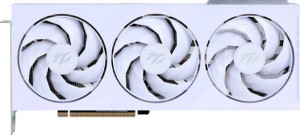
Galax GeForce RTX 5070 Ti Saber OC
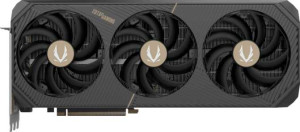
Zotac Gaming GeForce RTX 5070 Ti Solid OC

Galax GeForce RTX 5070 Ti Saber OC Zotac Gaming GeForce RTX 5070 Ti Solid OC

Overview

When choosing between the Galax GeForce RTX 5070 Ti Saber OC and the Zotac Gaming GeForce RTX 5070 Ti Solid OC, it quickly becomes clear that both cards share an impressive common foundation built on the Blackwell architecture with identical memory and feature sets. Yet they diverge in key areas including GPU boost clock speed, floating-point compute performance, and physical dimensions. This detailed spec comparison is here to help you find the card that fits your build and priorities.

Common Features

  • Both cards share a base GPU clock speed of 2295 MHz.
  • Both cards have a GPU memory speed of 1750 MHz.
  • Both cards feature 8960 shading units.
  • Both cards include 280 texture mapping units (TMUs).
  • Both cards have 96 render output units (ROPs).
  • Double Precision Floating Point (DPFP) is supported on both cards.
  • Both cards use GDDR7 memory with an effective speed of 28000 MHz.
  • Both cards offer 16 GB of VRAM.
  • Both cards have a maximum memory bandwidth of 896 GB/s.
  • Both cards use a 256-bit memory bus width.
  • ECC memory is supported on both cards.
  • Both cards support DirectX 12 Ultimate.
  • Both cards support OpenGL version 4.6.
  • Both cards support OpenCL version 3.
  • Multi-display technology is supported on both cards.
  • Ray tracing is supported on both cards.
  • 3D output is supported on both cards.
  • DLSS is supported on both cards.
  • XeSS (XMX) is not available on either card.
  • Both cards feature one HDMI 2.1b port and three DisplayPort outputs, with no USB-C or DVI outputs.
  • Both cards are built on the Blackwell GPU architecture using a 5 nm semiconductor process.
  • Both cards have a Thermal Design Power (TDP) of 300W.
  • Both cards connect via PCIe version 5.
  • Both cards contain 45600 million transistors.
  • Air-water cooling is not available on either card.

Main Differences

  • GPU turbo clock speed is 2497 MHz on the Galax GeForce RTX 5070 Ti Saber OC and 2482 MHz on the Zotac Gaming GeForce RTX 5070 Ti Solid OC.
  • Pixel rate is 239.7 GPixel/s on the Galax GeForce RTX 5070 Ti Saber OC and 238.3 GPixel/s on the Zotac Gaming GeForce RTX 5070 Ti Solid OC.
  • Floating-point performance is 44.75 TFLOPS on the Galax GeForce RTX 5070 Ti Saber OC and 44.48 TFLOPS on the Zotac Gaming GeForce RTX 5070 Ti Solid OC.
  • Texture rate is 699.2 GTexels/s on the Galax GeForce RTX 5070 Ti Saber OC and 695 GTexels/s on the Zotac Gaming GeForce RTX 5070 Ti Solid OC.
  • Card width is 316.5 mm on the Galax GeForce RTX 5070 Ti Saber OC and 329.7 mm on the Zotac Gaming GeForce RTX 5070 Ti Solid OC.
  • Card height is 140.1 mm on the Galax GeForce RTX 5070 Ti Saber OC and 137.8 mm on the Zotac Gaming GeForce RTX 5070 Ti Solid OC.
Specs Comparison
Galax GeForce RTX 5070 Ti Saber OC

Galax GeForce RTX 5070 Ti Saber OC

Zotac Gaming GeForce RTX 5070 Ti Solid OC

Zotac Gaming GeForce RTX 5070 Ti Solid OC

Performance:
GPU clock speed 2295 MHz 2295 MHz
GPU turbo 2497 MHz 2482 MHz
pixel rate 239.7 GPixel/s 238.3 GPixel/s
floating-point performance 44.75 TFLOPS 44.48 TFLOPS
texture rate 699.2 GTexels/s 695 GTexels/s
GPU memory speed 1750 MHz 1750 MHz
shading units 8960 8960
texture mapping units (TMUs) 280 280
render output units (ROPs) 96 96
Has Double Precision Floating Point (DPFP)

At the foundation, both the Galax RTX 5070 Ti Saber OC and the Zotac RTX 5070 Ti Solid OC share identical hardware configurations: the same 8960 shading units, 280 TMUs, 96 ROPs, and a base GPU clock of 2295 MHz. This means both cards start from the exact same silicon baseline, and any performance differences between them come down entirely to how far each vendor has pushed the boost behavior.

The single differentiator in this group is the GPU turbo clock: the Galax reaches 2497 MHz versus the Zotac's 2482 MHz — a gap of just 15 MHz, or roughly 0.6%. This small advantage cascades into proportionally minor leads across all derived metrics: the Galax edges ahead with 44.75 TFLOPS of floating-point performance versus 44.48 TFLOPS, a pixel rate of 239.7 vs 238.3 GPixel/s, and a texture rate of 699.2 vs 695 GTexels/s. In practice, these differences are well within single-digit percentage margins and are unlikely to produce a measurable frame rate gap in real workloads.

The Galax Saber OC holds a technical edge in this group purely on the basis of its higher factory turbo clock, but the advantage is nominal. Both cards support Double Precision Floating Point, which is relevant for compute and professional workloads. For gamers, the performance outcome between these two will be effectively identical — the Galax's lead exists on paper, but would not translate into a perceptible difference at the display.

Memory:
effective memory speed 28000 MHz 28000 MHz
maximum memory bandwidth 896 GB/s 896 GB/s
VRAM 16GB 16GB
GDDR version GDDR7 GDDR7
memory bus width 256-bit 256-bit
Supports ECC memory

Memory is one area where choosing between the Galax RTX 5070 Ti Saber OC and the Zotac RTX 5070 Ti Solid OC requires no deliberation whatsoever — every single spec is identical. Both cards carry 16GB of GDDR7 across a 256-bit bus, delivering a maximum bandwidth of 896 GB/s at an effective memory speed of 28000 MHz.

The significance of this configuration is worth unpacking. GDDR7 represents a generational leap in memory efficiency and throughput, and 896 GB/s is a substantial bandwidth figure that comfortably feeds the GPU's shader array even in demanding scenarios like 4K texturing, ray tracing, or large generative AI workloads. The 16GB frame buffer also provides meaningful headroom for high-resolution texture packs and multi-monitor setups, reducing the risk of VRAM saturation that can cause stuttering in modern titles. Both cards also support ECC memory, which is primarily relevant for professional and compute use cases where data integrity is critical.

This group is a complete tie. There is no memory-related reason to prefer one card over the other — buyers can set this category aside entirely and focus their decision on other factors such as cooling, acoustics, or price.

Features:
DirectX version DirectX 12 Ultimate DirectX 12 Ultimate
OpenGL version 4.6 4.6
OpenCL version 3 3
Supports multi-display technology
supports ray tracing
Supports 3D
supports DLSS
has XeSS (XMX)
AMD SAM / Intel Resizable BAR Intel Resizable BAR Intel Resizable BAR
has LHR
has RGB lighting
supported displays 4 4

Feature parity is absolute here. Both the Galax RTX 5070 Ti Saber OC and the Zotac RTX 5070 Ti Solid OC support DirectX 12 Ultimate and ray tracing, confirming full compatibility with the current generation of graphically demanding titles and real-time lighting effects. DLSS support is also shared, which is a meaningful practical advantage — it allows both cards to use AI-driven upscaling to recover frame rates at high resolutions without a proportional hit to image quality.

Both cards support up to 4 simultaneous displays and include Intel Resizable BAR, which enables the CPU to access the full GPU frame buffer at once rather than in smaller chunks — a feature that can yield modest but real frame rate improvements in supported games. Neither card carries LHR restrictions, meaning full compute throughput is available for any workload. RGB lighting is present on both, so aesthetic customization is on the table for either choice.

Much like the memory group, features result in a complete tie. Every capability — from API support to display count to software features — is mirrored exactly across both products. Buyers gain nothing and give up nothing on the features front regardless of which card they choose.

Ports:
has an HDMI output
HDMI ports 1 1
HDMI version HDMI 2.1b HDMI 2.1b
DisplayPort outputs 3 3
USB-C ports 0 0
DVI outputs 0 0
mini DisplayPort outputs 0 0

Connectivity on both the Galax RTX 5070 Ti Saber OC and the Zotac RTX 5070 Ti Solid OC follows the same layout: one HDMI 2.1b port and three DisplayPort outputs, totaling four display connections — consistent with the four-display maximum noted in the features group. HDMI 2.1b is the latest revision of the standard, capable of handling 4K at high refresh rates and 8K output, making it well-suited for modern televisions and high-end monitors alike.

The absence of USB-C or Thunderbolt output on either card is worth noting for users who rely on USB-C monitors or daisy-chaining displays, though this is a shared limitation rather than a differentiator. The three DisplayPort outputs provide ample flexibility for multi-monitor workstation setups or high-refresh-rate gaming arrays, and the combination of DisplayPort and HDMI covers virtually all current display ecosystems without the need for adapters in most scenarios.

Ports deliver yet another complete tie. The connector layout is identical on both cards, and neither offers any advantage over the other in terms of display compatibility, output count, or interface versioning.

General info:
GPU architecture Blackwell Blackwell
release date February 2025 February 2025
Thermal Design Power (TDP) 300W 300W
PCI Express (PCIe) version 5 5
semiconductor size 5 nm 5 nm
number of transistors 45600 million 45600 million
Has air-water cooling
width 316.5 mm 329.7 mm
height 140.1 mm 137.8 mm

Underneath the different cooler designs, the Galax RTX 5070 Ti Saber OC and the Zotac RTX 5070 Ti Solid OC are built on identical silicon: the Blackwell architecture at 5 nm, with 45.6 billion transistors and a 300W TDP. Both use PCIe 5.0, ensuring maximum bandwidth headroom with current and near-future motherboards, though PCIe 4.0 compatibility is maintained for older platforms. The shared 300W power draw means neither card has a thermal or power-supply advantage over the other — both will demand the same from your PSU and cooling environment.

The only meaningful distinction in this group is physical size. The Galax measures 316.5 mm in length and 140.1 mm in height, while the Zotac is slightly longer at 329.7 mm but marginally shorter at 137.8 mm. The Zotac's 13 mm length premium could matter in compact mid-tower or small form factor cases with tight GPU clearance, making the Galax the more accommodating option for constrained builds. The height difference of roughly 2 mm is negligible in practice and unlikely to affect case compatibility in any real scenario.

For most builds, this group is effectively a tie on fundamentals, with the Galax holding a minor edge for space-conscious cases purely due to its shorter length. Buyers with ample case clearance can disregard the size difference entirely and treat both cards as equivalent in this category.

Comparison Summary & Verdict

Both the Galax GeForce RTX 5070 Ti Saber OC and the Zotac Gaming GeForce RTX 5070 Ti Solid OC deliver identical 16 GB GDDR7 memory at 896 GB/s bandwidth, share the same 300W TDP, and offer full support for ray tracing, DLSS, and DirectX 12 Ultimate, making them evenly matched on features. The real separation comes down to minor performance and size differences. The Galax card holds a slight edge with a GPU turbo of 2497 MHz and 44.75 TFLOPS of floating-point performance, and its narrower 316.5 mm width may be easier to fit in compact cases. The Zotac, while marginally wider at 329.7 mm, stands slightly shorter at 137.8 mm. Buyers chasing peak boost clock and compute throughput will lean toward the Galax, while those for whom card height clearance is the tighter constraint may find the Zotac the more practical choice.

Galax GeForce RTX 5070 Ti Saber OC
Buy Galax GeForce RTX 5070 Ti Saber OC if...

Buy the Galax GeForce RTX 5070 Ti Saber OC if you want the higher GPU boost clock of 2497 MHz and the marginally greater floating-point performance, or if a narrower card width is important for your case clearance.

Zotac Gaming GeForce RTX 5070 Ti Solid OC
Buy Zotac Gaming GeForce RTX 5070 Ti Solid OC if...

Buy the Zotac Gaming GeForce RTX 5070 Ti Solid OC if a slightly shorter card height better accommodates your build, and you have no issue with its marginally wider footprint.