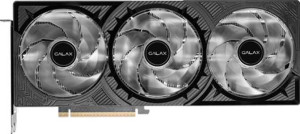
Galax GeForce RTX 5080 1-Click OC
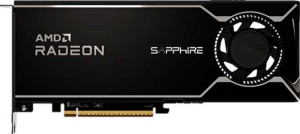
Sapphire Radeon AI Pro R9700

Galax GeForce RTX 5080 1-Click OC Sapphire Radeon AI Pro R9700

Overview

Welcome to our in-depth comparison of the Galax GeForce RTX 5080 1-Click OC and the Sapphire Radeon AI Pro R9700 — two powerful GPUs that take very different approaches to high-end graphics computing. While both cards share a 256-bit memory bus, PCIe 5 support, and ray tracing capability, they diverge sharply on architecture, VRAM capacity, raw shader count, and memory technology, making this a fascinating matchup worth examining closely.

Common Features

  • Both products support Double Precision Floating Point (DPFP).
  • Both products have a memory bus width of 256-bit.
  • Both products support ECC memory.
  • Both products support DirectX 12 Ultimate.
  • Both products support OpenGL version 4.6.
  • Both products support multi-display technology.
  • Both products support ray tracing.
  • Both products support 3D.
  • XeSS (XMX) support is not available on either product.
  • LHR is not present on either product.
  • Both products support up to 4 displays.
  • Neither product has USB-C ports.
  • Neither product has DVI outputs.
  • Neither product has mini DisplayPort outputs.
  • Both products use PCI Express (PCIe) version 5.
  • Neither product features air-water cooling.

Main Differences

  • GPU clock speed is 2295 MHz on Galax GeForce RTX 5080 1-Click OC and 1660 MHz on Sapphire Radeon AI Pro R9700.
  • GPU turbo speed is 2625 MHz on Galax GeForce RTX 5080 1-Click OC and 2920 MHz on Sapphire Radeon AI Pro R9700.
  • Pixel rate is 294 GPixel/s on Galax GeForce RTX 5080 1-Click OC and 373.8 GPixel/s on Sapphire Radeon AI Pro R9700.
  • Floating-point performance is 56.45 TFLOPS on Galax GeForce RTX 5080 1-Click OC and 47.8 TFLOPS on Sapphire Radeon AI Pro R9700.
  • Texture rate is 882 GTexels/s on Galax GeForce RTX 5080 1-Click OC and 747.5 GTexels/s on Sapphire Radeon AI Pro R9700.
  • GPU memory speed is 1875 MHz on Galax GeForce RTX 5080 1-Click OC and 2518 MHz on Sapphire Radeon AI Pro R9700.
  • Shading units number 10752 on Galax GeForce RTX 5080 1-Click OC and 4096 on Sapphire Radeon AI Pro R9700.
  • Texture mapping units (TMUs) total 336 on Galax GeForce RTX 5080 1-Click OC and 256 on Sapphire Radeon AI Pro R9700.
  • Render output units (ROPs) total 112 on Galax GeForce RTX 5080 1-Click OC and 128 on Sapphire Radeon AI Pro R9700.
  • Effective memory speed is 30000 MHz on Galax GeForce RTX 5080 1-Click OC and 20100 MHz on Sapphire Radeon AI Pro R9700.
  • Maximum memory bandwidth is 960 GB/s on Galax GeForce RTX 5080 1-Click OC and 644.6 GB/s on Sapphire Radeon AI Pro R9700.
  • VRAM is 16GB on Galax GeForce RTX 5080 1-Click OC and 32GB on Sapphire Radeon AI Pro R9700.
  • GDDR version is GDDR7 on Galax GeForce RTX 5080 1-Click OC and GDDR6 on Sapphire Radeon AI Pro R9700.
  • OpenCL version is 3 on Galax GeForce RTX 5080 1-Click OC and 2.2 on Sapphire Radeon AI Pro R9700.
  • Resizable BAR technology is Intel Resizable BAR on Galax GeForce RTX 5080 1-Click OC and AMD SAM on Sapphire Radeon AI Pro R9700.
  • RGB lighting is present on Galax GeForce RTX 5080 1-Click OC but not available on Sapphire Radeon AI Pro R9700.
  • An HDMI output is present on Galax GeForce RTX 5080 1-Click OC but not available on Sapphire Radeon AI Pro R9700.
  • DisplayPort outputs number 3 on Galax GeForce RTX 5080 1-Click OC and 4 on Sapphire Radeon AI Pro R9700.
  • GPU architecture is Blackwell on Galax GeForce RTX 5080 1-Click OC and RDNA 4.0 on Sapphire Radeon AI Pro R9700.
  • Thermal Design Power (TDP) is 360W on Galax GeForce RTX 5080 1-Click OC and 300W on Sapphire Radeon AI Pro R9700.
  • Semiconductor size is 5 nm on Galax GeForce RTX 5080 1-Click OC and 4 nm on Sapphire Radeon AI Pro R9700.
  • Number of transistors is 45600 million on Galax GeForce RTX 5080 1-Click OC and 53900 million on Sapphire Radeon AI Pro R9700.
  • Width is 315 mm on Galax GeForce RTX 5080 1-Click OC and 266.7 mm on Sapphire Radeon AI Pro R9700.
  • Height is 140.5 mm on Galax GeForce RTX 5080 1-Click OC and 111 mm on Sapphire Radeon AI Pro R9700.
Specs Comparison
Galax GeForce RTX 5080 1-Click OC

Galax GeForce RTX 5080 1-Click OC

Sapphire Radeon AI Pro R9700

Sapphire Radeon AI Pro R9700

Performance:
GPU clock speed 2295 MHz 1660 MHz
GPU turbo 2625 MHz 2920 MHz
pixel rate 294 GPixel/s 373.8 GPixel/s
floating-point performance 56.45 TFLOPS 47.8 TFLOPS
texture rate 882 GTexels/s 747.5 GTexels/s
GPU memory speed 1875 MHz 2518 MHz
shading units 10752 4096
texture mapping units (TMUs) 336 256
render output units (ROPs) 112 128
Has Double Precision Floating Point (DPFP)

These two GPUs tell a fascinating architectural story. The Galax RTX 5080 launches from a significantly higher base clock (2295 MHz vs. 1660 MHz), meaning it delivers sustained performance well before any boost algorithm kicks in — a real advantage in workloads that don't push the GPU to its thermal ceiling. The Sapphire R9700, however, closes the gap considerably at peak, reaching a 2920 MHz turbo versus the RTX 5080's 2625 MHz, suggesting its architecture is tuned to burst aggressively when thermals allow.

Where the RTX 5080 pulls decisively ahead is in raw compute throughput: its 56.45 TFLOPS of floating-point performance and 882 GTexels/s texture rate — backed by 10,752 shading units — reflect a much wider execution engine. The R9700's 4,096 shading units and 47.8 TFLOPS indicate a narrower but higher-clocked design. In shader-heavy tasks like ray tracing, AI-accelerated rendering, or modern rasterization, the RTX 5080's sheer unit count gives it a structural edge. Conversely, the R9700 counters with a faster memory subsystem (2518 MHz vs. 1875 MHz) and a higher pixel fill rate (373.8 GPixel/s vs. 294 GPixel/s), thanks to its higher ROP count (128 vs. 112), which benefits high-resolution output and bandwidth-bound scenarios.

Overall, the Galax RTX 5080 holds a clear advantage in compute and texture throughput — the specs most relevant to general gaming and GPU compute workloads. The Sapphire R9700 carves out a niche edge in pixel output rate and memory bandwidth efficiency, which may matter in specific high-resolution or fill-rate-limited use cases. Both cards support double-precision floating point, making them relevant for mixed professional workloads, but the RTX 5080's broader execution resources make it the stronger all-round performer based on these specs alone.
Memory:
effective memory speed 30000 MHz 20100 MHz
maximum memory bandwidth 960 GB/s 644.6 GB/s
VRAM 16GB 32GB
GDDR version GDDR7 GDDR6
memory bus width 256-bit 256-bit
Supports ECC memory

The Galax GeForce RTX 5080 1-Click OC features an effective memory speed of 30000 MHz, which is significantly faster than the Sapphire Radeon AI Pro R9700’s 20100 MHz. The RTX 5080 also boasts a higher maximum memory bandwidth of 960 GB/s, compared to the R9700’s 644.6 GB/s. In terms of VRAM, the R9700 has a much larger capacity at 32GB, while the RTX 5080 is equipped with 16GB of VRAM.

Both products utilize a 256-bit memory bus width and support Error-Correcting Code (ECC) memory, ensuring reliable data handling and stability during intensive tasks. The RTX 5080 uses the newer GDDR7 memory type, while the R9700 is equipped with GDDR6 memory, which is a previous generation but still provides strong performance.

While both cards provide high-performance memory features, the RTX 5080 leads in memory speed and bandwidth, while the R9700 excels in VRAM capacity.

Features:
DirectX version DirectX 12 Ultimate DirectX 12 Ultimate
OpenGL version 4.6 4.6
OpenCL version 3 2.2
Supports multi-display technology
supports ray tracing
Supports 3D
has XeSS (XMX)
AMD SAM / Intel Resizable BAR Intel Resizable BAR AMD SAM
has LHR
has RGB lighting
supported displays 4 4

Both the Galax GeForce RTX 5080 1-Click OC and the Sapphire Radeon AI Pro R9700 support DirectX 12 Ultimate, OpenGL 4.6, and ray tracing, with both also being capable of handling 3D graphics. The RTX 5080 supports OpenCL 3, while the R9700 is limited to OpenCL 2.2. Both cards support multi-display technology and can drive up to 4 supported displays.

In terms of advanced features, the RTX 5080 uses Intel Resizable BAR, while the R9700 supports AMD SAM. Neither card supports XeSS (XMX), and both are free from LHR (Lite Hash Rate) limitations. The RTX 5080 has RGB lighting, whereas the R9700 does not.

Overall, both products share many core features, but the RTX 5080 has slight advantages in OpenCL version and additional aesthetics with RGB lighting.

Ports:
has an HDMI output
DisplayPort outputs 3 4
USB-C ports 0 0
DVI outputs 0 0
mini DisplayPort outputs 0 0

The Galax GeForce RTX 5080 1-Click OC includes one HDMI output and three DisplayPort outputs, offering versatile display connectivity. In contrast, the Sapphire Radeon AI Pro R9700 lacks an HDMI output but provides four DisplayPort outputs. Neither card features USB-C ports, DVI outputs, or mini DisplayPort outputs.

While both cards support DisplayPort outputs, the RTX 5080 has one HDMI output, which the R9700 does not. The R9700, however, provides an additional DisplayPort output, bringing the total to four.

In terms of ports, the RTX 5080 offers slightly more flexibility for users who prefer HDMI connections, while the R9700 leans more toward DisplayPort-heavy setups.

General info:
GPU architecture Blackwell RDNA 4.0
release date January 2025 July 2025
Thermal Design Power (TDP) 360W 300W
PCI Express (PCIe) version 5 5
semiconductor size 5 nm 4 nm
number of transistors 45600 million 53900 million
Has air-water cooling
width 315 mm 266.7 mm
height 140.5 mm 111 mm

The Galax GeForce RTX 5080 1-Click OC uses the Blackwell GPU architecture, while the Sapphire Radeon AI Pro R9700 is built on the RDNA 4.0 architecture. The RTX 5080 has a Thermal Design Power (TDP) of 360W, higher than the R9700’s 300W TDP. Both cards support PCI Express (PCIe) version 5, ensuring fast data transfer speeds. The RTX 5080 has a 5 nm semiconductor size, while the R9700 uses a slightly smaller 4 nm semiconductor.

In terms of transistor count, the R9700 has more at 53900 million, compared to the RTX 5080’s 45600 million. Both cards lack air-water cooling systems, which may influence cooling setups. The RTX 5080 is larger in size, measuring 315 mm in width and 140.5 mm in height, while the R9700 is more compact, with a width of 266.7 mm and a height of 111 mm.

Overall, the RTX 5080 is larger and has a higher TDP, while the R9700 is built on a more advanced semiconductor process with a higher transistor count and a smaller form factor.

Comparison Summary & Verdict

After examining all available specifications, both GPUs excel in distinct areas that cater to different user profiles. The Galax GeForce RTX 5080 1-Click OC dominates in raw compute throughput with 56.45 TFLOPS of floating-point performance, 10752 shading units, 882 GTexels/s texture rate, and blazing 960 GB/s memory bandwidth via GDDR7 — making it the stronger pick for gaming and GPU-accelerated workloads demanding brute shader power. By contrast, the Sapphire Radeon AI Pro R9700 answers with a commanding 32GB of VRAM, a higher GPU turbo clock of 2920 MHz, superior pixel rate of 373.8 GPixel/s, a more refined 4nm process node, and a lower 300W TDP — advantages that make it far better suited for professional AI workloads, large model inference, and memory-intensive creative applications where capacity and efficiency matter most.

Galax GeForce RTX 5080 1-Click OC
Buy Galax GeForce RTX 5080 1-Click OC if...

Buy the Galax GeForce RTX 5080 1-Click OC if you want maximum shader throughput, higher floating-point performance, and faster memory bandwidth for gaming or GPU-accelerated tasks, and you also value HDMI output and RGB lighting.

Sapphire Radeon AI Pro R9700
Buy Sapphire Radeon AI Pro R9700 if...

Buy the Sapphire Radeon AI Pro R9700 if you need a large 32GB VRAM pool for AI inference or memory-intensive professional workloads, and prefer a more power-efficient card with a lower 300W TDP and a more advanced 4nm chip.