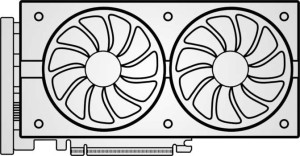
Galax GeForce RTX 5080 HOF OC Lab Plus
Nvidia GeForce RTX 5080

Galax GeForce RTX 5080 HOF OC Lab Plus Nvidia GeForce RTX 5080

Overview

Welcome to our in-depth spec comparison between the Galax GeForce RTX 5080 HOF OC Lab Plus and the Nvidia GeForce RTX 5080. Both cards share the same Blackwell architecture and 16GB of GDDR7 memory, yet they differ in key areas such as boost clock speeds, physical dimensions, and a few feature extras. Read on to see how these two RTX 5080 variants stack up across performance, memory, features, and build characteristics.

Common Features

  • GPU memory speed is 1875 MHz on both products.
  • Both products have 10752 shading units.
  • Both products have 336 texture mapping units (TMUs).
  • Both products have 112 render output units (ROPs).
  • Double Precision Floating Point (DPFP) is supported on both products.
  • Effective memory speed is 30000 MHz on both products.
  • Maximum memory bandwidth is 960 GB/s on both products.
  • Both products have 16GB of VRAM.
  • Both products use GDDR7 memory.
  • Memory bus width is 256-bit on both products.
  • ECC memory is supported on both products.
  • Both products support DirectX 12 Ultimate.
  • OpenGL version 4.6 is available on both products.
  • OpenCL version 3 is available on both products.
  • Multi-display technology is supported on both products.
  • Ray tracing is supported on both products.
  • 3D support is available on both products.
  • DLSS is supported on both products.
  • XeSS (XMX) is not available on either product.
  • Both products have one HDMI output running HDMI 2.1b.
  • Both products have 3 DisplayPort outputs.
  • Neither product has USB-C, DVI, or mini DisplayPort outputs.
  • Both products are based on the Blackwell GPU architecture.
  • Thermal Design Power (TDP) is 360W on both products.
  • Both products use PCIe version 5.
  • Both products are manufactured on a 5 nm semiconductor process.
  • Both products have 45600 million transistors.
  • Neither product features air-water cooling.

Main Differences

  • GPU base clock speed is 2295 MHz on Galax GeForce RTX 5080 HOF OC Lab Plus and 2300 MHz on Nvidia GeForce RTX 5080.
  • GPU turbo clock speed is 2685 MHz on Galax GeForce RTX 5080 HOF OC Lab Plus and 2620 MHz on Nvidia GeForce RTX 5080.
  • Pixel rate is 300.7 GPixel/s on Galax GeForce RTX 5080 HOF OC Lab Plus and 293.4 GPixel/s on Nvidia GeForce RTX 5080.
  • Floating-point performance is 57.74 TFLOPS on Galax GeForce RTX 5080 HOF OC Lab Plus and 56.34 TFLOPS on Nvidia GeForce RTX 5080.
  • Texture rate is 902.2 GTexels/s on Galax GeForce RTX 5080 HOF OC Lab Plus and 880 GTexels/s on Nvidia GeForce RTX 5080.
  • RGB lighting is present on Galax GeForce RTX 5080 HOF OC Lab Plus but not available on Nvidia GeForce RTX 5080.
  • Width is 349.4 mm on Galax GeForce RTX 5080 HOF OC Lab Plus and 304 mm on Nvidia GeForce RTX 5080.
  • Height is 160 mm on Galax GeForce RTX 5080 HOF OC Lab Plus and 137 mm on Nvidia GeForce RTX 5080.
Specs Comparison
Galax GeForce RTX 5080 HOF OC Lab Plus

Galax GeForce RTX 5080 HOF OC Lab Plus

Nvidia GeForce RTX 5080

Nvidia GeForce RTX 5080

Performance:
GPU clock speed 2295 MHz 2300 MHz
GPU turbo 2685 MHz 2620 MHz
pixel rate 300.7 GPixel/s 293.4 GPixel/s
floating-point performance 57.74 TFLOPS 56.34 TFLOPS
texture rate 902.2 GTexels/s 880 GTexels/s
GPU memory speed 1875 MHz 1875 MHz
shading units 10752 10752
texture mapping units (TMUs) 336 336
render output units (ROPs) 112 112
Has Double Precision Floating Point (DPFP)

At the core of both cards sits the same fundamental silicon: identical counts of 10,752 shading units, 336 TMUs, and 112 ROPs, plus matching 1875 MHz memory speed and Double Precision Floating Point support. This means any performance gap between them is purely a function of clock speed tuning, not architectural differences.

That tuning is where the Galax HOF OC Lab Plus separates itself. While its base clock of 2295 MHz is essentially tied with the Nvidia reference card's 2300 MHz, the HOF pulls meaningfully ahead under sustained load with a turbo of 2685 MHz versus 2620 MHz — a 65 MHz advantage that cascades directly into every compute metric. The result is a 57.74 TFLOPS floating-point throughput versus 56.34 TFLOPS, a 902.2 GTexels/s texture rate versus 880 GTexels/s, and a 300.7 GPixel/s pixel rate versus 293.4 GPixel/s. Each of these individually represents a roughly 2–3% uplift, which in practice translates to marginally higher sustained framerates and slightly faster compute workloads.

The edge in this group goes clearly to the Galax HOF OC Lab Plus. The gains are modest — rooted entirely in a higher factory overclock rather than any hardware advantage — but they are consistent across every throughput metric. For users who want the maximum out-of-box performance from the RTX 5080 architecture without manual overclocking, the HOF variant delivers a measurable, if incremental, lead.

Memory:
effective memory speed 30000 MHz 30000 MHz
maximum memory bandwidth 960 GB/s 960 GB/s
VRAM 16GB 16GB
GDDR version GDDR7 GDDR7
memory bus width 256-bit 256-bit
Supports ECC memory

The memory subsystem of both cards is completely identical across every measurable dimension. Both carry 16GB of GDDR7 running over a 256-bit bus at an effective speed of 30,000 MHz, delivering 960 GB/s of peak bandwidth. GDDR7 is the latest generation of graphics memory, and that bandwidth figure is a substantial leap over prior-gen standards — it ensures that neither card will be memory-bottlenecked in 4K gaming, ray-traced workloads, or moderately demanding AI inference tasks.

ECC memory support is present on both, which is worth noting for users who intend to use these cards for professional compute or workstation tasks alongside gaming. ECC allows the GPU to detect and correct single-bit memory errors, adding a layer of reliability that matters in long-running or data-sensitive workloads — though it has no bearing on gaming performance.

This group is a complete tie. There is not a single memory specification that distinguishes the Galax HOF OC Lab Plus from the Nvidia reference card. Any decision between these two products must rest entirely on other spec groups, as the memory hardware is functionally interchangeable.

Features:
DirectX version DirectX 12 Ultimate DirectX 12 Ultimate
OpenGL version 4.6 4.6
OpenCL version 3 3
Supports multi-display technology
supports ray tracing
Supports 3D
supports DLSS
has XeSS (XMX)
AMD SAM / Intel Resizable BAR Intel Resizable BAR Intel Resizable BAR
has LHR
has RGB lighting
supported displays 4 4

Functionally, these two cards are feature-identical where it counts most. Both support DirectX 12 Ultimate, ray tracing, and DLSS, and both can drive up to 4 displays simultaneously. DirectX 12 Ultimate ensures compatibility with the full suite of modern rendering features — ray tracing, mesh shaders, variable rate shading — across all current and upcoming titles that leverage them. DLSS, Nvidia's AI-driven upscaling technology, remains one of the most impactful features on either card for boosting framerates with minimal visual quality trade-off.

The only differentiator this group surfaces is RGB lighting, which the Galax HOF OC Lab Plus includes and the Nvidia reference card does not. This is purely an aesthetic consideration with no bearing on performance or functionality — but for users building a visually themed system, it is a tangible distinction.

In terms of meaningful features, this group is effectively a tie. The HOF's RGB lighting gives it a cosmetic edge for aesthetics-focused builders, but no feature relevant to gaming, compute, or display capability separates the two cards here.

Ports:
has an HDMI output
HDMI ports 1 1
HDMI version HDMI 2.1b HDMI 2.1b
DisplayPort outputs 3 3
USB-C ports 0 0
DVI outputs 0 0
mini DisplayPort outputs 0 0

Both cards share an identical port configuration: 1 HDMI 2.1b output and 3 DisplayPort outputs, for a total of four display connections — matching the four-display limit established in the Features group. HDMI 2.1b is the latest revision of the standard, supporting very high refresh rates and resolutions, making it well-suited for modern gaming monitors and high-end televisions alike. The triple DisplayPort arrangement is a practical choice for multi-monitor workstation setups.

Neither card offers USB-C, DVI, or mini DisplayPort outputs, so users with legacy displays or those hoping to daisy-chain monitors via USB-C will need adapters regardless of which card they choose. This is a straightforward limitation shared equally by both.

This group is a complete tie — down to the exact port count, types, and standards. Connectivity plays no role in differentiating these two cards.

General info:
GPU architecture Blackwell Blackwell
release date January 2025 January 2025
Thermal Design Power (TDP) 360W 360W
PCI Express (PCIe) version 5 5
semiconductor size 5 nm 5 nm
number of transistors 45600 million 45600 million
Has air-water cooling
width 349.4 mm 304 mm
height 160 mm 137 mm

Beneath the surface, these two cards are built from the same foundation: identical Blackwell architecture, the same 5nm process node, the same 45,600 million transistors, and a matching 360W TDP over PCIe 5.0. The shared TDP means both cards impose the same power supply and cooling demands on a system — neither has an efficiency advantage over the other at the platform level.

Where this group does draw a clear line is physical size. The Galax HOF OC Lab Plus is a notably larger card, measuring 349.4 mm × 160 mm compared to the Nvidia reference card's 304 mm × 137 mm. That is a difference of over 45 mm in length and 23 mm in height — significant enough to cause fitment issues in smaller mid-tower or compact cases. Prospective buyers of the HOF should verify case clearance carefully before purchasing, as this is a large card by any measure.

The edge in this group depends on the user's situation. For those with spacious full-tower builds, the size difference is inconsequential. For anyone working with a smaller chassis, the Nvidia reference card's more compact dimensions give it a meaningful practical advantage. On all other general specs — architecture, power, process node — the two are completely equal.

Comparison Summary & Verdict

After a thorough comparison, both cards deliver nearly identical memory configurations, feature sets, and thermal envelopes, making the choice come down to specific priorities. The Galax GeForce RTX 5080 HOF OC Lab Plus edges ahead with a higher GPU turbo clock of 2685 MHz, superior floating-point performance of 57.74 TFLOPS, and added RGB lighting, but it does so in a noticeably larger chassis. The Nvidia GeForce RTX 5080, on the other hand, offers a more compact form factor at 304 mm wide and 137 mm tall, making it a better fit for tighter builds, while its slightly higher base clock of 2300 MHz keeps it competitive. Neither card is objectively superior for every user — your ideal pick depends entirely on whether raw boosted throughput or physical compatibility matters more to your setup.

Galax GeForce RTX 5080 HOF OC Lab Plus
Buy Galax GeForce RTX 5080 HOF OC Lab Plus if...

Buy the Galax GeForce RTX 5080 HOF OC Lab Plus if you want the highest possible boost clock, better peak floating-point performance, and RGB lighting in your build.

Nvidia GeForce RTX 5080
Buy Nvidia GeForce RTX 5080 if...

Buy the Nvidia GeForce RTX 5080 if you need a more compact card that fits smaller cases while still delivering a competitive base clock speed.