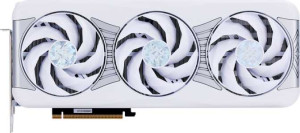
Galax GeForce RTX 5090 D Luna OC
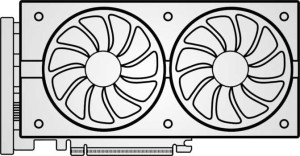
Nvidia GeForce RTX 5090

Galax GeForce RTX 5090 D Luna OC Nvidia GeForce RTX 5090

Overview

Welcome to this detailed specification showdown between the Galax GeForce RTX 5090 D Luna OC and the Nvidia GeForce RTX 5090. Both cards share the same powerful Blackwell architecture, 32GB of GDDR7 memory, and a 575W TDP, yet they differ in key areas worth examining closely. This comparison explores their clock speed performance, physical dimensions, memory bandwidth, and feature set to help you decide which card best suits your needs.

Common Features

  • Both cards have a GPU memory speed of 1750 MHz.
  • Both cards feature 21760 shading units.
  • Both cards include 680 texture mapping units (TMUs).
  • Both cards have 176 render output units (ROPs).
  • Double Precision Floating Point (DPFP) is supported on both cards.
  • Both cards have an effective memory speed of 28000 MHz.
  • Both cards come with 32GB of VRAM.
  • Both cards use GDDR7 memory.
  • Both cards feature a 512-bit memory bus width.
  • ECC memory is supported on both cards.
  • Both cards support DirectX 12 Ultimate.
  • Both cards have an OpenGL version of 4.6.
  • Both cards support OpenCL version 3.
  • Multi-display technology is supported on both cards.
  • Ray tracing is supported on both cards.
  • 3D support is available on both cards.
  • DLSS is supported on both cards.
  • XeSS (XMX) is not available on either card.
  • Both cards include one HDMI 2.1b port and three DisplayPort outputs, with no USB-C or DVI outputs.
  • Both cards are built on the Blackwell GPU architecture with a 5 nm semiconductor process, 92200 million transistors, a 575W TDP, and PCIe 5 interface.

Main Differences

  • GPU base clock speed is 2017 MHz on Galax GeForce RTX 5090 D Luna OC and 2010 MHz on Nvidia GeForce RTX 5090.
  • GPU turbo clock speed is 2452 MHz on Galax GeForce RTX 5090 D Luna OC and 2410 MHz on Nvidia GeForce RTX 5090.
  • Pixel rate is 431.6 GPixel/s on Galax GeForce RTX 5090 D Luna OC and 424.2 GPixel/s on Nvidia GeForce RTX 5090.
  • Floating-point performance is 106.7 TFLOPS on Galax GeForce RTX 5090 D Luna OC and 104.9 TFLOPS on Nvidia GeForce RTX 5090.
  • Texture rate is 1667 GTexels/s on Galax GeForce RTX 5090 D Luna OC and 1638.8 GTexels/s on Nvidia GeForce RTX 5090.
  • Maximum memory bandwidth is 1790 GB/s on Galax GeForce RTX 5090 D Luna OC and 1792 GB/s on Nvidia GeForce RTX 5090.
  • RGB lighting is present on Galax GeForce RTX 5090 D Luna OC but not available on Nvidia GeForce RTX 5090.
  • Card width is 348 mm on Galax GeForce RTX 5090 D Luna OC and 304 mm on Nvidia GeForce RTX 5090.
  • Card height is 155 mm on Galax GeForce RTX 5090 D Luna OC and 137 mm on Nvidia GeForce RTX 5090.
Specs Comparison
Galax GeForce RTX 5090 D Luna OC

Galax GeForce RTX 5090 D Luna OC

Nvidia GeForce RTX 5090

Nvidia GeForce RTX 5090

Performance:
GPU clock speed 2017 MHz 2010 MHz
GPU turbo 2452 MHz 2410 MHz
pixel rate 431.6 GPixel/s 424.2 GPixel/s
floating-point performance 106.7 TFLOPS 104.9 TFLOPS
texture rate 1667 GTexels/s 1638.8 GTexels/s
GPU memory speed 1750 MHz 1750 MHz
shading units 21760 21760
texture mapping units (TMUs) 680 680
render output units (ROPs) 176 176
Has Double Precision Floating Point (DPFP)

Both GPUs share the same fundamental silicon configuration — identical 21,760 shading units, 680 TMUs, 176 ROPs, and 1750 MHz memory speed — meaning the architectural foundation is exactly the same. The real separation between the Galax GeForce RTX 5090 D Luna OC and the Nvidia GeForce RTX 5090 comes down purely to clock speeds, which is expected given that the Galax card is a factory-overclocked model.

The Galax card pushes its base clock to 2017 MHz versus 2010 MHz on the reference Nvidia card, and more meaningfully, its boost clock reaches 2452 MHz compared to 2410 MHz — a delta of 42 MHz, or roughly 1.7%. This directly translates into the Galax card′s slightly higher 106.7 TFLOPS of floating-point performance versus 104.9 TFLOPS, and a marginally better pixel rate (431.6 vs 424.2 GPixel/s) and texture rate (1667 vs 1638.8 GTexels/s). In practice, a ~1.7% clock advantage is unlikely to produce a perceptible difference in most workloads or games — it falls well within benchmark noise margins.

The Galax RTX 5090 D Luna OC holds a narrow performance edge in this group, but strictly as a result of its factory overclock rather than any architectural distinction. Both cards support Double Precision Floating Point, which matters for compute and scientific workloads. For users prioritizing raw peak performance on paper, the Galax card wins — but the margin is slim enough that real-world rendering or gaming performance will be virtually indistinguishable from the reference Nvidia model.

Memory:
effective memory speed 28000 MHz 28000 MHz
maximum memory bandwidth 1790 GB/s 1792 GB/s
VRAM 32GB 32GB
GDDR version GDDR7 GDDR7
memory bus width 512-bit 512-bit
Supports ECC memory

On memory configuration, these two cards are nearly carbon copies of each other. Both feature 32GB of GDDR7 across a 512-bit bus running at an effective 28,000 MHz — a combination that places them at the very top of consumer GPU memory specs. The 512-bit bus width is particularly significant: it is double what most high-end GPUs offer, and paired with GDDR7′s improved efficiency over GDDR6X, it enables the kind of sustained bandwidth that benefits AI inference, large texture streaming, and high-resolution rendering workloads.

The only measurable difference is the maximum memory bandwidth — 1792 GB/s for the Nvidia reference card versus 1790 GB/s for the Galax Luna OC. A 2 GB/s gap at this scale is a rounding-level distinction, almost certainly a result of minor timing or configuration differences in how bandwidth is reported, and carries zero practical significance in any real workload. ECC memory support is present on both, which is relevant for professional and compute use cases where data integrity matters.

This group is effectively a dead heat. Any buyer choosing between these two cards will experience identical memory performance in practice. The 32GB capacity itself is the headline here — it future-proofs both cards for increasingly VRAM-hungry AI models and next-generation games, and neither product holds any meaningful advantage over the other in this category.

Features:
DirectX version DirectX 12 Ultimate DirectX 12 Ultimate
OpenGL version 4.6 4.6
OpenCL version 3 3
Supports multi-display technology
supports ray tracing
Supports 3D
supports DLSS
has XeSS (XMX)
AMD SAM / Intel Resizable BAR Intel Resizable BAR Intel Resizable BAR
has LHR
has RGB lighting
supported displays 4 4

Across the software and API feature set, these two cards are functionally identical where it counts most. Both support DirectX 12 Ultimate, ray tracing, and DLSS — the trifecta that defines a modern high-end gaming GPU. DirectX 12 Ultimate in particular guarantees support for hardware-accelerated ray tracing, variable rate shading, and mesh shaders, meaning both cards are fully equipped for current and near-future game engines. Intel Resizable BAR support on both further ensures that the CPU can access the full GPU frame buffer at once, which can yield measurable performance gains in compatible titles.

The only difference in this group is aesthetic rather than functional: the Galax Luna OC includes RGB lighting, while the Nvidia reference card does not. For a segment of buyers — particularly those building showcase systems with windowed cases — this is a genuine differentiator. For everyone else, it is irrelevant to performance or compatibility.

From a pure features standpoint, this group is essentially a tie on substance, with the Galax Luna OC holding a minor edge for users who care about RGB aesthetics. Neither card supports XeSS, and both cap out at 4 simultaneous displays, so multi-monitor users are equally served. The Galax card′s RGB inclusion is the only reason it could be considered the marginal winner here, and only for buyers to whom visual customization matters.

Ports:
has an HDMI output
HDMI ports 1 1
HDMI version HDMI 2.1b HDMI 2.1b
DisplayPort outputs 3 3
USB-C ports 0 0
DVI outputs 0 0
mini DisplayPort outputs 0 0

Port selection is identical across both cards, and the configuration is well-suited for a flagship GPU. Each offers 3 DisplayPort outputs and 1 HDMI 2.1b port, totaling four display connections — matching the maximum supported display count noted in the features group. HDMI 2.1b is the most current HDMI specification, supporting up to 10K resolution, high frame rate output at 4K and 8K, and Variable Refresh Rate, making it fully capable of driving the latest high-end monitors and televisions without any adapters.

The absence of USB-C is worth noting for users who rely on that connector for display output or daisy-chaining peripherals, though neither card is at a disadvantage relative to the other since both omit it equally. Legacy connectors like DVI and mini DisplayPort are also absent on both, which is entirely expected at this tier and poses no practical limitation for modern display setups.

This group is a complete tie — there is no differentiator between the Galax Luna OC and the Nvidia reference card whatsoever. Buyers with specific connectivity requirements, such as needing USB-C display output, will need to factor in an adapter regardless of which card they choose.

General info:
GPU architecture Blackwell Blackwell
release date January 2025 January 2025
Thermal Design Power (TDP) 575W 575W
PCI Express (PCIe) version 5 5
semiconductor size 5 nm 5 nm
number of transistors 92200 million 92200 million
Has air-water cooling
width 348 mm 304 mm
height 155 mm 137 mm

At the silicon level, these two cards are built from the same foundation: identical Blackwell architecture, a 5nm fabrication process, 92.2 billion transistors, and a 575W TDP. That power figure deserves emphasis — 575W is a substantial thermal load that demands a high-quality PSU and good case airflow regardless of which card is chosen. Both use PCIe 5.0, ensuring maximum bandwidth headroom for current and upcoming motherboards, though PCIe 4.0 systems will still run them without a meaningful bottleneck.

Where this group reveals a real difference is physical size. The Galax Luna OC measures 348 × 155 mm, while the Nvidia reference card comes in at a notably more compact 304 × 137 mm — meaning the Galax card is roughly 44mm longer and 18mm taller. At this size class, those are not trivial dimensions. The Galax card may not fit in smaller or mid-tower cases that the reference card would clear, making case compatibility a genuine pre-purchase consideration for the Galax model.

The Nvidia reference card holds a practical advantage in this group purely on the basis of its smaller footprint, giving it broader compatibility across different case sizes. For buyers in compact builds or those sensitive to clearance constraints, this distinction matters. Everything else — the architecture, power draw, and process node — is shared equally between the two.

Comparison Summary & Verdict

After examining the full specification set, both cards are clearly top-tier offerings built on the same Blackwell architecture with identical memory configurations and feature support. The Galax GeForce RTX 5090 D Luna OC holds a measurable edge in GPU clock speeds and compute throughput, delivering higher pixel rates, texture rates, and floating-point performance thanks to its factory overclock. It also adds RGB lighting for those who value aesthetics. The Nvidia GeForce RTX 5090, on the other hand, offers a marginally higher maximum memory bandwidth and comes in a noticeably more compact form factor, making it the better fit for tighter builds. Neither card is universally superior; the right choice depends entirely on whether raw overclocked performance and visual flair or a smaller, reference-sized design matters more to you.

Galax GeForce RTX 5090 D Luna OC
Buy Galax GeForce RTX 5090 D Luna OC if...

Buy the Galax GeForce RTX 5090 D Luna OC if you want a factory-overclocked card with higher clock speeds, greater compute throughput, and RGB lighting for a premium, high-performance build.

Nvidia GeForce RTX 5090
Buy Nvidia GeForce RTX 5090 if...

Buy the Nvidia GeForce RTX 5090 if you prefer a more compact reference design that fits smaller cases while still delivering near-identical performance and a marginally higher memory bandwidth.