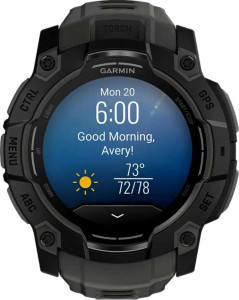
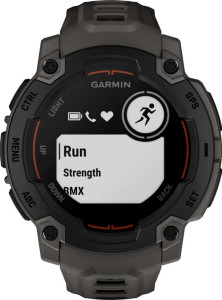
Much of the feature set here is shared ground — HRV tracking, VO2 max, resting heart rate, fast/slow heart rate notifications, stopwatch, phone finder, silent alarm, notifications, Galileo GPS support, thunderstorm risk alerts, and sunrise/sunset times are all present on both watches. For core smartwatch and health-monitoring utility, neither device leaves the user short.
Three differences stand out. First, the Garmin Instinct 3 AMOLED 50mm includes a readiness level indicator — a recovery-oriented metric that synthesizes health data to tell users whether their body is primed for hard effort or needs rest. Its absence on the Instinct E 45mm is a meaningful gap for anyone training with structure. Second, fall detection on the Instinct 3 adds a layer of personal safety, automatically triggering an alert if an impact is detected — useful for solo trail runners or older users. Third, and perhaps most practically significant, the Instinct 3 carries 4GB of internal storage compared to just 0.128GB on the Instinct E. This isn't a marginal difference — it's roughly 31 times more storage, enabling music storage, detailed maps, or richer activity data logging that the Instinct E simply cannot accommodate.
The Instinct E holds its own on the fundamentals, but the accumulation of absent features — readiness tracking, fall detection, and severely limited storage — paints a consistent picture of a more stripped-down offering. The Instinct 3 AMOLED 50mm has a clear advantage in this group, particularly for users who want deeper training insights, safety features, or onboard storage capacity.