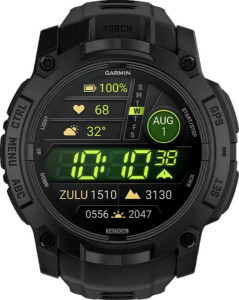
Garmin Instinct 3 AMOLED Tactical Edition
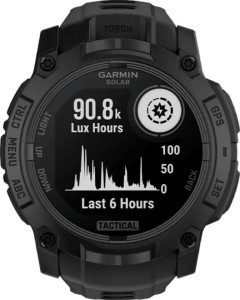
Garmin Instinct 3 Solar Tactical Edition

Garmin Instinct 3 AMOLED Tactical Edition Garmin Instinct 3 Solar Tactical Edition

Overview

Choosing between the Garmin Instinct 3 AMOLED Tactical Edition and the Garmin Instinct 3 Solar Tactical Edition means weighing two very different philosophies in rugged smartwatch design. Both share the same tough tactical DNA, identical sensors, and activity-tracking capabilities, yet they diverge sharply when it comes to display quality, battery endurance, and onboard storage. Which one fits your mission profile best?

Common Features

  • Both products feature an OLED/AMOLED display type.
  • Both products are waterproof with a 10 ATM rating.
  • Neither product has branded damage-resistant glass.
  • Neither product has a sapphire glass display.
  • Both products have a thickness of 14.4 mm.
  • The watch band is replaceable on both products.
  • Neither product has a touchscreen.
  • Both products have GPS.
  • Both products include a heart rate monitor.
  • Both products monitor blood oxygenation levels.
  • Both products have a barometer, accelerometer, compass, temperature sensor, and cadence sensor.
  • Both products offer route tracking, distance tracking, pace measurement, trackback mode, sleep tracking, multi-sport mode, automatic activity detection, and elevation tracking.
  • Both products are compatible with iOS and Android.
  • Neither product supports Wi-Fi or has a cellular module.
  • Both products support ANT+ and have NFC.
  • Both products have HRV tracking, VO2 max measurement, resting heart rate measurement, fast/slow heart rate notifications, and readiness level display.
  • Neither product can upload maps, and neither has vibrating alerts.
  • Both products have a stopwatch.
  • Both products do not have wireless charging, have a rechargeable battery, and do not have a removable battery.
  • Both products provide activity reports, inactivity alerts, calorie tracking, goal setting, achievements, an exercise diary, and are ad-free with a free companion app.
  • Both products have a battery level indicator, auto pause, compatibility with external heart rate monitors, smart scales, Windows, Mac OS X, and are available on PC.
  • Neither product has an external memory slot.

Main Differences

  • Screen size is 1.3″ on the Garmin Instinct 3 AMOLED Tactical Edition and 1.1″ on the Garmin Instinct 3 Solar Tactical Edition.
  • Resolution is 416 x 416 px on the Garmin Instinct 3 AMOLED Tactical Edition and 176 x 176 px on the Garmin Instinct 3 Solar Tactical Edition.
  • Pixel density is 452 ppi on the Garmin Instinct 3 AMOLED Tactical Edition and 226 ppi on the Garmin Instinct 3 Solar Tactical Edition.
  • Weight is 59 g on the Garmin Instinct 3 AMOLED Tactical Edition and 58 g on the Garmin Instinct 3 Solar Tactical Edition.
  • Battery life is 9 days on the Garmin Instinct 3 AMOLED Tactical Edition and effectively unlimited on the Garmin Instinct 3 Solar Tactical Edition.
  • Battery life with GPS on is 40 hours on the Garmin Instinct 3 AMOLED Tactical Edition and 260 hours on the Garmin Instinct 3 Solar Tactical Edition.
  • Battery life in training mode is 30 hours on the Garmin Instinct 3 AMOLED Tactical Edition and 60 hours on the Garmin Instinct 3 Solar Tactical Edition.
  • Solar power battery charging is present on the Garmin Instinct 3 Solar Tactical Edition but not available on the Garmin Instinct 3 AMOLED Tactical Edition.
  • Internal storage is 4GB on the Garmin Instinct 3 AMOLED Tactical Edition and 0.128GB on the Garmin Instinct 3 Solar Tactical Edition.
Specs Comparison
Garmin Instinct 3 AMOLED Tactical Edition

Garmin Instinct 3 AMOLED Tactical Edition

Garmin Instinct 3 Solar Tactical Edition

Garmin Instinct 3 Solar Tactical Edition

Design:
screen size 1.3" 1.1"
Display type OLED/AMOLED OLED/AMOLED
water resistance Waterproof Waterproof
has branded damage-resistant glass
ATM rating 10 ATM 10 ATM
resolution 416 x 416 px 176 x 176 px
Watch band is replaceable
has a touch screen
weight 59 g 58 g
Has sapphire glass display
thickness 14.4 mm 14.4 mm
Always-On Display
height 50 mm 50 mm
pixel density 452 ppi 226 ppi
Has a display
width 50 mm 50 mm
width of band 26 mm 26 mm
volume 36 cm³ 36 cm³

Both watches share the same physical shell: identical 50 × 50 mm dimensions, 14.4 mm thickness, 36 cm³ volume, and a near-identical weight of 59 g vs. 58 g — a difference so marginal it is imperceptible on the wrist. Both are rated 10 ATM waterproof, lack sapphire or branded damage-resistant glass, support a replaceable 26 mm band, and offer an Always-On display without a touchscreen. In terms of form factor, these two watches are essentially twins.

The meaningful split is entirely in the display. The AMOLED Tactical Edition carries a larger 1.3″ screen at a sharp 416 × 416 px resolution, yielding a pixel density of 452 ppi — a genuinely crisp, detailed image. The Solar Tactical Edition uses a smaller 1.1″ panel at only 176 × 176 px, resulting in a much lower 226 ppi. In practice, this roughly halved pixel density means text, maps, and data fields will appear noticeably coarser on the Solar model, which matters when reading small tactical data at a glance under stress or in low light.

On design alone, the AMOLED Tactical Edition holds a clear edge solely due to its superior display size and sharpness. Users who prioritize crisp, readable screen real estate will find the AMOLED variant significantly more capable, while those for whom the display quality is secondary — perhaps prioritizing solar charging trade-offs evaluated elsewhere — may find the Solar model's screen adequate but definitively lower-fidelity.

Sensors:
has GPS
Has a heart rate monitor
Monitors blood oxygenation levels
Has a barometer
has an accelerometer
has a compass
Has a temperature sensor
Has a cadence sensor
has a gyroscope
Has a wind speed sensor
Monitors perspiration

Across every single sensor listed, these two watches are in complete lockstep. Both carry GPS, a heart rate monitor, SpO2 blood oxygen tracking, a barometer, accelerometer, compass, temperature sensor, cadence sensor, and a gyroscope — a comprehensive suite that covers navigation, environmental awareness, and activity tracking for demanding tactical and outdoor use.

Notably absent from both is a wind speed sensor and perspiration monitoring, so neither watch ventures into those more specialized biometric or environmental territories. This is a shared limitation rather than a differentiator, and users requiring those metrics will find neither model sufficient regardless of which variant they choose.

This group is a complete tie. The sensor hardware is identical across both editions, meaning the choice between the AMOLED and Solar Tactical variants will hinge entirely on other factors such as display quality or battery characteristics — sensor capability offers no reason to favor one over the other.

Activity tracking:
Has a route tracker
Tracks distance
Measures pace
Has trackback mode
Tracks your sleep
Has multi-sport mode
Detects activities automatically
Tracks elevation
Tracks steps taken
Provides sleep reports
Has exercise tagging
Has a stroke counter for swimming
Tracks calorie intake
Designed for diving
Designed for golf

Activity tracking is another domain where these two variants are indistinguishable. Both cover the full spectrum of core tracking features — route tracking, elevation, pace, distance, steps, and automatic activity detection — forming a solid foundation for athletes and outdoor users alike. The inclusion of trackback mode is particularly valuable in tactical contexts, allowing users to retrace their exact path in unfamiliar terrain without relying on pre-loaded maps.

The breadth of sport-specific features is equally matched: both offer multi-sport mode, a stroke counter for swimming, and are designed for golf, while neither is rated for diving. Sleep tracking and detailed sleep reports round out a well-rounded wellness picture on both devices. The calorie intake tracking capability adds a nutritional layer that goes beyond what many rugged watches offer.

As with sensors, this group is a complete tie — every activity tracking capability present on one is present on the other. Buyers focused purely on what these watches can track and record will find zero differentiation here; the decision remains one of display and battery characteristics rather than tracking breadth.

Connectivity:
Is compatible with iOS
Is compatible with Android
supports Wi-Fi
has a cellular module
supports ANT+
has NFC

Connectivity is identical between the two variants. Both pair with iOS and Android, support ANT+ for connecting to third-party fitness accessories like heart rate chest straps and cycling sensors, and include NFC for contactless payments — a useful convenience that is not always guaranteed on rugged tactical watches.

Worth noting is what neither watch offers: there is no Wi-Fi and no cellular module on either model. The absence of Wi-Fi means firmware updates and syncing must go through a paired smartphone rather than a direct network connection, which is a minor but real workflow consideration. The lack of cellular is expected at this tier and keeps the design lean and power-efficient.

This category is a complete tie. The connectivity stack is byte-for-byte identical, so users evaluating these two watches on the basis of how they communicate with other devices and accessories will find no reason to favor one over the other here.

Battery:
battery life 9 days Infinity days
battery life with GPS on 40 hours 260 hours
battery life in training mode 30 hours 60 hours
has wireless charging
Has a solar power battery
has a rechargeable battery
has a removable battery

Battery life is where these two watches diverge most dramatically, and it is not a close contest. The AMOLED Tactical Edition lasts 9 days in smartwatch mode and 40 hours with GPS active — respectable figures for a watch with a power-hungry AMOLED display, but firmly in the territory of regular charging. The Solar Tactical Edition, by contrast, lists its smartwatch battery life as infinity days and stretches GPS endurance to a remarkable 260 hours — a 6.5× advantage in GPS mode alone — thanks to its solar charging capability supplementing the internal battery.

The training mode numbers reinforce the gap: 60 hours on the Solar versus 30 hours on the AMOLED, meaning the Solar model can sustain twice as long a continuous workout session before needing a charge. For multi-day expeditions, ultra-endurance events, or deployments where access to a power source cannot be guaranteed, this difference is operationally significant rather than merely a spec sheet advantage. Neither watch supports wireless charging, so when the AMOLED model does need power, it requires a physical cable connection.

The Solar Tactical Edition holds an overwhelming edge in this category. The solar harvesting capability fundamentally changes the battery calculus — users who operate in outdoor environments with regular sun exposure may rarely or never need to charge it in typical use. Those willing to accept frequent charging cycles in exchange for the AMOLED's superior display will find the trade-off meaningful, but on raw battery endurance, the Solar model wins decisively.

Features:
release date April 2025 April 2025
has HRV tracking
measures VO2 max
measures resting heart rate
has fast/slow heart rate notifications
shows readiness level
Can upload maps
Has vibrating alerts
Has a stopwatch
Locates your phone
Has silent alarm
has irregular heart rate warnings
has fall detection
Has notifications
Acquires GPS faster
Has call control
Provides the sunrise/sunset time
internal storage 4GB 0.128GB
Can be used to answer calls
supports Galileo
Has smart alarm
Informs about the risk of thunderstorms
warranty period 1 years 1 years
has voice commands
Has a built-in camera remote control function

Feature parity between these two variants is nearly total. Both deliver a strong health monitoring suite — HRV tracking, VO2 max, resting heart rate, readiness level, and fall detection — alongside practical tactical utilities like fast GPS acquisition, Galileo satellite support, thunderstorm risk alerts, and sunrise/sunset times. Shared absences are equally notable: neither offers vibrating alerts, call control, voice commands, or smart alarms, which are consistent omissions across both editions.

The sole but significant differentiator in this group is internal storage. The AMOLED Tactical Edition provides 4 GB, while the Solar Tactical Edition offers just 0.128 GB — a gap of more than 30×. In practical terms, 4 GB is enough to store a meaningful offline music library or a substantial volume of map tiles and mission data, whereas 0.128 GB is severely limiting for anything beyond basic app and workout data storage. For users who intend to load the watch with offline content for use away from a phone, this difference is far from trivial.

The AMOLED Tactical Edition has a clear edge in this category, driven entirely by its vastly larger internal storage. All other features being equal, users who rely on onboard storage for music, navigation data, or other offline content will find the Solar model's 0.128 GB allocation a meaningful constraint in real-world operational use.

App & Software:
Provides activity reports
Has inactivity alerts
Counts how many calories you've burned
Has goal setting
Has achievements
Free app
Has exercise diary
Ad-free
Has weight tracking
Tracks BMI
Tracks water intake
Has live tracking
Has coaching
Has temperature tracking
Has period notifications
Supports routes
Syncs with existing calendars
Has voice feedback
Has music playback
Displays fertile window notifications
Includes maps
Doesn’t require account
Predicts start date
Predicts ovulation
Has video tutorials
Supports widgets
Can be personalised
Has barcode scanner on app

The companion app experience is identical for both watches — every single feature listed is shared without exception. The software ecosystem is notably comprehensive: beyond standard fitness tools like activity reports, goal setting, coaching, and an exercise diary, both watches tie into an app that covers menstrual cycle tracking with fertile window notifications, ovulation and start date predictions, as well as live tracking, route support, and full map integration. That breadth is meaningful for users who want a single platform to manage both tactical/athletic performance and everyday wellness.

The app is free and ad-free, syncs with existing calendars, supports widgets, and allows personalization — practical qualities that reduce friction in day-to-day use. The one shared gap worth flagging is that an account is required; there is no anonymous usage option on either platform. The absence of a barcode scanner for food logging is a minor limitation for nutrition-focused users on both devices.

This group is a complete tie. The software and app capabilities are indistinguishable between the AMOLED and Solar Tactical editions, so users prioritizing ecosystem depth and companion app features have no basis to choose one variant over the other here.

Miscellaneous:
has a battery level indicator
Is compatible with Windows
Has auto pause
Compatible with external heart rate monitors
Available on PC
Compatible with smart scales
Is compatible with Mac OS X
has an external memory slot
has a socket for a 3.5 mm audio jack

Rounding out the spec comparison, the miscellaneous category offers no differentiation whatsoever between the two variants. Both are compatible with Windows and Mac OS X, support external heart rate monitors and smart scales, include auto pause, and display a battery level indicator — a practical set of integrations that slots each watch comfortably into a broader fitness and computing ecosystem.

Neither model includes an external memory slot or a 3.5 mm audio jack, which are consistent omissions. The lack of expandable storage reinforces the significance of the internal storage gap identified in the Features group — what the AMOLED Tactical Edition ships with is all it will ever have, and the same constraint applies even more acutely to the Solar model's 0.128 GB.

This group is a complete tie. Every miscellaneous attribute is shared equally, and no spec here shifts the overall balance between the two editions. The broader choice continues to rest on the trade-offs already established: display quality and onboard storage favor the AMOLED variant, while battery endurance firmly favors the Solar.

Comparison Summary & Verdict

After a full side-by-side review, both watches are closely matched in sensors, connectivity, and tracking features, but each targets a distinct type of user. The Garmin Instinct 3 AMOLED Tactical Edition wins decisively on visual experience, delivering a larger 1.3″ display at 452 ppi and a generous 4 GB of internal storage, making it the better pick for those who value a sharp, vivid screen and room to store data. The Garmin Instinct 3 Solar Tactical Edition, on the other hand, dominates on battery endurance, offering up to 260 hours of GPS runtime and effectively unlimited everyday battery life thanks to its solar charging capability — a decisive advantage for extended field operations, ultra-endurance events, or any mission where recharging is not an option.

Garmin Instinct 3 AMOLED Tactical Edition
Buy Garmin Instinct 3 AMOLED Tactical Edition if...

Buy the Garmin Instinct 3 AMOLED Tactical Edition if you prioritize a sharper, larger display and significantly more internal storage for your data.

Garmin Instinct 3 Solar Tactical Edition
Buy Garmin Instinct 3 Solar Tactical Edition if...

Buy the Garmin Instinct 3 Solar Tactical Edition if maximum battery endurance is your top priority, especially for long expeditions or operations where recharging is not practical.