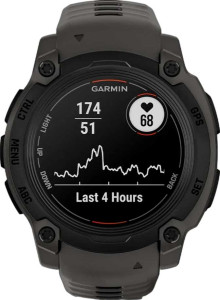
Garmin Instinct E 40mm
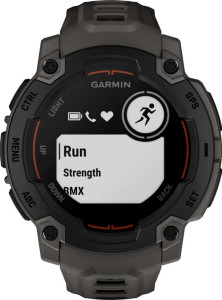
Garmin Instinct E 45mm

Garmin Instinct E 40mm Garmin Instinct E 45mm

Overview

Choosing between the Garmin Instinct E 40mm and the Garmin Instinct E 45mm comes down to more than just size. Both rugged GPS watches share an impressive core feature set, yet they diverge in meaningful ways across physical dimensions and weight, display resolution, and battery endurance. Whether you prioritize a compact and lighter fit on your wrist or a larger screen with extended stamina, this head-to-head comparison covers every key specification to help you make the right call.

Common Features

  • Both watches use an LCD display type.
  • Both watches are waterproof with a 10 ATM rating.
  • Neither watch features branded damage-resistant glass.
  • Neither watch has a sapphire glass display.
  • Neither watch has a touch screen.
  • Neither watch has an Always-On Display.
  • The watch band is replaceable on both models.
  • Both watches include GPS.
  • Both watches have a heart rate monitor.
  • Both watches monitor blood oxygenation levels.
  • Both watches include a barometer, accelerometer, compass, and temperature sensor.
  • Neither watch has a cadence sensor.
  • Both watches track routes, distance, pace, elevation, and sleep.
  • Automatic activity detection is available on both watches.
  • Neither watch supports trackback mode or multi-sport mode.
  • Both watches are compatible with iOS and Android.
  • Neither watch supports Wi-Fi, NFC, or cellular connectivity.
  • ANT+ connectivity is supported on both watches.
  • Neither watch has wireless charging or a solar power battery, though both have a rechargeable, non-removable battery.
  • Both watches support HRV tracking, VO2 max measurement, resting heart rate measurement, and fast/slow heart rate notifications.
  • Neither watch can upload maps or shows a readiness level, and neither has vibrating alerts.
  • Both watches include a stopwatch.
  • Both watches provide activity reports, inactivity alerts, calorie tracking, goal setting, achievements, an exercise diary, and an ad-free free app.
  • Both watches have a battery level indicator, auto pause, external heart rate monitor compatibility, smart scale compatibility, and are compatible with Windows, Mac OS X, and PC.
  • Neither watch has an external memory slot.

Main Differences

  • Screen size is 0.86″ on the Garmin Instinct E 40mm and 0.9″ on the Garmin Instinct E 45mm.
  • Resolution is 166 x 166 px on the Garmin Instinct E 40mm and 176 x 176 px on the Garmin Instinct E 45mm.
  • Pixel density is 272 ppi on the Garmin Instinct E 40mm and 276 ppi on the Garmin Instinct E 45mm.
  • Weight is 41 g on the Garmin Instinct E 40mm and 48 g on the Garmin Instinct E 45mm.
  • Thickness is 13.6 mm on the Garmin Instinct E 40mm and 14.2 mm on the Garmin Instinct E 45mm.
  • Height is 40 mm on the Garmin Instinct E 40mm and 45 mm on the Garmin Instinct E 45mm.
  • Width is 40 mm on the Garmin Instinct E 40mm and 45 mm on the Garmin Instinct E 45mm.
  • Band width is 20 mm on the Garmin Instinct E 40mm and 22 mm on the Garmin Instinct E 45mm.
  • Volume is 21.76 cm³ on the Garmin Instinct E 40mm and 28.755 cm³ on the Garmin Instinct E 45mm.
  • Battery life is 14 days on the Garmin Instinct E 40mm and 16 days on the Garmin Instinct E 45mm.
  • Battery life with GPS on is 21 hours on the Garmin Instinct E 40mm and 24 hours on the Garmin Instinct E 45mm.
  • Battery life in training mode is 14 hours on the Garmin Instinct E 40mm and 16 hours on the Garmin Instinct E 45mm.
Specs Comparison
Garmin Instinct E 40mm

Garmin Instinct E 40mm

Garmin Instinct E 45mm

Garmin Instinct E 45mm

Design:
screen size 0.86" 0.9"
Display type LCD LCD
water resistance Waterproof Waterproof
has branded damage-resistant glass
ATM rating 10 ATM 10 ATM
resolution 166 x 166 px 176 x 176 px
Watch band is replaceable
has a touch screen
weight 41 g 48 g
Has sapphire glass display
thickness 13.6 mm 14.2 mm
Always-On Display
height 40 mm 45 mm
pixel density 272 ppi 276 ppi
Has a display
width 40 mm 45 mm
width of band 20 mm 22 mm
volume 21.76 cm³ 28.755 cm³

The most defining difference between these two watches is their physical size. The 40mm variant measures 40 × 40 mm and weighs 41 g, while the 45mm model measures 45 × 45 mm and weighs 48 g. That 7-gram difference may sound minor, but combined with a larger footprint and a greater volume (21.76 cm³ vs. 28.76 cm³), the 45mm will sit noticeably more prominently on the wrist — a real consideration for users with smaller wrists or those who prioritize a low-profile feel during sleep or workouts.

On the display side, both watches use an LCD panel with no touch input, no Always-On mode, and no sapphire or branded damage-resistant glass. The 45mm edges ahead with a slightly larger 0.9″ screen at 176 × 176 px and 276 ppi, compared to 0.86″, 166 × 166 px, and 272 ppi on the 40mm. In practice, the differences in sharpness are negligible at these densities — both will render text and data cleanly — but the larger screen on the 45mm does offer a marginally more readable glance experience. Both are rated at 10 ATM waterproofing, making them equally capable for swimming and water sports.

Overall, the 40mm has the edge for users prioritizing comfort and discretion on the wrist, while the 45mm suits those who prefer a larger watch face and slightly more screen real estate. Neither model offers premium display protection or advanced screen technology, so the choice here comes down almost entirely to personal size preference.

Sensors:
has GPS
Has a heart rate monitor
Monitors blood oxygenation levels
Has a barometer
has an accelerometer
has a compass
Has a temperature sensor
Has a cadence sensor
has a gyroscope
Has a wind speed sensor
Monitors perspiration

Across every sensor listed, the Garmin Instinct E 40mm and 45mm are a perfect match. Both carry the same core suite: GPS, heart rate monitor, blood oxygenation (SpO2), barometer, accelerometer, compass, temperature sensor, and gyroscope. This is a well-rounded set for an outdoor and fitness-focused watch — the barometer enables altitude tracking and weather trend detection, while the combination of GPS, compass, and gyroscope supports reliable navigation in demanding environments.

Neither watch includes a cadence sensor, wind speed sensor, or perspiration monitor, which means users with highly specific athletic needs — such as cyclists wanting real-time pedaling rhythm or advanced sweat-based hydration tracking — will find the same limitations on both models. These omissions are consistent with the watches' positioning rather than a differentiator between them.

This category is a complete tie. The sensor package is identical in every respect, so a buyer's choice between the 40mm and 45mm should rest entirely on other factors such as size and battery life. Neither model holds any advantage here.

Activity tracking:
Has a route tracker
Tracks distance
Measures pace
Has trackback mode
Tracks your sleep
Has multi-sport mode
Detects activities automatically
Tracks elevation
Tracks steps taken
Provides sleep reports
Has exercise tagging
Has a stroke counter for swimming
Tracks calorie intake
Designed for diving
Designed for golf

Activity tracking is another area where the two watches are completely interchangeable. Both cover the fundamentals expected of a fitness-oriented GPS watch: route tracking, distance, pace, elevation, and step counting are all present, giving users a solid foundation for running, hiking, and general daily activity monitoring. The inclusion of automatic activity detection is a practical convenience — the watch identifies workouts without requiring manual logging, reducing friction for users who want seamless tracking.

A few capabilities stand out as particularly noteworthy on both models. Swim stroke counting extends utility into the pool, while sleep tracking with dedicated sleep reports adds a recovery dimension beyond pure athletic performance. Calorie intake tracking and exercise tagging round out a well-structured wellness picture. On the other hand, neither watch supports multi-sport mode or trackback navigation, and neither is designed for diving or golf — so users with those specific disciplines in mind will find both models equally limited.

Just as with the sensor group, this is a complete tie. The activity tracking feature set is identical across the 40mm and 45mm, with no meaningful distinction to guide a purchase decision here. Buyers should continue weighing other factors — primarily size and fit — to differentiate between the two.

Connectivity:
Is compatible with iOS
Is compatible with Android
supports Wi-Fi
has a cellular module
supports ANT+
has NFC

Connectivity on both watches follows the same focused, no-frills philosophy. Both support ANT+ and are compatible with iOS and Android, covering the essentials for pairing with external fitness accessories — such as heart rate chest straps, cycling power meters, or foot pods — and syncing data to a smartphone. For users embedded in the Garmin ecosystem, this is a practical and sufficient setup.

Worth noting are the shared absences: neither model includes Wi-Fi, NFC, or a cellular module. No Wi-Fi means syncing relies entirely on a Bluetooth connection to a paired phone rather than direct network uploads. No NFC rules out contactless payments entirely. No cellular means the watch cannot operate independently of a phone for calls, messages, or data — it is a companion device, not a standalone one. These are deliberate trade-offs consistent with a rugged outdoor watch prioritizing battery efficiency over smart features.

Connectivity is a complete tie — the two models are spec-for-spec identical in this category. Users who need Wi-Fi syncing, mobile payments, or phone-free connectivity will find both equally limiting; those who do not require those features will find both equally capable.

Battery:
battery life 14 days 16 days
battery life with GPS on 21 hours 24 hours
battery life in training mode 14 hours 16 hours
has wireless charging
Has a solar power battery
has a rechargeable battery
has a removable battery

Battery life is the first category where a meaningful — if modest — gap emerges between the two models. The 45mm pulls ahead across every metric: 16 days of general use versus 14 days, 24 hours of GPS runtime versus 21 hours, and 16 hours in training mode versus 14 hours. The pattern is consistent — roughly a 14% advantage in favor of the larger model across all three scenarios. In practice, this translates to fewer charging interruptions on extended trips and, crucially, more headroom for multi-day outdoor adventures where GPS is running continuously.

The GPS endurance gap is particularly relevant for endurance athletes and hikers. An extra 3 hours of GPS runtime could be the difference between finishing an ultramarathon or a long trekking day with battery to spare versus having to ration tracking. For everyday use, the two-day difference in general battery life is noticeable but not dramatic — both watches comfortably clear the two-week mark without a charge.

On charging, both models share the same constraints: no wireless charging and no solar option, so users rely solely on a wired connection. The 45mm holds a clear battery edge in this group — its larger chassis accommodates a bigger battery, and that advantage is consistently reflected across all usage modes. Users who prioritize longevity in the field, especially with GPS active, will find the 45mm the stronger choice here.

Features:
release date January 2025 January 2025
has HRV tracking
measures VO2 max
measures resting heart rate
has fast/slow heart rate notifications
shows readiness level
Can upload maps
Has vibrating alerts
Has a stopwatch
Locates your phone
Has silent alarm
has irregular heart rate warnings
has fall detection
Has notifications
Acquires GPS faster
Has call control
Provides the sunrise/sunset time
internal storage 0.128GB 0.128GB
Can be used to answer calls
supports Galileo
Has smart alarm
Informs about the risk of thunderstorms
warranty period 1 years 1 years
has voice commands
Has a built-in camera remote control function

The feature set paints a consistent picture of a capable but deliberately focused outdoor watch — and once again, both models are identical in every respect. On the health monitoring side, HRV tracking, VO2 max estimation, resting heart rate measurement, and fast/slow heart rate notifications form a solid performance and wellness toolkit. Notably absent are irregular heart rate warnings and readiness level scoring, which means users seeking more clinical cardiac monitoring or daily recovery guidance will find both models equally limited in that regard.

For outdoor utility, Galileo satellite support alongside faster GPS acquisition improves positioning reliability in challenging environments like dense forests or deep valleys. The thunderstorm risk alerts and sunrise/sunset times are practical additions for hikers and trail runners planning around weather and daylight. The 0.128 GB of internal storage is minimal — sufficient for basic data logging but not for storing maps or music. Map uploading is unsupported on both, reinforcing that these watches rely on live GPS rather than preloaded cartography.

Smart and communication features are sparse across both: no vibrating alerts, no call control, no voice commands, and no smart alarm. This is consistent with the watches' rugged, distraction-free positioning. Since every feature listed is shared identically, this group is a complete tie — size and battery life remain the only meaningful differentiators between the two models.

App & Software:
Provides activity reports
Has inactivity alerts
Counts how many calories you've burned
Has goal setting
Has achievements
Free app
Has exercise diary
Ad-free
Has weight tracking
Tracks BMI
Tracks water intake
Has live tracking
Has coaching
Has temperature tracking
Has period notifications
Supports routes
Syncs with existing calendars
Has voice feedback
Has music playback
Displays fertile window notifications
Includes maps
Doesn’t require account
Predicts start date
Predicts ovulation
Has video tutorials
Supports widgets
Can be personalised
Has barcode scanner on app

The companion app experience is rich and evenly matched across both models. The software covers an impressive breadth of wellness tracking — calorie burn, weight, BMI, water intake, and temperature — alongside training-focused tools like activity reports, an exercise diary, goal setting, and achievements. For athletes who want structure, route support, live tracking, and calendar sync add meaningful planning and safety utility, while voice feedback and video tutorials lower the barrier to entry for less experienced users getting the most out of their device.

A few gaps are worth flagging, and they apply equally to both: there is no coaching functionality, no barcode scanner for nutrition logging, and no reproductive health features such as period notifications, fertile window tracking, or ovulation prediction. Users who rely on guided training plans or detailed nutrition input via barcode scanning will find both models equally limited in those areas. Requiring an account to use the app is also a shared constraint.

With every software and app capability being identical between the two, this group is a complete tie. The app adds genuine value to both watches in equal measure — the decision between the 40mm and 45mm continues to hinge on physical fit and battery life rather than any software distinction.

Miscellaneous:
has a battery level indicator
Is compatible with Windows
Has auto pause
Compatible with external heart rate monitors
Available on PC
Compatible with smart scales
Is compatible with Mac OS X
has an external memory slot
has a socket for a 3.5 mm audio jack

Rounding out the comparison, the miscellaneous specs reinforce a familiar pattern: the 40mm and 45mm are identical in every detail. Both are compatible with Windows, Mac OS X, and PC for desktop syncing, and both support external heart rate monitors and smart scales — a useful pairing for users who want to consolidate fitness and body composition data in one ecosystem. Auto pause is a practical training feature that stops recording when movement halts, keeping workout data clean without requiring manual intervention.

Neither model offers an external memory slot or a 3.5mm audio jack. The absence of expandable storage is consistent with the minimal onboard storage noted in the features group, and the lack of an audio jack means there is no wired audio output — users wanting music during workouts must rely on a paired Bluetooth device rather than wired headphones directly from the watch.

This group is a complete tie, with no differentiators whatsoever between the two models. Taken across the full comparison, the only areas where the 45mm distinguishes itself are battery life and physical size — everything else, from sensors and software to connectivity and miscellaneous compatibility, is shared equally between the two.

Comparison Summary & Verdict

After examining both models in detail, the choice between the Garmin Instinct E 40mm and the Garmin Instinct E 45mm comes down to your personal priorities. Both watches deliver an identical sensor suite, the same connectivity options, and shared durability through 10 ATM water resistance. Where they part ways is in form factor and stamina: the 40mm is the lighter, slimmer option at just 41 g and 13.6 mm thick, making it a natural fit for users with smaller wrists or those who prefer a more discreet profile. The 45mm counters with a slightly larger 0.9″ display at higher resolution, and leads on battery life with up to 16 days of use, 24 hours of GPS tracking, and 16 hours in training mode. If endurance and screen real estate are your top concerns, the 45mm is the stronger choice; if a compact, lightweight design matters most, the 40mm is the smarter pick.

Garmin Instinct E 40mm
Buy Garmin Instinct E 40mm if...

Buy the Garmin Instinct E 40mm if you prefer a lighter, more compact watch at just 41 g and 13.6 mm thick, ideal for smaller wrists or an understated everyday fit.

Garmin Instinct E 45mm
Buy Garmin Instinct E 45mm if...

Buy the Garmin Instinct E 45mm if you want a larger display with higher resolution and longer battery life, offering up to 16 days of use and 24 hours of GPS tracking.