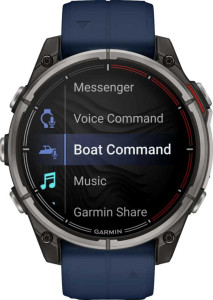
Garmin Quatix 8
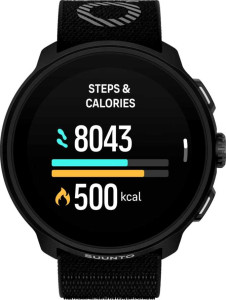
Suunto Run

Garmin Quatix 8 Suunto Run

Overview

When comparing the Garmin Quatix 8 and the Suunto Run, two very different philosophies emerge in the smartwatch space. Both share a strong foundation — OLED displays, GPS, heart rate monitoring, and robust activity tracking — but they diverge sharply when it comes to build, connectivity, and specialist features. Whether you care most about battery longevity, wearability, or the breadth of supported sports and smart functions, this side-by-side breakdown will help you understand exactly where each watch excels and where trade-offs must be made.

Common Features

  • Both watches feature an OLED/AMOLED display.
  • Both watches are waterproof.
  • Both watches have a replaceable watch band.
  • Both watches support touch screen input.
  • Both watches have an Always-On Display.
  • Both watches include GPS.
  • Both watches have a heart rate monitor.
  • Both watches monitor blood oxygenation levels.
  • Both watches include a barometer.
  • Both watches include an accelerometer and a compass.
  • Neither watch includes a wind speed sensor or perspiration monitoring.
  • Both watches offer route tracking, distance tracking, pace measurement, sleep tracking, multi-sport mode, automatic activity detection, elevation tracking, and step tracking.
  • Both watches are compatible with iOS and Android.
  • Neither watch has a cellular module.
  • Neither watch supports wireless or solar charging, and both have a rechargeable, non-removable battery.
  • Both watches support HRV tracking, VO2 max measurement, resting heart rate measurement, fast/slow heart rate notifications, readiness level display, map uploads, vibrating alerts, and a stopwatch.
  • Both watches provide activity reports, inactivity alerts, calorie tracking, goal setting, achievements, an exercise diary, a free app, and an ad-free experience.
  • Both watches have a battery level indicator, auto pause, compatibility with external heart rate monitors, and are compatible with Windows and Mac OS X.
  • Neither watch has an external memory slot or a 3.5 mm audio jack socket.

Main Differences

  • Screen size is 1.4″ on Garmin Quatix 8 and 1.32″ on Suunto Run.
  • Branded damage-resistant glass is not present on Garmin Quatix 8 but is available on Suunto Run.
  • Resolution is 454 x 454 px on Garmin Quatix 8 and 466 x 466 px on Suunto Run.
  • Weight is 92 g on Garmin Quatix 8 and 36 g on Suunto Run.
  • Sapphire glass display is present on Garmin Quatix 8 but not available on Suunto Run.
  • Thickness is 14.7 mm on Garmin Quatix 8 and 11.5 mm on Suunto Run.
  • Height is 51 mm on Garmin Quatix 8 and 46 mm on Suunto Run.
  • Width is 51 mm on Garmin Quatix 8 and 46 mm on Suunto Run.
  • Pixel density is 458 ppi on Garmin Quatix 8 and 499 ppi on Suunto Run.
  • Volume is 38.2347 cm³ on Garmin Quatix 8 and 24.334 cm³ on Suunto Run.
  • A temperature sensor is present on Garmin Quatix 8 but not available on Suunto Run.
  • A gyroscope is present on Garmin Quatix 8 but not available on Suunto Run.
  • Trackback mode is available on Garmin Quatix 8 but not on Suunto Run.
  • Diving support is present on Garmin Quatix 8 but not on Suunto Run.
  • Golf mode is available on Garmin Quatix 8 but not on Suunto Run.
  • Wi-Fi support is present on Garmin Quatix 8 but not on Suunto Run.
  • ANT+ support is present on Garmin Quatix 8 but not on Suunto Run.
  • NFC is available on Garmin Quatix 8 but not on Suunto Run.
  • Battery life is 29 days on Garmin Quatix 8 and 12 days on Suunto Run.
  • Battery life in training mode is 18 hours on Garmin Quatix 8 and 20 hours on Suunto Run.
  • Phone locating is supported on Garmin Quatix 8 but not on Suunto Run.
  • Call control is available on Garmin Quatix 8 but not on Suunto Run.
  • Answering calls directly from the watch is possible on Garmin Quatix 8 but not on Suunto Run.
  • Voice commands are supported on Garmin Quatix 8 but not on Suunto Run.
Specs Comparison
Garmin Quatix 8

Garmin Quatix 8

Suunto Run

Suunto Run

Design:
screen size 1.4" 1.32"
Display type OLED/AMOLED OLED/AMOLED
water resistance Waterproof Waterproof
has branded damage-resistant glass
resolution 454 x 454 px 466 x 466 px
Watch band is replaceable
has a touch screen
weight 92 g 36 g
Has sapphire glass display
thickness 14.7 mm 11.5 mm
Always-On Display
height 51 mm 46 mm
pixel density 458 ppi 499 ppi
Has a display
width 51 mm 46 mm
volume 38.2347 cm³ 24.334 cm³

The most striking physical difference between these two watches is weight: the Garmin Quatix 8 comes in at 92 g, more than twice the 36 g of the Suunto Run. Combined with a 14.7 mm thickness versus 11.5 mm and a significantly larger overall volume (38.23 cm³ vs 24.33 cm³), the Quatix 8 is a substantially bulkier device. For everyday wear or long-distance running, that extra mass on the wrist becomes noticeable over hours, giving the Suunto Run a clear comfort advantage for endurance athletes.

On display quality, the two are closer than expected. Both use OLED/AMOLED panels with Always-On Display support. The Quatix 8 offers a larger 1.4″ screen, which benefits readability at a glance, but the Suunto Run counters with a slightly higher pixel density of 499 ppi (vs 458 ppi) on its 1.32″ panel, meaning text and graphics appear marginally sharper. For most users the difference is negligible, but the larger canvas of the Quatix 8 can make map navigation and data fields easier to parse.

Glass protection is a meaningful trade-off: the Quatix 8 uses sapphire glass, which is highly scratch-resistant and better suited to rugged marine or outdoor environments, while the Suunto Run opts for branded damage-resistant glass (not sapphire), which typically offers more shatter resistance but less scratch immunity. Overall, the Suunto Run wins on wearability and form factor, while the Quatix 8 has the edge in screen real estate and premium scratch protection — making the right choice dependent on whether the user prioritizes comfort during long activities or durability in demanding conditions.

Sensors:
has GPS
Has a heart rate monitor
Monitors blood oxygenation levels
Has a barometer
has an accelerometer
has a compass
Has a temperature sensor
has a gyroscope
Has a wind speed sensor
Monitors perspiration

The sensor suites of these two watches share a strong common foundation — both include GPS, heart rate monitoring, blood oxygenation (SpO2), a barometer, an accelerometer, and a compass. For the vast majority of training and outdoor activities, this core set covers all the essentials: accurate positioning, altitude tracking, cardio monitoring, and basic navigation.

Where the Quatix 8 pulls ahead is in two additional sensors absent on the Suunto Run: a temperature sensor and a gyroscope. The temperature sensor allows the watch to log ambient conditions during activities — particularly relevant for sailors, mountaineers, or anyone training in variable climates. The gyroscope complements the accelerometer by adding rotational motion data, which improves movement detection accuracy, wrist-gesture recognition, and can enhance activity auto-detection for sports with complex motion patterns.

For a runner focused purely on road or trail use, the Suunto Run's sensor set is entirely adequate — the missing sensors are unlikely to affect day-to-day training metrics. However, users who want richer environmental data logging or more precise motion tracking will find the Quatix 8's broader hardware more capable. The edge goes to the Garmin Quatix 8 strictly on sensor breadth.

Activity tracking:
Has a route tracker
Tracks distance
Measures pace
Has trackback mode
Tracks your sleep
Has multi-sport mode
Detects activities automatically
Tracks elevation
Tracks steps taken
Provides sleep reports
Has exercise tagging
Has a stroke counter for swimming
Tracks calorie intake
Designed for diving
Designed for golf

In terms of everyday activity tracking, these two watches are remarkably well-matched. Both cover the full range of training essentials — route tracking, pace, elevation, steps, calorie intake, sleep reporting, multi-sport mode, automatic activity detection, and even a stroke counter for swimming. For a runner or triathlete, either watch delivers a comprehensive data picture without meaningful gaps.

The differences emerge at the edges of the activity profile. The Quatix 8 includes trackback mode, which allows users to retrace their exact route back to the starting point — a genuinely useful safety and navigation feature for trail runners, hikers, or anyone venturing into unfamiliar terrain. The Suunto Run lacks this. More significantly, the Quatix 8 is purpose-built for both diving and golf, extending its utility well beyond running and multisport into niche but dedicated disciplines. The Suunto Run carries neither designation, positioning it as a more focused run-and-fitness device.

For a user whose activity profile centers on running and general training, the gap is narrow and the Suunto Run holds its own. But for anyone who values navigational safety features or participates in a wider range of activities, the Garmin Quatix 8 holds a clear advantage in this category — its tracking capabilities are simply broader in scope.

Connectivity:
Is compatible with iOS
Is compatible with Android
supports Wi-Fi
has a cellular module
supports ANT+
has NFC

Both watches cover the basics equally well — full compatibility with iOS and Android, and neither includes a cellular module, meaning both rely on a paired smartphone for notifications and data sync. That common ground aside, the connectivity gap between these two is substantial.

The Quatix 8 adds three meaningful connectivity features that the Suunto Run entirely lacks. Wi-Fi support allows the watch to sync workouts, maps, and firmware updates directly over a home or gym network without needing the phone nearby — a small but genuinely convenient quality-of-life advantage. ANT+ compatibility opens up a wide ecosystem of third-party sensors: chest-strap heart rate monitors, cycling power meters, foot pods, and more, all communicating wirelessly with the watch. For athletes who rely on external sensors for precision training, ANT+ is a significant practical asset. Finally, NFC enables contactless payments directly from the wrist, removing the need to carry a wallet or phone during runs and workouts.

The Suunto Run, by contrast, connects to a phone and little else. For a runner who trains with just the watch and a smartphone app, this is perfectly functional. But for users who want to integrate external sensors, sync without a phone, or pay on the go, the Quatix 8 holds a clear and decisive connectivity advantage.

Battery:
battery life 29 days 12 days
battery life in training mode 18 hours 20 hours
has wireless charging
Has a solar power battery
has a rechargeable battery
has a removable battery

Battery life splits interestingly between these two watches depending on how you measure it. In everyday standby use, the Quatix 8 dominates with a rated 29 days versus just 12 days for the Suunto Run — a gap that translates directly into how often the watch needs to come off the wrist for charging. For users who wear their watch around the clock for sleep tracking and health monitoring, that difference is felt every week.

Flip to active training mode, however, and the picture nearly reverses. The Suunto Run edges ahead with 20 hours of GPS training time compared to 18 hours on the Quatix 8. In practice this margin is modest — both comfortably cover even the longest ultramarathons or full-day adventures without recharging — so it is unlikely to be a deciding factor for most athletes. It does suggest, though, that the Suunto Run is relatively more efficient when the GPS radio is running continuously.

Neither watch supports wireless charging or solar power, so both require a physical cable connection to recharge. On balance, the overall battery advantage belongs to the Garmin Quatix 8: its dramatically longer standby life means significantly fewer charging interruptions during normal daily wear, while the Suunto Run's slight training-mode lead is too narrow to offset that gap.

Features:
release date June 2025 May 2025
has HRV tracking
measures VO2 max
measures resting heart rate
has fast/slow heart rate notifications
shows readiness level
Can upload maps
Has vibrating alerts
Has a stopwatch
Locates your phone
Has silent alarm
has irregular heart rate warnings
Has notifications
Acquires GPS faster
Has call control
Provides the sunrise/sunset time
Can be used to answer calls
supports Galileo
Has smart alarm
Informs about the risk of thunderstorms
warranty period 1 years 1 years
has voice commands
Has a built-in camera remote control function

Across the broad sweep of features, these two watches are closely aligned. Both deliver HRV tracking, VO2 max estimation, readiness scores, map uploads, fast GPS acquisition, Galileo satellite support, sunrise/sunset times, and even thunderstorm risk alerts — a well-rounded feature set that serves athletes and outdoor users alike. The shared foundation is strong enough that either watch handles the core smartwatch and training-intelligence use cases without compromise.

The Quatix 8 distinguishes itself through a cluster of communication-focused features that the Suunto Run omits entirely. Call control and the ability to answer calls directly from the wrist mean the Quatix 8 can function as a hands-free device during workouts or on the water. Voice commands add another layer of convenience, allowing interaction with the watch without touching the screen — useful when hands are occupied or wet. The ability to locate your phone from the watch is a minor but practical daily-use perk the Suunto Run also lacks.

None of these missing features affect training performance, and a runner focused purely on athletic metrics will not feel their absence. But for a user who wants the watch to serve as a fuller wrist-based interface — managing calls, issuing commands, and staying connected — the Garmin Quatix 8 holds a clear functional edge in this category.

App & Software:
Provides activity reports
Has inactivity alerts
Counts how many calories you've burned
Has goal setting
Has achievements
Free app
Has exercise diary
Ad-free
Has weight tracking
Tracks water intake
Has temperature tracking
Supports routes
Has music playback
Supports widgets
Can be personalised
Has barcode scanner on app

The App & Software category is the most clear-cut of this entire comparison: the two watches are in complete parity. Every single spec in this group — from activity reports and inactivity alerts to route support, music playback, widgets, and personalisation — is identical. Both apps are free and ad-free, and neither includes a barcode scanner.

The feature set on offer is genuinely comprehensive. Calorie tracking, water intake logging, weight tracking, temperature tracking, goal setting, achievements, and an exercise diary together form a well-rounded health and training platform that goes beyond pure athletic performance into broader wellness management. Music playback support and widget customisation further extend the day-to-day utility of both companion apps.

With no differentiators to speak of, this category is a straight tie. Users choosing between the Garmin Quatix 8 and the Suunto Run on software grounds alone will find no meaningful distinction based on the provided data — the decision should be driven entirely by the differences identified in other specification groups.

Miscellaneous:
has a battery level indicator
Is compatible with Windows
Has auto pause
Compatible with external heart rate monitors
Is compatible with Mac OS X
has an external memory slot
has a socket for a 3.5 mm audio jack

Much like the App & Software category, Miscellaneous yields another complete tie. The Garmin Quatix 8 and Suunto Run are identical across every spec in this group — both offer a battery level indicator, auto pause, compatibility with external heart rate monitors, and support for both Windows and Mac OS X. Neither includes an external memory slot or a 3.5 mm audio jack.

A few of these shared traits are worth noting for their practical value. Auto pause — which stops the workout timer automatically when movement ceases at a traffic light or rest stop — is a quality-of-life feature that keeps training data clean without manual intervention. External heart rate monitor compatibility is meaningful for athletes who prefer chest-strap accuracy over optical wrist-based readings, and both watches support this workflow equally.

With no differentiators present in the provided data, this group is a definitive draw. As with the software comparison, prospective buyers should weight their decision on the more substantive differences found in categories such as Design, Connectivity, and Features rather than anything in this group.

Comparison Summary & Verdict

After examining every specification, the Garmin Quatix 8 and Suunto Run clearly target different audiences. The Garmin Quatix 8 is the more feature-complete device, offering Wi-Fi, ANT+, NFC, voice commands, call control, a gyroscope, a temperature sensor, sapphire glass, and specialist modes for diving and golf — all backed by an impressive 29-day battery life. However, it is notably heavier at 92 g and bulkier at 14.7 mm thick. The Suunto Run, by contrast, is a lean, focused companion: at just 36 g and 11.5 mm thin, it is far more comfortable for all-day and sleep tracking wear, and it edges ahead with 20 hours of training-mode battery life. Choose the Garmin Quatix 8 if you want a versatile, connected multi-sport and marine watch loaded with smart features. Choose the Suunto Run if you prioritize a lightweight, streamlined running watch built for comfort and endurance.

Garmin Quatix 8
Buy Garmin Quatix 8 if...

Buy the Garmin Quatix 8 if you want a feature-rich smartwatch with Wi-Fi, NFC, ANT+, voice commands, call control, diving and golf modes, and a 29-day battery life. It suits users who need a versatile, connected device for marine, outdoor, and multi-sport use.

Suunto Run
Buy Suunto Run if...

Buy the Suunto Run if you prioritize an ultra-lightweight and slim watch — just 36 g and 11.5 mm thick — that keeps you comfortable during long runs and everyday wear, with a solid 20 hours of training-mode battery life.