Garmin Venu 4 41mm
Huawei Watch GT 6 41mm

Garmin Venu 4 41mm Huawei Watch GT 6 41mm

Overview

When choosing between the Garmin Venu 4 41mm and the Huawei Watch GT 6 41mm, shoppers face a genuinely close contest between two capable 41mm smartwatches. Both share a strong sensor suite and solid health-tracking foundations, yet they diverge sharply on areas like battery life and connectivity, specialist sport modes, and display technology. Read on to see how every specification stacks up side by side.

Common Features

  • Both watches feature an OLED/AMOLED display.
  • Both watches are waterproof with a 5 ATM rating.
  • Always-On Display is available on both watches.
  • The watch band is replaceable on both watches.
  • Both watches have a touchscreen display.
  • Neither watch is designed for kids.
  • Both watches monitor blood oxygenation levels.
  • Both watches have a heart rate monitor.
  • Both watches have built-in GPS.
  • Both watches include an accelerometer, gyroscope, compass, barometer, and temperature sensor.
  • Both watches track sleep and provide sleep reports.
  • Both watches track distance, steps taken, pace, elevation, and include a route tracker.
  • Both watches can detect activities automatically.
  • Neither watch has a cellular module.
  • Both watches are compatible with iOS and Android.
  • Both watches support NFC and Galileo.
  • Both watches have a rechargeable battery with no solar power or removable battery option.
  • Both watches support HRV tracking, VO2 max measurement, and resting heart rate measurement.
  • Both watches offer fast/slow heart rate notifications, readiness level, call answering, call control, and phone locating.
  • Both watches provide activity reports, inactivity alerts, calorie tracking, goal setting, achievements, exercise diary, and are ad-free with a free app.
  • Both watches have a battery level indicator, auto pause, and are compatible with smart scales and external heart rate monitors.
  • Neither watch has an external memory slot or a 3.5 mm audio jack socket.

Main Differences

  • Screen size is 1.2″ on Garmin Venu 4 41mm and 1.32″ on Huawei Watch GT 6 41mm.
  • Pixel density is 459 ppi on Garmin Venu 4 41mm and 352 ppi on Huawei Watch GT 6 41mm.
  • Resolution is 390 x 390 px on Garmin Venu 4 41mm and 466 x 466 px on Huawei Watch GT 6 41mm.
  • Branded damage-resistant glass is present on Garmin Venu 4 41mm but not available on Huawei Watch GT 6 41mm.
  • Sapphire glass display is present on Huawei Watch GT 6 41mm but not on Garmin Venu 4 41mm.
  • Thickness is 12 mm on Garmin Venu 4 41mm and 10 mm on Huawei Watch GT 6 41mm.
  • Weight is 33 g on Garmin Venu 4 41mm and 37.5 g on Huawei Watch GT 6 41mm.
  • Volume is 20.172 cm³ on Garmin Venu 4 41mm and 17.0569 cm³ on Huawei Watch GT 6 41mm.
  • Stroke counter for swimming is available on Garmin Venu 4 41mm but not on Huawei Watch GT 6 41mm.
  • Diving design is present on Huawei Watch GT 6 41mm but not on Garmin Venu 4 41mm.
  • Golf mode is available on Garmin Venu 4 41mm but not on Huawei Watch GT 6 41mm.
  • Wi-Fi support is available on Garmin Venu 4 41mm but not on Huawei Watch GT 6 41mm.
  • ANT+ support is available on Garmin Venu 4 41mm but not on Huawei Watch GT 6 41mm.
  • Battery life is 10 days on Garmin Venu 4 41mm and 14 days on Huawei Watch GT 6 41mm.
  • Wireless charging is available on Huawei Watch GT 6 41mm but not on Garmin Venu 4 41mm.
  • ECG technology is present on Garmin Venu 4 41mm but not on Huawei Watch GT 6 41mm.
  • Fall detection is available on Garmin Venu 4 41mm but not on Huawei Watch GT 6 41mm.
  • Built-in camera remote control is available on Huawei Watch GT 6 41mm but not on Garmin Venu 4 41mm.
  • Faster GPS acquisition is a feature of Garmin Venu 4 41mm but not of Huawei Watch GT 6 41mm.
  • Windows compatibility is available on Garmin Venu 4 41mm but not on Huawei Watch GT 6 41mm.
  • Mac OS X compatibility is available on Garmin Venu 4 41mm but not on Huawei Watch GT 6 41mm.
Specs Comparison
Garmin Venu 4 41mm

Garmin Venu 4 41mm

Huawei Watch GT 6 41mm

Huawei Watch GT 6 41mm

Design:
screen size 1.2" 1.32"
Display type OLED/AMOLED OLED/AMOLED
water resistance Waterproof Waterproof
ATM rating 5 ATM 5 ATM
Always-On Display
pixel density 459 ppi 352 ppi
resolution 390 x 390 px 466 x 466 px
Watch band is replaceable
has branded damage-resistant glass
thickness 12 mm 10 mm
weight 33 g 37.5 g
height 41 mm 41.3 mm
width 41 mm 41.3 mm
Has a display
has a touch screen
Has sapphire glass display
volume 20.172 cm³ 17.0569 cm³
is designed for kids

Both the Garmin Venu 4 41mm and the Huawei Watch GT 6 41mm share the same fundamental design DNA: identical OLED/AMOLED display technology, 5 ATM water resistance, Always-On Display support, replaceable bands, and a touchscreen interface. At a glance, they look like near-twins on paper — but the details tell a more nuanced story.

On the display front, the two watches make opposite trade-offs. The Venu 4 offers a smaller 1.2″ screen but packs a significantly sharper image at 459 ppi, compared to the GT 6's larger 1.32″ panel at only 352 ppi. In practice, the Venu 4's higher pixel density means crisper text and finer detail, while the GT 6's bigger screen offers more visual real estate — a meaningful difference for readability at a glance. For glass protection, the Venu 4 uses a branded damage-resistant glass (similar to Gorilla Glass-class protection), whereas the GT 6 opts for sapphire glass, which is generally superior for scratch resistance but can be more brittle under impact. Neither choice is strictly better — it depends on whether scratch resistance or shatter resistance matters more to the user.

In terms of physical form, the GT 6 has a clear edge in wearability: it is notably slimmer at 10 mm thick versus the Venu 4's 12 mm, and occupies less overall volume (17.06 cm³ vs 20.17 cm³), making it feel more discreet on the wrist. The Venu 4, however, is meaningfully lighter at 33 g compared to the GT 6's 37.5 g — a difference that can matter during extended wear or sleep tracking. Overall, neither watch holds a dominant design advantage: the Venu 4 wins on display sharpness and weight, while the GT 6 wins on screen size, thickness, and glass quality.
Sensors:
Monitors blood oxygenation levels
Has a heart rate monitor
has GPS
has an accelerometer
Has a temperature sensor
has a compass
Has a barometer
has a gyroscope
Has a cadence sensor
Monitors perspiration

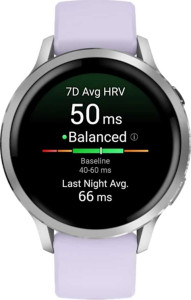
When it comes to sensors, the Garmin Venu 4 41mm and the Huawei Watch GT 6 41mm are a perfect match — every single sensor category in this group returns an identical result for both devices. Both carry the full core suite expected of a modern health-focused smartwatch: heart rate monitor, SpO2 (blood oxygen), GPS, accelerometer, gyroscope, barometer, compass, and a temperature sensor.

The practical implications of this shared hardware stack are significant. The barometer enables elevation tracking and floor-climbing detection, the gyroscope adds precision to movement and gesture recognition, and the temperature sensor supports body and ambient condition monitoring — all capabilities present on both watches equally. Neither device includes a cadence sensor or perspiration monitor, which means neither has an edge in those niche but emerging health-tracking areas.

This group is a clear tie. Sensor-for-sensor, these two watches are functionally equivalent based on the available data, and the choice between them cannot be made on this dimension alone. Users prioritizing a richer or more differentiated sensor profile should look to other specification groups for a deciding factor.

Activity tracking:
Tracks your sleep
Tracks distance
Tracks steps taken
Measures pace
Provides sleep reports
Detects activities automatically
Has a route tracker
Tracks elevation
Has multi-sport mode
Has exercise tagging
Has a stroke counter for swimming
Tracks calorie intake
Designed for diving
Designed for golf

Activity tracking is largely a shared strength between the Garmin Venu 4 41mm and the Huawei Watch GT 6 41mm. Both cover the essential bases convincingly: sleep tracking with reports, step counting, distance, pace, elevation, route tracking, automatic activity detection, exercise tagging, calorie intake tracking, and a full multi-sport mode. For the everyday athlete or fitness-conscious user, either watch delivers a comprehensive monitoring experience without meaningful gaps.

The real divergence lies in two sport-specific capabilities that reveal each watch's intended audience. The Venu 4 includes a stroke counter for swimming and is designed for golf — a combination that positions it toward swimmers who want granular pool metrics and golfers who need on-course support. The GT 6, by contrast, is designed for diving but lacks the swim stroke counter — making it a better fit for underwater adventure sports while offering less to dedicated lap swimmers or golfers.

There is no universal winner here; the edge belongs to whichever watch aligns with the user's sport. Swimmers and golfers get more targeted functionality from the Venu 4, while divers are better served by the GT 6. For general multi-sport users who fall outside those niches, the two watches are effectively tied on this dimension.

Connectivity:
has a cellular module
Is compatible with iOS
Is compatible with Android
supports Wi-Fi
supports ANT+
has NFC
supports Galileo

Both the Garmin Venu 4 41mm and the Huawei Watch GT 6 41mm share a solid connectivity foundation: no cellular module on either, but both support NFC for contactless payments, Galileo satellite positioning for improved GPS accuracy in challenging environments, and full compatibility with iOS and Android. For most users, these shared features cover the everyday essentials without compromise.

Where the two watches diverge meaningfully is in their extended connectivity options. The Venu 4 adds Wi-Fi support, enabling direct firmware updates and data syncing without needing a phone nearby — a genuine convenience for users who want a more autonomous device. More notably, it also supports ANT+, a wireless protocol widely used to connect external fitness accessories like cycling power meters, heart rate chest straps, and foot pods. This makes the Venu 4 significantly more appealing to dedicated athletes who rely on a broader ecosystem of training hardware. The GT 6 offers neither of these, which narrows its wireless compatibility to what is available through Bluetooth alone.

The Venu 4 holds a clear connectivity advantage in this group. The addition of Wi-Fi and ANT+ are not trivial extras — they expand the watch's utility both for everyday convenience and for sport-specific use cases that the GT 6 simply cannot match based on the available data.

Battery:
battery life 10 days 14 days
has wireless charging
has a rechargeable battery
Has a solar power battery
has a removable battery

Battery performance is one of the clearest differentiators between these two watches, and the Huawei Watch GT 6 41mm holds the advantage on both key metrics. Its rated battery life of 14 days outpaces the Garmin Venu 4 41mm's 10 days by a significant margin — in practical terms, that is roughly two additional weeks between charges over the course of a month, reducing charging interruptions and making the GT 6 a more natural fit for extended trips or users who simply dislike the charging routine.

The gap widens further when charging method is considered. The GT 6 supports wireless charging, which adds meaningful day-to-day convenience — simply placing the watch on a compatible pad rather than fussing with a proprietary cable. The Venu 4 lacks this feature entirely, relying solely on a wired connection. While neither watch has a removable or solar-powered battery, the wireless charging capability of the GT 6 is a tangible quality-of-life upgrade that frequent travelers and cable-averse users will appreciate.

The GT 6 wins this category decisively. Longer battery life combined with the added convenience of wireless charging makes it the stronger performer on this dimension, with no compensating battery-related advantage on the Venu 4's side.

Features:
release date September 2025 September 2025
has HRV tracking
measures VO2 max
measures resting heart rate
has fast/slow heart rate notifications
shows readiness level
Can be used to answer calls
Locates your phone
Has call control
Has notifications
has irregular heart rate warnings
Has ECG technology
Has silent alarm
Has vibrating alerts
has fall detection
Has a stopwatch
Has smart alarm
has voice commands
Has a built-in camera remote control function
Acquires GPS faster
warranty period 1 years 1 years
has a front camera

Across the broad features landscape, these two watches share an impressively deep common ground — HRV tracking, VO2 max, readiness scores, call handling, phone locator, irregular heart rate warnings, voice commands, and vibrating alerts, among others. For the majority of smartwatch users, both devices deliver a functionally equivalent experience on day-to-day smart features.

The meaningful separations are few but significant. The Garmin Venu 4 41mm includes ECG technology, enabling on-demand electrocardiogram readings that can help detect atrial fibrillation — a feature with genuine clinical relevance that the GT 6 lacks entirely. It also offers fall detection, an important safety net for older users or those engaging in high-risk activities, and claims faster GPS acquisition, which reduces the waiting time before outdoor workouts can begin. The Huawei Watch GT 6 41mm, on the other hand, counters with a built-in camera remote control function — a handy but comparatively lightweight convenience feature for photography enthusiasts.

The Venu 4 holds a clear edge in this group. ECG monitoring and fall detection are high-value health and safety capabilities that carry real-world consequence, and faster GPS lock adds practical workout convenience. The GT 6's camera remote does not offset those advantages in any meaningful way for health-focused users.

App & Software:
Provides activity reports
Has inactivity alerts
Counts how many calories you've burned
Has goal setting
Has achievements
Free app
Has exercise diary
Ad-free
Has coaching
Has temperature tracking
Has period notifications
Supports routes
Has voice feedback
Has music playback
Displays fertile window notifications
Includes maps
Predicts ovulation
Predicts start date
Supports widgets
Can be personalised
Has barcode scanner on app
Tracks water intake
Has weight tracking
Has live tracking
Tracks BMI

The App & Software category produces the most straightforward result in this entire comparison: the Garmin Venu 4 41mm and the Huawei Watch GT 6 41mm are identical across every single data point provided. Both offer a free, ad-free app with a remarkably complete feature set — activity reports, goal setting, exercise diary, coaching, live tracking, music playback, maps, route support, voice feedback, widgets, and full personalization options.

The breadth of shared wellness tracking is equally matched. Both apps cover calorie burn, water intake, weight, and BMI tracking, alongside a comprehensive suite of women's health features including period notifications, fertile window display, ovulation prediction, and cycle start date forecasting. Neither app includes a barcode scanner — the one absent feature — but its omission is consistent across both products and unlikely to be a deciding factor for most users.

This group is an unambiguous tie. Based strictly on the available data, no software or app-related advantage can be assigned to either watch. Users should treat this dimension as neutral and focus on the differentiating factors found in other specification groups when making their decision.

Miscellaneous:
has a battery level indicator
Has auto pause
Compatible with smart scales
Compatible with external heart rate monitors
Is compatible with Windows
has an external memory slot
Is compatible with Mac OS X
has a socket for a 3.5 mm audio jack

Most of the miscellaneous compatibility specs align neatly between the two watches. Both the Garmin Venu 4 41mm and the Huawei Watch GT 6 41mm include a battery level indicator, auto pause, smart scale compatibility, and support for external heart rate monitors — functional parity that covers the practical needs of most fitness-oriented users.

The one notable split in this group is desktop OS compatibility. The Venu 4 is compatible with both Windows and Mac OS X, offering flexibility for users who sync or manage their device data from a computer. The GT 6 supports neither, which means desktop-based data management or syncing is not available based on the provided specs. For users who prefer or rely on a PC or Mac as part of their fitness workflow, this is a tangible limitation of the GT 6.

The Venu 4 takes the edge in this group, solely on the strength of its broader desktop OS support. Neither watch includes an external memory slot or a 3.5mm audio jack, so those absences are a wash. The GT 6's lack of Windows and Mac compatibility is the only meaningful differentiator here, and it favors the Venu 4 for users who value a complete cross-device ecosystem.

Comparison Summary & Verdict

After examining every specification, both watches prove highly competent, but each suits a different kind of user. The Garmin Venu 4 41mm stands out for athletes and power users who value ECG technology, fall detection, Wi-Fi and ANT+ connectivity, a golf mode, swim stroke counting, and faster GPS acquisition — plus broad desktop compatibility with Windows and Mac. The Huawei Watch GT 6 41mm, on the other hand, wins on battery life at 14 days, a slimmer 10 mm profile, wireless charging, a sapphire glass display, and a built-in camera remote. Its diving-oriented design also makes it the better pick for water sports enthusiasts. In short, choose Garmin for a richer feature set and ecosystem integrations; choose Huawei for longer endurance, a more refined build, and effortless charging.

Garmin Venu 4 41mm
Buy Garmin Venu 4 41mm if...

Buy the Garmin Venu 4 41mm if you want advanced health monitoring with ECG and fall detection, need Wi-Fi and ANT+ connectivity, or rely on sport-specific modes like golf and swim stroke counting.

Huawei Watch GT 6 41mm
Buy Huawei Watch GT 6 41mm if...

Buy the Huawei Watch GT 6 41mm if you prioritize a longer 14-day battery life, the convenience of wireless charging, a slimmer design with a sapphire glass display, or diving-ready water sport tracking.