Garmin Venu 4 41mm
Xiaomi Watch S4 41mm

Garmin Venu 4 41mm Xiaomi Watch S4 41mm

Overview

Welcome to our in-depth spec comparison between the Garmin Venu 4 41mm and the Xiaomi Watch S4 41mm — two compelling 41mm smartwatches that share a surprising amount of common ground while diverging sharply in key areas. From display sharpness and health monitoring to connectivity options and battery performance, this head-to-head will help you cut through the noise and find the watch that truly fits your lifestyle.

Common Features

  • Both watches feature an OLED/AMOLED display type.
  • Both watches are waterproof with a 5 ATM rating.
  • Always-On Display is available on both watches.
  • The watch band is replaceable on both models.
  • Both watches have a touchscreen display.
  • Neither watch is designed for kids.
  • Both watches monitor blood oxygenation levels.
  • Both watches include a heart rate monitor.
  • Both watches have built-in GPS.
  • Both watches include an accelerometer, gyroscope, compass, barometer, and temperature sensor.
  • Both watches track sleep and provide sleep reports.
  • Both watches track distance, steps taken, pace, elevation, and route.
  • Both watches detect activities automatically.
  • Both watches are compatible with iOS and Android.
  • Both watches support NFC and Galileo.
  • Both watches have a rechargeable battery, but neither supports solar charging or a removable battery.
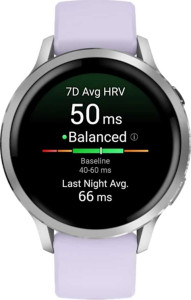
  • Both watches support HRV tracking, VO2 max measurement, and resting heart rate monitoring.
  • Both watches offer fast/slow heart rate notifications, readiness level, call answering, call control, and phone locating.
  • Both watches provide activity reports, inactivity alerts, calorie tracking, goal setting, achievements, an exercise diary, and are ad-free with a free app.
  • Both watches have a battery level indicator, no external memory slot, and no 3.5 mm audio jack socket.

Main Differences

  • Screen size is 1.2″ on the Garmin Venu 4 41mm and 1.32″ on the Xiaomi Watch S4 41mm.
  • Pixel density is 459 ppi on the Garmin Venu 4 41mm and 320 ppi on the Xiaomi Watch S4 41mm.
  • Resolution is 390 x 390 px on the Garmin Venu 4 41mm and 466 x 466 px on the Xiaomi Watch S4 41mm.
  • Branded damage-resistant glass is present on the Garmin Venu 4 41mm but not on the Xiaomi Watch S4 41mm.
  • Sapphire glass display is present on the Xiaomi Watch S4 41mm but not on the Garmin Venu 4 41mm.
  • Thickness is 12 mm on the Garmin Venu 4 41mm and 9.5 mm on the Xiaomi Watch S4 41mm.
  • Weight is 33 g on the Garmin Venu 4 41mm and 32 g on the Xiaomi Watch S4 41mm.
  • Volume is 20.172 cm³ on the Garmin Venu 4 41mm and 16.12568 cm³ on the Xiaomi Watch S4 41mm.
  • A cellular module is present on the Xiaomi Watch S4 41mm but not on the Garmin Venu 4 41mm.
  • Wi-Fi support is present on the Garmin Venu 4 41mm but not on the Xiaomi Watch S4 41mm.
  • ANT+ support is present on the Garmin Venu 4 41mm but not on the Xiaomi Watch S4 41mm.
  • Battery life is 10 days on the Garmin Venu 4 41mm and 8 days on the Xiaomi Watch S4 41mm.
  • Wireless charging is available on the Xiaomi Watch S4 41mm but not on the Garmin Venu 4 41mm.
  • Irregular heart rate warnings are available on the Garmin Venu 4 41mm but not on the Xiaomi Watch S4 41mm.
  • ECG technology is present on the Garmin Venu 4 41mm but not on the Xiaomi Watch S4 41mm.
  • Internal storage is 8 GB on the Garmin Venu 4 41mm and 32 GB on the Xiaomi Watch S4 41mm.
  • A built-in camera remote control function is available on the Xiaomi Watch S4 41mm but not on the Garmin Venu 4 41mm.
  • Coaching support is available on the Garmin Venu 4 41mm but not on the Xiaomi Watch S4 41mm.
  • Route support in the app is available on the Garmin Venu 4 41mm but not on the Xiaomi Watch S4 41mm.
  • Windows and Mac OS X compatibility is present on the Garmin Venu 4 41mm but not on the Xiaomi Watch S4 41mm.
Specs Comparison
Garmin Venu 4 41mm

Garmin Venu 4 41mm

Xiaomi Watch S4 41mm

Xiaomi Watch S4 41mm

Design:
screen size 1.2" 1.32"
Display type OLED/AMOLED OLED/AMOLED
water resistance Waterproof Waterproof
ATM rating 5 ATM 5 ATM
Always-On Display
pixel density 459 ppi 320 ppi
resolution 390 x 390 px 466 x 466 px
Watch band is replaceable
has branded damage-resistant glass
thickness 12 mm 9.5 mm
weight 33 g 32 g
height 41 mm 41.2 mm
width 41 mm 41.2 mm
Has a display
has a touch screen
Has sapphire glass display
volume 20.172 cm³ 16.12568 cm³
is designed for kids

Both watches share the same 41mm footprint and nearly identical weight (33g vs 32g), so in-hand feel is virtually indistinguishable. Where they diverge meaningfully is in profile and display philosophy. The Xiaomi Watch S4 is notably slimmer at 9.5mm thick versus the Garmin Venu 4's 12mm, and its smaller volume (16.13 cm³ vs 20.17 cm³) means it sits flatter and less obtrusively on the wrist — a tangible advantage for those who wear a watch 24/7 or under shirt cuffs.

The display trade-off is the most analytically interesting aspect of this group. The Venu 4 uses a smaller 1.2″ panel but achieves a pixel density of 459 ppi, which is exceptionally sharp for a smartwatch — text and UI elements will look crisp and defined. The Xiaomi S4 counters with a larger 1.32″ screen and higher absolute resolution (466 x 466 px), but its 320 ppi density is noticeably lower. In practice, the Venu 4's screen will appear visually tighter and more refined up close, while the S4 offers more screen real estate for glanceable information.

On glass protection, the two products make opposite bets: the Venu 4 includes branded damage-resistant glass (typically optimized for impact resistance), while the Xiaomi S4 features a sapphire glass display, which ranks higher on the Mohs hardness scale and is far more resistant to everyday scratches. For long-term wearability, sapphire is generally the premium choice for scratch durability. Overall, the Xiaomi Watch S4 holds a design edge thanks to its slimmer chassis and sapphire glass, while the Garmin Venu 4 counters with a significantly sharper display — making the decision hinge on whether you prioritize wrist presence or screen clarity.

Sensors:
Monitors blood oxygenation levels
Has a heart rate monitor
has GPS
has an accelerometer
Has a temperature sensor
has a compass
Has a barometer
has a gyroscope
Has a cadence sensor
Monitors perspiration

Rarely does a sensor comparison end in a dead heat, but that is precisely what the data shows here. The Garmin Venu 4 and Xiaomi Watch S4 carry an identical sensor loadout: heart rate monitor, SpO2, GPS, accelerometer, gyroscope, compass, barometer, and temperature sensor. Neither watch monitors perspiration or includes a cadence sensor, so the ceiling and floor of each device's sensing capability are exactly the same on paper.

The core suite present on both is genuinely comprehensive for this class of wearable. The combination of GPS and barometer enables accurate outdoor route tracking with real elevation data — not estimated altitude — which matters for hiking, trail running, or cycling with significant climbs. The gyroscope paired with the accelerometer improves motion accuracy for activity detection and sleep staging, while the temperature sensor can inform body metrics like resting metabolic estimates when worn overnight.

Because every listed sensor is shared identically, this group is a complete tie. Any real-world difference in health and fitness tracking accuracy between these two watches will come down to firmware algorithms and sensor calibration quality — factors that fall outside the scope of this spec group. Buyers should not use sensors as a differentiator when choosing between these two models.

Activity tracking:
Tracks your sleep
Tracks distance
Tracks steps taken
Measures pace
Provides sleep reports
Detects activities automatically
Has a route tracker
Tracks elevation
Has exercise tagging
Has a stroke counter for swimming
Tracks calorie intake
Designed for diving

Activity tracking is one of the most scrutinized spec categories for fitness-oriented buyers, and here the Garmin Venu 4 and Xiaomi Watch S4 once again land on identical ground across all eleven listed features. Both cover the full spectrum of everyday fitness needs: movement basics like step counting, distance, and pace; outdoor capability via route tracking and elevation; and wellness depth through sleep tracking with reports and calorie intake logging.

A few standout features deserve particular attention. Automatic activity detection — present on both — removes the friction of manually starting a workout, which meaningfully improves data completeness for users who exercise spontaneously. The inclusion of a stroke counter for swimming signals that both watches are positioned beyond casual fitness tracking, extending their utility to pool athletes who need technique-level data. Calorie intake tracking is also noteworthy; pairing consumption data with burn data on-device is a feature that not all smartwatches in this segment support.

With every tracked activity feature matching point for point, this group is a complete tie. As with the sensor comparison, the actual quality of insights generated from these shared capabilities — such as sleep staging accuracy or auto-detection reliability — will depend on each platform's software and algorithms, which fall outside what this spec group can measure.

Connectivity:
has a cellular module
Is compatible with iOS
Is compatible with Android
supports Wi-Fi
supports ANT+
has NFC
supports Galileo

Connectivity is where these two watches finally diverge in a way that could be a dealbreaker depending on use case. The Xiaomi Watch S4 includes a cellular module, meaning it can make calls, receive notifications, and stream data independently of a paired phone — a significant functional upgrade for users who want true standalone capability during runs or workouts. The Garmin Venu 4 has no cellular radio, so it remains tethered to a smartphone for real-time data connectivity.

Garmin counters with two exclusive protocols that matter to a specific audience. Wi-Fi support enables direct sync of workouts, maps, and firmware updates without needing a phone nearby — a convenience feature that serious fitness users genuinely appreciate. More distinctively, ANT+ compatibility allows the Venu 4 to communicate with a wide ecosystem of third-party fitness accessories: external heart rate straps, cycling power meters, foot pods, and more. The Xiaomi S4 lacks both, which limits its expandability within dedicated fitness hardware setups.

Both watches share NFC for contactless payments and support the Galileo satellite network for improved GPS positioning in challenging environments. On balance, the connectivity edge depends entirely on priorities: the Xiaomi Watch S4 wins for users who value phone-free independence, while the Garmin Venu 4 is the stronger choice for those embedded in a broader fitness accessory ecosystem or who rely on Wi-Fi sync workflows.

Battery:
battery life 10 days 8 days
has wireless charging
has a rechargeable battery
Has a solar power battery
has a removable battery

Battery life and charging convenience pull in opposite directions here, forcing a trade-off rather than a clean winner. The Garmin Venu 4 claims a rated 10-day battery life versus 8 days for the Xiaomi Watch S4 — a 25% difference on paper. For users who travel frequently, go on multi-day trips, or simply dislike the ritual of charging, those two extra days translate to meaningfully fewer interruptions over the course of a month.

The Xiaomi S4 counters with wireless charging, a convenience feature the Venu 4 lacks entirely. Wireless charging removes cable dependency and allows the watch to charge on any compatible Qi pad — including ones already on a nightstand or desk. For users who charge nightly regardless of battery level, the Venu 4's longer endurance becomes less relevant, and the friction-free topping-up experience of the S4 becomes the more practical daily advantage.

Neither watch has a removable or solar-assisted battery, so both are fully dependent on periodic charging. The conclusion hinges on charging behavior: users who charge infrequently and want to go longer between sessions should favor the Garmin Venu 4, while those who charge opportunistically every night will likely find the Xiaomi Watch S4's wireless charging more impactful in day-to-day use than the extra two days of rated endurance.

Features:
release date September 2025 June 2025
has HRV tracking
measures VO2 max
measures resting heart rate
has fast/slow heart rate notifications
shows readiness level
Can be used to answer calls
Locates your phone
Has call control
Has notifications
has irregular heart rate warnings
Has ECG technology
Has silent alarm
Has vibrating alerts
has fall detection
Has a stopwatch
Has smart alarm
has voice commands
internal storage 8GB 32GB
Has a built-in camera remote control function
Acquires GPS faster
warranty period 1 years 1 years
has a front camera

The feature sets of these two watches are broadly comparable, but two health-focused capabilities exclusive to the Garmin Venu 4 stand out as meaningful differentiators. The Venu 4 includes ECG technology and irregular heart rate warnings — a combination that positions it as a more clinically oriented health tool. ECG allows on-demand electrical heart readings that can help flag atrial fibrillation, while passive irregular rhythm alerts add a continuous safety net. The Xiaomi Watch S4 lacks both, which is a notable gap for health-conscious buyers who want cardiac monitoring beyond standard rate tracking.

Storage tells the opposite story. The Xiaomi S4 packs 32GB of internal storage against the Venu 4's 8GB — four times more capacity. For a smartwatch, 32GB is genuinely generous and supports extensive local music libraries, offline maps, or large app data without compromise. The S4 also adds a camera remote control function, a minor but practical convenience for photographers who want to trigger their phone camera from their wrist. Neither feature matches the clinical significance of ECG, but storage in particular is a real daily-use differentiator.

Across the rest of the feature list — including HRV tracking, VO2 max, readiness scores, fall detection, voice commands, and call handling — both watches are evenly matched. On balance, the Garmin Venu 4 holds a clear edge for users who prioritize cardiac health monitoring, while the Xiaomi Watch S4 appeals to those who value storage headroom and utility-focused extras.

App & Software:
Provides activity reports
Has inactivity alerts
Counts how many calories you've burned
Has goal setting
Has achievements
Free app
Has exercise diary
Ad-free
Has coaching
Has temperature tracking
Has period notifications
Supports routes
Syncs with existing calendars
Has music playback
Includes maps
Doesn’t require account
Predicts ovulation
Predicts start date
Supports widgets
Can be personalised
Has barcode scanner on app
Tracks water intake
Has weight tracking

Software ecosystems are often where specification parity on paper breaks down in practice, and this group surfaces two concrete gaps that separate these platforms. The Garmin Venu 4 supports coaching and routes within its app; the Xiaomi Watch S4 supports neither. Coaching — structured, adaptive workout guidance delivered through the app — meaningfully elevates the experience for users who want more than passive data logging and prefer guided training plans. Route support, meanwhile, allows users to load and follow pre-planned courses on the watch, which is essential for trail runners, cyclists, and hikers navigating unfamiliar terrain.

Outside of those two features, the overlap is extensive. Both platforms are free and ad-free, cover wellness comprehensively with water intake, weight tracking, calorie burn, and temperature tracking, and include a notably complete suite of women's health features — period notifications, ovulation prediction, and cycle start date forecasting. Both also support music playback, maps, calendar sync, and deep personalization through widgets and customizable layouts.

Given that the only differentiators favor one side, the Garmin Venu 4 holds a clear edge in this category. The absence of coaching and route support in the Xiaomi S4's app is not a critical omission for casual users, but for anyone who trains with structure or navigates outdoors, Garmin's software platform delivers meaningfully more utility.
Miscellaneous:
has a battery level indicator
Is compatible with Windows
has an external memory slot
Is compatible with Mac OS X
has a socket for a 3.5 mm audio jack

This is a lean spec group with limited data points, but one distinction stands out. The Garmin Venu 4 is listed as compatible with both Windows and Mac OS X, while the Xiaomi Watch S4 is marked incompatible with both desktop platforms. In practical terms, this typically affects how the watch syncs, manages firmware, or interfaces with desktop companion software — relevant for users who prefer managing their device from a computer rather than exclusively through a smartphone app.

Neither watch includes an external memory slot or a 3.5mm audio jack, and both display a battery level indicator — all of which are expected baselines for modern smartwatches rather than meaningful differentiators. The absence of a headphone jack is standard for the category and carries no real-world penalty given Bluetooth audio is the norm.

With desktop platform compatibility as the only differentiator, the Garmin Venu 4 holds a narrow edge in this group — particularly for users on Windows or macOS who want flexibility beyond mobile-only management. For the majority of users who interact with their watch entirely via smartphone, this distinction will have little to no practical impact on daily use.

Comparison Summary & Verdict

After examining every spec, it is clear that both watches serve distinct audiences. The Garmin Venu 4 41mm stands out with its superior 459 ppi pixel density, branded damage-resistant glass, ECG technology, irregular heart rate warnings, Wi-Fi and ANT+ connectivity, longer 10-day battery life, and a richer app ecosystem featuring coaching and route support — making it the stronger pick for fitness enthusiasts and health-focused users who want depth and precision. The Xiaomi Watch S4 41mm, on the other hand, wins on slimmer 9.5 mm profile, sapphire glass display, wireless charging, a cellular module for standalone connectivity, a generous 32 GB internal storage, and a built-in camera remote — making it ideal for users who prioritize sleek design, independence from their phone, and everyday versatility.

Garmin Venu 4 41mm
Buy Garmin Venu 4 41mm if...

Buy the Garmin Venu 4 41mm if you prioritize advanced health features like ECG and irregular heart rate warnings, a sharper display, longer battery life, and a more feature-rich fitness app with coaching and route support.

Xiaomi Watch S4 41mm
Buy Xiaomi Watch S4 41mm if...

Buy the Xiaomi Watch S4 41mm if you want a slimmer watch with a sapphire glass display, wireless charging, built-in cellular connectivity, and significantly more internal storage for a versatile everyday experience.