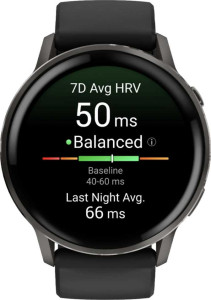
The companion app experience for both watches is remarkably comprehensive and, predictably by this point in the comparison, completely identical. What stands out here is the breadth of the ecosystem rather than any difference between models. The app goes well beyond workout logging: it incorporates reproductive health tracking — including period notifications, fertile window alerts, ovulation prediction, and cycle start date forecasting — alongside conventional wellness tools like water intake tracking, weight and BMI logging, and calorie burn counting. For users who want a single platform covering both athletic performance and holistic health, this is a genuinely broad offering.
On the athletic side, the software supports coaching, voice feedback, live tracking, route support with maps, and an exercise diary — features that cater to structured training rather than passive step counting. Music playback support, calendar sync, and widget customization add day-to-day smartwatch utility, while video tutorials lower the barrier for new users getting started with more advanced features. The app being both free and ad-free removes friction that plagues some competing ecosystems, though an account is required to use it, which is worth noting for privacy-conscious users.
The one notable absence shared by both is a barcode scanner for food logging, which means calorie and nutrition tracking relies on manual entry or search rather than quick scan-to-log — a convenience gap compared to some dedicated nutrition apps. Since every app and software capability is mirrored exactly across both models, this category is a complete tie. The software ecosystem is a strength of the Venu 4 line as a whole, not a differentiator within it.