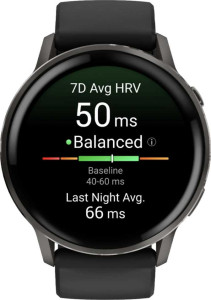
Garmin Venu 4
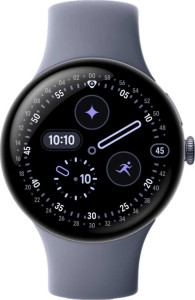
Google Pixel Watch 4

Garmin Venu 4 Google Pixel Watch 4

Overview

When choosing between the Garmin Venu 4 and the Google Pixel Watch 4, shoppers are looking at two capable smartwatches that share a surprising amount of common ground — yet diverge sharply in areas that matter most. From battery endurance and sports-tracking depth to connectivity options and platform compatibility, this comparison breaks down exactly where each watch leads and where it falls short, helping you find the right fit for your lifestyle.

Common Features

  • Both watches feature a 1.4″ screen size.
  • Both use an OLED/AMOLED display type.
  • Both are waterproof with a 5 ATM rating and a 50 m depth rating.
  • Always-On Display is available on both watches.
  • Watch bands are replaceable on both watches.
  • Both feature branded damage-resistant glass.
  • Both monitors blood oxygenation levels.
  • Both have a heart rate monitor.
  • Both have built-in GPS.
  • Both have an accelerometer.
  • Both have a temperature sensor.
  • Both have a compass.
  • Both have a barometer.
  • Both have a gyroscope.
  • Sleep tracking is available on both watches.
  • Both track distance, steps taken, pace, and elevation.
  • Sleep reports are provided on both watches.
  • Automatic activity detection is available on both watches.
  • Route tracking is available on both watches.
  • Both are compatible with Android and support Wi-Fi, NFC, and Galileo.
  • Neither watch has wireless charging, a solar power battery, or a removable battery.
  • Both have a rechargeable battery.
  • HRV tracking is available on both watches.
  • Both measure VO2 max and resting heart rate.
  • Fast and slow heart rate notifications are available on both watches.
  • Readiness level tracking is available on both watches.
  • Both can be used to answer calls and have call control.
  • Both can locate your phone.
  • Both provide activity reports, inactivity alerts, calorie tracking, goal setting, achievements, an exercise diary, and a free ad-free app.
  • Both have a battery level indicator.
  • Neither watch has an external memory slot or a 3.5 mm audio jack socket.

Main Differences

  • Pixel density is 458 ppi on Garmin Venu 4 and 320 ppi on Google Pixel Watch 4.
  • Resolution is 454 x 454 px on Garmin Venu 4 and 456 x 456 px on Google Pixel Watch 4.
  • Gorilla Glass 3 is used on Garmin Venu 4, while Gorilla Glass 5 is used on Google Pixel Watch 4.
  • Thickness is 12 mm on Garmin Venu 4 and 12.3 mm on Google Pixel Watch 4.
  • Weight is 38 g on Garmin Venu 4 and 36.7 g on Google Pixel Watch 4.
  • Volume is 24.3 cm³ on Garmin Venu 4 and 24.9075 cm³ on Google Pixel Watch 4.
  • A cadence sensor is present on Google Pixel Watch 4 but not available on Garmin Venu 4.
  • Multi-sport mode is available on Garmin Venu 4 but not on Google Pixel Watch 4.
  • A stroke counter for swimming is available on Garmin Venu 4 but not on Google Pixel Watch 4.
  • Golf features are available on Garmin Venu 4 but not on Google Pixel Watch 4.
  • A cellular module is present on Google Pixel Watch 4 but not on Garmin Venu 4.
  • iOS compatibility is available on Garmin Venu 4 but not on Google Pixel Watch 4.
  • Battery life is 12 days on Garmin Venu 4 and 1.6 days on Google Pixel Watch 4.
  • Charge time is 1 hour on Garmin Venu 4 and 1.25 hours on Google Pixel Watch 4.
  • Battery life in power save mode is 25 hours on Garmin Venu 4 and 72 hours on Google Pixel Watch 4.
  • Internal storage is 8 GB on Garmin Venu 4 and 32 GB on Google Pixel Watch 4.
  • A built-in camera remote control function is present on Google Pixel Watch 4 but not on Garmin Venu 4.
  • Faster GPS acquisition is available on Garmin Venu 4 but not on Google Pixel Watch 4.
  • Windows compatibility is available on Garmin Venu 4 but not on Google Pixel Watch 4.
  • Mac OS X compatibility is available on Garmin Venu 4 but not on Google Pixel Watch 4.
Specs Comparison
Garmin Venu 4

Garmin Venu 4

Google Pixel Watch 4

Google Pixel Watch 4

Design:
screen size 1.4" 1.4"
Display type OLED/AMOLED OLED/AMOLED
water resistance Waterproof Waterproof
ATM rating 5 ATM 5 ATM
waterproof depth rating 50 m 50 m
Always-On Display
pixel density 458 ppi 320 ppi
resolution 454 x 454 px 456 x 456 px
Watch band is replaceable
has branded damage-resistant glass
Gorilla Glass version Gorilla Glass 3 Gorilla Glass 5
thickness 12 mm 12.3 mm
weight 38 g 36.7 g
height 45 mm 45 mm
width 45 mm 45 mm
Has a display
has a touch screen
Has sapphire glass display
volume 24.3 cm³ 24.9075 cm³

At a glance, the Garmin Venu 4 and Google Pixel Watch 4 share a remarkably similar physical footprint: identical 1.4″ AMOLED displays, the same 45 × 45 mm case dimensions, a matching 12 mm (vs 12.3 mm) profile, and equivalent 5 ATM / 50 m waterproofing. Both also offer always-on display mode and replaceable bands, so on the surface they appear nearly interchangeable in form factor.

The most meaningful divergence lives in two opposing specs. The Venu 4 delivers a substantially sharper screen at 458 ppi versus the Pixel Watch 4′s 320 ppi — a gap wide enough to be visible in everyday use, particularly when reading small text, glancing at metrics, or viewing maps. Conversely, the Pixel Watch 4 counters with Gorilla Glass 5 versus the Venu 4′s older Gorilla Glass 3, meaning its lens is meaningfully more resistant to drops and scratches. The Pixel Watch 4 is also marginally lighter at 36.7 g versus 38 g, though a 1.3 g difference is imperceptible on the wrist.

Overall, this group is closely contested but splits on priorities. If display crispness matters most — for readability or visual richness — the Garmin Venu 4 holds a clear edge with its significantly higher pixel density. If long-term durability and scratch resistance are the priority, the Pixel Watch 4′s Gorilla Glass 5 provides a tangible advantage. Neither device dominates across the board in design; the right choice depends on which trade-off the user values more.

Sensors:
Monitors blood oxygenation levels
Has a heart rate monitor
has GPS
has an accelerometer
Has a temperature sensor
has a compass
Has a barometer
has a gyroscope
Has a cadence sensor
Monitors perspiration

Both watches arrive with a comprehensive and nearly identical sensor suite — heart rate, SpO2, GPS, accelerometer, gyroscope, barometer, compass, and skin temperature are all present on both devices. For the vast majority of health and fitness use cases, this shared foundation means either watch can track workouts, monitor sleep, gauge exertion, and provide navigation data without compromise.

The single differentiator in this group is the cadence sensor, which the Pixel Watch 4 includes and the Venu 4 does not. Cadence — the measurement of steps per minute when running or pedaling cycles per minute when cycling — is a meaningful training metric for runners and cyclists aiming to optimize efficiency and reduce injury risk. Its absence on the Garmin is notable given Garmin′s strong fitness positioning, though some devices can derive cadence estimates from accelerometer data rather than a dedicated sensor; the specs provided do not clarify this.

The Pixel Watch 4 holds a narrow but real edge in this category strictly by the data provided. For casual users, the difference is inconsequential. For runners or cyclists who actively train with cadence targets, however, the Pixel Watch 4′s dedicated cadence sensor is a tangible advantage that the Venu 4 cannot match on paper.

Activity tracking:
Tracks your sleep
Tracks distance
Tracks steps taken
Measures pace
Provides sleep reports
Detects activities automatically
Has a route tracker
Tracks elevation
Has multi-sport mode
Has exercise tagging
Has a stroke counter for swimming
Tracks calorie intake
Designed for diving
Designed for golf

For everyday activity tracking, the two watches are well-matched: both cover the core bases of sleep tracking with reports, distance, steps, pace, elevation, route tracking, calorie intake, automatic activity detection, and exercise tagging. A user primarily focused on general fitness monitoring will find either device equally capable in these respects.

The gaps emerge when looking at sport-specific functionality. The Garmin Venu 4 supports multi-sport mode — critical for triathletes or anyone who transitions between activities in a single session — while the Pixel Watch 4 does not. The Venu 4 also includes a stroke counter for swimming, which gives pool swimmers actionable technique data, and adds golf mode, broadening its appeal to a sport that demands course awareness and shot tracking. The Pixel Watch 4 lacks all three of these features.

The Garmin Venu 4 holds a clear advantage in this category. Its additional capabilities are not minor novelties — multi-sport mode and swim stroke counting speak directly to serious, multi-discipline athletes, while golf support extends the watch′s utility to a distinct user segment entirely. Users whose activity repertoire goes beyond single-sport workouts will find the Venu 4 meaningfully more versatile based on these specs alone.

Connectivity:
has a cellular module
Is compatible with iOS
Is compatible with Android
supports Wi-Fi
has NFC
supports Galileo

Shared ground here includes Wi-Fi, NFC for contactless payments, and Galileo satellite support — so both watches are well-equipped for the connectivity basics. The two key differentiators, however, cut in opposite directions and each carries significant real-world weight.

The Pixel Watch 4 includes a cellular module; the Venu 4 does not. This is a substantial functional gap for users who want their watch to make calls, stream music, or receive notifications independently — without a paired phone nearby. For runners, commuters, or anyone who regularly leaves their phone behind, built-in LTE fundamentally changes how untethered the experience can be. On the other side, the Garmin Venu 4 is compatible with both iOS and Android, while the Pixel Watch 4 is Android-only. That platform restriction is a hard wall — iPhone users simply cannot use the Pixel Watch 4 at all.

Neither product dominates unconditionally; the right edge depends entirely on the user′s situation. The Pixel Watch 4 wins for Android users who want phone-free connectivity, thanks to its cellular capability. The Venu 4 wins on flexibility, as its cross-platform compatibility makes it the only viable option for iOS users and a safer choice for households or users who may switch phone ecosystems.

Battery:
battery life 12 days 1.6 days
charge time 1 hours 1.25 hours
battery life in power save mode 25 hours 72 hours
has wireless charging
has a rechargeable battery
Has a solar power battery
has a removable battery

Battery life is where these two watches diverge most dramatically. The Garmin Venu 4 lasts up to 12 days on a single charge under normal use, while the Pixel Watch 4 manages just 1.6 days — roughly 38 hours. That is not a marginal difference; it represents a fundamentally different relationship with charging. Venu 4 users can go nearly two weeks without reaching for a cable, while Pixel Watch 4 users will need to charge every night or every other night as a matter of routine.

The power-save mode comparison tells a more nuanced story. In that mode, the Pixel Watch 4 extends to 72 hours versus the Venu 4′s 25 hours — a reversal of the standard-use standings. This suggests the Pixel Watch 4 draws heavily on power-intensive features during normal operation, and that stripping those back yields proportionally larger gains. For a user caught in an emergency or multi-day situation without a charger, the Pixel Watch 4′s power-save endurance is actually the stronger safety net. Charge time is close but also favors the Venu 4 slightly at 1 hour versus 1.25 hours.

For everyday use, the Garmin Venu 4 wins this category decisively. A 12-day battery life eliminates charging anxiety entirely and makes the watch genuinely low-maintenance — a quality many users rank highly. The Pixel Watch 4′s superior power-save duration is a useful fallback, but it cannot compensate for needing to be charged almost daily under normal conditions.

Features:
release date September 2025 August 2025
has HRV tracking
measures VO2 max
measures resting heart rate
has fast/slow heart rate notifications
shows readiness level
Can be used to answer calls
Locates your phone
Has call control
Has notifications
has irregular heart rate warnings
Has ECG technology
Has silent alarm
Has vibrating alerts
has fall detection
Has a stopwatch
Has smart alarm
has voice commands
internal storage 8GB 32GB
Has a built-in camera remote control function
Acquires GPS faster
warranty period 1 years 1 years

Across the health and smart notification features, these two watches are essentially identical on paper — both deliver ECG, HRV tracking, VO2 max, readiness scores, fall detection, irregular heart rate warnings, voice commands, call handling, and more. For the overwhelming majority of feature-driven purchase decisions, neither watch has a gap to exploit here.

Three specific points separate them. Storage is the most tangible: the Pixel Watch 4 offers 32GB of internal storage against the Venu 4′s 8GB — four times as much. This matters most for users who want to store music or other media locally for phone-free playback, especially relevant given the Pixel Watch 4′s cellular capability. The Pixel Watch 4 also adds a camera remote control function, a convenient but niche perk for photography use cases. Going the other way, the Venu 4 acquires GPS faster, which is a practical advantage for athletes who want to start a workout immediately without waiting for a satellite lock.

This group is closely contested, but the Pixel Watch 4 edges ahead on utility for most users. Its 32GB storage advantage is substantial and directly enables standalone media use cases, while the camera remote is a bonus on top. The Venu 4′s faster GPS acquisition is a genuine real-world win for outdoor athletes, but it is a narrower advantage that serves a more specific audience. Users who prioritize on-device storage will find the Pixel Watch 4 meaningfully better equipped.
App & Software:
Provides activity reports
Has inactivity alerts
Counts how many calories you've burned
Has goal setting
Has achievements
Free app
Has exercise diary
Ad-free
Has coaching
Has temperature tracking
Has period notifications
Supports routes
Syncs with existing calendars
Has voice feedback
Has music playback
Displays fertile window notifications
Includes maps
Doesn’t require account
Predicts ovulation
Predicts start date
Supports widgets
Can be personalised
Has barcode scanner on app
Tracks water intake
Has weight tracking
Has live tracking

The App & Software category produces a rare outcome in this comparison: a perfect tie. Every single spec listed — across 25 data points covering fitness, health, navigation, personalization, and companion app features — is identical between the Garmin Venu 4 and the Google Pixel Watch 4. Activity reports, coaching, maps, live tracking, women's health features, music playback, water and weight tracking, calendar sync, widgets, and more are all present on both devices.

Notable shared strengths worth highlighting include the breadth of women's health tracking — both watches predict ovulation, display fertile window notifications, and send period alerts — as well as live tracking and full mapping support, features that not all smartwatches in this segment include. The fact that both companion apps are free and ad-free is also a meaningful quality-of-life parity point.

Based strictly on the provided data, neither product holds any advantage in this category. A user choosing between these two watches on software and app capability alone has no differentiating reason to favor one over the other — the decision will need to be made on the basis of the other specification groups.

Miscellaneous:
has a battery level indicator
Is compatible with Windows
has an external memory slot
Is compatible with Mac OS X
has a socket for a 3.5 mm audio jack

This is a lean category with few data points, and most are shared: neither watch has an external memory slot or a 3.5mm audio jack, and both display a battery level indicator. The one meaningful differentiator is desktop OS compatibility.

The Garmin Venu 4 is compatible with both Windows and Mac OS X, while the Pixel Watch 4 supports neither. In practice, this matters most for users who manage their device through a desktop client — syncing settings, updating firmware, or exporting data via a computer. The Venu 4′s broader desktop compatibility gives it more flexibility across different computing environments, whereas the Pixel Watch 4 appears to rely entirely on its mobile companion app for device management based on these specs.

The Garmin Venu 4 takes a clear edge here, albeit in a category that will be irrelevant to users who manage everything through a smartphone. For those who prefer or require desktop interaction with their wearable — particularly Windows users — the Venu 4 is the only option of the two that accommodates that workflow.

Comparison Summary & Verdict

After examining the full spec sheet, both watches serve genuinely different audiences. The Garmin Venu 4 stands out for users who demand exceptional battery life — up to 12 days of regular use — along with deeper sport-specific features like multi-sport mode, a stroke counter for swimming, and golf support. It also holds the edge with iOS and Windows compatibility and a sharper 458 ppi display. The Google Pixel Watch 4, on the other hand, is the stronger pick for Android-first users who want built-in cellular connectivity, a cadence sensor, 32 GB of internal storage, and a more modern Gorilla Glass 5 build. Its 72-hour power-save mode also impresses despite a shorter standard battery life. Neither watch is objectively superior — your ideal choice depends entirely on your ecosystem, activity profile, and how often you want to reach for a charger.

Garmin Venu 4
Buy Garmin Venu 4 if...

Buy the Garmin Venu 4 if you want a long-lasting battery of up to 12 days, advanced sport-tracking features like multi-sport mode and swim stroke counting, and compatibility with iOS, Windows, and Mac.

Google Pixel Watch 4
Buy Google Pixel Watch 4 if...

Buy the Google Pixel Watch 4 if you are an Android user who values built-in cellular connectivity, a cadence sensor, 32 GB of storage, and the added durability of Gorilla Glass 5.