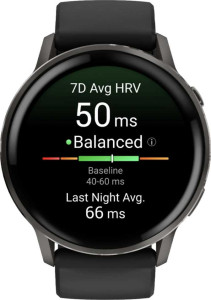
Garmin Venu 4
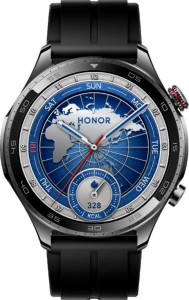
Honor Watch 5 Pro

Garmin Venu 4 Honor Watch 5 Pro

Overview

Welcome to our in-depth comparison of the Garmin Venu 4 and the Honor Watch 5 Pro — two capable smartwatches that share a number of strong foundations yet diverge in meaningful ways. Both sport AMOLED displays, comprehensive health tracking, and NFC support, but they take different paths when it comes to connectivity options, display quality, and everyday wearability. Read on as we break down exactly where each watch excels and where trade-offs emerge.

Common Features

  • Both watches feature an OLED/AMOLED display.
  • Both watches are waterproof with a 5 ATM rating.
  • Watch bands are replaceable on both models.
  • Both watches have a touchscreen display.
  • Neither watch has a sapphire glass display.
  • Neither watch is designed for kids.
  • Both watches monitor blood oxygenation levels.
  • Both watches have a heart rate monitor.
  • Both watches have built-in GPS.
  • Both watches include an accelerometer, compass, barometer, and gyroscope.
  • Neither watch has a cadence sensor.
  • Both watches track sleep and provide sleep reports.
  • Both watches track distance, steps, pace, elevation, and route.
  • Both watches detect activities automatically.
  • Both watches are compatible with iOS and Android.
  • Both watches support NFC and Galileo.
  • Both watches have HRV tracking and measure VO2 max.
  • Both watches support call answering, call control, and phone locating.
  • Fall detection is available on Garmin Venu 4 but not on Honor Watch 5 Pro.
  • Both watches offer activity reports, inactivity alerts, calorie counting, goal setting, achievements, an exercise diary, and a free ad-free app.
  • Both watches have a battery level indicator, auto pause, and compatibility with smart scales and external heart rate monitors.
  • Neither watch has an external memory slot.
  • Neither watch has a solar power battery or a removable battery.
  • Both watches have a rechargeable battery.

Main Differences

  • Screen size is 1.4″ on Garmin Venu 4 and 1.5″ on Honor Watch 5 Pro.
  • Waterproof depth rating is 50 m on Garmin Venu 4 and 1.5 m on Honor Watch 5 Pro.
  • Always-On Display is available on Garmin Venu 4 but not on Honor Watch 5 Pro.
  • Pixel density is 458 ppi on Garmin Venu 4 and 310 ppi on Honor Watch 5 Pro.
  • Resolution is 454 x 454 px on Garmin Venu 4 and 464 x 464 px on Honor Watch 5 Pro.
  • Branded damage-resistant glass is present on Garmin Venu 4 but not on Honor Watch 5 Pro.
  • Thickness is 12 mm on Garmin Venu 4 and 11.3 mm on Honor Watch 5 Pro.
  • Weight is 38 g on Garmin Venu 4 and 51 g on Honor Watch 5 Pro.
  • Height is 45 mm on Garmin Venu 4 and 46.3 mm on Honor Watch 5 Pro.
  • Width is 45 mm on Garmin Venu 4 and 46.3 mm on Honor Watch 5 Pro.
  • A temperature sensor is present on Garmin Venu 4 but not on Honor Watch 5 Pro.
  • A cellular module is available on Honor Watch 5 Pro but not on Garmin Venu 4.
  • Wi-Fi support is present on Garmin Venu 4 but not on Honor Watch 5 Pro.
  • ANT+ support is present on Garmin Venu 4 but not on Honor Watch 5 Pro.
  • Battery life is 12 days on Garmin Venu 4 and 10 days on Honor Watch 5 Pro.
  • Wireless charging is available on Honor Watch 5 Pro but not on Garmin Venu 4.
  • Windows compatibility is available on Garmin Venu 4 but not on Honor Watch 5 Pro.
  • Mac OS X compatibility is available on Garmin Venu 4 but not on Honor Watch 5 Pro.
  • A 3.5 mm audio jack socket is present on Honor Watch 5 Pro but not on Garmin Venu 4.
Specs Comparison
Garmin Venu 4

Garmin Venu 4

Honor Watch 5 Pro

Honor Watch 5 Pro

Design:
screen size 1.4" 1.5"
Display type OLED/AMOLED OLED/AMOLED
water resistance Waterproof Waterproof
ATM rating 5 ATM 5 ATM
waterproof depth rating 50 m 1.5 m
Always-On Display
pixel density 458 ppi 310 ppi
resolution 454 x 454 px 464 x 464 px
Watch band is replaceable
has branded damage-resistant glass
thickness 12 mm 11.3 mm
weight 38 g 51 g
height 45 mm 46.3 mm
width 45 mm 46.3 mm
Has a display
has a touch screen
Has sapphire glass display
volume 24.3 cm³ 24.223697 cm³
is designed for kids
width of band 22 mm 22 mm

Both watches share the same OLED/AMOLED display technology, a 22 mm replaceable band, and near-identical footprints — but the similarities end there. The Garmin Venu 4's 458 ppi pixel density is dramatically sharper than the Honor Watch 5 Pro's 310 ppi, even though the Honor carries a marginally larger 1.5″ panel versus the Venu 4's 1.4″. In practice, this means the Venu 4 renders text, watch faces, and health data with noticeably crisper detail — a meaningful advantage for at-a-glance readability.

The Venu 4 also supports an Always-On Display, which the Honor Watch 5 Pro entirely lacks. For users who want the time visible without a wrist raise, this is a daily usability differentiator. On durability, the Venu 4 ships with branded damage-resistant glass and a water resistance depth of 50 m, compared to the Honor's unbranded glass and a depth rating of only 1.5 m — despite both carrying the same nominal 5 ATM rating. That depth gap is significant for swimmers or anyone regularly submerging the watch.

The Honor Watch 5 Pro is marginally thinner (11.3 mm vs 12 mm) but weighs considerably more at 51 g versus the Venu 4's 38 g — a 34% weight penalty that translates directly to wrist comfort during extended wear. Overall, the Garmin Venu 4 holds a clear design edge: it is sharper, lighter, always-on capable, better protected against impact, and substantially more water-resistant.

Sensors:
Monitors blood oxygenation levels
Has a heart rate monitor
has GPS
has an accelerometer
Has a temperature sensor
has a compass
Has a barometer
has a gyroscope
Has a cadence sensor
Monitors perspiration

The sensor suites of these two watches are remarkably aligned — both pack heart rate monitoring, SpO2 tracking, GPS, accelerometer, gyroscope, compass, and barometer. For the vast majority of fitness and outdoor use cases, this shared foundation delivers equivalent capability: route tracking, elevation awareness, motion detection, and continuous health monitoring are all covered on either wrist.

The single differentiator in this group is the temperature sensor, present on the Garmin Venu 4 but absent from the Honor Watch 5 Pro. A wrist-based temperature sensor contributes to more nuanced wellness insights — it can inform body battery calculations, detect subtle shifts during sleep, and support menstrual health tracking when combined with other data streams. It is not a mission-critical omission, but it does represent a meaningful gap for users who prioritize granular physiological monitoring.

The Garmin Venu 4 takes a narrow but clear edge here purely on account of that temperature sensor. For users whose priorities are standard fitness and heart health tracking, the Honor Watch 5 Pro is effectively equivalent — but anyone seeking a more comprehensive biometric picture will find the Venu 4's sensor array the more complete of the two.

Activity tracking:
Tracks your sleep
Tracks distance
Tracks steps taken
Measures pace
Provides sleep reports
Detects activities automatically
Has a route tracker
Tracks elevation
Has exercise tagging
Has a stroke counter for swimming
Tracks calorie intake
Designed for diving

Across every activity tracking feature in this group, the Garmin Venu 4 and Honor Watch 5 Pro are in complete lockstep. Both cover the full spectrum of everyday fitness tracking — steps, distance, pace, and calorie intake — alongside more specialized capabilities like swim stroke counting, elevation tracking, and automatic activity detection. That last feature is worth highlighting: auto-detection removes the friction of manually starting a workout, which meaningfully improves data completeness for users who exercise spontaneously.

Sleep tracking is equally matched, with both devices recording sleep and generating sleep reports. Combined with route tracking and exercise tagging, the shared feature set here is genuinely comprehensive — covering runners, swimmers, hikers, and general wellness users without meaningful gaps on either side.

This group is a clear tie. There is not a single differentiating data point between the two watches across all provided activity tracking specs. Buyers should look to other specification groups — such as sensors, design, or battery life — to break the deadlock, as activity tracking capability alone will not distinguish these two devices.

Connectivity:
has a cellular module
Is compatible with iOS
Is compatible with Android
supports Wi-Fi
supports ANT+
has NFC
supports Galileo

The connectivity profiles of these two watches pull in opposite directions, making this one of the more nuanced trade-off groups in the comparison. The Honor Watch 5 Pro includes a cellular module, meaning it can receive notifications, make calls, or stream data independently of a paired smartphone — a significant functional upgrade for users who want wrist-level independence during workouts or commutes. The Garmin Venu 4 has no cellular radio, keeping it tethered to a phone for live data.

The Venu 4 counters with Wi-Fi and ANT+, neither of which the Honor supports. Wi-Fi enables faster firmware updates and data syncing without Bluetooth, while ANT+ is a key protocol for pairing with third-party fitness accessories — chest-strap heart rate monitors, cycling power meters, and speed sensors all commonly use it. For serious athletes who rely on external sensors, the absence of ANT+ on the Honor Watch 5 Pro is a real limitation. Both watches share NFC and cross-platform compatibility with iOS and Android, putting contactless payments and broad smartphone support on equal footing.

Declaring a winner here depends entirely on use case. Casual users who prioritize phone-free independence will favor the Honor Watch 5 Pro and its cellular capability. Athletes and fitness enthusiasts who rely on accessory ecosystems will find the Garmin Venu 4's ANT+ and Wi-Fi support more practically valuable. On balance, these two watches are evenly matched in connectivity — but for different audiences.

Battery:
battery life 12 days 10 days
has wireless charging
has a rechargeable battery
Has a solar power battery
has a removable battery

Battery life is where the Garmin Venu 4 pulls ahead in raw endurance, rated at 12 days compared to the Honor Watch 5 Pro's 10 days. That two-day gap may sound modest, but in practice it translates to meaningfully fewer charging cycles per month — roughly 2–3 fewer charges — which adds up over time and matters most during travel or multi-day outdoor activities where access to a charger is limited.

The Honor Watch 5 Pro counters with wireless charging, a convenience the Venu 4 lacks entirely. When the Honor does need a top-up, the experience is frictionless — just place it on a compatible pad. The Venu 4 requires a proprietary wired connection, which is a minor but real daily inconvenience for users embedded in a wireless charging ecosystem. Both watches use non-removable, rechargeable batteries with no solar assist, so neither has an edge on those fronts.

This group presents a genuine trade-off: the Garmin Venu 4 wins on longevity, while the Honor Watch 5 Pro wins on charging convenience. Users who prioritize going longer between charges — particularly travelers or outdoor enthusiasts — will prefer the Venu 4. Those who value the simplicity of wireless charging and are comfortable with slightly more frequent top-ups will lean toward the Honor. On balance, the Venu 4 holds a slight overall edge, as battery life is the more fundamental of the two considerations.

Features:
release date September 2025 October 2025
has HRV tracking
measures VO2 max
measures resting heart rate
has fast/slow heart rate notifications
shows readiness level
Can be used to answer calls
Locates your phone
Has call control
Has notifications
has irregular heart rate warnings
Has ECG technology
Has silent alarm
Has vibrating alerts
has fall detection
Has a stopwatch
Has smart alarm
has voice commands
Has a built-in camera remote control function
has a front camera

For a feature group this expansive, the degree of overlap between these two watches is striking. Both deliver a sophisticated health monitoring stack — ECG, HRV tracking, VO2 max, irregular heart rate warnings, and readiness scoring — alongside a full communication suite including call answering, call control, notifications, and voice commands. For the overwhelming majority of smartwatch users, either device covers the feature bases they are likely to care about.

Drill into the data, and the sole differentiator is fall detection, which the Garmin Venu 4 supports and the Honor Watch 5 Pro does not. This feature automatically triggers an alert — and can notify emergency contacts — if the wearer takes a hard fall and remains motionless. It is a passive safety net that most users will never need to consciously activate, but for older adults, solo hikers, or anyone with a fall risk, its presence carries real-world weight well beyond its quiet place in a spec sheet.

The Garmin Venu 4 takes the edge in this group, and specifically for safety-conscious users, the gap is more meaningful than the feature count alone suggests. For everyone else, the Honor Watch 5 Pro is functionally equivalent — this is a niche but legitimate differentiator rather than a sweeping advantage.

App & Software:
Provides activity reports
Has inactivity alerts
Counts how many calories you've burned
Has goal setting
Has achievements
Free app
Has exercise diary
Ad-free
Has coaching
Has temperature tracking
Has period notifications
Supports routes
Has voice feedback
Has music playback
Displays fertile window notifications
Includes maps
Predicts ovulation
Predicts start date
Supports widgets
Can be personalised
Has barcode scanner on app
Tracks water intake
Has weight tracking
Has live tracking
Tracks BMI

Rarely does a spec group this large produce a result this definitive: across all 25 app and software data points provided, the Garmin Venu 4 and Honor Watch 5 Pro are in perfect alignment. Both companion apps are free and ad-free, offer coaching, live tracking, and maps, and cover the full wellness spectrum — from music playback and BMI tracking to water intake logging and weight tracking.

The breadth of shared features here is genuinely impressive for both devices. Reproductive health tools — including ovulation prediction, fertile window notifications, and cycle start date forecasting — are present on both, as are personalization options, widgets, voice feedback, and exercise diaries. Whether a user's priority is athletic performance, general wellness, or women's health tracking, the software foundation is equivalent on either platform.

This group is an unambiguous tie. There is no differentiating data point to analyze. Prospective buyers should weight their decision on the hardware and connectivity comparisons covered in other groups, as the companion app experience — at least as defined by these specifications — offers no basis for choosing one watch over the other.

Miscellaneous:
has a battery level indicator
Has auto pause
Compatible with smart scales
Compatible with external heart rate monitors
Is compatible with Windows
has an external memory slot
Is compatible with Mac OS X
has a socket for a 3.5 mm audio jack

Shared ground here includes auto pause, battery level indication, and compatibility with both smart scales and external heart rate monitors — useful for users who want a connected health ecosystem without being locked into first-party accessories. Neither watch offers expandable storage, which is consistent with the broader smartwatch category norm.

Where the two diverge is in desktop compatibility and audio connectivity. The Garmin Venu 4 supports syncing and management on both Windows and Mac OS X, while the Honor Watch 5 Pro is compatible with neither — limiting desktop interaction for users who prefer managing their fitness data from a computer rather than a smartphone. On the other side, the Honor Watch 5 Pro includes a 3.5 mm audio jack, which the Venu 4 lacks. This allows direct wired headphone use, a tangible convenience for users who prefer analog audio or have not transitioned to wireless earbuds.

The Garmin Venu 4 holds the broader advantage in this group. Desktop compatibility with both major operating systems serves a wider user base, whereas the Honor's 3.5 mm jack is a narrower convenience that appeals to a more specific audience. Users who manage their data primarily from a phone and exclusively use wired headphones may find the trade-off less clear-cut, but for most, the Venu 4's cross-platform desktop support is the more universally useful differentiator.

Comparison Summary & Verdict

After a thorough review of both watches, it is clear that each serves a distinct type of user. The Garmin Venu 4 stands out for its higher pixel density (458 ppi), Always-On Display, branded damage-resistant glass, built-in temperature sensor, fall detection, Wi-Fi and ANT+ support, deeper waterproofing at 50 m, longer battery life of 12 days, and a notably lighter 38 g build — making it the stronger choice for fitness enthusiasts and outdoor users who want a premium, durable, and feature-rich experience. The Honor Watch 5 Pro, on the other hand, brings its own advantages with built-in cellular connectivity, wireless charging, a 3.5 mm audio jack, and a slightly larger 1.5-inch screen — appealing to users who want smartphone independence on the wrist and more convenience-oriented features. Neither watch is a clear-cut winner for everyone; your ideal pick depends on whether you prioritize fitness-grade sensors and durability or connectivity flexibility and modern conveniences.

Garmin Venu 4
Buy Garmin Venu 4 if...

Buy the Garmin Venu 4 if you want a lightweight, feature-packed fitness watch with a sharper display, longer battery life, deeper water resistance, fall detection, and Wi-Fi plus ANT+ support.

Honor Watch 5 Pro
Buy Honor Watch 5 Pro if...

Buy the Honor Watch 5 Pro if you prioritize built-in cellular connectivity for smartphone-free use, the convenience of wireless charging, and a larger screen at an accessible form factor.