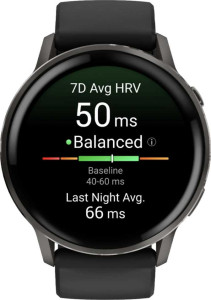
Garmin Venu 4
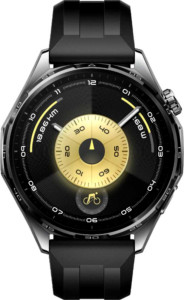
Huawei Watch GT 6

Garmin Venu 4 Huawei Watch GT 6

Overview

Welcome to our in-depth spec comparison between the Garmin Venu 4 and the Huawei Watch GT 6 — two feature-rich smartwatches targeting active users who demand more from their wrist. While both share a strong foundation of health sensors and fitness tracking, they diverge in key areas such as display sharpness, sport-specific features, and connectivity options. Read on to discover which watch best suits your lifestyle.

Common Features

  • Both watches feature an OLED/AMOLED display.
  • Both are waterproof with a 5 ATM rating.
  • Always-On Display is available on both watches.
  • Watch bands are replaceable on both models.
  • Both watches have a touchscreen display.
  • Neither watch is designed for kids.
  • Both monitors blood oxygenation levels.
  • Both have a heart rate monitor.
  • Both have built-in GPS.
  • Both include an accelerometer, gyroscope, compass, barometer, and temperature sensor.
  • Both watches track sleep and provide sleep reports.
  • Both track distance, steps taken, pace, elevation, and include a route tracker.
  • Both detect activities automatically.
  • Neither watch has a cellular module.
  • Both are compatible with iOS and Android.
  • Both have NFC and support Galileo.
  • Neither watch has a solar power battery, and neither has a removable battery.
  • Both have HRV tracking, measure VO2 max, resting heart rate, and offer fast/slow heart rate notifications.
  • Both can be used to answer calls and have call control, and can locate your phone.
  • Both provide activity reports, inactivity alerts, calorie tracking, goal setting, achievements, an exercise diary, and a free ad-free app.
  • Both have a battery level indicator, auto pause, and are compatible with smart scales and external heart rate monitors.
  • Neither watch has an external memory slot or a 3.5 mm audio jack socket.

Main Differences

  • Screen size is 1.4″ on the Garmin Venu 4 and 1.47″ on the Huawei Watch GT 6.
  • Pixel density is 458 ppi on the Garmin Venu 4 and 317 ppi on the Huawei Watch GT 6.
  • Resolution is 454 x 454 px on the Garmin Venu 4 and 466 x 466 px on the Huawei Watch GT 6.
  • Branded damage-resistant glass is present on the Garmin Venu 4 but not on the Huawei Watch GT 6.
  • Sapphire glass display is available on the Huawei Watch GT 6 but not on the Garmin Venu 4.
  • Thickness is 12 mm on the Garmin Venu 4 and 11 mm on the Huawei Watch GT 6.
  • Weight is 38 g on the Garmin Venu 4 and 51.3 g on the Huawei Watch GT 6.
  • Height is 45 mm on the Garmin Venu 4 and 46 mm on the Huawei Watch GT 6.
  • Width is 45 mm on the Garmin Venu 4 and 46 mm on the Huawei Watch GT 6.
  • Volume is 24.3 cm³ on the Garmin Venu 4 and 23.276 cm³ on the Huawei Watch GT 6.
  • A stroke counter for swimming is available on the Garmin Venu 4 but not on the Huawei Watch GT 6.
  • Diving design is present on the Huawei Watch GT 6 but not on the Garmin Venu 4.
  • Golf-specific features are available on the Garmin Venu 4 but not on the Huawei Watch GT 6.
  • Wi-Fi support is available on the Garmin Venu 4 but not on the Huawei Watch GT 6.
  • ANT+ support is available on the Garmin Venu 4 but not on the Huawei Watch GT 6.
  • Wireless charging is supported on the Huawei Watch GT 6 but not on the Garmin Venu 4.
  • ECG technology is present on the Garmin Venu 4 but not on the Huawei Watch GT 6.
  • Fall detection is available on the Garmin Venu 4 but not on the Huawei Watch GT 6.
  • A built-in camera remote control function is available on the Huawei Watch GT 6 but not on the Garmin Venu 4.
  • Faster GPS acquisition is a feature of the Garmin Venu 4 but not of the Huawei Watch GT 6.
  • Windows compatibility is supported on the Garmin Venu 4 but not on the Huawei Watch GT 6.
  • Mac OS X compatibility is supported on the Garmin Venu 4 but not on the Huawei Watch GT 6.
Specs Comparison
Garmin Venu 4

Garmin Venu 4

Huawei Watch GT 6

Huawei Watch GT 6

Design:
screen size 1.4" 1.47"
Display type OLED/AMOLED OLED/AMOLED
water resistance Waterproof Waterproof
ATM rating 5 ATM 5 ATM
Always-On Display
pixel density 458 ppi 317 ppi
resolution 454 x 454 px 466 x 466 px
Watch band is replaceable
has branded damage-resistant glass
thickness 12 mm 11 mm
weight 38 g 51.3 g
height 45 mm 46 mm
width 45 mm 46 mm
Has a display
has a touch screen
Has sapphire glass display
volume 24.3 cm³ 23.276 cm³
is designed for kids

Both watches share a strong design foundation: OLED/AMOLED displays, Always-On capability, 5 ATM waterproofing, replaceable bands, and touchscreens. Their footprints are nearly identical, with the Huawei Watch GT 6 at 46 × 46 mm edging out the Garmin Venu 4's 45 × 45 mm, and the GT 6 being marginally thinner at 11 mm versus 12 mm. In terms of physical presence on the wrist, the two are essentially equivalent.

Where the displays diverge sharply is pixel density. The Venu 4 packs 458 ppi into its 1.4″ panel, compared to the GT 6's 317 ppi on a slightly larger 1.47″ screen. That gap is immediately perceptible — text, watch faces, and health metrics will appear noticeably crisper on the Venu 4. On durability, the GT 6 counters with a sapphire glass display, one of the hardest materials used in watchmaking and highly scratch-resistant, while the Venu 4 relies on branded damage-resistant glass, which is more impact-tolerant but less scratch-proof by comparison.

The most practically significant differentiator for daily wear is weight: the Venu 4 at 38 g is substantially lighter than the GT 6 at 51.3 g — a 35% difference that will be felt during workouts or extended wear. Overall, the Venu 4 holds a clear edge in display sharpness and wearability comfort, while the GT 6 trades those advantages for a more scratch-resistant screen surface.

Sensors:
Monitors blood oxygenation levels
Has a heart rate monitor
has GPS
has an accelerometer
Has a temperature sensor
has a compass
Has a barometer
has a gyroscope
Has a cadence sensor
Monitors perspiration

Across the entire sensor suite, the Garmin Venu 4 and Huawei Watch GT 6 are a perfect match. Both carry the full set of health and motion sensors expected from premium smartwatches: heart rate monitor, SpO2 tracking, temperature sensor, GPS, accelerometer, gyroscope, compass, and barometer. This breadth means both watches are equally equipped for outdoor navigation, altitude-aware activity tracking, and continuous wellness monitoring.

The combination of barometer and GPS is particularly meaningful for athletes — it enables accurate elevation gain tracking during hikes or runs without relying solely on GPS altitude estimates, which can drift. The temperature sensor on both devices supports body and ambient readings that feed into recovery and sleep metrics. Neither watch offers cadence sensing or perspiration monitoring, so cyclists and runners who rely on dedicated cadence data will need a separate peripheral regardless of which watch they choose.

This group is a definitive tie. There is no sensor-based reason to favor one watch over the other — every capability present on one is equally present on the other, and both share the same two omissions.

Activity tracking:
Tracks your sleep
Tracks distance
Tracks steps taken
Measures pace
Provides sleep reports
Detects activities automatically
Has a route tracker
Tracks elevation
Has multi-sport mode
Has exercise tagging
Has a stroke counter for swimming
Tracks calorie intake
Designed for diving
Designed for golf

For the vast majority of users, activity tracking on these two watches is functionally identical. Sleep monitoring with reports, step and distance tracking, pace measurement, elevation, route tracking, automatic activity detection, exercise tagging, calorie intake, and multi-sport mode are all present on both. That shared foundation is broad enough to cover most fitness lifestyles without compromise on either side.

The real differentiation comes down to two sport-specific features that each watch holds exclusively. The Venu 4 includes a stroke counter for swimming and is designed for golf, making it a stronger companion for pool swimmers who want stroke-by-stroke analysis and for golfers who want on-course assistance. The Huawei Watch GT 6, by contrast, is designed for diving — a more specialized credential that implies suitability for deeper or more demanding water activities than standard waterproofing alone would suggest — but lacks both the swim stroke counter and golf features.

Neither watch has a universal edge here; the advantage depends entirely on the user's primary sport. Swimmers and golfers will find the Venu 4 more purpose-built for their activities, while divers should lean toward the GT 6. For everyone else, the two are effectively tied on activity tracking capabilities.

Connectivity:
has a cellular module
Is compatible with iOS
Is compatible with Android
supports Wi-Fi
supports ANT+
has NFC
supports Galileo

On the connectivity front, both watches share the same baseline: no cellular module, full iOS and Android compatibility, NFC for contactless payments, and Galileo satellite support. Neither can operate independently of a phone for data or calls, which puts them in the same category of companion-dependent smartwatches.

The Venu 4 pulls ahead with two exclusive features. Wi-Fi support allows it to sync data, download updates, and transfer content without needing an active Bluetooth connection to a phone — a practical convenience that the GT 6 simply lacks. More meaningfully for active users, ANT+ compatibility opens up a wide ecosystem of third-party fitness peripherals: chest-strap heart rate monitors, cycling power meters, foot pods, and more. The GT 6 has no ANT+ support, meaning it cannot communicate with this class of accessories at all.

The Venu 4 holds a clear advantage in this group. Wi-Fi is a quality-of-life upgrade, but the absence of ANT+ on the GT 6 is a tangible limitation for fitness enthusiasts who rely on dedicated sensors for more accurate or specialized training data.

Battery:
has wireless charging
has a rechargeable battery
Has a solar power battery
has a removable battery

Battery specs here are nearly identical: both watches use a built-in, non-removable rechargeable battery with no solar charging option. The only point of divergence is how they recharge — and it matters in practice.

The Huawei Watch GT 6 supports wireless charging, while the Venu 4 does not. For daily users, this means the GT 6 can be placed on any compatible Qi pad — including one already on a desk or nightstand — without fumbling for a proprietary cable. The Venu 4 requires its dedicated charger, which becomes a consideration when traveling or if the cable is misplaced.

It is a single differentiator, but a genuinely useful one. The GT 6 takes the edge in this group purely on the convenience of wireless charging — a feature that, once accustomed to, is difficult to give up.

Features:
release date September 2025 September 2025
has HRV tracking
measures VO2 max
measures resting heart rate
has fast/slow heart rate notifications
shows readiness level
Can be used to answer calls
Locates your phone
Has call control
Has notifications
has irregular heart rate warnings
Has ECG technology
Has silent alarm
Has vibrating alerts
has fall detection
Has a stopwatch
Has smart alarm
has voice commands
Has a built-in camera remote control function
Acquires GPS faster
warranty period 1 years 1 years
has a front camera

The feature overlap between these two watches is extensive — call handling, notifications, HRV tracking, VO2 max, readiness scoring, irregular heart rate warnings, voice commands, and more are shared across both. For the everyday smartwatch user, either device delivers a comparably rich experience. The meaningful distinctions, however, are clustered around health safety and situational utility.

The Venu 4 carries two significant exclusive advantages. ECG technology enables on-demand electrocardiogram readings, a clinical-grade tool for detecting atrial fibrillation that the GT 6 entirely lacks. Combined with fall detection — which can automatically alert emergency contacts if a hard fall is detected — the Venu 4 positions itself as a more safety-oriented device, particularly relevant for older users or those with cardiac concerns. The Venu 4 also acquires GPS signal faster, a practical benefit when starting outdoor activities without waiting for a fix. The GT 6's sole exclusive is a camera remote control function, useful for triggering a phone's camera from the wrist but a comparatively minor lifestyle convenience.

The Venu 4 holds a clear edge in this group. ECG and fall detection are not incremental perks — they address genuine health and safety scenarios that the GT 6 cannot, and they meaningfully widen the gap between the two watches for health-conscious buyers.

App & Software:
Provides activity reports
Has inactivity alerts
Counts how many calories you've burned
Has goal setting
Has achievements
Free app
Has exercise diary
Ad-free
Has coaching
Has temperature tracking
Has period notifications
Supports routes
Has voice feedback
Has music playback
Displays fertile window notifications
Includes maps
Predicts ovulation
Predicts start date
Supports widgets
Can be personalised
Has barcode scanner on app
Tracks water intake
Has weight tracking
Has live tracking
Tracks BMI

Rarely does a side-by-side comparison produce a result this unambiguous. Across all 25 app and software features evaluated, the Garmin Venu 4 and Huawei Watch GT 6 are a complete match — every capability present on one is equally present on the other, and the single absent feature (barcode scanner) is missing from both.

The shared feature set is notably comprehensive. Both apps cover women's health tracking in full — period notifications, fertile window display, ovulation prediction, and cycle start date forecasting. Fitness management is equally thorough, with calorie burn, water intake, weight, BMI, goal setting, coaching, and an exercise diary all included. For navigation-oriented users, both offer maps, route support, and live tracking, while music playback and voice feedback round out the day-to-day utility.

This group is a definitive tie. The software ecosystems of these two watches, as represented by these specs, are functionally indistinguishable — a buyer's choice between them will have to rest entirely on the differentiators found in other categories.

Miscellaneous:
has a battery level indicator
Has auto pause
Compatible with smart scales
Compatible with external heart rate monitors
Is compatible with Windows
has an external memory slot
Is compatible with Mac OS X
has a socket for a 3.5 mm audio jack

Most of this category is shared ground: battery level indicator, auto pause, compatibility with smart scales and external heart rate monitors, and the absence of both a memory card slot and a 3.5mm audio jack are identical across both watches. For the majority of users, none of these points will tip a decision.

The one area where the watches diverge is desktop OS compatibility. The Venu 4 works with both Windows and Mac OS X, while the GT 6 is listed as compatible with neither. In practice, this matters most for users who sync or manage their watch data through a desktop application rather than exclusively via a smartphone — a workflow more common among data-focused athletes or users who prefer managing health records on a computer.

The Venu 4 takes a modest edge here, purely on the basis of broader desktop compatibility. It is not a headline differentiator, but for users who rely on desktop syncing, the GT 6's lack of Windows and Mac support is a real limitation worth noting.

Comparison Summary & Verdict

After reviewing every specification, the Garmin Venu 4 and Huawei Watch GT 6 each carve out a distinct identity. The Venu 4 stands out with its notably higher pixel density at 458 ppi, lighter 38 g build, Wi-Fi and ANT+ connectivity, ECG technology, fall detection, golf support, and swim stroke counting — making it the stronger all-around choice for fitness enthusiasts who value data-rich tracking and broad device compatibility. The Huawei Watch GT 6, on the other hand, counters with a sapphire glass display, wireless charging, diving-oriented design, and a built-in camera remote, appealing to users who prioritize durability, convenience, and a slightly larger screen. Both watches share an impressive common core of sensors, sleep tracking, and health features, so neither will disappoint on the fundamentals. Your final choice should come down to your specific sporting needs and ecosystem preferences.

Garmin Venu 4
Buy Garmin Venu 4 if...

Buy the Garmin Venu 4 if you want a lightweight smartwatch with a sharper display, ECG, fall detection, Wi-Fi, ANT+ support, and sport-specific features like golf tracking and swim stroke counting.

Huawei Watch GT 6
Buy Huawei Watch GT 6 if...

Buy the Huawei Watch GT 6 if you prefer wireless charging, a durable sapphire glass display, diving support, and a built-in camera remote control on your smartwatch.