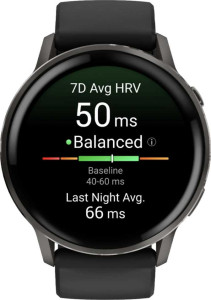
Garmin Venu 4
Huawei Watch GT 6 41mm

Garmin Venu 4 Huawei Watch GT 6 41mm

Overview

Welcome to our in-depth spec comparison between the Garmin Venu 4 and the Huawei Watch GT 6 41mm — two capable smartwatches that share a strong sensor foundation yet diverge sharply in areas like connectivity, activity specialization, and battery convenience. Whether you are drawn to Garmin's ecosystem depth or Huawei's sleek, compact build, this breakdown will help you understand exactly where each watch excels and where it falls short before you make your decision.

Common Features

  • Both watches feature an OLED/AMOLED display.
  • Both watches are waterproof with a 5 ATM rating.
  • Always-On Display is available on both watches.
  • Watch bands are replaceable on both models.
  • Both watches have a touchscreen display.
  • Neither watch is designed for kids.
  • Both watches monitor blood oxygenation levels.
  • Both watches include a heart rate monitor.
  • Both watches have built-in GPS.
  • Both watches include an accelerometer, gyroscope, compass, barometer, and temperature sensor.
  • Both watches track sleep and provide sleep reports.
  • Both watches track distance, steps taken, pace, elevation, and include a route tracker.
  • Both watches can detect activities automatically.
  • Neither watch has a cellular module.
  • Both watches are compatible with iOS and Android.
  • Both watches support NFC and Galileo.
  • Both watches have a rechargeable, non-removable battery with no solar charging.
  • Both watches support HRV tracking, VO2 max measurement, and resting heart rate monitoring.
  • Both watches offer fast/slow heart rate notifications, readiness level, call answering, call control, and phone locating.
  • Both watches provide activity reports, inactivity alerts, calorie tracking, goal setting, achievements, an exercise diary, and are ad-free with a free app.
  • Both watches have a battery level indicator, auto pause, compatibility with smart scales and external heart rate monitors.
  • Neither watch has an external memory slot or a 3.5 mm audio jack socket.

Main Differences

  • Screen size is 1.4″ on Garmin Venu 4 and 1.32″ on Huawei Watch GT 6 41mm.
  • Pixel density is 458 ppi on Garmin Venu 4 and 352 ppi on Huawei Watch GT 6 41mm.
  • Resolution is 454 x 454 px on Garmin Venu 4 and 466 x 466 px on Huawei Watch GT 6 41mm.
  • Branded damage-resistant glass is present on Garmin Venu 4 but not on Huawei Watch GT 6 41mm.
  • Sapphire glass display is present on Huawei Watch GT 6 41mm but not on Garmin Venu 4.
  • Thickness is 12 mm on Garmin Venu 4 and 10 mm on Huawei Watch GT 6 41mm.
  • Weight is 38 g on Garmin Venu 4 and 37.5 g on Huawei Watch GT 6 41mm.
  • Height and width are 45 mm on Garmin Venu 4 and 41.3 mm on Huawei Watch GT 6 41mm.
  • Volume is 24.3 cm³ on Garmin Venu 4 and 17.0569 cm³ on Huawei Watch GT 6 41mm.
  • A stroke counter for swimming is available on Garmin Venu 4 but not on Huawei Watch GT 6 41mm.
  • Diving design is present on Huawei Watch GT 6 41mm but not on Garmin Venu 4.
  • Golf design is present on Garmin Venu 4 but not on Huawei Watch GT 6 41mm.
  • Wi-Fi support is available on Garmin Venu 4 but not on Huawei Watch GT 6 41mm.
  • ANT+ support is available on Garmin Venu 4 but not on Huawei Watch GT 6 41mm.
  • Battery life is 12 days on Garmin Venu 4 and 14 days on Huawei Watch GT 6 41mm.
  • Wireless charging is available on Huawei Watch GT 6 41mm but not on Garmin Venu 4.
  • ECG technology is present on Garmin Venu 4 but not on Huawei Watch GT 6 41mm.
  • Fall detection is available on Garmin Venu 4 but not on Huawei Watch GT 6 41mm.
  • A built-in camera remote control function is available on Huawei Watch GT 6 41mm but not on Garmin Venu 4.
  • Faster GPS acquisition is a feature of Garmin Venu 4 but not of Huawei Watch GT 6 41mm.
  • Windows compatibility is available on Garmin Venu 4 but not on Huawei Watch GT 6 41mm.
  • Mac OS X compatibility is available on Garmin Venu 4 but not on Huawei Watch GT 6 41mm.
Specs Comparison
Garmin Venu 4

Garmin Venu 4

Huawei Watch GT 6 41mm

Huawei Watch GT 6 41mm

Design:
screen size 1.4" 1.32"
Display type OLED/AMOLED OLED/AMOLED
water resistance Waterproof Waterproof
ATM rating 5 ATM 5 ATM
Always-On Display
pixel density 458 ppi 352 ppi
resolution 454 x 454 px 466 x 466 px
Watch band is replaceable
has branded damage-resistant glass
thickness 12 mm 10 mm
weight 38 g 37.5 g
height 45 mm 41.3 mm
width 45 mm 41.3 mm
Has a display
has a touch screen
Has sapphire glass display
volume 24.3 cm³ 17.0569 cm³
is designed for kids

Both watches share a strong design foundation: OLED/AMOLED displays with Always-On support, 5 ATM water resistance, touch screens, and replaceable bands. The real divergence is in physical footprint and display sharpness. The Garmin Venu 4 runs larger at 45 × 45 mm with a 1.4″ screen, while the Huawei Watch GT 6 41mm sits at a noticeably more compact 41.3 × 41.3 mm with a 1.32″ panel. The Huawei is also slimmer at 10 mm thick versus 12 mm, and its volume of roughly 17 cm³ is substantially smaller than the Venu 4′s 24.3 cm³ — a difference you will feel on smaller wrists or under tight shirt cuffs.

On screen quality, the Venu 4 holds a meaningful edge with a pixel density of 458 ppi compared to the Huawei′s 352 ppi. Despite the Huawei having a marginally higher resolution (466 × 466 px vs. 454 × 454 px), cramming those pixels into a smaller panel does not compensate for the Venu 4′s superior density — text and graphics will appear visibly crisper on Garmin′s display. Where the trade reverses is glass protection: the Venu 4 uses a branded damage-resistant glass (without sapphire), while the Huawei GT 6 41mm features sapphire glass, which is significantly harder and far more scratch-resistant in daily use — a genuine long-term durability advantage.

In summary, this group presents a clear trade-off rather than a single winner. The Garmin Venu 4 wins on screen size and sharpness, which matters for readability and content display. The Huawei Watch GT 6 41mm wins on compactness and scratch resistance, making it the stronger pick for users who prefer a discreet, wrist-friendly form factor and want their display glass to stay pristine over time.

Sensors:
Monitors blood oxygenation levels
Has a heart rate monitor
has GPS
has an accelerometer
Has a temperature sensor
has a compass
Has a barometer
has a gyroscope
Has a cadence sensor
Monitors perspiration

Across the entire sensor suite, the Garmin Venu 4 and Huawei Watch GT 6 41mm are in complete lockstep. Both pack GPS, heart rate monitoring, SpO2 (blood oxygen), a temperature sensor, barometer, compass, accelerometer, and gyroscope — a configuration that covers the full spectrum of health tracking and outdoor navigation needs. Neither watch includes a cadence sensor or perspiration monitor, so both share the same ceiling as well as the same floor.

The practical implication of this parity is significant. For the vast majority of users — whether tracking sleep, monitoring resting heart rate, logging hikes with elevation data via the barometer, or keeping tabs on blood oxygen during altitude changes — either watch delivers an equally capable hardware foundation. The barometer and compass combination is particularly valuable for trail and outdoor use, enabling accurate elevation tracking and directional awareness without relying solely on GPS.

This group is a clear tie. There is no sensor-based reason to choose one watch over the other; the decision will come down to how each platform processes and presents this shared data through software, which falls outside the scope of these specs.

Activity tracking:
Tracks your sleep
Tracks distance
Tracks steps taken
Measures pace
Provides sleep reports
Detects activities automatically
Has a route tracker
Tracks elevation
Has multi-sport mode
Has exercise tagging
Has a stroke counter for swimming
Tracks calorie intake
Designed for diving
Designed for golf

The activity tracking overlap between these two watches is extensive. Both handle the core fitness tracking pillars — sleep tracking with reports, steps, distance, pace, elevation, route tracking, automatic activity detection, exercise tagging, calorie intake, and multi-sport mode — meaning everyday athletes and general fitness users will find little to separate them on paper. That shared foundation is genuinely comprehensive for a smartwatch category.

Where the two diverge is in their sport-specific specializations, and the differences reveal clearly different target audiences. The Garmin Venu 4 includes a swim stroke counter and is designed for golf — the stroke counter being a meaningful tool for swimmers who want to analyze technique and efficiency, while golf mode suggests features like course mapping or shot tracking oriented at that specific user base. The Huawei Watch GT 6 41mm flips the script entirely: it is designed for diving and lacks both the stroke counter and golf support. Dive-oriented design implies compatibility with deeper water exposure and potentially dive-specific metrics, making it the stronger choice for underwater activities beyond casual swimming.

Neither watch holds a universal advantage here — the verdict depends entirely on lifestyle. Swimmers and golfers will find the Venu 4 better tailored to their needs, while divers and those who prioritize underwater activity will lean toward the Huawei GT 6 41mm. For users whose sports fall outside these specializations, the two are effectively tied.

Connectivity:
has a cellular module
Is compatible with iOS
Is compatible with Android
supports Wi-Fi
supports ANT+
has NFC
supports Galileo

On the connectivity front, both watches share a sensible common baseline: no cellular module, cross-platform compatibility with iOS and Android, NFC for contactless payments, and Galileo satellite support for improved GPS positioning accuracy in challenging environments. Neither requires a separate SIM, so both depend on a paired smartphone for data and notifications — a standard trade-off at this tier.

The meaningful gap opens up with two features exclusive to the Garmin Venu 4: Wi-Fi and ANT+. Wi-Fi support allows the watch to sync data, download updates, and transfer workouts directly over a wireless network without needing the phone nearby — a practical convenience for users who train at home or in a gym. ANT+ is arguably the more impactful differentiator for fitness-focused buyers: it enables wireless communication with a wide ecosystem of third-party sensors such as cycling power meters, foot pods, and chest-based heart rate straps. The Huawei Watch GT 6 41mm supports neither, which limits its ability to integrate with external training hardware.

The Garmin Venu 4 holds a clear connectivity edge. The addition of Wi-Fi and especially ANT+ makes it meaningfully more versatile for users who rely on external sensors or prefer phone-free syncing. For casual users with no interest in third-party accessories, the Huawei′s connectivity set remains adequate, but the gap is real and relevant for serious athletes.

Battery:
battery life 12 days 14 days
has wireless charging
has a rechargeable battery
Has a solar power battery
has a removable battery

Battery life is one of the most practical day-to-day considerations for any smartwatch buyer, and here the Huawei Watch GT 6 41mm pulls ahead on both key metrics. Its rated 14-day battery life outpaces the Garmin Venu 4's 12 days — a two-day difference that may not sound dramatic, but in practice means fewer charging cycles per month and more flexibility when traveling or during periods where charging access is limited.

The more impactful differentiator, though, is charging method. The Huawei supports wireless charging, while the Venu 4 does not, requiring a proprietary cable every time. Wireless charging is a genuine convenience upgrade — it eliminates cable dependency, reduces connector wear over time, and fits naturally into a nightstand or charging pad routine that many users already maintain for their phones. For the Venu 4, forgetting or losing the specific charging cable becomes a real inconvenience.

The Huawei Watch GT 6 41mm takes a clear win in this category. Longer rated battery life combined with wireless charging makes it the more convenient long-term ownership proposition. The Venu 4 offers no compensating battery advantage — both watches share a non-removable, non-solar rechargeable battery — making Huawei's edge here straightforward and unambiguous.

Features:
release date September 2025 September 2025
has HRV tracking
measures VO2 max
measures resting heart rate
has fast/slow heart rate notifications
shows readiness level
Can be used to answer calls
Locates your phone
Has call control
Has notifications
has irregular heart rate warnings
Has ECG technology
Has silent alarm
Has vibrating alerts
has fall detection
Has a stopwatch
Has smart alarm
has voice commands
Has a built-in camera remote control function
Acquires GPS faster
warranty period 1 years 1 years
has a front camera

The shared feature set between these two watches is genuinely impressive. Both offer HRV tracking, VO2 max measurement, readiness scores, irregular heart rate warnings, call handling, notifications, voice commands, and vibration alerts — a package that covers serious health monitoring and smart notification needs without compromise on either side. For the majority of users, this common ground alone represents a fully-featured experience.

The divergence, however, favors the Garmin Venu 4 in ways that carry real health significance. It includes ECG technology — a clinical-grade tool capable of detecting atrial fibrillation patterns that standard optical heart rate monitors can miss — which the Huawei Watch GT 6 41mm lacks entirely. The Venu 4 also adds fall detection, a safety feature that can automatically trigger an alert if the wearer takes a hard fall and becomes unresponsive, and it acquires GPS faster, reducing the pre-workout wait time when starting an outdoor session. Against these, the Huawei's sole exclusive is a camera remote control function — useful for hands-free photography, but considerably less impactful from a health and safety standpoint.

The Garmin Venu 4 holds a meaningful edge in this category. ECG alone is a feature that many health-conscious buyers actively seek out, and pairing it with fall detection and faster GPS makes the Venu 4′s exclusive additions weightier than anything the Huawei brings uniquely to the table. Users who prioritize wellness depth and safety features will find the Venu 4 the stronger choice here.

App & Software:
Provides activity reports
Has inactivity alerts
Counts how many calories you've burned
Has goal setting
Has achievements
Free app
Has exercise diary
Ad-free
Has coaching
Has temperature tracking
Has period notifications
Supports routes
Has voice feedback
Has music playback
Displays fertile window notifications
Includes maps
Predicts ovulation
Predicts start date
Supports widgets
Can be personalised
Has barcode scanner on app
Tracks water intake
Has weight tracking
Has live tracking
Tracks BMI

Rarely does a spec group land as a perfect draw, but the App & Software category for these two watches is exactly that. Every single feature listed — from activity reports, goal setting, and coaching, to maps, live tracking, and music playback — is present on both the Garmin Venu 4 and the Huawei Watch GT 6 41mm. Neither includes a barcode scanner in its app, and both are free and ad-free, which means users on either platform pay nothing extra and face no paywalled core features.

The breadth of what both apps share is worth noting. Comprehensive women's health tracking — covering period notifications, fertile window alerts, ovulation prediction, and cycle start date forecasting — sits alongside practical wellness tools like water intake tracking, weight and BMI logging, and temperature tracking. Add voice feedback, widgets, personalization, and route support, and both platforms arrive at the same destination via their respective ecosystems. This is not a stripped-down overlap; it is a genuinely full-featured match across the board.

This group is an unambiguous tie. Based strictly on the provided specs, there is no software or app feature that gives either watch an advantage over the other. Buyers should look to other spec groups — hardware, connectivity, or battery — to inform their final decision, as the companion app experience offers no differentiating reason to choose one over the other.

Miscellaneous:
has a battery level indicator
Has auto pause
Compatible with smart scales
Compatible with external heart rate monitors
Is compatible with Windows
has an external memory slot
Is compatible with Mac OS X
has a socket for a 3.5 mm audio jack

Most of the miscellaneous specs here land identically: both watches display battery level, support auto pause during workouts, connect with smart scales, and are compatible with external heart rate monitors. Neither offers an external memory slot or a 3.5mm audio jack — omissions that are standard for modern smartwatches and unlikely to surprise anyone shopping in this category.

The one meaningful split is desktop computer compatibility. The Garmin Venu 4 works with both Windows and Mac OS X, while the Huawei Watch GT 6 41mm is listed as compatible with neither. In practice, this matters most for users who manage their fitness data or sync watch settings through a desktop application rather than exclusively through a smartphone. Garmin's desktop compatibility broadens the ecosystem access and can be particularly relevant for users who prefer reviewing detailed workout data on a larger screen.

The Garmin Venu 4 takes a modest but clear edge in this group solely on the basis of its Windows and Mac compatibility. For users who rely purely on mobile apps, this distinction is negligible. For those who value desktop integration as part of their workflow, it tips the balance in Garmin's favor.

Comparison Summary & Verdict

After examining every spec category, both watches prove to be well-rounded wearables with identical core sensors and solid health-tracking capabilities. However, their strengths point toward different users. The Garmin Venu 4 stands out for its Wi-Fi and ANT+ connectivity, ECG technology, fall detection, golf and swimming stroke tracking, faster GPS acquisition, and broader desktop compatibility — making it the stronger choice for serious athletes and users deeply invested in the Garmin ecosystem. The Huawei Watch GT 6 41mm, on the other hand, wins on longer battery life, a slimmer and lighter design, wireless charging, a sapphire glass display, and a built-in camera remote — appealing to users who prioritize everyday elegance and low-maintenance convenience. Choose the Garmin if feature depth matters most; choose the Huawei if you want a refined, lightweight companion with fewer charging interruptions.

Garmin Venu 4
Buy Garmin Venu 4 if...

Buy the Garmin Venu 4 if you want ECG technology, Wi-Fi and ANT+ connectivity, fall detection, and sport-specific features like golf tracking and swim stroke counting.

Huawei Watch GT 6 41mm
Buy Huawei Watch GT 6 41mm if...

Buy the Huawei Watch GT 6 41mm if you prefer a slimmer, lighter design with a sapphire glass display, wireless charging, and a longer 14-day battery life.