Garmin Venu 4
Samsung Galaxy Watch8 LTE 40mm

Garmin Venu 4 Samsung Galaxy Watch8 LTE 40mm

Overview

Welcome to our in-depth specification comparison between the Garmin Venu 4 and the Samsung Galaxy Watch8 LTE 40mm. These two smartwatches occupy similar territory but take notably different approaches when it comes to battery endurance, connectivity options, and physical design. Whether you prioritize extended autonomy in the field or a sleeker, more connected urban companion, this breakdown will help you navigate the key battlegrounds before making your decision.

Common Features

  • Both products feature an OLED/AMOLED display type.
  • Both products have a 5 ATM water resistance rating with a waterproof depth of 50 m.
  • Always-On Display is available on both products.
  • Watch bands are replaceable on both products.
  • Both products have a touchscreen display.
  • Neither product is designed for kids.
  • Both products monitor blood oxygenation levels.
  • Both products include a heart rate monitor, GPS, accelerometer, temperature sensor, compass, barometer, and gyroscope.
  • Both products track sleep and provide sleep reports.
  • Both products track distance, steps taken, pace, elevation, and route.
  • Both products detect activities automatically.
  • Both products are compatible with Android.
  • Both products support Wi-Fi, NFC, and Galileo.
  • Both products have HRV tracking and measure VO2 max.
  • Both products measure resting heart rate and provide fast/slow heart rate notifications.
  • Both products show readiness level and can be used to answer calls.
  • Both products have call control and can locate your phone.
  • Both products provide activity reports, have inactivity alerts, count calories burned, support goal setting, and include an exercise diary.
  • Neither product has a solar power battery or a removable battery, but both have rechargeable batteries.
  • Neither product has an external memory slot or a 3.5 mm audio jack socket.
  • Both products have a battery level indicator, auto pause, and are compatible with smart scales and external heart rate monitors.
  • Both products offer a free, ad-free app with achievements.

Main Differences

  • Screen size is 1.4″ on Garmin Venu 4 and 1.34″ on Samsung Galaxy Watch8 LTE 40mm.
  • Water resistance is rated as Waterproof on Garmin Venu 4 but only Water resistant on Samsung Galaxy Watch8 LTE 40mm.
  • Pixel density is 458 ppi on Garmin Venu 4 and 327 ppi on Samsung Galaxy Watch8 LTE 40mm.
  • Resolution is 454 x 454 px on Garmin Venu 4 and 438 x 438 px on Samsung Galaxy Watch8 LTE 40mm.
  • Branded damage-resistant glass is present on Garmin Venu 4 but not available on Samsung Galaxy Watch8 LTE 40mm.
  • Sapphire glass display is present on Samsung Galaxy Watch8 LTE 40mm but not available on Garmin Venu 4.
  • Thickness is 12 mm on Garmin Venu 4 and 8.6 mm on Samsung Galaxy Watch8 LTE 40mm.
  • Weight is 38 g on Garmin Venu 4 and 30 g on Samsung Galaxy Watch8 LTE 40mm.
  • Height is 45 mm on Garmin Venu 4 and 42.7 mm on Samsung Galaxy Watch8 LTE 40mm.
  • Width is 45 mm on Garmin Venu 4 and 40.4 mm on Samsung Galaxy Watch8 LTE 40mm.
  • Maximum operating temperature is 55 °C on Garmin Venu 4 and 35 °C on Samsung Galaxy Watch8 LTE 40mm.
  • Lowest potential operating temperature is -20 °C on Garmin Venu 4 and 0 °C on Samsung Galaxy Watch8 LTE 40mm.
  • Multi-sport mode is available on Garmin Venu 4 but not on Samsung Galaxy Watch8 LTE 40mm.
  • Golf-specific design is present on Garmin Venu 4 but not on Samsung Galaxy Watch8 LTE 40mm.
  • A cellular module is present on Samsung Galaxy Watch8 LTE 40mm but not available on Garmin Venu 4.
  • iOS compatibility is supported on Garmin Venu 4 but not on Samsung Galaxy Watch8 LTE 40mm.
  • ANT+ support is available on Garmin Venu 4 but not on Samsung Galaxy Watch8 LTE 40mm.
  • Battery life is 12 days on Garmin Venu 4 and 2 days on Samsung Galaxy Watch8 LTE 40mm.
  • Wireless charging is available on Samsung Galaxy Watch8 LTE 40mm but not on Garmin Venu 4.
  • Internal storage is 8GB on Garmin Venu 4 and 32GB on Samsung Galaxy Watch8 LTE 40mm.
  • A built-in camera remote control function is present on Samsung Galaxy Watch8 LTE 40mm but not available on Garmin Venu 4.
  • Windows compatibility is supported on Garmin Venu 4 but not on Samsung Galaxy Watch8 LTE 40mm.
  • Mac OS X compatibility is supported on Garmin Venu 4 but not on Samsung Galaxy Watch8 LTE 40mm.
Specs Comparison
Garmin Venu 4

Garmin Venu 4

Samsung Galaxy Watch8 LTE 40mm

Samsung Galaxy Watch8 LTE 40mm

Design:
screen size 1.4" 1.34"
Display type OLED/AMOLED OLED/AMOLED
water resistance Waterproof Water resistant
ATM rating 5 ATM 5 ATM
waterproof depth rating 50 m 50 m
Always-On Display
pixel density 458 ppi 327 ppi
resolution 454 x 454 px 438 x 438 px
Watch band is replaceable
has branded damage-resistant glass
thickness 12 mm 8.6 mm
weight 38 g 30 g
height 45 mm 42.7 mm
width 45 mm 40.4 mm
maximum operating temperature 55 °C 35 °C
lowest potential operating temperature -20 °C 0 °C
Has a display
has a touch screen
Has sapphire glass display
volume 24.3 cm³ 14.835688 cm³
is designed for kids
width of band 22 mm 20 mm

Both watches share a solid design foundation — OLED/AMOLED displays, always-on mode, touch screens, replaceable bands, and a 5 ATM / 50 m water resistance rating — but they diverge sharply in physical form and display quality. The Garmin Venu 4 is the larger, more assertive wearable: at 45 × 45 mm and 12 mm thick, it occupies significantly more wrist real estate than the Samsung Galaxy Watch8 40mm, which measures 42.7 × 40.4 mm with a svelte 8.6 mm profile. The volume difference reinforces this — 24.3 cm³ versus 14.8 cm³ — and the Venu 4's 38 g weight versus the Galaxy Watch8's 30 g means the Samsung will feel noticeably lighter and less intrusive during all-day wear, particularly for smaller wrists.

On display quality, the Venu 4 holds a decisive advantage: its 458 ppi pixel density on a 1.4″ screen is substantially sharper than the Galaxy Watch8's 327 ppi on a 1.34″ panel. In practical terms, text, map details, and health metrics will appear crisper on the Venu 4, which matters during workouts or when glancing at data-dense screens. The Galaxy Watch8 counters with a sapphire glass display — inherently the hardest and most scratch-resistant option — while the Venu 4 relies on branded damage-resistant glass (non-sapphire), making the Samsung's screen more resilient to daily scratches despite lacking the Garmin's sharpness.

A less obvious but meaningful differentiator is the operating temperature range: the Venu 4 functions from -20 °C to 55 °C, while the Galaxy Watch8 is rated only from 0 °C to 35 °C. For users in cold climates or extreme outdoor environments, the Garmin is the clear choice. Overall, neither watch dominates outright — the Galaxy Watch8 wins on comfort and screen durability, while the Venu 4 wins on display sharpness and environmental ruggedness — making the best pick highly dependent on the user's lifestyle and wrist size.

Sensors:
Monitors blood oxygenation levels
Has a heart rate monitor
has GPS
has an accelerometer
Has a temperature sensor
has a compass
Has a barometer
has a gyroscope
Has a cadence sensor
Monitors perspiration

Across every sensor category provided, the Garmin Venu 4 and Samsung Galaxy Watch8 LTE 40mm are in complete lockstep. Both pack the core suite expected of a premium smartwatch in 2024: heart rate monitor, blood oxygen (SpO2) tracking, GPS, accelerometer, gyroscope, barometer, compass, and a temperature sensor. This combination covers the vast majority of fitness and health use cases — from elevation tracking during hikes to sleep and recovery monitoring overnight.

The practical implications of this shared hardware are meaningful. The barometer enables accurate altitude and floor-climbing data, the gyroscope refines motion detection for activity recognition, and the temperature sensor supports body and ambient readings that feed into wellness metrics. Neither watch includes a cadence sensor or perspiration monitor — two features that remain relatively rare at this tier — so neither gains an edge on those fronts either.

The verdict here is a straightforward tie. Based strictly on the provided sensor specs, there is no differentiator between these two watches. Buyers choosing between them on sensor capability alone will find identical hardware on paper, meaning other spec groups — such as software features, battery life, or ecosystem integration — will ultimately need to drive this decision.

Activity tracking:
Tracks your sleep
Tracks distance
Tracks steps taken
Measures pace
Provides sleep reports
Detects activities automatically
Has a route tracker
Tracks elevation
Has multi-sport mode
Has exercise tagging
Has a stroke counter for swimming
Tracks calorie intake
Designed for diving
Designed for golf

For the vast majority of everyday tracking needs, these two watches are functionally identical — both log sleep with reports, monitor steps and distance, measure pace, track elevation, detect activities automatically, count swimming strokes, and record calorie intake. That shared foundation is genuinely strong and covers the core requirements of most recreational athletes and health-conscious users without compromise on either side.

Where the Garmin Venu 4 pulls ahead is in breadth of sport-specific functionality. Its multi-sport mode allows athletes to chain multiple disciplines — say, a swim-to-bike-to-run triathlon — into a single continuous session without stopping to manually switch activities, a feature the Galaxy Watch8 does not offer. Additionally, the Venu 4 includes a dedicated golf mode, which typically provides course mapping and shot tracking for golfers — again absent on the Samsung. These are not fringe additions; for triathletes or golfers specifically, they represent a meaningful capability gap.

The conclusion for this group is a clear edge to the Garmin Venu 4. Users whose activities stay within a single sport at a time — running, swimming, or cycling independently — will find the Galaxy Watch8 perfectly sufficient. But anyone who trains across disciplines or plays golf will find the Venu 4's activity tracking considerably more capable based strictly on the provided specs.

Connectivity:
has a cellular module
Is compatible with iOS
Is compatible with Android
supports Wi-Fi
supports ANT+
has NFC
supports Galileo

The most consequential split in this group comes down to two opposing trade-offs: the Samsung Galaxy Watch8 LTE 40mm has a cellular module, while the Garmin Venu 4 supports ANT+. The cellular advantage means the Galaxy Watch8 can make calls, stream music, and receive notifications entirely independently of a paired phone — a genuine lifestyle upgrade for users who want to leave their phone behind during runs or commutes. The Venu 4, lacking LTE, stays tethered to a smartphone for those functions. However, ANT+ is the long-standing standard for connecting to third-party fitness accessories — cycling power meters, heart rate chest straps, bike speed sensors — making the Venu 4 a more versatile hub for serious athletes using dedicated gear. The Galaxy Watch8 does not support ANT+, which locks Samsung users out of that wider accessory ecosystem.

Smartphone compatibility is the other critical dividing line. The Venu 4 works with both iOS and Android, making it a flexible choice regardless of what phone a user carries. The Galaxy Watch8, by contrast, is Android-only, which immediately disqualifies it for iPhone users. This is a hard constraint, not a minor limitation — iOS users simply cannot use the Samsung watch.

Shared ground includes Wi-Fi, NFC (enabling contactless payments on both), and Galileo satellite support. Overall, neither watch wins unconditionally here — the Galaxy Watch8 has the edge for Android users who prioritize phone-free independence, while the Venu 4 is the stronger choice for iOS users, Android users invested in fitness accessories, or anyone who values cross-platform flexibility.
Battery:
battery life 12 days 2 days
has wireless charging
has a rechargeable battery
Has a solar power battery
has a removable battery

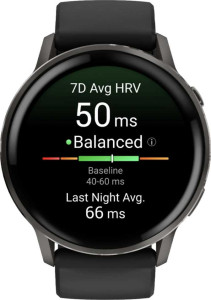
Battery life is where these two watches diverge most dramatically. The Garmin Venu 4 is rated at 12 days, while the Samsung Galaxy Watch8 LTE 40mm manages just 2 days. In real-world terms, that gap is transformative: the Venu 4 can last nearly two full weeks between charges, making it a practical companion for travel, multi-day hikes, or simply users who find frequent charging a friction point. The Galaxy Watch8, at two days, demands charging every other night — a routine that, if missed, risks a dead watch by the following evening.

The Samsung counters with wireless charging, which the Venu 4 lacks. While convenient, wireless charging is a quality-of-life feature that softens — but does not resolve — the core disadvantage of a much shorter battery life. It makes topping up slightly easier, but users still need to charge far more frequently regardless of how they do it.

This group has a decisive winner: the Garmin Venu 4 holds a commanding advantage in battery endurance. For users who prioritize always-on reliability, sleep tracking without nightly charging interruptions, or extended outdoor use, the Venu 4 is the clear choice. The Galaxy Watch8's wireless charging convenience is a minor consolation given the six-fold difference in rated battery life.

Features:
release date September 2025 July 2025
has HRV tracking
measures VO2 max
measures resting heart rate
has fast/slow heart rate notifications
shows readiness level
Can be used to answer calls
Locates your phone
Has call control
Has notifications
has irregular heart rate warnings
Has ECG technology
Has silent alarm
Has vibrating alerts
has fall detection
Has a stopwatch
Has smart alarm
has voice commands
internal storage 8GB 32GB
Has a built-in camera remote control function
Acquires GPS faster

Feature parity between these two watches is remarkably high. Both offer a comprehensive health monitoring stack — HRV tracking, VO2 max, ECG, irregular heart rate warnings, and readiness scoring — alongside practical smartwatch utilities like call answering, voice commands, fall detection, and fast GPS acquisition. For the vast majority of daily use cases, a user switching between these two would notice no functional gap whatsoever in this category.

The meaningful differences are limited to two specs. Storage is the more consequential one: the Samsung Galaxy Watch8 LTE 40mm offers 32GB of internal storage versus the Garmin Venu 4's 8GB. That four-fold difference matters primarily for users who want to store music directly on the watch for phone-free listening — 32GB accommodates a substantially larger offline library. The Galaxy Watch8 also includes a camera remote control function, a convenience feature for triggering a paired phone's camera from the wrist, which the Venu 4 omits.

On balance, this group gives a narrow edge to the Galaxy Watch8. The camera remote is a minor perk, but the storage advantage is a practical differentiator for anyone who relies on the watch as a standalone media player. That said, for users who stream music or rarely use onboard storage, the gap closes considerably, and the two watches remain functionally near-identical across this feature set.

App & Software:
Provides activity reports
Has inactivity alerts
Counts how many calories you've burned
Has goal setting
Has achievements
Free app
Has exercise diary
Ad-free
Has coaching
Has temperature tracking
Has period notifications
Supports routes
Has voice feedback
Has music playback
Includes maps
Predicts start date
Supports widgets
Can be personalised
Has barcode scanner on app
Tracks water intake
Has weight tracking
Tracks BMI

Rarely does a spec group produce a result this definitive: across all 22 app and software attributes provided, the Garmin Venu 4 and Samsung Galaxy Watch8 LTE 40mm are identical — every single feature is either present on both or absent on both. This spans the full range from fitness tools like activity reports, coaching, goal setting, and voice feedback, to health tracking capabilities such as temperature tracking, period notifications, water intake, BMI, and weight tracking.

Worth highlighting is what both watches share at the quality end of the spectrum: maps and route support, music playback, and companion apps that are both free and ad-free. These are not trivial inclusions — on-watch maps reduce reliance on a phone during outdoor navigation, and an ad-free experience signals that neither ecosystem gates core functionality behind a paywall, at least based on the data provided. Neither watch supports a barcode scanner in the app, though that omission is unlikely to factor into most users' decisions.

The verdict is an unambiguous tie. Based strictly on the provided software and app specs, there is no ground to recommend one watch over the other in this category. Users should look to other spec groups — battery life, connectivity, or design — to differentiate between these two options, as their software platforms are evenly matched on every listed dimension.

Miscellaneous:
has a battery level indicator
Has auto pause
Compatible with smart scales
Compatible with external heart rate monitors
Is compatible with Windows
has an external memory slot
Is compatible with Mac OS X
has a socket for a 3.5 mm audio jack

Most of this group is shared territory. Both watches include a battery level indicator, auto pause, compatibility with smart scales and external heart rate monitors, and neither offers an external memory slot or a 3.5mm audio jack. The support for external heart rate monitors is worth noting — it means both watches can pair with chest straps or other dedicated sensors for users who want more precise readings than optical wrist-based tracking provides.

The sole differentiator here is desktop OS compatibility. The Garmin Venu 4 is compatible with both Windows and Mac OS X, while the Samsung Galaxy Watch8 LTE 40mm supports neither. In practical terms, this affects users who manage their device, sync data, or interact with companion software via a desktop or laptop computer. The Samsung's lack of desktop OS compatibility suggests a more phone-centric ecosystem, whereas Garmin's broader compatibility offers additional flexibility for users who prefer managing their fitness data on a computer.

This group delivers a narrow edge to the Garmin Venu 4, purely on the strength of its desktop platform compatibility. For most users whose watch interaction happens entirely through a smartphone, this distinction will be inconsequential. But for those who actively use desktop tools to review or export their health and fitness data, the Venu 4's Windows and Mac support is a genuine, if modest, advantage.

Comparison Summary & Verdict

After examining every specification, a clear picture emerges for each product. The Garmin Venu 4 stands out with its exceptional 12-day battery life, broader temperature tolerance (-20°C to 55°C), multi-sport and golf modes, iOS and Windows compatibility, and ANT+ support, making it the stronger choice for outdoor enthusiasts and multi-platform users. The Samsung Galaxy Watch8 LTE 40mm, on the other hand, wins on sleek design with its lighter 30 g build, thinner 8.6 mm profile, sapphire glass display, built-in cellular connectivity, wireless charging, and 32 GB of internal storage, appealing to Android users who want a premium, always-connected wearable. Both watches share a solid sensor suite and strong fitness tracking foundations, so your choice ultimately comes down to lifestyle priorities.

Garmin Venu 4
Buy Garmin Venu 4 if...

Buy the Garmin Venu 4 if you need an enduring smartwatch with up to 12 days of battery life, multi-sport and golf tracking, and compatibility with iOS, Android, Windows, and Mac.

Samsung Galaxy Watch8 LTE 40mm
Buy Samsung Galaxy Watch8 LTE 40mm if...

Buy the Samsung Galaxy Watch8 LTE 40mm if you want a slim, lightweight Android smartwatch with built-in LTE cellular connectivity, wireless charging, and 32 GB of internal storage.