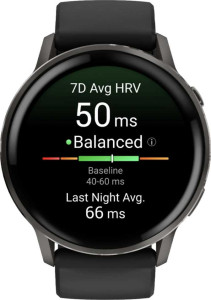
Garmin Venu 4
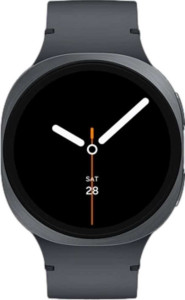
Samsung Galaxy Watch8 LTE 44mm

Garmin Venu 4 Samsung Galaxy Watch8 LTE 44mm

Overview

When it comes to choosing between the Garmin Venu 4 and the Samsung Galaxy Watch8 LTE 44mm, the decision is far from straightforward. Both smartwatches share a strong foundation of health and fitness tracking features, yet they diverge sharply in areas like battery life, connectivity, and platform compatibility. Whether you prioritize endurance on the wrist or seamless smartphone integration, this comparison breaks down exactly where each watch leads and where it falls short.

Common Features

  • Both watches feature an OLED/AMOLED display type.
  • Both have a 5 ATM water resistance rating and a waterproof depth of 50 m.
  • Always-On Display is available on both watches.
  • Watch bands are replaceable on both models.
  • Both feature a touchscreen display.
  • Neither watch is designed for kids.
  • Both monitor blood oxygenation levels.
  • Both include a heart rate monitor, accelerometer, temperature sensor, compass, barometer, and gyroscope.
  • GPS is built into both watches.
  • Both watches track sleep and provide sleep reports.
  • Both track distance, steps taken, pace, elevation, and include a route tracker.
  • Activity auto-detection is available on both watches.
  • Both are compatible with Android and support Wi-Fi.
  • NFC is supported on both watches.
  • Both support Galileo satellite navigation.
  • Neither watch has a solar power battery or a removable battery, but both have rechargeable batteries.
  • Both watches support HRV tracking, VO2 max measurement, resting heart rate measurement, and fast/slow heart rate notifications.
  • Both can be used to answer calls, control calls, and locate your phone.
  • Both show a readiness level.
  • Both provide activity reports, inactivity alerts, calorie tracking, goal setting, achievements, an exercise diary, and are ad-free with a free companion app.
  • Neither watch has an external memory slot or a 3.5 mm audio jack.
  • Both have a battery level indicator, auto pause, and are compatible with smart scales and external heart rate monitors.

Main Differences

  • Screen size is 1.4″ on the Garmin Venu 4 and 1.47″ on the Samsung Galaxy Watch8 LTE 44mm.
  • Water resistance is rated as fully waterproof on the Garmin Venu 4, while the Samsung Galaxy Watch8 LTE 44mm is only water resistant.
  • Pixel density is 458 ppi on the Garmin Venu 4 and 327 ppi on the Samsung Galaxy Watch8 LTE 44mm.
  • Resolution is 454 x 454 px on the Garmin Venu 4 and 480 x 480 px on the Samsung Galaxy Watch8 LTE 44mm.
  • Damage-resistant branded glass is present on the Garmin Venu 4 but not available on the Samsung Galaxy Watch8 LTE 44mm.
  • Sapphire glass display is featured on the Samsung Galaxy Watch8 LTE 44mm but not on the Garmin Venu 4.
  • Thickness is 12 mm on the Garmin Venu 4 and 8.6 mm on the Samsung Galaxy Watch8 LTE 44mm.
  • Weight is 38 g on the Garmin Venu 4 and 34 g on the Samsung Galaxy Watch8 LTE 44mm.
  • Height is 45 mm on the Garmin Venu 4 and 46 mm on the Samsung Galaxy Watch8 LTE 44mm.
  • Width is 45 mm on the Garmin Venu 4 and 43.7 mm on the Samsung Galaxy Watch8 LTE 44mm.
  • Maximum operating temperature is 55 °C on the Garmin Venu 4 and 35 °C on the Samsung Galaxy Watch8 LTE 44mm.
  • Lowest potential operating temperature is -20 °C on the Garmin Venu 4 and 0 °C on the Samsung Galaxy Watch8 LTE 44mm.
  • Multi-sport mode is available on the Garmin Venu 4 but not on the Samsung Galaxy Watch8 LTE 44mm.
  • Golf-specific design features are present on the Garmin Venu 4 but not on the Samsung Galaxy Watch8 LTE 44mm.
  • A cellular module is built into the Samsung Galaxy Watch8 LTE 44mm but is not available on the Garmin Venu 4.
  • iOS compatibility is supported on the Garmin Venu 4 but not on the Samsung Galaxy Watch8 LTE 44mm.
  • ANT+ connectivity is supported on the Garmin Venu 4 but not on the Samsung Galaxy Watch8 LTE 44mm.
  • Battery life is 12 days on the Garmin Venu 4 and 2 days on the Samsung Galaxy Watch8 LTE 44mm.
  • Wireless charging is available on the Samsung Galaxy Watch8 LTE 44mm but not on the Garmin Venu 4.
  • Internal storage is 8 GB on the Garmin Venu 4 and 32 GB on the Samsung Galaxy Watch8 LTE 44mm.
  • A built-in camera remote control function is present on the Samsung Galaxy Watch8 LTE 44mm but not on the Garmin Venu 4.
  • Windows compatibility is supported on the Garmin Venu 4 but not on the Samsung Galaxy Watch8 LTE 44mm.
  • Mac OS X compatibility is supported on the Garmin Venu 4 but not on the Samsung Galaxy Watch8 LTE 44mm.
Specs Comparison
Garmin Venu 4

Garmin Venu 4

Samsung Galaxy Watch8 LTE 44mm

Samsung Galaxy Watch8 LTE 44mm

Design:
screen size 1.4" 1.47"
Display type OLED/AMOLED OLED/AMOLED
water resistance Waterproof Water resistant
ATM rating 5 ATM 5 ATM
waterproof depth rating 50 m 50 m
Always-On Display
pixel density 458 ppi 327 ppi
resolution 454 x 454 px 480 x 480 px
Watch band is replaceable
has branded damage-resistant glass
thickness 12 mm 8.6 mm
weight 38 g 34 g
height 45 mm 46 mm
width 45 mm 43.7 mm
maximum operating temperature 55 °C 35 °C
lowest potential operating temperature -20 °C 0 °C
Has a display
has a touch screen
Has sapphire glass display
volume 24.3 cm³ 17.28772 cm³
is designed for kids
width of band 22 mm 20 mm

Both watches share the same OLED/AMOLED display technology and an identical 5 ATM / 50 m water resistance rating, but their display quality diverges sharply. The Garmin Venu 4 delivers a significantly higher pixel density of 458 ppi compared to the Galaxy Watch8's 327 ppi, meaning text, icons, and health data will appear noticeably crisper and sharper on the Venu 4 — a real-world advantage when reading small metrics at a glance. The Galaxy Watch8 offers a marginally larger 1.47″ screen versus the Venu 4's 1.4″, and a slightly higher raw resolution (480 x 480 px vs 454 x 454 px), but that extra pixel count is spread over a bigger panel, which actually results in a less dense image. In practice, the Venu 4's screen will look sharper.

Physically, the two watches take opposite design philosophies. The Galaxy Watch8 is notably slimmer at 8.6 mm thick versus the Venu 4's 12 mm, and lighter at 34 g versus 38 g. Its significantly smaller volume (17.3 cm³ vs 24.3 cm³) means it sits much flatter and less obtrusively on the wrist — a tangible benefit for all-day and sleep tracking comfort. In contrast, the Venu 4 uses a wider 22 mm band (vs 20 mm) and has a more substantial presence on the wrist. For glass protection, the two products make different trade-offs: the Venu 4 uses branded damage-resistant glass while the Galaxy Watch8 opts for sapphire glass, which is generally harder and more scratch-resistant in real-world use.

One underappreciated differentiator is the operating temperature range. The Venu 4 is rated from -20 °C to 55 °C, while the Galaxy Watch8 is limited to 0 °C to 35 °C — a meaningful gap for outdoor athletes or users in extreme climates. Overall, neither watch dominates entirely: the Galaxy Watch8 has the edge in wearability due to its slimmer, lighter form factor and sapphire glass, while the Venu 4 leads in display sharpness and environmental durability. Your choice should hinge on whether you prioritize a barely-there feel on the wrist or a crisper, more rugged display.

Sensors:
Monitors blood oxygenation levels
Has a heart rate monitor
has GPS
has an accelerometer
Has a temperature sensor
has a compass
Has a barometer
has a gyroscope
Has a cadence sensor
Monitors perspiration

Across the entire sensor suite, the Garmin Venu 4 and Galaxy Watch8 are in complete lockstep. Both pack the core health monitoring trio — heart rate monitor, blood oxygen (SpO2), and temperature sensor — that modern smartwatch users have come to expect. Together, these enable continuous wellness tracking, sleep quality analysis, and early detection of potential health anomalies like illness or altitude stress. Neither watch offers cadence sensing or perspiration monitoring, so runners and cyclists who rely on dedicated cadence data will need to pair an external sensor regardless of which watch they choose.

On the motion and navigation side, both watches carry an identical set of accelerometer, gyroscope, barometer, compass, and GPS. This combination is the gold standard for fitness tracking: the accelerometer and gyroscope together enable accurate step counting, activity recognition, and wrist-gesture detection, while the barometer adds elevation tracking useful for hikes or stair climbing. The built-in GPS means neither watch requires a paired smartphone to record outdoor routes — a crucial feature for serious athletes.

This category is a dead heat. Every sensor present on one watch is present on the other, and every sensor absent from one is absent from both. Prospective buyers will find no differentiation here and should base their sensor-related decision on software implementation — how well each platform actually uses this shared hardware — rather than on the hardware specifications themselves.

Activity tracking:
Tracks your sleep
Tracks distance
Tracks steps taken
Measures pace
Provides sleep reports
Detects activities automatically
Has a route tracker
Tracks elevation
Has multi-sport mode
Has exercise tagging
Has a stroke counter for swimming
Tracks calorie intake
Designed for diving
Designed for golf

The foundational activity tracking capabilities of these two watches are remarkably well-matched. Both cover the essentials — sleep tracking with reports, distance, steps, pace, elevation, route tracking, automatic activity detection, exercise tagging, and even a stroke counter for swimming. For the everyday fitness user, this shared foundation means neither watch leaves an obvious gap in day-to-day health and workout monitoring.

Where the Garmin Venu 4 pulls ahead is in breadth of sport-specific support. Its multi-sport mode allows athletes to chain multiple disciplines — like swim, bike, and run in a triathlon — into a single continuous workout session without stopping to switch activities manually. The Galaxy Watch8 lacks this feature entirely, which is a concrete disadvantage for anyone who trains across multiple sports in one session. Additionally, the Venu 4 is designed for golf, offering dedicated golf functionality that the Galaxy Watch8 does not provide at all — a meaningful differentiator for golfers who want course data and shot tracking on their wrist.

The Garmin Venu 4 holds a clear edge in this category. While casual fitness users will find both watches equally capable for everyday tracking, the Venu 4's multi-sport mode and golf support give it a meaningfully broader athletic range. The Galaxy Watch8's activity tracking is solid but narrower in scope, making the Venu 4 the stronger choice for anyone who participates in multiple sports or regularly plays golf.

Connectivity:
has a cellular module
Is compatible with iOS
Is compatible with Android
supports Wi-Fi
supports ANT+
has NFC
supports Galileo

The single biggest connectivity dividing line here is cellular. The Galaxy Watch8 LTE includes a cellular module, meaning it can make calls, send messages, and stream data independently of a smartphone — a genuine freedom for users who want to leave their phone behind on a run or commute. The Venu 4 has no cellular capability and must stay within range of a paired phone for any data-dependent features beyond onboard tracking. That said, both watches support Wi-Fi and NFC, the latter enabling contactless payments from the wrist regardless of which you choose.

Smartphone compatibility is a crucial filter. The Venu 4 works with both iOS and Android, making it a genuinely platform-agnostic choice. The Galaxy Watch8, by contrast, is Android-only — iPhone users are categorically excluded. For mixed-household buyers or anyone considering a future platform switch, this is a hard constraint worth weighing carefully. On the peripheral side, the Venu 4 supports ANT+, a protocol widely used by fitness equipment like bike sensors, heart rate chest straps, and gym machines, which the Galaxy Watch8 lacks. For serious athletes with existing ANT+ accessories, this is a practical advantage.

There is no single winner here — the right choice depends entirely on the user's ecosystem. The Galaxy Watch8 leads for Android users who want cellular independence. The Venu 4 is the stronger pick for iPhone users, cross-platform households, or athletes invested in the ANT+ accessory ecosystem. Neither watch is objectively superior; their connectivity profiles serve meaningfully different user profiles.

Battery:
battery life 12 days 2 days
has wireless charging
has a rechargeable battery
Has a solar power battery
has a removable battery

Battery life is where these two watches diverge most dramatically. The Garmin Venu 4 is rated for 12 days on a single charge, while the Galaxy Watch8 manages just 2 days. In practical terms, that gap is transformative: the Venu 4 can last through a multi-week trip, extended outdoor adventure, or two weeks of continuous sleep tracking without ever needing a charger nearby. The Galaxy Watch8, by contrast, demands a charging routine roughly every other night — meaning users must actively manage when and how they charge to avoid waking up to a dead watch.

The Galaxy Watch8 does offset some of that charging friction with wireless charging support, which the Venu 4 lacks entirely. Being able to drop the watch onto a Qi pad rather than fumbling with a proprietary cable is a genuine convenience perk — but it only matters if you are already charging frequently. For a watch that needs charging every two days, easy charging is a necessary consolation; for a watch lasting 12 days, the absence of wireless charging is far less impactful since charge events are infrequent to begin with.

The Garmin Venu 4 has a commanding edge in this category. A six-fold battery life advantage is not a marginal difference — it reflects a fundamentally different user experience. Travelers, outdoor enthusiasts, and anyone who values uninterrupted sleep tracking will find the Venu 4's longevity far more practical. The Galaxy Watch8's wireless charging is a useful convenience, but it cannot compensate for a battery life that requires near-daily attention.

Features:
release date September 2025 July 2025
has HRV tracking
measures VO2 max
measures resting heart rate
has fast/slow heart rate notifications
shows readiness level
Can be used to answer calls
Locates your phone
Has call control
Has notifications
has irregular heart rate warnings
Has ECG technology
Has silent alarm
Has vibrating alerts
has fall detection
Has a stopwatch
Has smart alarm
has voice commands
internal storage 8GB 32GB
Has a built-in camera remote control function
Acquires GPS faster

For a feature set this extensive, the overlap between these two watches is striking. Both deliver a comprehensive health monitoring package — ECG, HRV tracking, VO2 max, resting heart rate, and irregular heart rate warnings — alongside practical smartwatch staples like call answering, notifications, fall detection, voice commands, and fast GPS acquisition. Users upgrading from a basic fitness band will find either watch represents a substantial leap in capability, with no meaningful gaps in the core feature set.

Dig into the differences, however, and two specs stand out. The Galaxy Watch8 offers 32 GB of internal storage compared to the Venu 4's 8 GB — four times the capacity. For a smartwatch, that extra room is most relevant for storing music locally for offline playback during phone-free workouts. The Galaxy Watch8 also includes a built-in camera remote control function, absent on the Venu 4, which lets users trigger their smartphone camera from the wrist — a small but genuinely handy feature for solo photography.

The Galaxy Watch8 holds a modest edge in this category, driven primarily by its significantly larger internal storage and the camera remote function. Neither difference is a dealbreaker, but for users who load music onto their watch or frequently take solo photos, the Galaxy Watch8's advantages are practical and tangible. For everyone else, the feature sets are functionally equivalent and the decision will rest on factors covered in other specification groups.

App & Software:
Provides activity reports
Has inactivity alerts
Counts how many calories you've burned
Has goal setting
Has achievements
Free app
Has exercise diary
Ad-free
Has coaching
Has temperature tracking
Has period notifications
Supports routes
Has voice feedback
Has music playback
Includes maps
Predicts start date
Supports widgets
Can be personalised
Has barcode scanner on app
Tracks water intake
Has weight tracking
Tracks BMI

Rarely does a side-by-side comparison resolve this cleanly. Across all 22 app and software attributes in this group, the Garmin Venu 4 and Galaxy Watch8 are an exact match — every feature present on one is present on the other, and the single absent feature (barcode scanner on app) is missing from both. The shared offering is genuinely comprehensive: free, ad-free companion apps with activity reports, goal setting, coaching, exercise diary, and achievements form a strong motivational ecosystem for users at any fitness level.

The breadth of health and lifestyle tracking covered by both platforms is noteworthy. Beyond standard fitness metrics, both apps handle temperature tracking, women's health features including period notifications and cycle start date prediction, as well as weight, BMI, and water intake tracking. Add in maps, route support, music playback, voice feedback, and widget customization, and both watches deliver a software experience that goes well beyond basic step counting into genuine lifestyle management.

This category is an unambiguous tie. There is not a single software or app feature within this data set that separates the two products. Buyers should treat this as a neutral factor and let the meaningful distinctions identified in design, battery, connectivity, and activity tracking categories guide their final decision.

Miscellaneous:
has a battery level indicator
Has auto pause
Compatible with smart scales
Compatible with external heart rate monitors
Is compatible with Windows
has an external memory slot
Is compatible with Mac OS X
has a socket for a 3.5 mm audio jack

Most of this category is shared ground. Both watches display a battery level indicator, support auto-pause during workouts, integrate with smart scales, and accept external heart rate monitors — the latter being particularly useful for athletes who prefer a chest strap's accuracy over wrist-based optical sensing during intense training sessions.

The one meaningful differentiator is desktop OS compatibility. The Garmin Venu 4 is compatible with both Windows and Mac OS X, while the Galaxy Watch8 supports neither. In practice, this matters most for users who manage or sync their fitness data via a desktop or laptop — whether that's exporting training logs, updating firmware through a computer-based tool, or simply having a broader range of sync options beyond a smartphone. The Galaxy Watch8 appears to be designed around an exclusively mobile-first workflow, which suits most users but could be a friction point for those who prefer desktop-based data management.

The Garmin Venu 4 takes a narrow edge here solely on the basis of its Windows and Mac compatibility. For the majority of users whose interaction with their watch flows entirely through a smartphone, this distinction will be invisible. But for desktop-oriented users or those who work within fitness platforms best accessed on a computer, the Venu 4's broader compatibility is a genuine practical advantage.

Comparison Summary & Verdict

After a thorough comparison, both watches prove to be capable health companions, but they cater to distinctly different users. The Garmin Venu 4 stands out with its exceptional 12-day battery life, broader platform compatibility including iOS, Windows, and Mac, ANT+ support, multi-sport and golf modes, and a higher pixel density display with branded damage-resistant glass — making it the stronger choice for dedicated fitness enthusiasts and outdoor adventurers. The Samsung Galaxy Watch8 LTE 44mm, on the other hand, wins on built-in LTE cellular connectivity, a slimmer and lighter build at just 8.6 mm thick, wireless charging, 32 GB of internal storage, sapphire glass, and a camera remote — making it the ideal pick for Android users who want a connected, feature-rich smartwatch for everyday urban life.

Garmin Venu 4
Buy Garmin Venu 4 if...

Buy the Garmin Venu 4 if you want an exceptional 12-day battery life, iOS and multi-platform compatibility, multi-sport and golf tracking modes, and a sharper display with damage-resistant glass.

Samsung Galaxy Watch8 LTE 44mm
Buy Samsung Galaxy Watch8 LTE 44mm if...

Buy the Samsung Galaxy Watch8 LTE 44mm if you are an Android user who wants built-in LTE cellular connectivity, wireless charging, a slimmer design, and 32 GB of internal storage for a fully independent smartwatch experience.