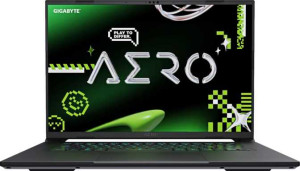
Gigabyte Aero X16 2WH (2025) 16"
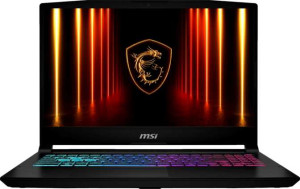
MSI Katana 15 HX B14W (2025) 15.6"

Gigabyte Aero X16 2WH (2025) 16" MSI Katana 15 HX B14W (2025) 15.6"

Overview

Welcome to our in-depth spec comparison between the Gigabyte Aero X16 2WH (2025) 16″ and the MSI Katana 15 HX B14W (2025) 15.6″, two gaming laptops built for demanding users. While both share the same GPU architecture, display resolution, and RAM configuration, they diverge sharply when it comes to portability and form factor, CPU architecture and benchmark performance, and connectivity options. Read on to see which machine best fits your priorities.

Common Features

  • Both products are gaming laptops.
  • Neither product uses a fanless design.
  • Both products have a backlit keyboard.
  • Neither product is weather-sealed or splashproof.
  • Neither product has a rugged build.
  • Both products share a 2560 x 1600 px resolution.
  • Both products use an LCD, LED-backlit, IPS display type.
  • Neither product has a touch screen.
  • Both products have a 165Hz refresh rate.
  • Neither product has an anti-reflection coating.
  • Both products support up to 4 external displays.
  • Both products come with 32GB of RAM running at 5600 MHz.
  • Both products use flash storage with 1024GB of internal storage.
  • Both products have 8GB of VRAM using GDDR7.
  • Both products deliver 23.22 TFLOPS of floating-point performance.
  • Both products achieve a texture rate of 362.9 GTexels/s.
  • Both products score 19987 on the PassMark (G3D) benchmark.
  • Neither product has USB 4 20Gbps ports, USB 3.2 Gen 1 USB-C ports, or Thunderbolt 3 ports.
  • Both products have an HDMI output, USB Type-C connectivity, and Wi-Fi support.
  • Both products support Wi-Fi 6E, Wi-Fi 6, Wi-Fi 5, and Wi-Fi 4.
  • Neither product has an external memory slot.
  • Both products have sleep-and-charge USB ports.
  • Neither product uses a MagSafe power adapter.
  • Both products have stereo speakers and a 3.5mm audio jack.
  • Both products support ray tracing and DLSS.
  • Neither product includes a stylus or a fingerprint scanner.
  • Both products have 1 microphone and a front camera.
  • Both products use Intel Resizable BAR technology.
  • Both products feature a GPU based on the Blackwell architecture.
  • Neither product has LHR.
  • Both products have a Thermal Design Power (TDP) of 50W.
  • Both products support 3D and multi-display technology.
  • Both products support OpenCL version 3 and OpenGL version 4.6.

Main Differences

  • Weight is 1900 g on Gigabyte Aero X16 2WH (2025) 16″ and 2400 g on MSI Katana 15 HX B14W (2025) 15.6″.
  • Volume is 1331.25 cm³ on Gigabyte Aero X16 2WH (2025) 16″ and 2351.45 cm³ on MSI Katana 15 HX B14W (2025) 15.6″.
  • Width is 355 mm on Gigabyte Aero X16 2WH (2025) 16″ and 359 mm on MSI Katana 15 HX B14W (2025) 15.6″.
  • Height is 250 mm on Gigabyte Aero X16 2WH (2025) 16″ and 262 mm on MSI Katana 15 HX B14W (2025) 15.6″.
  • Thickness is 15 mm on Gigabyte Aero X16 2WH (2025) 16″ and 25 mm on MSI Katana 15 HX B14W (2025) 15.6″.
  • Screen size is 16″ on Gigabyte Aero X16 2WH (2025) 16″ and 15.6″ on MSI Katana 15 HX B14W (2025) 15.6″.
  • Pixel density is 188 ppi on Gigabyte Aero X16 2WH (2025) 16″ and 193 ppi on MSI Katana 15 HX B14W (2025) 15.6″.
  • CPU speed is 12 x 2 GHz on Gigabyte Aero X16 2WH (2025) 16″ and 8 x 2.2 & 16 x 1.6 GHz on MSI Katana 15 HX B14W (2025) 15.6″.
  • CPU threads count is 24 on Gigabyte Aero X16 2WH (2025) 16″ and 32 on MSI Katana 15 HX B14W (2025) 15.6″.
  • Maximum memory amount is 64GB on Gigabyte Aero X16 2WH (2025) 16″ and 96GB on MSI Katana 15 HX B14W (2025) 15.6″.
  • Turbo clock speed is 5.1GHz on Gigabyte Aero X16 2WH (2025) 16″ and 5.8GHz on MSI Katana 15 HX B14W (2025) 15.6″.
  • PCIe version is 5 on Gigabyte Aero X16 2WH (2025) 16″ and 4 on MSI Katana 15 HX B14W (2025) 15.6″.
  • Geekbench 6 multi-core result is 13283 on Gigabyte Aero X16 2WH (2025) 16″ and 15655 on MSI Katana 15 HX B14W (2025) 15.6″.
  • Geekbench 6 single-core result is 2593 on Gigabyte Aero X16 2WH (2025) 16″ and 2680 on MSI Katana 15 HX B14W (2025) 15.6″.
  • PassMark result is 35142 on Gigabyte Aero X16 2WH (2025) 16″ and 45332 on MSI Katana 15 HX B14W (2025) 15.6″.
  • PassMark single-core result is 3872 on Gigabyte Aero X16 2WH (2025) 16″ and 4245 on MSI Katana 15 HX B14W (2025) 15.6″.
  • USB 4 40Gbps port is present on Gigabyte Aero X16 2WH (2025) 16″ but not available on MSI Katana 15 HX B14W (2025) 15.6″.
  • Thunderbolt 4 port is present on Gigabyte Aero X16 2WH (2025) 16″ but not available on MSI Katana 15 HX B14W (2025) 15.6″.
  • USB 3.2 Gen 2 USB-C ports: Gigabyte Aero X16 2WH (2025) 16″ has 0 while MSI Katana 15 HX B14W (2025) 15.6″ has 1.
  • USB 3.2 Gen 2 USB-A ports: Gigabyte Aero X16 2WH (2025) 16″ has 0 while MSI Katana 15 HX B14W (2025) 15.6″ has 3.
  • USB 3.2 Gen 1 USB-A ports: Gigabyte Aero X16 2WH (2025) 16″ has 2 while MSI Katana 15 HX B14W (2025) 15.6″ has 0.
  • USB 2.0 port is present on Gigabyte Aero X16 2WH (2025) 16″ but not available on MSI Katana 15 HX B14W (2025) 15.6″.
  • RJ45 port is present on Gigabyte Aero X16 2WH (2025) 16″ but not available on MSI Katana 15 HX B14W (2025) 15.6″.
  • Bluetooth version is 5.2 on Gigabyte Aero X16 2WH (2025) 16″ and 5.3 on MSI Katana 15 HX B14W (2025) 15.6″.
  • Battery size is 76 Wh on Gigabyte Aero X16 2WH (2025) 16″ and 75 Wh on MSI Katana 15 HX B14W (2025) 15.6″.
  • Dolby Atmos support is present on Gigabyte Aero X16 2WH (2025) 16″ but not available on MSI Katana 15 HX B14W (2025) 15.6″.
  • 3D facial recognition is available on Gigabyte Aero X16 2WH (2025) 16″ but not available on MSI Katana 15 HX B14W (2025) 15.6″.
  • Clock multiplier is 20 on Gigabyte Aero X16 2WH (2025) 16″ and 22 on MSI Katana 15 HX B14W (2025) 15.6″.
  • Big.LITTLE technology is not used on Gigabyte Aero X16 2WH (2025) 16″ but is used on MSI Katana 15 HX B14W (2025) 15.6″.
  • L3 cache is 24 MB on Gigabyte Aero X16 2WH (2025) 16″ and 36 MB on MSI Katana 15 HX B14W (2025) 15.6″.
  • GPU execution units: Gigabyte Aero X16 2WH (2025) 16″ has 16 while MSI Katana 15 HX B14W (2025) 15.6″ has 32.
  • GPU name is Radeon 890M on Gigabyte Aero X16 2WH (2025) 16″ and UHD Graphics 770 on MSI Katana 15 HX B14W (2025) 15.6″.
  • Maximum RAM speed is 7500 MHz on Gigabyte Aero X16 2WH (2025) 16″ and 5600 MHz on MSI Katana 15 HX B14W (2025) 15.6″.
Specs Comparison
Gigabyte Aero X16 2WH (2025) 16"

Gigabyte Aero X16 2WH (2025) 16"

MSI Katana 15 HX B14W (2025) 15.6"

MSI Katana 15 HX B14W (2025) 15.6"

Design:
Type Gaming Gaming
weight 1900 g 2400 g
Uses a fanless design
Has a backlit keyboard
volume 1331.25 cm³ 2351.45 cm³
width 355 mm 359 mm
height 250 mm 262 mm
thickness 15 mm 25 mm
is weather-sealed (splashproof)
has a rugged build

Both laptops share the same fundamental design category — gaming — and offer comparable footprints in terms of width and height. However, the differences beneath those surface similarities are significant. The Gigabyte Aero X16 is just 15 mm thick, compared to the MSI Katana 15's 25 mm. That 10 mm gap is not cosmetic: it translates directly into how the machine fits in a bag, how it sits on a desk, and the overall impression of build refinement. The Aero X16 also has a dramatically smaller total volume — 1,331 cm³ versus 2,351 cm³ — meaning it occupies nearly half the physical space of the Katana 15, despite being a 16-inch device against a 15.6-inch one.

The weight gap reinforces this story. At 1,900 g, the Aero X16 is 500 g lighter than the Katana 15's 2,400 g. Over the course of a commute or a long day of carrying it between rooms, that difference is very tangible — roughly the weight of a full water bottle. Neither laptop is splashproof, weather-sealed, or ruggedized, and both rely on active cooling rather than a fanless design, so those shared traits are a wash.

The Gigabyte Aero X16 holds a clear design advantage here. It is meaningfully thinner, lighter, and more compact — all without sacrificing screen size. For users who value portability alongside gaming performance, this is a decisive edge. The MSI Katana 15's bulkier chassis is typical of budget-oriented gaming designs that prioritize thermal headroom and cost efficiency over slim form factors.

Display:
screen size 16" 15.6"
resolution 2560 x 1600 px 2560 x 1600 px
pixel density 188 ppi 193 ppi
Display type LCD, LED-backlit, IPS LCD, LED-backlit, IPS
has a touch screen
refresh rate 165Hz 165Hz
has anti-reflection coating
supported displays 4 4

On paper, these two displays are strikingly close. Both panels are IPS LCD with identical 2560 x 1600 resolution and a 165 Hz refresh rate — a combination that delivers sharp visuals and smooth motion well-suited for gaming and content work alike. The 16:10 aspect ratio implied by that resolution (taller than the standard 16:9) benefits both machines equally, offering more vertical screen space for productivity tasks and immersive gaming environments.

The one numerical difference is pixel density: the Katana 15 edges out at 193 ppi versus the Aero X16's 188 ppi, a direct consequence of fitting the same resolution onto a slightly smaller 15.6″ panel versus a 16″ one. In practice, a 5 ppi difference at this density range is imperceptible to the naked eye at normal viewing distances, so this does not translate into a meaningful real-world advantage for either machine. Neither display offers a touch screen or anti-reflection coating, and both support up to 4 external displays, giving users identical multi-monitor flexibility.

This group is effectively a tie. The specifications are so closely matched that no meaningful edge exists between the two. Display choice here will not be a deciding factor — users should look to other spec groups, such as performance or design, to differentiate these two laptops.

Performance:
RAM 32GB 32GB
RAM speed 5600 MHz 5600 MHz
Uses flash storage
internal storage 1024GB 1024GB
CPU speed 12 x 2 GHz 8 x 2.2 & 16 x 1.6 GHz
CPU threads 24 threads 32 threads
VRAM 8GB 8GB
floating-point performance 23.22 TFLOPS 23.22 TFLOPS
GDDR version GDDR7 GDDR7
texture rate 362.9 GTexels/s 362.9 GTexels/s
pixel rate 121 GPixel/s 121 GPixel/s
Is an NVMe SSD
DirectX version DirectX 12 Ultimate DirectX 12 Ultimate
GPU clock speed 2235 MHz 2235 MHz
uses multithreading
maximum memory amount 64GB 96GB
DDR memory version 5 5
turbo clock speed 5.1GHz 5.8GHz
GPU turbo 2520 MHz 2520 MHz
memory slots 2 2
PCI Express (PCIe) version 5 4
semiconductor size 4 nm 4 nm
has XeSS (XMX)
Supports 64-bit

GPU performance is a dead heat between these two machines. Identical 23.22 TFLOPS of floating-point performance, the same 8GB GDDR7 VRAM, matching clock speeds, and equivalent texture and pixel fill rates mean neither will outrender the other in games or GPU-accelerated workloads. Where the comparison gets interesting is on the CPU side. The Katana 15 runs a hybrid-core processor with 32 threads and a turbo clock reaching 5.8 GHz, while the Aero X16 offers 24 threads peaking at 5.1 GHz. That 700 MHz turbo gap and eight extra threads give the Katana a tangible advantage in heavily parallelized tasks — video encoding, 3D rendering, and large compilation jobs will feel the difference.

Memory scalability also favors the Katana 15, which supports up to 96GB of DDR5 RAM compared to the Aero X16's 64GB ceiling. For most users running 32GB today, this is irrelevant — but for power users who plan to keep the machine long-term or push memory-intensive workloads, the Katana leaves more room to grow. The Aero X16 counters with PCIe 5 support versus the Katana's PCIe 4, which unlocks significantly higher SSD bandwidth headroom. In practice, real-world storage speeds depend on the specific drive installed, but the Aero's platform is better positioned for next-generation NVMe drives.

The MSI Katana 15 holds the edge in this group, driven by its higher CPU thread count and superior turbo clock speed — both of which directly impact sustained compute performance in demanding applications. The Aero X16's PCIe 5 platform is a genuine advantage, but it is narrower in scope than the CPU gap. Users prioritizing raw processing power and future RAM expandability will find the Katana 15 the stronger choice here.

Benchmarks:
Geekbench 6 result (multi) 13283 15655
Geekbench 6 result (single) 2593 2680
PassMark (G3D) result 19987 19987
PassMark result 35142 45332
PassMark result (single) 3872 4245

Benchmark results here paint a consistent and clear picture. GPU performance is locked in a tie — both laptops post an identical PassMark G3D score of 19,987, confirming what the shared GPU specs already suggested: neither machine will outpace the other in graphics-bound workloads like gaming or GPU rendering. The divergence emerges entirely on the CPU side, and it is substantial.

The Katana 15 scores 15,655 in Geekbench 6 multi-core versus the Aero X16's 13,283 — a gap of nearly 18%. In the overall PassMark CPU benchmark, the difference is even more pronounced: 45,332 against 35,142, representing a 29% advantage for the Katana. Single-core scores tell the same story, with the Katana reaching 4,245 compared to the Aero's 3,872. Single-core performance matters for tasks that cannot be parallelized — everyday responsiveness, game logic, and latency-sensitive operations — so the Katana's lead here is broadly felt, not just in synthetic corner cases.

The MSI Katana 15 wins this group decisively. Across every CPU benchmark — single-core, multi-core, and overall — it outperforms the Aero X16 by meaningful margins. These numbers directly validate the CPU spec differences noted in the Performance group, and they translate into real-world advantages in compute-heavy tasks. The GPU tie means gaming output will be equivalent, but users who push their machine beyond gaming will notice the Katana's processing lead.
Connectivity:
USB 3.2 Gen 2 ports (USB-C) 0 1
USB 3.2 Gen 2 ports (USB-A) 0 3
USB 4 20Gbps ports 0 0
USB 4 40Gbps ports 1 0
Thunderbolt 4 ports 1 0
USB 3.2 Gen 1 ports (USB-C) 0 0
USB 3.2 Gen 1 ports (USB-A) 2 0
Thunderbolt 3 ports 0 0
has an HDMI output
Has USB Type-C
supports Wi-Fi
Wi-Fi version Wi-Fi 6E (802.11ax), Wi-Fi 6 (802.11ax), Wi-Fi 5 (802.11ac), Wi-Fi 4 (802.11n) Wi-Fi 6E (802.11ax), Wi-Fi 6 (802.11ax), Wi-Fi 5 (802.11ac), Wi-Fi 4 (802.11n)
has an external memory slot
Bluetooth version 5.2 5.3
RJ45 ports 1 0
HDMI ports 1 1
HDMI version HDMI 2.1 HDMI 2.1
DisplayPort outputs 0 0
USB 2.0 ports 1 0
has AirPlay
mini DisplayPort outputs 0 0
has a VGA connector

Connectivity is where these two machines make very different philosophical bets. The Aero X16 prioritizes high-bandwidth, versatile ports: a Thunderbolt 4 port and a USB4 40Gbps port together offer exceptional throughput for external GPUs, ultra-fast NVMe enclosures, and daisy-chained peripherals. The Katana 15, by contrast, skips USB4 and Thunderbolt entirely, instead offering three USB 3.2 Gen 2 USB-A ports — a more practical layout for users with a desk full of standard peripherals who want to plug in without a hub.

A meaningful real-world differentiator is the Aero X16's inclusion of an RJ45 ethernet port, which the Katana 15 entirely lacks. For gamers and power users who rely on wired internet for stability and low latency, this is a genuine convenience advantage — the Katana 15 owner will need a USB-to-ethernet adapter to achieve the same. On wireless, both laptops are evenly matched with Wi-Fi 6E, and the Katana's Bluetooth 5.3 versus the Aero's 5.2 is a marginal difference with negligible practical impact. Both share HDMI 2.1 output and AirPlay support.

The Gigabyte Aero X16 holds the edge in this group, owing to its combination of Thunderbolt 4, USB4, and a built-in ethernet port — a more capable and future-proof suite for power users and those who demand wired networking. The Katana 15's three USB-A Gen 2 ports are a practical advantage for peripheral-heavy desk setups, but it cannot match the Aero's raw connectivity ceiling.

Battery:
battery size 76 Wh 75 Wh
Has sleep-and-charge USB ports
Has a MagSafe power adapter

Battery is the simplest group to analyze in this comparison. The Aero X16 carries a 76 Wh cell and the Katana 15 a 75 Wh cell — a 1 Wh difference that is, for all practical purposes, meaningless. Both laptops will draw on their batteries in essentially identical ways under equivalent loads, and no user will perceive a runtime difference attributable to that gap. Both also include sleep-and-charge USB ports, allowing devices to be charged even when the laptop is powered off — a small but convenient shared feature.

This group is an unambiguous tie. With matched battery capacities and identical feature sets, neither laptop offers any battery-related advantage over the other. Users evaluating these machines on endurance grounds should look to factors outside this spec group — such as display power draw or processor efficiency under load — neither of which is captured in the provided data.

Features:
release date January 2025 January 2025
has stereo speakers
has a socket for a 3.5 mm audio jack
supports ray tracing
supports DLSS
has Dolby Atmos
Stylus included
Has a fingerprint scanner
number of microphones 1 1
Uses 3D facial recognition
has a front camera
Has S/PDIF Out port
has a gyroscope
has GPS
has an accelerometer
has a compass
Has an optical disc drive

Most features here are shared: stereo speakers, a 3.5 mm audio jack, ray tracing and DLSS support, a front camera, and a single microphone are common to both machines. Where the Aero X16 pulls ahead is in two specific areas. It includes Dolby Atmos audio processing — absent on the Katana 15 — which enhances spatial audio for both gaming and media consumption without requiring external hardware. More notably, the Aero X16 offers 3D facial recognition for login, whereas the Katana 15 relies on conventional camera-based methods or a password. Neither laptop has a fingerprint scanner, making facial recognition the only biometric option available, and only the Aero X16 has it.

The Katana 15 has no meaningful exclusive features in this group to counter those advantages. Both machines lack GPS, motion sensors, a stylus, and an optical drive — omissions that are entirely expected and unremarkable for gaming laptops in this class. The feature parity across gaming-critical specs like ray tracing and DLSS means neither holds an advantage where it matters most for in-game visuals.

The Gigabyte Aero X16 takes this group. Dolby Atmos and 3D facial recognition are not transformative features, but they represent genuine quality-of-life additions that the Katana 15 simply does not offer. For users who value a more polished, security-forward daily experience, the Aero X16 is the more fully-featured machine here.

Miscellaneous:
clock multiplier 20 22
AMD SAM / Intel Resizable BAR Intel Resizable BAR Intel Resizable BAR
GPU architecture Blackwell Blackwell
has LHR
Thermal Design Power (TDP) 50W 50W
Supports 3D
Supports multi-display technology
OpenCL version 3 3
OpenGL version 4.6 4.6
Supports ECC memory
memory bus width 128-bit 128-bit
effective memory speed 25400 MHz 25400 MHz
maximum memory bandwidth 405.8 GB/s 405.8 GB/s
render output units (ROPs) 48 48
texture mapping units (TMUs) 144 144
shading units 4608 4608
Has Double Precision Floating Point (DPFP)
GPU memory speed 2000 MHz 2000 MHz
Type Laptop, Desktop Laptop
Uses big.LITTLE technology
instruction sets MMX, F16C, FMA3, AES, AVX, AVX2, SSE 4.1, SSE 4.2 MMX, F16C, FMA3, AES, AVX2, AVX, SSE 4.1, SSE 4.2
Has an unlocked multiplier
L3 cache 24 MB 36 MB
GPU execution units 16 32
GPU name Radeon 890M UHD Graphics 770
Has integrated graphics
memory channels 2 2
RAM speed (max) 7500 MHz 5600 MHz
CPU temperature 100 °C 100 °C
Has NX bit

A substantial portion of this group is shared ground: identical GPU architecture, the same 50W TDP, matching memory bandwidth, bus width, shading units, and API support levels make direct comparison straightforward on those axes. The more telling differences lie in CPU architecture details. The Katana 15 uses big.LITTLE technology — the hybrid efficiency/performance core design that explains its higher thread count from the Performance group — while the Aero X16 does not. The Katana also carries a larger 36 MB L3 cache versus the Aero's 24 MB, a 50% advantage that meaningfully reduces memory latency in cache-sensitive workloads like gaming, simulation, and data processing pipelines.

Flipping the advantage, the Aero X16's platform supports RAM speeds up to 7500 MHz, compared to the Katana 15's ceiling of 5600 MHz. Higher memory bandwidth headroom can benefit GPU-accelerated tasks and memory-bound applications, though the actual impact depends on what RAM is physically installed. The two laptops also differ in their integrated GPU: the Aero X16 uses a Radeon 890M while the Katana 15 integrates an Intel UHD Graphics 770. These are architecturally distinct and serve as fallback displays rather than gaming solutions alongside the discrete Blackwell GPU both machines share.

This group does not produce a clean winner. The MSI Katana 15 holds a CPU-side advantage with its larger L3 cache and big.LITTLE architecture, while the Aero X16 counters with a higher RAM speed ceiling. These are complementary rather than directly competing strengths, and the practical relevance of each will depend heavily on specific use cases. Users running cache-sensitive workloads favor the Katana; those planning to leverage ultra-fast memory favor the Aero.

Comparison Summary & Verdict

After examining every specification, these two gaming laptops emerge as distinct choices for different types of users. The Gigabyte Aero X16 2WH (2025) 16″ stands out as the more portable and versatile option, weighing 500 g less and measuring just 15 mm thick, while also offering Thunderbolt 4 and USB 4 40Gbps connectivity, a built-in RJ45 port, Dolby Atmos audio, and 3D facial recognition — making it ideal for professionals who travel and need a well-rounded, feature-rich machine. The MSI Katana 15 HX B14W (2025) 15.6″, on the other hand, delivers higher CPU benchmark scores across the board, a faster turbo clock speed of 5.8GHz, support for up to 96GB of RAM, a larger L3 cache of 36 MB, and more USB-A ports — making it the stronger pick for users who prioritize raw processing power and expandability at the desk.

Gigabyte Aero X16 2WH (2025) 16
Buy Gigabyte Aero X16 2WH (2025) 16" if...

Buy the Gigabyte Aero X16 2WH (2025) 16″ if you value a lighter, slimmer build with premium connectivity like Thunderbolt 4 and USB 4 40Gbps, plus extras like Dolby Atmos and 3D facial recognition.

MSI Katana 15 HX B14W (2025) 15.6
Buy MSI Katana 15 HX B14W (2025) 15.6" if...

Buy the MSI Katana 15 HX B14W (2025) 15.6″ if you prioritize stronger CPU benchmark performance, a higher turbo clock speed, greater maximum RAM capacity, and more USB-A ports for a desktop-focused setup.