Gigabyte Aorus GeForce RTX 5060 Elite
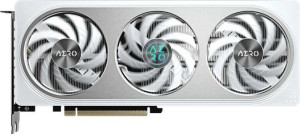
Gigabyte GeForce RTX 5060 Aero OC

Gigabyte Aorus GeForce RTX 5060 Elite Gigabyte GeForce RTX 5060 Aero OC

Overview

Welcome to our in-depth specification comparison of the Gigabyte Aorus GeForce RTX 5060 Elite and the Gigabyte GeForce RTX 5060 Aero OC. Both cards share the same Blackwell architecture, 8GB of GDDR7 memory, and a 145W TDP, yet they differ in meaningful ways across boost clock speeds, raw compute throughput, and physical dimensions. Read on to discover which card best suits your needs.

Common Features

  • Both cards share a base GPU clock speed of 2280 MHz.
  • Both cards have a GPU memory speed of 1750 MHz.
  • Both cards feature 3840 shading units.
  • Both cards include 120 texture mapping units (TMUs).
  • Both cards have 48 render output units (ROPs).
  • Double Precision Floating Point (DPFP) is supported on both cards.
  • Both cards have an effective memory speed of 28000 MHz.
  • Both cards offer a maximum memory bandwidth of 448 GB/s.
  • Both cards come with 8GB of VRAM.
  • Both cards use GDDR7 memory.
  • Both cards feature a 128-bit memory bus width.
  • ECC memory is supported on both cards.
  • Both cards support DirectX 12 Ultimate.
  • Both cards support OpenGL version 4.6.
  • Both cards support OpenCL version 3.
  • Multi-display technology is supported on both cards.
  • Ray tracing is supported on both cards.
  • 3D support is available on both cards.
  • DLSS is supported on both cards.
  • XeSS (XMX) is not available on either card.
  • Both cards include one HDMI 2.1b output.
  • Both cards feature three DisplayPort outputs.
  • Neither card includes USB-C ports, DVI outputs, or mini DisplayPort outputs.
  • Both cards are based on the Blackwell GPU architecture.
  • Both cards have a Thermal Design Power (TDP) of 145W.
  • Both cards use PCIe version 5.
  • Both cards are built on a 5 nm semiconductor process.
  • Both cards contain 21,900 million transistors.
  • Neither card features air-water cooling.

Main Differences

  • GPU turbo clock speed is 2722 MHz on the Gigabyte Aorus GeForce RTX 5060 Elite and 2595 MHz on the Gigabyte GeForce RTX 5060 Aero OC.
  • Pixel rate is 130.7 GPixel/s on the Gigabyte Aorus GeForce RTX 5060 Elite and 124.6 GPixel/s on the Gigabyte GeForce RTX 5060 Aero OC.
  • Floating-point performance is 20.9 TFLOPS on the Gigabyte Aorus GeForce RTX 5060 Elite and 19.93 TFLOPS on the Gigabyte GeForce RTX 5060 Aero OC.
  • Texture rate is 326.6 GTexels/s on the Gigabyte Aorus GeForce RTX 5060 Elite and 311.4 GTexels/s on the Gigabyte GeForce RTX 5060 Aero OC.
  • Width is 329 mm on the Gigabyte Aorus GeForce RTX 5060 Elite and 281 mm on the Gigabyte GeForce RTX 5060 Aero OC.
  • Height is 128 mm on the Gigabyte Aorus GeForce RTX 5060 Elite and 117 mm on the Gigabyte GeForce RTX 5060 Aero OC.
Specs Comparison
Gigabyte Aorus GeForce RTX 5060 Elite

Gigabyte Aorus GeForce RTX 5060 Elite

Gigabyte GeForce RTX 5060 Aero OC

Gigabyte GeForce RTX 5060 Aero OC

Performance:
GPU clock speed 2280 MHz 2280 MHz
GPU turbo 2722 MHz 2595 MHz
pixel rate 130.7 GPixel/s 124.6 GPixel/s
floating-point performance 20.9 TFLOPS 19.93 TFLOPS
texture rate 326.6 GTexels/s 311.4 GTexels/s
GPU memory speed 1750 MHz 1750 MHz
shading units 3840 3840
texture mapping units (TMUs) 120 120
render output units (ROPs) 48 48
Has Double Precision Floating Point (DPFP)

Both the Aorus Elite and the Aero OC share an identical foundation: the same 2280 MHz base clock, 3840 shading units, 120 TMUs, 48 ROPs, and 1750 MHz memory speed. This means any performance gap between them is not a matter of hardware architecture or memory bandwidth — it comes down entirely to how aggressively each card boosts under load.

That is where the Aorus Elite pulls ahead. Its GPU turbo of 2722 MHz outpaces the Aero OC's 2595 MHz — a difference of 127 MHz, or roughly 5%. Because floating-point throughput, pixel fill rate, and texture rate all scale directly with clock speed, this single delta cascades across every computed performance metric: the Elite reaches 20.9 TFLOPS versus 19.93 TFLOPS, 130.7 GPixel/s versus 124.6 GPixel/s, and 326.6 GTexels/s versus 311.4 GTexels/s. In practice, a ~5% clock advantage typically translates to a similar margin in GPU-bound workloads — noticeable in sustained rendering or compute tasks, though less dramatic in scenarios bottlenecked by memory or the CPU.

The Aorus Elite holds a clear performance edge within this group. The advantage is consistent and stems from a meaningfully higher boost clock rather than any architectural difference, making it the stronger choice for users who want to extract maximum throughput from the RTX 5060 silicon.

Memory:
effective memory speed 28000 MHz 28000 MHz
maximum memory bandwidth 448 GB/s 448 GB/s
VRAM 8GB 8GB
GDDR version GDDR7 GDDR7
memory bus width 128-bit 128-bit
Supports ECC memory

On the memory front, these two cards are completely indistinguishable. Both carry 8GB of GDDR7 on a 128-bit bus, running at an effective 28000 MHz for a maximum bandwidth of 448 GB/s. GDDR7 is a meaningful generational step — its higher data rates allow it to deliver competitive bandwidth even through a relatively narrow 128-bit interface, which keeps die cost and power consumption in check without gutting throughput.

The 448 GB/s figure is what matters most in practice. It determines how quickly the GPU can feed its shading units with texture data and framebuffer information — a bottleneck that becomes especially visible at higher resolutions or when using memory-hungry assets. Both cards also support ECC memory, a feature more relevant to professional compute workloads than gaming, as it allows the hardware to detect and correct single-bit memory errors on the fly.

This group is a complete tie. Every memory specification is identical across the Aorus Elite and the Aero OC, so neither card holds any advantage here. Memory performance will be an equal factor in any workload, and buyers should look to other specification groups to differentiate between the two.

Features:
DirectX version DirectX 12 Ultimate DirectX 12 Ultimate
OpenGL version 4.6 4.6
OpenCL version 3 3
Supports multi-display technology
supports ray tracing
Supports 3D
supports DLSS
has XeSS (XMX)
AMD SAM / Intel Resizable BAR Intel Resizable BAR Intel Resizable BAR
has LHR
has RGB lighting
supported displays 4 4

Feature parity is total between these two cards. Both support DirectX 12 Ultimate — the current gold standard for modern gaming APIs, enabling hardware-accelerated ray tracing, mesh shaders, and variable rate shading across compatible titles. Alongside that, DLSS support is present on both, giving users access to Nvidia's AI-driven upscaling technology, which can significantly boost frame rates with minimal perceptible quality loss — a practical daily-use advantage in demanding games.

Ray tracing support is confirmed on both cards, which is expected at this tier. Also worth noting is that neither card carries an LHR (Lite Hash Rate) limiter, and both support Intel Resizable BAR, a feature that allows the CPU to access the full GPU frame buffer at once rather than in chunks — this can yield measurable performance gains in certain games and workloads when enabled in the system BIOS. Multi-display output up to 4 displays and RGB lighting round out an identical feature set.

As with the memory group, this is a complete tie. The Aorus Elite and the Aero OC offer an exactly matched software and feature ecosystem, so neither holds an advantage here. Users who prioritize specific features such as DLSS or ray tracing will find no reason to favor one over the other on these grounds alone.

Ports:
has an HDMI output
HDMI ports 1 1
HDMI version HDMI 2.1b HDMI 2.1b
DisplayPort outputs 3 3
USB-C ports 0 0
DVI outputs 0 0
mini DisplayPort outputs 0 0

Connectivity is identical across both cards. Each offers a practical four-output layout: 1 HDMI 2.1b port and 3 DisplayPort outputs, supporting up to four simultaneous displays — consistent with the multi-display capability noted in the Features group. HDMI 2.1b is the latest revision of the standard, capable of handling 4K at high refresh rates and 8K output, making it well-suited for modern monitors and TVs without any adapter requirements.

The absence of USB-C, DVI, and mini DisplayPort outputs is worth acknowledging in context: DVI is effectively a legacy standard at this point, so its omission is of no practical concern. The lack of USB-C is more notable for users who own USB-C or Thunderbolt-connected displays, as they would need an active adapter. That said, this applies equally to both cards and is a trait of the product lineup rather than a differentiator between them.

No edge exists here — the Aorus Elite and the Aero OC are identical in every port specification. Display compatibility and multi-monitor potential will be exactly the same regardless of which card a buyer chooses.

General info:
GPU architecture Blackwell Blackwell
release date May 2025 May 2025
Thermal Design Power (TDP) 145W 145W
PCI Express (PCIe) version 5 5
semiconductor size 5 nm 5 nm
number of transistors 21900 million 21900 million
Has air-water cooling
width 329 mm 281 mm
height 128 mm 117 mm

At their core, these two cards are built on the same silicon: both use Nvidia's Blackwell architecture on a 5nm process node with 21.9 billion transistors, draw an identical 145W TDP, and connect via PCIe 5.0. This shared foundation means power supply requirements, slot compatibility, and thermal output are equivalent — buyers won't need to make any trade-offs on those fronts based on which model they choose.

Where the two diverge meaningfully is physical footprint. The Aorus Elite measures 329 mm × 128 mm, while the Aero OC comes in noticeably more compact at 281 mm × 117 mm — a difference of 48 mm in length and 11 mm in height. That gap is significant in practice: smaller cases with restricted GPU clearance may only accommodate the Aero OC, whereas the Elite's larger PCB typically allows for a more elaborate cooling solution, which may contribute to its higher boost clock observed in the Performance group.

The Aero OC holds a clear advantage for users with constrained builds or compact enclosures. Conversely, the Elite's larger form factor is a non-issue in full-size ATX cases and may be the price of its more aggressive thermal headroom. Neither card uses liquid cooling, so case airflow planning remains equally relevant for both.

Comparison Summary & Verdict

After examining every specification, the two cards share a remarkably similar foundation: identical memory configurations, the same Blackwell architecture, and full support for ray tracing and DLSS. Where they diverge is telling. The Gigabyte Aorus GeForce RTX 5060 Elite pulls ahead with a higher GPU turbo clock of 2722 MHz, a superior floating-point performance of 20.9 TFLOPS, and a faster texture rate of 326.6 GTexels/s, making it the stronger pick for users who demand every last drop of performance. However, it is also physically larger at 329 x 128 mm. The Gigabyte GeForce RTX 5060 Aero OC, measuring a more compact 281 x 117 mm, is better suited for smaller chassis and space-constrained builds where physical fit is a priority, with only a modest performance trade-off.

Gigabyte Aorus GeForce RTX 5060 Elite
Buy Gigabyte Aorus GeForce RTX 5060 Elite if...

Buy the Gigabyte Aorus GeForce RTX 5060 Elite if you want the highest possible boost clock, pixel rate, and floating-point performance from this GPU tier and have a case with enough room to accommodate its larger footprint.

Gigabyte GeForce RTX 5060 Aero OC
Buy Gigabyte GeForce RTX 5060 Aero OC if...

Buy the Gigabyte GeForce RTX 5060 Aero OC if you are building in a compact or space-constrained case and can accept a slightly lower boost clock and compute throughput in exchange for a noticeably smaller card size.