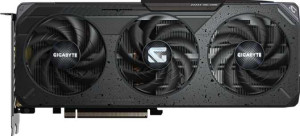
Gigabyte Aorus GeForce RTX 5060 Elite
Gigabyte Radeon RX 9060 XT Gaming OC 16GB

Gigabyte Aorus GeForce RTX 5060 Elite Gigabyte Radeon RX 9060 XT Gaming OC 16GB

Common Features

  • Double Precision Floating Point support is available on both products.
  • The memory bus width is 128-bit on both products.
  • ECC memory support is available on both products.
  • Both products use DirectX 12 Ultimate.
  • Both products support OpenGL version 4.6.
  • Multi-display technology support is available on both products.
  • Ray tracing support is available on both products.
  • 3D support is available on both products.
  • XeSS XMX support is not available on either product.
  • LHR is not present on either product.
  • RGB lighting is included on both products.
  • Both products include an HDMI output.
  • Each product has one HDMI port using HDMI 2.1b.
  • PCI Express version 5 is used by both products.
  • Air-water cooling is not included on either product.

Main Differences

  • GPU clock speed is 2280 MHz on Gigabyte Aorus GeForce RTX 5060 Elite and 1900 MHz on Gigabyte Radeon RX 9060 XT Gaming OC 16GB.
  • GPU turbo frequency is 2722 MHz on Gigabyte Aorus GeForce RTX 5060 Elite and 3320 MHz on Gigabyte Radeon RX 9060 XT Gaming OC 16GB.
  • Pixel rate is 130.7 GPixel per second on Gigabyte Aorus GeForce RTX 5060 Elite and 212.5 GPixel per second on Gigabyte Radeon RX 9060 XT Gaming OC 16GB.
  • Floating-point performance is 20.9 TFLOPS on Gigabyte Aorus GeForce RTX 5060 Elite and 27.2 TFLOPS on Gigabyte Radeon RX 9060 XT Gaming OC 16GB.
  • Texture rate is 326.6 GTexels per second on Gigabyte Aorus GeForce RTX 5060 Elite and 425 GTexels per second on Gigabyte Radeon RX 9060 XT Gaming OC 16GB.
  • GPU memory speed is 1750 MHz on Gigabyte Aorus GeForce RTX 5060 Elite and 2518 MHz on Gigabyte Radeon RX 9060 XT Gaming OC 16GB.
  • The number of shading units is 3840 on Gigabyte Aorus GeForce RTX 5060 Elite and 2048 on Gigabyte Radeon RX 9060 XT Gaming OC 16GB.
  • Texture mapping units count is 120 on Gigabyte Aorus GeForce RTX 5060 Elite and 128 on Gigabyte Radeon RX 9060 XT Gaming OC 16GB.
  • Render output units count is 48 on Gigabyte Aorus GeForce RTX 5060 Elite and 64 on Gigabyte Radeon RX 9060 XT Gaming OC 16GB.
  • Effective memory speed is 28000 MHz on Gigabyte Aorus GeForce RTX 5060 Elite and 20000 MHz on Gigabyte Radeon RX 9060 XT Gaming OC 16GB.
  • Maximum memory bandwidth is 448 GB per second on Gigabyte Aorus GeForce RTX 5060 Elite and 322.3 GB per second on Gigabyte Radeon RX 9060 XT Gaming OC 16GB.
  • VRAM capacity is 8GB on Gigabyte Aorus GeForce RTX 5060 Elite and 16GB on Gigabyte Radeon RX 9060 XT Gaming OC 16GB.
  • The GDDR memory version is GDDR7 on Gigabyte Aorus GeForce RTX 5060 Elite and GDDR6 on Gigabyte Radeon RX 9060 XT Gaming OC 16GB.
  • OpenCL version is 3 on Gigabyte Aorus GeForce RTX 5060 Elite and 2.2 on Gigabyte Radeon RX 9060 XT Gaming OC 16GB.
  • DLSS support is available on Gigabyte Aorus GeForce RTX 5060 Elite but not available on Gigabyte Radeon RX 9060 XT Gaming OC 16GB.
Specs Comparison
Gigabyte Aorus GeForce RTX 5060 Elite

Gigabyte Aorus GeForce RTX 5060 Elite

Gigabyte Radeon RX 9060 XT Gaming OC 16GB

Gigabyte Radeon RX 9060 XT Gaming OC 16GB

Performance:
GPU clock speed 2280 MHz 1900 MHz
GPU turbo 2722 MHz 3320 MHz
pixel rate 130.7 GPixel/s 212.5 GPixel/s
floating-point performance 20.9 TFLOPS 27.2 TFLOPS
texture rate 326.6 GTexels/s 425 GTexels/s
GPU memory speed 1750 MHz 2518 MHz
shading units 3840 2048
texture mapping units (TMUs) 120 128
render output units (ROPs) 48 64
Has Double Precision Floating Point (DPFP)

The Gigabyte Aorus GeForce RTX 5060 Elite and the Gigabyte Radeon RX 9060 XT Gaming OC 16GB differ significantly in terms of performance specs. The RTX 5060 Elite features a GPU clock speed of 2280 MHz, with a turbo boost of 2722 MHz, while the RX 9060 XT operates at a lower base clock of 1900 MHz but offers a higher turbo boost at 3320 MHz.

Looking at pixel rate, the RTX 5060 Elite has a pixel rate of 130.7 GPixel/s, whereas the RX 9060 XT surpasses it with 212.5 GPixel/s. This suggests that the RX 9060 XT may be more efficient at rendering images and frames. In terms of floating-point performance, the RTX 5060 Elite achieves 20.9 TFLOPS, while the RX 9060 XT leads with 27.2 TFLOPS, indicating a higher level of computational power for the Radeon card.

The RTX 5060 Elite has a texture rate of 326.6 GTexels/s, which is lower than the RX 9060 XT's 425 GTexels/s. Additionally, the memory speed of the RX 9060 XT is much higher at 2518 MHz compared to the RTX 5060 Elite's 1750 MHz. The RTX 5060 Elite has 3840 shading units, 120 texture mapping units (TMUs), and 48 render output units (ROPs), while the RX 9060 XT offers 2048 shading units, 128 TMUs, and 64 ROPs, giving the Radeon card a significant edge in these areas.

Memory:
effective memory speed 28000 MHz 20000 MHz
maximum memory bandwidth 448 GB/s 322.3 GB/s
VRAM 8GB 16GB
GDDR version GDDR7 GDDR6
memory bus width 128-bit 128-bit
Supports ECC memory

The Gigabyte Aorus GeForce RTX 5060 Elite and the Gigabyte Radeon RX 9060 XT Gaming OC 16GB have some key differences when it comes to memory specifications. The RTX 5060 Elite is equipped with 8GB of VRAM, whereas the RX 9060 XT features a significantly larger 16GB of VRAM.

In terms of memory speed, the RTX 5060 Elite has a higher effective memory speed of 28000 MHz, compared to the RX 9060 XT's 20000 MHz. Despite this, the maximum memory bandwidth of the RTX 5060 Elite is 448 GB/s, while the RX 9060 XT has a slightly lower bandwidth of 322.3 GB/s.

Both products use a 128-bit memory bus width and support ECC memory (Error Correction Code), ensuring data integrity during heavy workloads, so there is no difference in these features.

Features:
DirectX version DirectX 12 Ultimate DirectX 12 Ultimate
OpenGL version 4.6 4.6
OpenCL version 3 2.2
Supports multi-display technology
supports ray tracing
Supports 3D
supports DLSS
has XeSS (XMX)
AMD SAM / Intel Resizable BAR Intel Resizable BAR AMD SAM
has LHR
has RGB lighting
supported displays 4 3

The Gigabyte Aorus GeForce RTX 5060 Elite and the Gigabyte Radeon RX 9060 XT Gaming OC 16GB share several key features, but there are notable differences as well. Both cards support DirectX 12 Ultimate and OpenGL 4.6, ensuring compatibility with modern games and applications. However, the RTX 5060 Elite supports OpenCL 3, while the RX 9060 XT is limited to OpenCL 2.2.

Both cards support multi-display technology, ray tracing, and 3D, making them capable of delivering enhanced visual experiences. However, the RTX 5060 Elite supports DLSS (Deep Learning Super Sampling), which the RX 9060 XT does not. Neither card supports XeSS (XMX), a feature that might appeal to users looking for specific AI-driven graphics improvements.

In terms of platform compatibility, the RTX 5060 Elite supports Intel Resizable BAR, while the RX 9060 XT supports AMD SAM (Smart Access Memory), indicating that each card is optimized for use with different systems. Both cards lack LHR (Lite Hash Rate), ensuring they are not restricted for cryptocurrency mining use. As for aesthetics, both cards feature RGB lighting, but the RTX 5060 Elite supports up to 4 displays, while the RX 9060 XT supports 3 displays, offering a slight advantage in multi-monitor setups for the former.

Ports:
has an HDMI output
HDMI ports 1 1
HDMI version HDMI 2.1b HDMI 2.1b
DisplayPort outputs 3 2
USB-C ports 0 0
DVI outputs 0 0
mini DisplayPort outputs 0 0

Both the Gigabyte Aorus GeForce RTX 5060 Elite and the Gigabyte Radeon RX 9060 XT Gaming OC 16GB come with HDMI 2.1b ports. However, there is a slight difference in the number of additional display outputs. The RTX 5060 Elite offers 1 HDMI port and 3 DisplayPort outputs, while the RX 9060 XT has 1 HDMI port and 2 DisplayPort outputs.

Neither card includes USB-C ports, DVI outputs, or mini DisplayPort outputs, meaning both are similarly limited in terms of those connection types.

Overall, the primary difference is in the number of DisplayPort outputs, with the RTX 5060 Elite offering one more than the RX 9060 XT.

General info:
GPU architecture Blackwell RDNA 4.0
release date May 2025 June 2025
Thermal Design Power (TDP) 145W 160W
PCI Express (PCIe) version 5 5
semiconductor size 5 nm 4 nm
number of transistors 21900 million 29700 million
Has air-water cooling
width 329 mm 281 mm
height 128 mm 118 mm

The Gigabyte Aorus GeForce RTX 5060 Elite and the Gigabyte Radeon RX 9060 XT Gaming OC 16GB both use PCI Express 5.0, ensuring compatibility with modern motherboards. The RTX 5060 Elite features Blackwell architecture, while the RX 9060 XT uses RDNA 4.0, indicating different design approaches for the two cards.

In terms of power consumption, the RTX 5060 Elite has a Thermal Design Power (TDP) of 145W, which is lower than the RX 9060 XT’s 160W. The RTX 5060 Elite also uses a 5 nm semiconductor size, while the RX 9060 XT utilizes a smaller 4 nm semiconductor. This suggests the RX 9060 XT may offer higher efficiency in its chip design.

Dimensions-wise, the RTX 5060 Elite is larger, with a width of 329 mm and a height of 128 mm, compared to the RX 9060 XT’s smaller size of 281 mm in width and 118 mm in height. Both cards do not feature air-water cooling, and both have a large number of transistors, with the RTX 5060 Elite having 21.9 billion transistors and the RX 9060 XT housing 29.7 billion.

Comparison Summary

This specification comparison between Gigabyte Aorus GeForce RTX 5060 Elite and Gigabyte Radeon RX 9060 XT Gaming OC 16GB highlights shared features such as Double Precision Floating Point support, 128-bit memory bus width, DirectX 12 Ultimate compatibility, and HDMI 2.1b output. Key differences include GPU clock speed of 2280 MHz versus 1900 MHz, GPU turbo frequency of 2722 MHz versus 3320 MHz, floating-point performance of 20.9 TFLOPS versus 27.2 TFLOPS, VRAM capacity of 8GB versus 16GB, and memory type of GDDR7 versus GDDR6. Additional distinctions include DLSS support on the RTX 5060 Elite, which is not available on the RX 9060 XT, and pixel rate of 130.7 GPixel/s versus 212.5 GPixel/s, reflecting differences in rendering throughput.