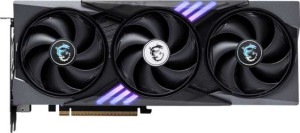
Gigabyte Aorus GeForce RTX 5060 Elite
MSI GeForce RTX 5060 Gaming Trio OC

Gigabyte Aorus GeForce RTX 5060 Elite MSI GeForce RTX 5060 Gaming Trio OC

Overview

Welcome to our in-depth specification comparison of the Gigabyte Aorus GeForce RTX 5060 Elite and the MSI GeForce RTX 5060 Gaming Trio OC. Both cards are built on the same Blackwell architecture and share a vast amount of common ground, yet key battlegrounds emerge around GPU turbo clock speeds, raw compute throughput, and physical dimensions. Read on to see exactly how these two RTX 5060 cards stack up spec for spec.

Common Features

  • Both cards share a base GPU clock speed of 2280 MHz.
  • Both cards have a GPU memory speed of 1750 MHz.
  • Both cards feature 3840 shading units.
  • Both cards include 120 texture mapping units (TMUs).
  • Both cards have 48 render output units (ROPs).
  • Double Precision Floating Point (DPFP) is supported on both cards.
  • Both cards have an effective memory speed of 28000 MHz.
  • Both cards offer a maximum memory bandwidth of 448 GB/s.
  • Both cards come with 8GB of VRAM.
  • Both cards use GDDR7 memory.
  • Both cards have a 128-bit memory bus width.
  • ECC memory is supported on both cards.
  • Both cards support DirectX 12 Ultimate.
  • Both cards support OpenGL version 4.6.
  • Both cards support OpenCL version 3.
  • Multi-display technology is supported on both cards.
  • Ray tracing is supported on both cards.
  • DLSS is supported on both cards.
  • XeSS (XMX) is not available on either card.
  • 3D support is present on both cards.
  • Both cards include 1 HDMI port using HDMI version 2.1b.
  • Both cards feature 3 DisplayPort outputs.
  • Neither card has USB-C ports, DVI outputs, or mini DisplayPort outputs.
  • Both cards are built on the Blackwell GPU architecture.
  • Both cards have a Thermal Design Power (TDP) of 145W.
  • Both cards use PCIe version 5.
  • Both cards are manufactured on a 5 nm semiconductor process.
  • Both cards contain 21900 million transistors.
  • Air-water cooling is not available on either card.

Main Differences

  • GPU turbo clock speed is 2722 MHz on the Gigabyte Aorus GeForce RTX 5060 Elite and 2625 MHz on the MSI GeForce RTX 5060 Gaming Trio OC.
  • Pixel rate is 130.7 GPixel/s on the Gigabyte Aorus GeForce RTX 5060 Elite and 126 GPixel/s on the MSI GeForce RTX 5060 Gaming Trio OC.
  • Floating-point performance is 20.9 TFLOPS on the Gigabyte Aorus GeForce RTX 5060 Elite and 20.16 TFLOPS on the MSI GeForce RTX 5060 Gaming Trio OC.
  • Texture rate is 326.6 GTexels/s on the Gigabyte Aorus GeForce RTX 5060 Elite and 315 GTexels/s on the MSI GeForce RTX 5060 Gaming Trio OC.
  • Card width is 329 mm on the Gigabyte Aorus GeForce RTX 5060 Elite and 300 mm on the MSI GeForce RTX 5060 Gaming Trio OC.
  • Card height is 128 mm on the Gigabyte Aorus GeForce RTX 5060 Elite and 125 mm on the MSI GeForce RTX 5060 Gaming Trio OC.
Specs Comparison
Gigabyte Aorus GeForce RTX 5060 Elite

Gigabyte Aorus GeForce RTX 5060 Elite

MSI GeForce RTX 5060 Gaming Trio OC

MSI GeForce RTX 5060 Gaming Trio OC

Performance:
GPU clock speed 2280 MHz 2280 MHz
GPU turbo 2722 MHz 2625 MHz
pixel rate 130.7 GPixel/s 126 GPixel/s
floating-point performance 20.9 TFLOPS 20.16 TFLOPS
texture rate 326.6 GTexels/s 315 GTexels/s
GPU memory speed 1750 MHz 1750 MHz
shading units 3840 3840
texture mapping units (TMUs) 120 120
render output units (ROPs) 48 48
Has Double Precision Floating Point (DPFP)

Both cards share an identical foundation: the same base clock of 2280 MHz, the same 3840 shading units, 120 TMUs, 48 ROPs, and equal memory speeds at 1750 MHz. This tells us they are built on the exact same GPU silicon with the same memory subsystem — any performance difference between them comes down entirely to how aggressively each manufacturer has pushed the boost clock.

That is where the Aorus Elite pulls ahead. Its GPU turbo reaches 2722 MHz versus 2625 MHz on the MSI Gaming Trio OC — a roughly 4% higher peak boost. This gap flows directly into every throughput metric: the Aorus delivers 20.9 TFLOPS of floating-point performance against 20.16 TFLOPS, a 326.6 GTexels/s texture fill rate versus 315 GTexels/s, and a pixel rate of 130.7 GPixel/s compared to 126 GPixel/s. In practice, a ~4% boost clock advantage typically translates to a similarly-sized gap in sustained frame rates under load — meaningful but not transformative.

The Aorus Elite holds a clear, if modest, performance edge in this group, driven purely by its higher boost clock. Both cards support Double Precision Floating Point, though at this GPU tier DPFP is rarely a practical differentiator for gaming workloads. If peak out-of-the-box throughput matters most, the Aorus is the faster card by the numbers; the MSI Gaming Trio OC trades a small performance ceiling for whatever advantages it may offer elsewhere.

Memory:
effective memory speed 28000 MHz 28000 MHz
maximum memory bandwidth 448 GB/s 448 GB/s
VRAM 8GB 8GB
GDDR version GDDR7 GDDR7
memory bus width 128-bit 128-bit
Supports ECC memory

On memory, these two cards are completely indistinguishable. Both carry 8GB of GDDR7 across a 128-bit bus, running at an effective speed of 28000 MHz to deliver 448 GB/s of bandwidth. There is no spec here — not a single one — where one card holds any advantage over the other.

The shared memory configuration is worth contextualizing. GDDR7 is a significant generational leap over GDDR6X, and the 448 GB/s bandwidth figure reflects that — it is notably higher than what a 128-bit GDDR6X bus could achieve, partially compensating for the narrower bus width compared to higher-end cards. ECC memory support is also present on both, which matters for compute and professional workloads where data integrity is critical, though it has no impact on gaming performance.

This group is a complete tie. The memory subsystem is hardware-identical between the Aorus Elite and the MSI Gaming Trio OC, so neither card has any advantage in texture streaming, frame buffer capacity, or bandwidth-sensitive workloads. Buyers should look to other spec groups to differentiate between these two.

Features:
DirectX version DirectX 12 Ultimate DirectX 12 Ultimate
OpenGL version 4.6 4.6
OpenCL version 3 3
Supports multi-display technology
supports ray tracing
Supports 3D
supports DLSS
has XeSS (XMX)
AMD SAM / Intel Resizable BAR Intel Resizable BAR Intel Resizable BAR
has LHR
has RGB lighting
supported displays 4 4

Feature parity is total here. Both cards run DirectX 12 Ultimate — the current standard that unlocks hardware ray tracing, mesh shaders, and variable rate shading in supported titles — alongside OpenGL 4.6 and OpenCL 3 for compute and legacy workloads. Support for ray tracing and DLSS is present on both, which is arguably the most consequential pairing in modern PC gaming: ray tracing raises the visual fidelity ceiling while DLSS uses AI upscaling to recover the frame rate cost.

Both cards also share Intel Resizable BAR support, which allows the CPU to access the full GPU frame buffer at once rather than in smaller chunks — a feature that can yield tangible frame rate gains in CPU-bound scenarios in supported games. Multi-monitor users are equally served, with both cards capable of driving up to 4 displays simultaneously. RGB lighting is present on both as well, though its relevance is purely aesthetic.

Much like the memory group, this is an unambiguous tie — every feature flag is identical across the Aorus Elite and the MSI Gaming Trio OC. No buyer gains or loses any software capability or API support by choosing one over the other. The decision remains squarely in the hands of other differentiators such as performance headroom, cooling, and price.

Ports:
has an HDMI output
HDMI ports 1 1
HDMI version HDMI 2.1b HDMI 2.1b
DisplayPort outputs 3 3
USB-C ports 0 0
DVI outputs 0 0
mini DisplayPort outputs 0 0

Connectivity is identical across both cards: one HDMI 2.1b port and three DisplayPort outputs, totaling four display connections — consistent with the four-display limit noted in the Features group. Neither card offers USB-C, DVI, or mini DisplayPort, so the output selection is straightforward and modern, dropping legacy connectors entirely in favor of current standards.

The HDMI 2.1b implementation is worth noting. This version supports up to 10K resolution and very high refresh rates, making it fully capable of driving the latest high-end TVs and monitors without a bandwidth bottleneck. For the majority of users connecting a single gaming monitor or TV, this single HDMI port is more than sufficient. The three DisplayPort outputs round out the setup nicely for multi-monitor workstations or enthusiast gaming rigs.

There is nothing to separate the Aorus Elite and the MSI Gaming Trio OC here — port layout, versions, and count are a mirror image. This group is a definitive tie, and connectivity should play no part in choosing between these two cards.

General info:
GPU architecture Blackwell Blackwell
release date May 2025 May 2025
Thermal Design Power (TDP) 145W 145W
PCI Express (PCIe) version 5 5
semiconductor size 5 nm 5 nm
number of transistors 21900 million 21900 million
Has air-water cooling
width 329 mm 300 mm
height 128 mm 125 mm

At the architectural level, these cards are twins. Both are built on NVIDIA's Blackwell architecture, fabbed at 5nm with an identical 21,900 million transistors, and both draw 145W TDP — meaning power supply requirements and thermal output are exactly the same. PCIe 5.0 support is shared as well, though both cards remain backward compatible with PCIe 4.0 and 3.0 slots with no meaningful real-world bandwidth penalty at this performance tier.

The one concrete differentiator in this group is physical size. The Aorus Elite measures 329 mm in length, while the MSI Gaming Trio OC comes in at 300 mm — a 29mm difference that is practically a full inch shorter. Height is nearly identical at 128 mm versus 125 mm, so the gap is purely in card length. That 29mm can genuinely matter: in compact mid-tower or smaller cases, the MSI's shorter footprint may clear tight clearances that would block the Aorus, and it generally leaves more breathing room around storage bays and front-panel connectors.

For users in full-tower builds where space is not a concern, this group is functionally a draw on every spec that affects performance or compatibility. But for anyone working with a smaller chassis, the MSI Gaming Trio OC holds a practical installation advantage by virtue of its more compact length.

Comparison Summary & Verdict

After reviewing every specification, these two cards are remarkably similar at their core, sharing the same 8GB GDDR7 memory, 145W TDP, PCIe 5 interface, and a full feature set including ray tracing and DLSS. Where they diverge is in peak performance headroom and physical size. The Gigabyte Aorus GeForce RTX 5060 Elite pulls ahead with a higher GPU turbo clock of 2722 MHz, a superior floating-point performance of 20.9 TFLOPS, and a faster texture rate, making it the stronger choice for users who want every last frame. The MSI GeForce RTX 5060 Gaming Trio OC, while slightly behind on peak clocks, offers a more compact form factor at 300 mm, which may be the deciding factor for builders working inside smaller chassis. Choose the Gigabyte for maximum out-of-the-box performance; choose the MSI if a tighter physical footprint matters most.

Gigabyte Aorus GeForce RTX 5060 Elite
Buy Gigabyte Aorus GeForce RTX 5060 Elite if...

Buy the Gigabyte Aorus GeForce RTX 5060 Elite if you want the highest possible turbo clock speed and peak compute performance between these two cards, and physical size is not a constraint in your build.

MSI GeForce RTX 5060 Gaming Trio OC
Buy MSI GeForce RTX 5060 Gaming Trio OC if...

Buy the MSI GeForce RTX 5060 Gaming Trio OC if you need a more compact card that still delivers nearly identical core specs, making it the better fit for smaller PC cases.