Gigabyte Aorus GeForce RTX 5060 Elite
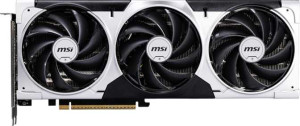
MSI GeForce RTX 5060 Ti Ventus 3X OC 8GB

Gigabyte Aorus GeForce RTX 5060 Elite MSI GeForce RTX 5060 Ti Ventus 3X OC 8GB

Overview

When choosing between the Gigabyte Aorus GeForce RTX 5060 Elite and the MSI GeForce RTX 5060 Ti Ventus 3X OC 8GB, the decision comes down to more than just raw compute power. Both cards share the same Blackwell architecture, 8GB of GDDR7 memory, and identical port configurations, yet they diverge in clock speeds, shading units, thermal design, and physical dimensions. This comparison examines those key battlegrounds to help you find the right fit for your build.

Common Features

  • GPU memory speed is 1750 MHz on both products.
  • Both products have 48 render output units (ROPs).
  • Double Precision Floating Point (DPFP) is supported on both products.
  • Effective memory speed is 28000 MHz on both products.
  • Maximum memory bandwidth is 448 GB/s on both products.
  • Both products have 8GB of VRAM.
  • Both products use GDDR7 memory.
  • Memory bus width is 128-bit on both products.
  • ECC memory is supported on both products.
  • Both products support DirectX 12 Ultimate.
  • OpenGL version 4.6 is supported on both products.
  • OpenCL version 3 is supported on both products.
  • Multi-display technology is supported on both products.
  • Ray tracing is supported on both products.
  • 3D support is available on both products.
  • DLSS is supported on both products.
  • XeSS (XMX) is not available on either product.
  • Both products have one HDMI output running HDMI 2.1b.
  • Both products have 3 DisplayPort outputs, no USB-C ports, no DVI outputs, and no mini DisplayPort outputs.
  • Both products are built on the Blackwell GPU architecture, use a 5 nm semiconductor process, support PCIe 5, feature 21900 million transistors, and do not have air-water cooling.

Main Differences

  • GPU base clock speed is 2280 MHz on Gigabyte Aorus GeForce RTX 5060 Elite and 2407 MHz on MSI GeForce RTX 5060 Ti Ventus 3X OC 8GB.
  • GPU turbo clock speed is 2722 MHz on Gigabyte Aorus GeForce RTX 5060 Elite and 2602 MHz on MSI GeForce RTX 5060 Ti Ventus 3X OC 8GB.
  • Pixel rate is 130.7 GPixel/s on Gigabyte Aorus GeForce RTX 5060 Elite and 124.9 GPixel/s on MSI GeForce RTX 5060 Ti Ventus 3X OC 8GB.
  • Floating-point performance is 20.9 TFLOPS on Gigabyte Aorus GeForce RTX 5060 Elite and 23.98 TFLOPS on MSI GeForce RTX 5060 Ti Ventus 3X OC 8GB.
  • Texture rate is 326.6 GTexels/s on Gigabyte Aorus GeForce RTX 5060 Elite and 374.7 GTexels/s on MSI GeForce RTX 5060 Ti Ventus 3X OC 8GB.
  • Shading units number 3840 on Gigabyte Aorus GeForce RTX 5060 Elite and 4608 on MSI GeForce RTX 5060 Ti Ventus 3X OC 8GB.
  • Texture mapping units (TMUs) total 120 on Gigabyte Aorus GeForce RTX 5060 Elite and 144 on MSI GeForce RTX 5060 Ti Ventus 3X OC 8GB.
  • RGB lighting is present on Gigabyte Aorus GeForce RTX 5060 Elite but not available on MSI GeForce RTX 5060 Ti Ventus 3X OC 8GB.
  • Thermal Design Power (TDP) is 145W on Gigabyte Aorus GeForce RTX 5060 Elite and 180W on MSI GeForce RTX 5060 Ti Ventus 3X OC 8GB.
  • Width is 329 mm on Gigabyte Aorus GeForce RTX 5060 Elite and 306 mm on MSI GeForce RTX 5060 Ti Ventus 3X OC 8GB.
  • Height is 128 mm on Gigabyte Aorus GeForce RTX 5060 Elite and 121 mm on MSI GeForce RTX 5060 Ti Ventus 3X OC 8GB.
Specs Comparison
Gigabyte Aorus GeForce RTX 5060 Elite

Gigabyte Aorus GeForce RTX 5060 Elite

MSI GeForce RTX 5060 Ti Ventus 3X OC 8GB

MSI GeForce RTX 5060 Ti Ventus 3X OC 8GB

Performance:
GPU clock speed 2280 MHz 2407 MHz
GPU turbo 2722 MHz 2602 MHz
pixel rate 130.7 GPixel/s 124.9 GPixel/s
floating-point performance 20.9 TFLOPS 23.98 TFLOPS
texture rate 326.6 GTexels/s 374.7 GTexels/s
GPU memory speed 1750 MHz 1750 MHz
shading units 3840 4608
texture mapping units (TMUs) 120 144
render output units (ROPs) 48 48
Has Double Precision Floating Point (DPFP)

The most telling differentiator in this group is the raw compute muscle. The MSI RTX 5060 Ti fields significantly more silicon: 4608 shading units and 144 TMUs versus 3840 and 120 on the Gigabyte Aorus RTX 5060 — a roughly 20% advantage in both. That translates directly into the floating-point numbers: the 5060 Ti delivers 23.98 TFLOPS against the 5060's 20.9 TFLOPS, a gap of about 15%. In practice, this means the 5060 Ti has meaningfully more headroom for compute-heavy workloads — think ray tracing, shader-intensive scenes, or AI-accelerated features — where raw parallelism matters most.

Clock speeds tell a more nuanced story. The Aorus RTX 5060 actually achieves a higher GPU turbo of 2722 MHz versus the MSI's 2602 MHz, which is why its pixel rate edges ahead at 130.7 GPixel/s despite having fewer ROPs. However, this clock speed advantage is not enough to close the gap opened by the 5060 Ti's wider shader array — the texture rate still favors the MSI at 374.7 GTexels/s versus 326.6 GTexels/s. Memory speed is identical on both at 1750 MHz, so neither card has a bandwidth edge from that angle.

Overall, the MSI RTX 5060 Ti holds a clear performance advantage in this group. Its broader compute architecture delivers superior throughput in the workloads that define modern GPU performance, and no single spec on the Aorus RTX 5060 is decisive enough to offset that structural gap. The Gigabyte card's higher turbo clock is a bright spot but functions more as a compensation mechanism than a genuine lead.

Memory:
effective memory speed 28000 MHz 28000 MHz
maximum memory bandwidth 448 GB/s 448 GB/s
VRAM 8GB 8GB
GDDR version GDDR7 GDDR7
memory bus width 128-bit 128-bit
Supports ECC memory

Memory is the one area where these two cards are in absolute lockstep. Both carry 8GB of GDDR7 over a 128-bit bus, running at an effective 28000 MHz for a maximum bandwidth of 448 GB/s. There is no differentiator to find here — every figure is identical down to ECC memory support, which adds a layer of data integrity useful in workstation or compute scenarios.

It is worth contextualizing what this memory configuration means in practice. GDDR7 is a generational leap in efficiency and throughput over GDDR6X, so 448 GB/s on a 128-bit bus is a strong result — one that would have required a wider 192-bit interface in the previous generation to match. That said, 8GB of VRAM remains a ceiling that users running very high-resolution textures or large AI models will eventually hit, regardless of how fast the bus is.

This group is an unambiguous tie. Memory configuration cannot be a deciding factor between these two cards since every specification is shared. Buyers should look to other spec groups — particularly performance and features — to differentiate them.

Features:
DirectX version DirectX 12 Ultimate DirectX 12 Ultimate
OpenGL version 4.6 4.6
OpenCL version 3 3
Supports multi-display technology
supports ray tracing
Supports 3D
supports DLSS
has XeSS (XMX)
AMD SAM / Intel Resizable BAR Intel Resizable BAR Intel Resizable BAR
has LHR
has RGB lighting
supported displays 4 4

From a software and API standpoint, these two cards are functionally equivalent. Both support DirectX 12 Ultimate, ray tracing, and DLSS — the three pillars of modern GPU feature sets — alongside OpenCL 3 and Intel Resizable BAR for CPU-GPU bandwidth optimization. Neither supports XeSS, but that is an Intel-native upscaling technology and its absence is expected on NVIDIA hardware. For gaming, content creation, or compute workloads, no feature gap exists between them on any of these fronts.

The only concrete differentiator in this group is RGB lighting. The Aorus RTX 5060 includes it; the MSI Ventus 3X OC does not. This is purely an aesthetic consideration with no performance implications, but it is a meaningful one for builders who care about a cohesive look inside a windowed case. The MSI's omission of RGB also reflects its positioning as a no-frills, workload-focused card.

Based strictly on the provided specs, the Gigabyte Aorus RTX 5060 has a marginal edge here — solely due to RGB lighting. For users who value case aesthetics, that distinction is real. For those who do not, this group is effectively a tie, and neither card offers a functional software or API advantage over the other.

Ports:
has an HDMI output
HDMI ports 1 1
HDMI version HDMI 2.1b HDMI 2.1b
DisplayPort outputs 3 3
USB-C ports 0 0
DVI outputs 0 0
mini DisplayPort outputs 0 0

Port configurations are identical across both cards: one HDMI 2.1b output and three DisplayPorts, totaling four display connections — which aligns with both cards' four-display multi-monitor support noted in the Features group. Neither card offers USB-C or any legacy outputs such as DVI or mini DisplayPort, reflecting the industry's clean break from older connector standards at this tier.

The inclusion of HDMI 2.1b is worth noting — it supports up to 10K resolution and very high refresh rates, making it well-suited for the latest high-bandwidth displays and gaming monitors without requiring an adapter. Three DisplayPort outputs further cement multi-monitor flexibility for productivity setups or sim racing rigs. No functional connectivity gap exists between these two cards.

This group is a complete tie. Connectivity cannot influence a buying decision here — both cards offer the same ports, the same HDMI version, and the same total display count.

General info:
GPU architecture Blackwell Blackwell
release date May 2025 April 2025
Thermal Design Power (TDP) 145W 180W
PCI Express (PCIe) version 5 5
semiconductor size 5 nm 5 nm
number of transistors 21900 million 21900 million
Has air-water cooling
width 329 mm 306 mm
height 128 mm 121 mm

Sharing the same Blackwell architecture, 5nm process node, and identical transistor count of 21.9 billion, these two cards are cut from the same silicon cloth at the foundry level. Both also use PCIe 5.0, ensuring neither is a bottleneck on modern platforms. The architectural parity here is a useful reminder that the performance gap seen in the compute specs comes from how NVIDIA has configured the silicon — not from any fundamental manufacturing difference.

Where things diverge is power draw. The MSI RTX 5060 Ti demands 180W TDP versus the Aorus RTX 5060's 145W — a 35W difference that is not trivial. For system builders with tighter PSU headroom or small form factor cases with limited airflow, the Aorus card is the more accommodating option. The flip side is that the 5060 Ti's higher power budget is what funds its broader shader array and higher throughput, so the wattage delta reflects a deliberate performance trade-off rather than inefficiency.

Somewhat counterintuitively, the lower-power Aorus RTX 5060 is the physically larger card at 329mm long and 128mm tall, compared to the MSI's more compact 306mm × 121mm footprint. Case compatibility checks are therefore slightly more critical for the Gigabyte card despite it being the lesser-powered of the two. On balance, neither card holds a decisive general advantage — the Aorus suits power-constrained or thermally tight builds, while the MSI's smaller frame and higher TDP reflect a more performance-forward design priority.

Comparison Summary & Verdict

After examining both cards in detail, the right choice depends heavily on your priorities. The Gigabyte Aorus GeForce RTX 5060 Elite stands out with a higher turbo clock of 2722 MHz and a lower 145W TDP, making it a strong pick for users who want efficient peak performance alongside the added visual appeal of RGB lighting. The MSI GeForce RTX 5060 Ti Ventus 3X OC 8GB counters with a higher base clock, significantly more shading units, and superior floating-point throughput at 23.98 TFLOPS, giving it a sustained advantage in compute-heavy and texture-intensive workloads, all packaged in a more compact body. Neither card is a clear loser; the decision comes down to whether you value peak-clock efficiency and aesthetics, or raw sustained compute performance in a smaller footprint.

Gigabyte Aorus GeForce RTX 5060 Elite
Buy Gigabyte Aorus GeForce RTX 5060 Elite if...

Buy the Gigabyte Aorus GeForce RTX 5060 Elite if you want a power-efficient card with a higher turbo clock and RGB lighting to complement a visually styled, energy-conscious build.

MSI GeForce RTX 5060 Ti Ventus 3X OC 8GB
Buy MSI GeForce RTX 5060 Ti Ventus 3X OC 8GB if...

Buy the MSI GeForce RTX 5060 Ti Ventus 3X OC 8GB if you prioritize raw compute throughput and texture performance, or need a more compact card that fits comfortably in tighter cases.