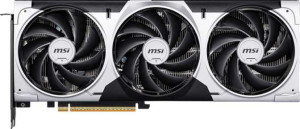
Functionally, these two cards are nearly identical in terms of software features. Both support DirectX 12 Ultimate, ray tracing, and DLSS — the trio that defines a modern NVIDIA GPU's capability stack. DirectX 12 Ultimate ensures compatibility with the full range of current and near-future gaming features, ray tracing enables physically accurate lighting in supported titles, and DLSS provides AI-driven upscaling that can meaningfully recover frame rates in demanding scenes. Neither card supports XeSS, which is expected given that is an Intel technology. Both also support Resizable BAR via Intel's implementation, which allows the CPU to access the full GPU frame buffer simultaneously — a feature that can yield modest but real performance gains in supported games.
The only concrete differentiator in this group is RGB lighting: the Aorus Elite has it, the Ventus 3X OC does not. This is purely aesthetic and carries no bearing on rendering capability, thermals, or compatibility. For users building a themed or illuminated system, the Aorus has the edge; for those who prefer a cleaner, understated look — or who simply do not care — the Ventus's lack of RGB is a non-issue.
As a features verdict, this group is essentially a functional tie, with the Aorus holding a minor advantage for aesthetics-conscious builders thanks to its RGB implementation. Nothing here should meaningfully influence a purchasing decision on technical grounds alone.