Gigabyte Aorus GeForce RTX 5060 Elite
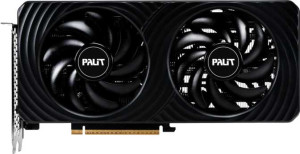
Palit GeForce RTX 5060 Ti Dual 8GB

Gigabyte Aorus GeForce RTX 5060 Elite Palit GeForce RTX 5060 Ti Dual 8GB

Overview

Welcome to our in-depth spec comparison between the Gigabyte Aorus GeForce RTX 5060 Elite and the Palit GeForce RTX 5060 Ti Dual 8GB, two Blackwell-architecture cards built around the same 8GB GDDR7 memory platform. While they share a surprising amount of common ground, key battlegrounds emerge around shader and compute throughput, boost clock behaviour, power consumption, and physical dimensions — making the choice between them far from straightforward.

Common Features

  • Both cards share a GPU memory speed of 1750 MHz.
  • Both cards have 48 render output units (ROPs).
  • Double Precision Floating Point (DPFP) is supported on both cards.
  • Both cards have an effective memory speed of 28000 MHz.
  • Both cards offer a maximum memory bandwidth of 448 GB/s.
  • Both cards are equipped with 8GB of VRAM.
  • Both cards use GDDR7 memory.
  • Both cards have a 128-bit memory bus width.
  • ECC memory is supported on both cards.
  • Both cards support DirectX 12 Ultimate.
  • Both cards support OpenGL version 4.6.
  • Both cards support OpenCL version 3.
  • Multi-display technology is supported on both cards.
  • Ray tracing is supported on both cards.
  • 3D technology is supported on both cards.
  • DLSS is supported on both cards.
  • XeSS (XMX) is not available on either card.
  • Both cards include one HDMI output using HDMI version 2.1b.
  • Both cards offer three DisplayPort outputs and no USB-C, DVI, or mini DisplayPort outputs.
  • Both cards are built on the Blackwell GPU architecture using a 5 nm process with 21,900 million transistors.
  • Both cards use PCIe version 5.
  • Air-water cooling is not available on either card.

Main Differences

  • GPU base clock speed is 2280 MHz on Gigabyte Aorus GeForce RTX 5060 Elite and 2407 MHz on Palit GeForce RTX 5060 Ti Dual 8GB.
  • GPU turbo clock speed is 2722 MHz on Gigabyte Aorus GeForce RTX 5060 Elite and 2573 MHz on Palit GeForce RTX 5060 Ti Dual 8GB.
  • Pixel rate is 130.7 GPixel/s on Gigabyte Aorus GeForce RTX 5060 Elite and 123.5 GPixel/s on Palit GeForce RTX 5060 Ti Dual 8GB.
  • Floating-point performance is 20.9 TFLOPS on Gigabyte Aorus GeForce RTX 5060 Elite and 23.71 TFLOPS on Palit GeForce RTX 5060 Ti Dual 8GB.
  • Texture rate is 326.6 GTexels/s on Gigabyte Aorus GeForce RTX 5060 Elite and 370.5 GTexels/s on Palit GeForce RTX 5060 Ti Dual 8GB.
  • Shading units number 3840 on Gigabyte Aorus GeForce RTX 5060 Elite and 4608 on Palit GeForce RTX 5060 Ti Dual 8GB.
  • Texture mapping units (TMUs) total 120 on Gigabyte Aorus GeForce RTX 5060 Elite and 144 on Palit GeForce RTX 5060 Ti Dual 8GB.
  • Thermal Design Power (TDP) is 145W on Gigabyte Aorus GeForce RTX 5060 Elite and 180W on Palit GeForce RTX 5060 Ti Dual 8GB.
  • Card width is 329 mm on Gigabyte Aorus GeForce RTX 5060 Elite and 262.1 mm on Palit GeForce RTX 5060 Ti Dual 8GB.
  • Card height is 128 mm on Gigabyte Aorus GeForce RTX 5060 Elite and 126.3 mm on Palit GeForce RTX 5060 Ti Dual 8GB.
Specs Comparison
Gigabyte Aorus GeForce RTX 5060 Elite

Gigabyte Aorus GeForce RTX 5060 Elite

Palit GeForce RTX 5060 Ti Dual 8GB

Palit GeForce RTX 5060 Ti Dual 8GB

Performance:
GPU clock speed 2280 MHz 2407 MHz
GPU turbo 2722 MHz 2573 MHz
pixel rate 130.7 GPixel/s 123.5 GPixel/s
floating-point performance 20.9 TFLOPS 23.71 TFLOPS
texture rate 326.6 GTexels/s 370.5 GTexels/s
GPU memory speed 1750 MHz 1750 MHz
shading units 3840 4608
texture mapping units (TMUs) 120 144
render output units (ROPs) 48 48
Has Double Precision Floating Point (DPFP)

The most telling difference between these two cards lies in their shader hardware. The Palit RTX 5060 Ti fields 4608 shading units and 144 TMUs, versus 3840 units and 120 TMUs on the Gigabyte Aorus RTX 5060 — a roughly 20% advantage in raw compute resources. This directly explains why the 5060 Ti pulls ahead in floating-point performance (23.71 TFLOPS vs 20.9 TFLOPS) and texture throughput (370.5 GTexels/s vs 326.6 GTexels/s), metrics that translate most directly into rendering complexity headroom in modern titles and compute workloads.

The Aorus 5060 does fight back on clock speed: its GPU turbo of 2722 MHz is meaningfully higher than the 5060 Ti's 2573 MHz, while the 5060 Ti leads on base clock (2407 MHz vs 2280 MHz). The higher turbo on the 5060 slightly narrows the gap in pixel fill rate — the 5060 actually edges ahead there at 130.7 GPixel/s vs 123.5 GPixel/s — but this advantage is narrow and does not offset the broader compute deficit. Both cards share identical memory clock speeds (1750 MHz), the same 48 ROPs, and both support Double Precision Floating Point, making those dimensions a wash.

Overall, the Palit RTX 5060 Ti holds a clear performance edge in this group. Its superior shader count and floating-point throughput give it the upper hand in GPU-bound scenarios — particularly at higher resolutions or in compute-intensive tasks. The Aorus 5060's higher turbo clock is a real asset for latency-sensitive workloads, but it cannot compensate for the architectural gap in execution resources. Users prioritizing raw rendering power should favor the 5060 Ti; those who may benefit from sustained high boost clocks in lightly-threaded scenarios will find the Aorus 5060 more competitive.

Memory:
effective memory speed 28000 MHz 28000 MHz
maximum memory bandwidth 448 GB/s 448 GB/s
VRAM 8GB 8GB
GDDR version GDDR7 GDDR7
memory bus width 128-bit 128-bit
Supports ECC memory

Memory is one area where these two cards offer no grounds for debate: every single spec is identical. Both the Aorus RTX 5060 and the Palit RTX 5060 Ti carry 8GB of GDDR7 across a 128-bit bus, running at an effective 28000 MHz for a peak bandwidth of 448 GB/s. That bandwidth figure is notably strong for a 128-bit interface — a direct benefit of GDDR7's generational efficiency gains over GDDR6X — and means neither card is throttled by memory throughput in typical 1080p or 1440p gaming workloads.

Both cards also support ECC memory, a feature more relevant to professional or compute use cases where data integrity matters, such as scientific workloads or AI inference. For gaming, it has no practical impact, but its presence on both cards at this price tier is worth noting. The shared 128-bit bus width is the one figure that places a ceiling on scalability — at 4K or in memory-intensive titles, this constraint will be felt equally by both GPUs.

This group is a complete tie. There is no memory-based reason to choose one card over the other; the decision must rest entirely on other spec groups such as compute performance or features.

Features:
DirectX version DirectX 12 Ultimate DirectX 12 Ultimate
OpenGL version 4.6 4.6
OpenCL version 3 3
Supports multi-display technology
supports ray tracing
Supports 3D
supports DLSS
has XeSS (XMX)
AMD SAM / Intel Resizable BAR Intel Resizable BAR Intel Resizable BAR
has LHR
has RGB lighting
supported displays 4 4

Feature parity is total here. Both the Aorus RTX 5060 and the Palit RTX 5060 Ti run on DirectX 12 Ultimate, which unlocks the full suite of modern rendering capabilities — hardware ray tracing, mesh shaders, and variable rate shading — ensuring neither card is left behind as games increasingly rely on these APIs. Support for DLSS is equally significant: Nvidia's AI-driven upscaling allows both cards to render at lower resolutions and reconstruct a higher-quality image, which is a meaningful performance multiplier particularly given the shared 128-bit memory bus.

Both cards also support ray tracing, up to 4 simultaneous displays, and Intel Resizable BAR — the latter allowing the CPU to access the full GPU framebuffer at once, which can yield measurable performance gains in compatible systems. RGB lighting is present on both as well, though that is purely an aesthetic consideration. Neither card carries an LHR (Lite Hash Rate) limiter, though this is largely a non-issue in the current market context.

Much like the memory group, this category produces a definitive tie. Every feature that matters — API support, upscaling, ray tracing, multi-display capability, and system-level optimizations — is shared identically between the two. Buyers will find no feature-based reason to favor one over the other; the differentiation lies elsewhere.

Ports:
has an HDMI output
HDMI ports 1 1
HDMI version HDMI 2.1b HDMI 2.1b
DisplayPort outputs 3 3
USB-C ports 0 0
DVI outputs 0 0
mini DisplayPort outputs 0 0

Connectivity is another area where these two cards are indistinguishable. Both the Aorus RTX 5060 and the Palit RTX 5060 Ti offer an identical port layout: one HDMI 2.1b output and three DisplayPort outputs, totaling four display connections — consistent with the four-display limit noted in the Features group. Neither card includes USB-C, DVI, or mini DisplayPort outputs.

The quality of those ports matters as much as the quantity. HDMI 2.1b supports up to 4K at high refresh rates and 8K output, making it well-suited for modern monitors and TVs alike. The three DisplayPort outputs give multi-monitor users plenty of flexibility without needing adapters. The absence of USB-C is worth noting for users who own USB-C or Thunderbolt-based displays, as those will require an adapter on either card.

This group is an unambiguous tie — port for port, version for version, the two cards are identical. Connectivity will not be a deciding factor in this comparison.

General info:
GPU architecture Blackwell Blackwell
release date May 2025 April 2025
Thermal Design Power (TDP) 145W 180W
PCI Express (PCIe) version 5 5
semiconductor size 5 nm 5 nm
number of transistors 21900 million 21900 million
Has air-water cooling
width 329 mm 262.1 mm
height 128 mm 126.3 mm

Sharing the same Blackwell architecture, 5nm process node, and identical transistor count of 21.9 billion, these two cards are built from the same silicon foundation — which makes the differences that do exist here particularly meaningful. The standout divergence is power consumption: the Aorus RTX 5060 carries a 145W TDP against the Palit RTX 5060 Ti's 180W. That 35W gap is substantial, implying the 5060 Elite will run cooler, draw less from the PSU, and likely operate more quietly under sustained load — all else being equal.

Physical size tells an equally interesting story. The Aorus 5060 is actually the longer card at 329mm, compared to the 5060 Ti's more compact 262.1mm. This is somewhat counterintuitive given the 5060's lower TDP — the extra length on the Aorus likely reflects Gigabyte's decision to invest in a more expansive cooling solution to manage thermals efficiently at lower noise levels. The 5060 Ti's shorter footprint makes it the easier fit in tighter cases, a real practical advantage for small-to-mid tower builds. Both cards use air cooling exclusively and connect via PCIe 5.0, ensuring neither is a bottleneck on modern platforms.

This group produces a split verdict depending on priorities. The Aorus RTX 5060 holds a clear edge in power efficiency, which benefits users with tighter PSU headroom or noise-sensitive environments. The Palit RTX 5060 Ti, however, wins on physical compactness — its shorter length offers meaningfully better case compatibility. Neither advantage is trivial, and the right choice here depends on the user's system constraints.

Comparison Summary & Verdict

After examining every available specification, a clear picture emerges for each card. The Palit GeForce RTX 5060 Ti Dual 8GB holds a decisive edge in raw compute muscle, delivering 23.71 TFLOPS of floating-point performance, 4608 shading units, and a texture rate of 370.5 GTexels/s — making it the stronger pick for users who want maximum throughput in GPU-intensive workloads. The Gigabyte Aorus GeForce RTX 5060 Elite, on the other hand, answers back with a higher turbo clock of 2722 MHz, a better pixel rate of 130.7 GPixel/s, and a notably lower TDP of 145W versus 180W, making it a more power-efficient option for builds where thermal headroom or PSU headroom is limited. Both cards are identical in memory configuration, feature support, and connectivity, so the decision ultimately comes down to whether you prioritise raw compute performance or power efficiency and boost frequency.

Gigabyte Aorus GeForce RTX 5060 Elite
Buy Gigabyte Aorus GeForce RTX 5060 Elite if...

Buy the Gigabyte Aorus GeForce RTX 5060 Elite if you want a more power-efficient card with a higher turbo clock speed and a lower 145W TDP, especially in builds where power or thermal headroom is a concern.

Palit GeForce RTX 5060 Ti Dual 8GB
Buy Palit GeForce RTX 5060 Ti Dual 8GB if...

Buy the Palit GeForce RTX 5060 Ti Dual 8GB if you prioritise maximum compute throughput, with higher floating-point performance at 23.71 TFLOPS, more shading units, and a greater texture rate for demanding GPU workloads.