Gigabyte Aorus Radeon RX 9070 XT Elite
Gigabyte Radeon RX 9070 XT Gaming OC

Gigabyte Aorus Radeon RX 9070 XT Elite Gigabyte Radeon RX 9070 XT Gaming OC

Overview

Welcome to our in-depth specification comparison between the Gigabyte Aorus Radeon RX 9070 XT Elite and the Gigabyte Radeon RX 9070 XT Gaming OC — two RDNA 4.0-based graphics cards sharing the same GPU core. While both cards offer identical memory configurations and feature sets, the key battlegrounds lie in their clock speeds and boost performance, as well as their physical dimensions. Read on to discover which card best suits your build and workload.

Common Features

  • Both cards share the same GPU memory speed of 2518 MHz.
  • Both cards have 4096 shading units.
  • Both cards have 256 texture mapping units (TMUs).
  • Both cards have 128 render output units (ROPs).
  • Double Precision Floating Point (DPFP) is supported on both cards.
  • Both cards have an effective memory speed of 20000 MHz.
  • Both cards offer a maximum memory bandwidth of 644.6 GB/s.
  • Both cards are equipped with 16GB of VRAM.
  • Both cards use GDDR6 memory.
  • Both cards have a 256-bit memory bus width.
  • ECC memory support is available on both cards.
  • Both cards support DirectX 12 Ultimate.
  • Both cards support OpenGL version 4.6.
  • Both cards support OpenCL version 2.2.
  • Multi-display technology is supported on both cards.
  • Ray tracing is supported on both cards.
  • 3D support is available on both cards.
  • DLSS is not supported on either card.
  • FSR4 is supported on both cards.
  • Both cards have 2 HDMI ports using HDMI 2.1b.
  • Both cards have 2 DisplayPort outputs.
  • Neither card has USB-C or DVI outputs.
  • Both cards are built on the RDNA 4.0 architecture.
  • Both cards have a Thermal Design Power (TDP) of 304W.
  • Both cards use PCIe version 5.
  • Both cards are manufactured on a 4 nm semiconductor process.
  • Both cards contain 53900 million transistors.
  • Air-water cooling is not available on either card.

Main Differences

  • GPU base clock speed is 1870 MHz on Gigabyte Aorus Radeon RX 9070 XT Elite and 1660 MHz on Gigabyte Radeon RX 9070 XT Gaming OC.
  • GPU turbo clock speed is 3100 MHz on Gigabyte Aorus Radeon RX 9070 XT Elite and 3060 MHz on Gigabyte Radeon RX 9070 XT Gaming OC.
  • Pixel rate is 396.8 GPixel/s on Gigabyte Aorus Radeon RX 9070 XT Elite and 391.7 GPixel/s on Gigabyte Radeon RX 9070 XT Gaming OC.
  • Floating-point performance is 50.79 TFLOPS on Gigabyte Aorus Radeon RX 9070 XT Elite and 50.14 TFLOPS on Gigabyte Radeon RX 9070 XT Gaming OC.
  • Texture rate is 793.6 GTexels/s on Gigabyte Aorus Radeon RX 9070 XT Elite and 783.4 GTexels/s on Gigabyte Radeon RX 9070 XT Gaming OC.
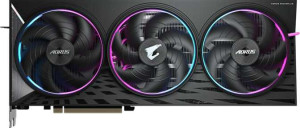
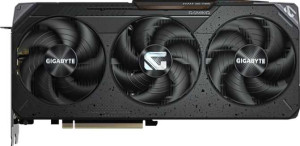
  • Card width is 339 mm on Gigabyte Aorus Radeon RX 9070 XT Elite and 288 mm on Gigabyte Radeon RX 9070 XT Gaming OC.
  • Card height is 136 mm on Gigabyte Aorus Radeon RX 9070 XT Elite and 132 mm on Gigabyte Radeon RX 9070 XT Gaming OC.
Specs Comparison
Gigabyte Aorus Radeon RX 9070 XT Elite

Gigabyte Aorus Radeon RX 9070 XT Elite

Gigabyte Radeon RX 9070 XT Gaming OC

Gigabyte Radeon RX 9070 XT Gaming OC

Performance:
GPU clock speed 1870 MHz 1660 MHz
GPU turbo 3100 MHz 3060 MHz
pixel rate 396.8 GPixel/s 391.7 GPixel/s
floating-point performance 50.79 TFLOPS 50.14 TFLOPS
texture rate 793.6 GTexels/s 783.4 GTexels/s
GPU memory speed 2518 MHz 2518 MHz
shading units 4096 4096
texture mapping units (TMUs) 256 256
render output units (ROPs) 128 128
Has Double Precision Floating Point (DPFP)

Both the Gigabyte Aorus Radeon RX 9070 XT Elite and the Gigabyte Radeon RX 9070 XT Gaming OC share identical GPU silicon at their core — the same 4096 shading units, 256 TMUs, 128 ROPs, and 2518 MHz memory speed — meaning any performance difference between them comes purely from factory clock tuning, not architectural distinction.

The most notable differentiator is the base GPU clock: the Aorus Elite runs at 1870 MHz versus the Gaming OC's 1660 MHz, a gap of roughly 13%. In practice, GPUs spend most of their time at or near boost clocks rather than base clocks, so this figure matters primarily for sustained, thermally constrained workloads. At boost, the gap narrows considerably — 3100 MHz versus 3060 MHz, a difference of just ~1.3%. This translates to marginal leads for the Elite in derived metrics: its floating-point throughput of 50.79 TFLOPS edges the Gaming OC's 50.14 TFLOPS, and its pixel and texture rates follow the same slim margin. In real-world gaming, these differences are unlikely to be perceptible in frame rates.

The Aorus Elite holds a narrow but measurable edge in peak performance on paper, and its higher base clock could offer slightly more headroom under sustained loads or in scenarios where the GPU cannot maintain full boost. That said, the ~1.3% boost clock advantage means the two cards are effectively performance-tied in typical gaming conditions. Buyers prioritizing maximum clock speed out of the box will prefer the Elite, while those who value value-per-dollar may find the Gaming OC equally capable for everyday use.
Memory:
effective memory speed 20000 MHz 20000 MHz
maximum memory bandwidth 644.6 GB/s 644.6 GB/s
VRAM 16GB 16GB
GDDR version GDDR6 GDDR6
memory bus width 256-bit 256-bit
Supports ECC memory

When it comes to memory, the Aorus Elite and the Gaming OC are in complete lockstep — every single specification is identical. Both cards carry 16GB of GDDR6 running on a 256-bit bus, delivering an effective speed of 20000 MHz and a peak bandwidth of 644.6 GB/s. There is no differentiator to find here.

Those shared figures are worth contextualizing, though. A 256-bit bus paired with fast GDDR6 at this bandwidth tier is well-suited for high-resolution gaming, including demanding 4K workloads and memory-hungry titles with large texture assets. The 16GB VRAM pool also provides meaningful headroom for content creation tasks and future game releases that continue to push memory requirements upward. ECC memory support adds a layer of data integrity that is largely irrelevant in consumer gaming but can matter for professional or compute-adjacent use cases.

This group is a clean tie. Neither card holds any memory advantage whatsoever — a buyer choosing between the Aorus Elite and the Gaming OC can disregard memory entirely as a deciding factor and focus on the differences found in other specification groups.

Features:
DirectX version DirectX 12 Ultimate DirectX 12 Ultimate
OpenGL version 4.6 4.6
OpenCL version 2.2 2.2
Supports multi-display technology
supports ray tracing
Supports 3D
supports DLSS
has FSR4
has XeSS (XMX)
AMD SAM / Intel Resizable BAR AMD SAM AMD SAM
has LHR
has RGB lighting
supported displays 4 4

Feature parity between the Aorus Elite and the Gaming OC is total — every capability listed for one card is matched exactly by the other. Both support DirectX 12 Ultimate and ray tracing, placing them fully in line with current-generation rendering standards, and both include FSR4, AMD's latest upscaling technology, which can meaningfully boost frame rates at higher resolutions with relatively modest image quality trade-offs. Neither card supports DLSS, which is expected given these are AMD GPUs — that is not a disadvantage specific to either product.

AMD SAM (Smart Access Memory) support is worth noting for users pairing these cards with a compatible AMD platform, as it allows the CPU to access the full VRAM pool directly, which can yield measurable performance gains in supported titles. Both cards also cap out at 4 simultaneous displays, making them equally capable for multi-monitor productivity setups. The absence of LHR (Lite Hash Rate) on both is a non-issue in a consumer gaming context.

Like the memory group before it, Features is a definitive tie. Every software capability, API version, and platform feature is shared identically between the two cards. No feature-based argument exists for choosing one over the other — this decision will ultimately rest on other differentiators such as clocks, cooling, or price.

Ports:
has an HDMI output
HDMI ports 2 2
HDMI version HDMI 2.1b HDMI 2.1b
DisplayPort outputs 2 2
USB-C ports 0 0
DVI outputs 0 0
mini DisplayPort outputs 0 0

The port configurations on both cards are identical: 2 HDMI 2.1b outputs and 2 DisplayPort outputs, for a total of four physical connections — matching the four-display ceiling established in the Features group. The dual-HDMI layout is a practical differentiator from many competing cards that offer only one, making these cards notably convenient for users who own multiple HDMI monitors or frequently switch between a display and a TV without adapters.

HDMI 2.1b is the headline here. It supports bandwidth sufficient for 4K at high refresh rates and up to 8K output, and also carries features like Variable Refresh Rate (VRR) natively over HDMI — useful for compatible TVs where DisplayPort is not an option. The absence of USB-C is worth flagging for users who rely on that port for direct connection to certain monitors or portable displays, though it is not an uncommon omission at this product tier.

Ports is another complete tie. The Aorus Elite and the Gaming OC offer an identical physical I/O layout with no variation in port count, type, or version. Connectivity preferences will not differentiate these two cards in any way.

General info:
GPU architecture RDNA 4.0 RDNA 4.0
release date March 2025 March 2025
Thermal Design Power (TDP) 304W 304W
PCI Express (PCIe) version 5 5
semiconductor size 4 nm 4 nm
number of transistors 53900 million 53900 million
Has air-water cooling
width 339 mm 288 mm
height 136 mm 132 mm

At the foundational level, these two cards are built from the same silicon: identical RDNA 4.0 architecture, the same 4nm manufacturing process, the same 53.9 billion transistors, and an identical 304W TDP. That shared power envelope means both cards place the same demands on your system's power supply and case airflow — no advantage to either in terms of system compatibility from a power standpoint.

The one meaningful divergence in this group is physical size. The Aorus Elite measures 339mm in length, while the Gaming OC comes in at 288mm — a difference of 51mm, or roughly 18% shorter. That gap is significant in practice. Smaller and mid-tower cases with constrained GPU clearance are more likely to accommodate the Gaming OC without issue, while the Aorus Elite's larger footprint is better suited to full-tower builds. The slight height difference (136mm vs 132mm) is less consequential for most builds.

The Gaming OC holds a clear physical size advantage, making it the more case-friendly option for compact or space-sensitive builds. The Aorus Elite's larger dimensions are typically associated with more elaborate cooling solutions, but since TDP is identical between the two cards, buyers in smaller cases should factor clearance carefully before committing to the Elite.

Comparison Summary & Verdict

Both the Gigabyte Aorus Radeon RX 9070 XT Elite and the Gigabyte Radeon RX 9070 XT Gaming OC are built on the same RDNA 4.0 foundation, share identical 16GB GDDR6 memory with a 256-bit bus, and offer the same feature set including FSR4, ray tracing, and DirectX 12 Ultimate support. The meaningful distinctions come down to clock speeds and card size: the Aorus Elite edges ahead with a higher base and boost clock of 3100 MHz versus 3060 MHz, translating into marginally better pixel and texture rates. However, it is also noticeably larger at 339 mm wide. The Gaming OC is the more compact option at 288 mm, making it a better fit for smaller chassis builds where clearance is a concern.

Gigabyte Aorus Radeon RX 9070 XT Elite
Buy Gigabyte Aorus Radeon RX 9070 XT Elite if...

Buy the Gigabyte Aorus Radeon RX 9070 XT Elite if you want the highest possible clock speeds and boost performance from the RX 9070 XT and your case has ample room to accommodate its larger 339 mm footprint.

Gigabyte Radeon RX 9070 XT Gaming OC
Buy Gigabyte Radeon RX 9070 XT Gaming OC if...

Buy the Gigabyte Radeon RX 9070 XT Gaming OC if you want a more compact card at 288 mm that still delivers near-identical performance and fully shares the same memory, features, and connectivity as its larger sibling.