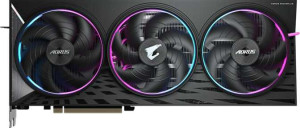
Gigabyte Aorus Radeon RX 9070 XT Elite
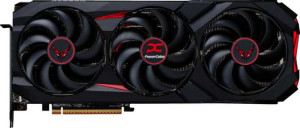
PowerColor Red Devil Radeon RX 9070 XT

Gigabyte Aorus Radeon RX 9070 XT Elite PowerColor Red Devil Radeon RX 9070 XT

Overview

Welcome to our in-depth specification comparison between the Gigabyte Aorus Radeon RX 9070 XT Elite and the PowerColor Red Devil Radeon RX 9070 XT. Both cards share the same RDNA 4.0 foundation, 16GB of GDDR6 memory, and a 304W TDP, but they diverge in meaningful ways across clock speeds, display connectivity, physical dimensions, and feature sets. Read on to discover which card best suits your build and priorities.

Common Features

  • Both cards have a GPU memory speed of 2518 MHz.
  • Both cards feature 4096 shading units.
  • Both cards have 256 texture mapping units (TMUs).
  • Both cards have 128 render output units (ROPs).
  • Double Precision Floating Point (DPFP) is supported on both cards.
  • Both cards have an effective memory speed of 20000 MHz.
  • Both cards offer a maximum memory bandwidth of 644.6 GB/s.
  • Both cards come with 16GB of VRAM.
  • Both cards use GDDR6 memory.
  • Both cards have a 256-bit memory bus width.
  • ECC memory is supported on both cards.
  • Both cards support OpenGL version 4.6.
  • Both cards support OpenCL version 2.2.
  • Multi-display technology is supported on both cards.
  • Ray tracing is supported on both cards.
  • 3D support is available on both cards.
  • DLSS is not supported on either card.
  • FSR4 is supported on both cards.
  • XeSS (XMX) is not supported on either card.
  • Both cards include an HDMI 2.1b output.
  • Neither card has USB-C ports, DVI outputs, or mini DisplayPort outputs.
  • Both cards are built on the RDNA 4.0 GPU architecture.
  • Both cards have a Thermal Design Power (TDP) of 304W.
  • Both cards use PCIe version 5.
  • Both cards are manufactured on a 4 nm semiconductor process.
  • Both cards have 53900 million transistors.
  • Air-water cooling is not available on either card.

Main Differences

  • GPU base clock speed is 1870 MHz on Gigabyte Aorus Radeon RX 9070 XT Elite and 1660 MHz on PowerColor Red Devil Radeon RX 9070 XT.
  • GPU turbo clock is 3100 MHz on Gigabyte Aorus Radeon RX 9070 XT Elite and 3060 MHz on PowerColor Red Devil Radeon RX 9070 XT.
  • Pixel rate is 396.8 GPixel/s on Gigabyte Aorus Radeon RX 9070 XT Elite and 391.7 GPixel/s on PowerColor Red Devil Radeon RX 9070 XT.
  • Floating-point performance is 50.79 TFLOPS on Gigabyte Aorus Radeon RX 9070 XT Elite and 50.14 TFLOPS on PowerColor Red Devil Radeon RX 9070 XT.
  • Texture rate is 793.6 GTexels/s on Gigabyte Aorus Radeon RX 9070 XT Elite and 783.4 GTexels/s on PowerColor Red Devil Radeon RX 9070 XT.
  • DirectX 12 Ultimate is supported on Gigabyte Aorus Radeon RX 9070 XT Elite, while PowerColor Red Devil Radeon RX 9070 XT supports DirectX 12.
  • RGB lighting is present on Gigabyte Aorus Radeon RX 9070 XT Elite but not available on PowerColor Red Devil Radeon RX 9070 XT.
  • HDMI port count is 2 on Gigabyte Aorus Radeon RX 9070 XT Elite and 1 on PowerColor Red Devil Radeon RX 9070 XT.
  • DisplayPort output count is 2 on Gigabyte Aorus Radeon RX 9070 XT Elite and 3 on PowerColor Red Devil Radeon RX 9070 XT.
  • Card width is 339 mm on Gigabyte Aorus Radeon RX 9070 XT Elite and 352 mm on PowerColor Red Devil Radeon RX 9070 XT.
  • Card height is 136 mm on Gigabyte Aorus Radeon RX 9070 XT Elite and 149 mm on PowerColor Red Devil Radeon RX 9070 XT.
Specs Comparison
Gigabyte Aorus Radeon RX 9070 XT Elite

Gigabyte Aorus Radeon RX 9070 XT Elite

PowerColor Red Devil Radeon RX 9070 XT

PowerColor Red Devil Radeon RX 9070 XT

Performance:
GPU clock speed 1870 MHz 1660 MHz
GPU turbo 3100 MHz 3060 MHz
pixel rate 396.8 GPixel/s 391.7 GPixel/s
floating-point performance 50.79 TFLOPS 50.14 TFLOPS
texture rate 793.6 GTexels/s 783.4 GTexels/s
GPU memory speed 2518 MHz 2518 MHz
shading units 4096 4096
texture mapping units (TMUs) 256 256
render output units (ROPs) 128 128
Has Double Precision Floating Point (DPFP)

Both cards share an identical GPU silicon foundation — the same 4096 shading units, 256 TMUs, 128 ROPs, and 2518 MHz memory speed — so any performance difference between the Gigabyte Aorus RX 9070 XT Elite and the PowerColor Red Devil RX 9070 XT comes purely from factory clock tuning. The Aorus carries a significantly higher base clock at 1870 MHz versus the Red Devil's 1660 MHz, a gap of 210 MHz. In practice, the base clock matters most under sustained, thermally constrained loads, suggesting the Aorus may maintain higher minimum frequencies in prolonged workloads.

At boost, the gap narrows considerably: the Aorus peaks at 3100 MHz against the Red Devil's 3060 MHz — a difference of just 40 MHz, or roughly 1.3%. This translates into correspondingly slim leads across compute-derived metrics: 50.79 TFLOPS vs 50.14 TFLOPS in floating-point throughput, and 793.6 GTexels/s vs 783.4 GTexels/s in texture fill rate. In real-world gaming, differences of this magnitude are unlikely to be perceptible in frame rates.

On pure paper performance, the Aorus holds a narrow edge by virtue of its higher clock speeds, but the margin is too small to constitute a meaningful real-world advantage in typical gaming scenarios. The more relevant differentiator for buyers will likely be thermals, acoustics, and power delivery — factors not captured here. If clock speed headroom is the sole criterion in this group, the Aorus wins, but only marginally.
Memory:
effective memory speed 20000 MHz 20000 MHz
maximum memory bandwidth 644.6 GB/s 644.6 GB/s
VRAM 16GB 16GB
GDDR version GDDR6 GDDR6
memory bus width 256-bit 256-bit
Supports ECC memory

Memory is one area where there is absolutely nothing to separate these two cards. The Aorus and the Red Devil both carry 16GB of GDDR6 across a 256-bit bus, running at an effective speed of 20000 MHz and delivering 644.6 GB/s of peak bandwidth. That bandwidth figure is substantial — enough to feed high-resolution textures and large frame buffers without becoming a bottleneck at 4K, and comfortably ahead of what most current titles demand even at maximum settings.

The 16GB pool is a particularly important long-term consideration. As games and creative workloads push VRAM requirements higher, 16GB provides meaningful headroom compared to the 8GB or 12GB configurations found on competing products in this tier. Both cards also support ECC memory, a feature that detects and corrects single-bit memory errors — more relevant for professional compute workloads than gaming, but worth noting for users running mixed-use systems.

This group is a straightforward dead tie. Every single memory specification is identical across both products, so memory alone cannot be a deciding factor in choosing between them. Buyers should look to other specification groups — particularly performance clocks, cooling, and connectivity — to differentiate the two.

Features:
DirectX version DirectX 12 Ultimate DirectX 12
OpenGL version 4.6 4.6
OpenCL version 2.2 2.2
Supports multi-display technology
supports ray tracing
Supports 3D
supports DLSS
has FSR4
has XeSS (XMX)
AMD SAM / Intel Resizable BAR AMD SAM AMD SAM
has LHR
has RGB lighting
supported displays 4 4

The most technically significant difference in this group is the DirectX version: the Aorus ships with DirectX 12 Ultimate support, while the Red Devil is listed at DirectX 12. DirectX 12 Ultimate is Microsoft's extended feature set that formalizes support for hardware ray tracing tiers, mesh shaders, variable rate shading, and sampler feedback — capabilities that game developers increasingly target for next-generation visual effects. Whether this reflects a genuine hardware distinction or a firmware/driver declaration difference, it is the one feature flag here that could carry forward relevance as titles adopt these advanced rendering paths more aggressively.

Beyond that, both cards share a well-rounded and identical software feature set: ray tracing, FSR4 (AMD's latest upscaling generation), AMD SAM for CPU-GPU bandwidth optimization, and support for up to 4 simultaneous displays. Neither card supports DLSS — expected, given these are AMD GPUs — and neither carries LHR mining restrictions, which is a non-factor for gaming buyers but worth noting for completeness.

The other concrete differentiator is cosmetic: the Aorus includes RGB lighting, while the Red Devil does not. For buyers who care about aesthetics in a windowed build, this matters; for those who do not, it is irrelevant. On balance, the Aorus holds a narrow functional edge in this group, primarily due to its DirectX 12 Ultimate designation and its RGB support for system builders who value it.

Ports:
has an HDMI output
HDMI ports 2 1
HDMI version HDMI 2.1b HDMI 2.1b
DisplayPort outputs 2 3
USB-C ports 0 0
DVI outputs 0 0
mini DisplayPort outputs 0 0

Both cards top out at four total display outputs and share the same HDMI 2.1b standard, which supports 4K at high refresh rates and 8K output — so the quality ceiling per port is identical. Where they diverge is in how that total is distributed. The Aorus offers 2 HDMI + 2 DisplayPort, while the Red Devil flips the balance to 1 HDMI + 3 DisplayPort. This is a meaningful ergonomic difference depending on a user's monitor setup.

For users running multiple HDMI-native devices — such as a TV alongside a gaming monitor, or a capture device — the Aorus's dual HDMI configuration reduces the need for adapters. Conversely, the Red Devil's three DisplayPort outputs are a better fit for multi-monitor desktop setups, where DisplayPort daisy-chaining or high-refresh-rate panels with native DP connections are the norm. Neither layout is objectively superior; it is entirely a function of what the buyer's display ecosystem demands.

Given that total output count and HDMI version are identical, this group does not produce a clear overall winner — it is a use-case-dependent tie. The Aorus has the edge for HDMI-heavy setups, while the Red Devil is the stronger choice for DisplayPort-centric multi-monitor configurations.

General info:
GPU architecture RDNA 4.0 RDNA 4.0
release date March 2025 March 2025
Thermal Design Power (TDP) 304W 304W
PCI Express (PCIe) version 5 5
semiconductor size 4 nm 4 nm
number of transistors 53900 million 53900 million
Has air-water cooling
width 339 mm 352 mm
height 136 mm 149 mm

At the silicon level, these two cards are indistinguishable. Both are built on the same RDNA 4.0 architecture, fabbed at 4 nm with an identical 53,900 million transistors, and connect via PCIe 5.0. Their 304W TDP is also identical, meaning system builders should plan for the same power delivery and case airflow requirements regardless of which card they choose. Neither includes liquid cooling, so both rely entirely on their air cooler designs to manage that thermal load.

Where this group reveals a genuine difference is in physical dimensions. The Aorus measures 339 × 136 mm, while the Red Devil is noticeably larger at 352 × 149 mm — 13 mm longer and 13 mm taller. That gap matters in practice: smaller and mid-tower cases with tight GPU clearances or obstructed PCIe slots are more likely to accommodate the Aorus comfortably. Buyers with compact builds should measure their available GPU length and height clearance carefully before committing to the Red Devil.

Given that architecture, process node, transistor count, TDP, and PCIe generation are all identical, the Aorus holds a practical edge in this group purely on the basis of its smaller footprint. For large full-tower builds the size difference is inconsequential, but for anything more constrained, the Aorus offers meaningfully greater compatibility.

Comparison Summary & Verdict

Both the Gigabyte Aorus Radeon RX 9070 XT Elite and the PowerColor Red Devil Radeon RX 9070 XT are compelling cards built on the same RDNA 4.0 architecture with identical memory configurations. The Gigabyte Aorus Radeon RX 9070 XT Elite pulls ahead with a higher base and turbo clock, slightly better pixel and texture rates, DirectX 12 Ultimate support, RGB lighting, dual HDMI outputs, and a more compact footprint at 339x136mm. The PowerColor Red Devil Radeon RX 9070 XT counters with three DisplayPort outputs, making it the stronger pick for multi-monitor desktop setups. If you want every ounce of performance, richer feature support, and a smaller card, go Gigabyte. If your workflow revolves around connecting three DisplayPort displays, the PowerColor is the practical choice.

Gigabyte Aorus Radeon RX 9070 XT Elite
Buy Gigabyte Aorus Radeon RX 9070 XT Elite if...

Buy the Gigabyte Aorus Radeon RX 9070 XT Elite if you want higher clock speeds, DirectX 12 Ultimate support, RGB lighting, dual HDMI outputs, and a more compact card size.

PowerColor Red Devil Radeon RX 9070 XT
Buy PowerColor Red Devil Radeon RX 9070 XT if...

Buy the PowerColor Red Devil Radeon RX 9070 XT if you need three DisplayPort outputs for a multi-monitor setup and do not require RGB lighting or dual HDMI connectivity.